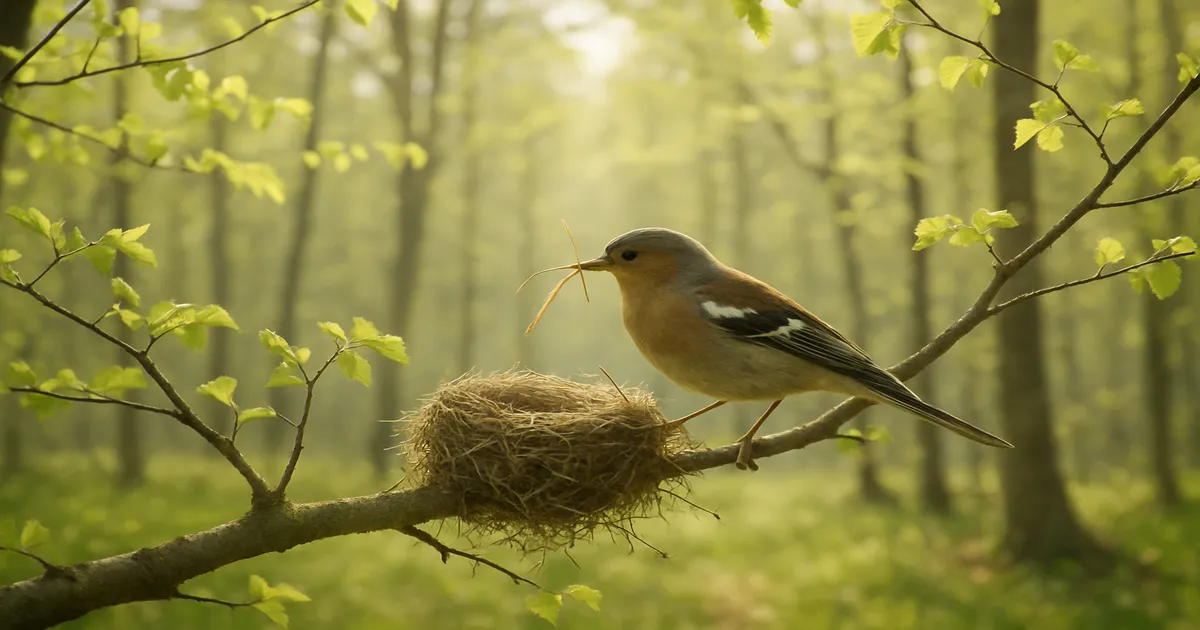
Quick Answer: Yes, birds will nest — but only when three conditions align: a suitable nest site, adequate food nearby, and the right time of year. Most backyard species nest between March and July, with peak activity in May. Get those right and you can dramatically increase the odds of nesting birds in your yard.
Will Birds Nest? The Short Answer
Birds will absolutely nest, and many species are surprisingly willing to do so close to human activity. The real question is whether your yard, garden, or nest box meets their minimum requirements. Get those right, and nesting birds will follow.
Three Things Birds Need Before They Will Nest
Every nesting attempt — from a Great Horned Owl (Bubo virginianus) incubating eggs in January to an American Goldfinch (Spinus tristis) weaving a nest in July — comes down to three non-negotiables:
- A suitable nest site — a tree cavity, dense shrub, nest box, open gravel patch, or ledge, depending on the species.
- Reliable food nearby — insects especially, since almost every species feeds nestlings high-protein invertebrates regardless of what the adults eat.
- The right seasonal timing — triggered primarily by increasing day length, not temperature, which is why birds are singing in February even when there’s still snow on the ground.
What Triggers Nesting Behavior?
Photoperiod: Why Day Length Runs the Show
The single most reliable trigger for nesting is photoperiod — the lengthening of days as winter turns to spring. As days grow longer, specialized photoreceptors in a bird’s brain stimulate the release of luteinizing hormone, which drives testosterone production in males and estrogen in females. Song increases, territorial behavior kicks in, and the whole breeding cycle starts turning. This is why Northern Cardinals are singing in February with snow still on the ground.
Temperature matters too, but mostly as a confirmation signal. Warmer weather means insects are active, which means there’s enough food to raise a brood. Many species fine-tune their egg-laying dates to coincide with peak caterpillar emergence — a narrow window of maximum food availability. A late cold snap can delay nesting by a week or two, but it won’t stop it entirely; the photoperiod drive is too strong.
Even a hormonally primed bird in perfect condition won’t commit to nesting without a suitable site. For a bluebird, that means an open cavity or nest box near short grass. For a cardinal, it means a dense shrub with good concealment. For a Killdeer (Charadrius vociferus), it’s bare gravel or a flat rooftop. If the site isn’t right, the bird moves on.
Why Some Birds Nest Earlier Than Others
Great Horned Owls begin incubating in January — among the earliest nesters in North America. They can do this because they’re large enough to keep eggs warm through cold nights, and by fledging early they give their owlets a long window to learn to hunt before the following winter. At the other extreme, the American Goldfinch waits until late June or July, timing its nesting to coincide with peak thistle and other composite seed availability, which it uses to feed nestlings — making it one of the few songbirds that raises young almost entirely on plant matter rather than insects.
When Will Birds Nest? A Month-by-Month Calendar
Nesting Timeline for North America
| Month | What’s Happening |
|---|---|
| January–February | Great Horned Owls incubating; year-round residents singing |
| March | Robins and bluebirds nest-building in southern states |
| April | Cardinals, chickadees, and wrens actively nesting across the East |
| May | Peak breeding activity continent-wide; migrants arrive and begin nesting |
| June | Many species on second or third clutch |
| July | American Goldfinch nesting in earnest; late breeders active |
| August | Nesting winds down; post-breeding molt begins |
| Sept–Dec | No active nesting for most species |
May is the month to watch. Migrants are streaming in, resident species are often already on second clutches, and nest boxes that sat empty all winter suddenly have waiting lists. If you only pay close attention to your yard birds one month a year, make it May.
Many species raise two or even three broods in a season, which extends the nesting window well into summer. A pair of Carolina Wrens (Thryothorus ludovicianus) might fledge their first brood in May and their second in July. One geography note worth keeping in mind: southern states run roughly four to six weeks ahead of northern states. A robin nesting in Georgia in early March might not start nesting in Minnesota until late April.
Which Birds Will Nest in Your Yard?
Cavity Nesters: Bluebird, Chickadee, and Wren
These three are the top candidates for nest box occupancy in eastern North America.
Eastern Bluebird (Sialia sialis) — About 7 inches long. The male’s deep blue back and rusty-orange breast make him one of the most recognizable birds in North America; the female is a more subdued grayish-blue above with a pale buff-orange wash on the breast. Listen for a soft, melodious chur-lee warble. Bluebirds are perch-and-pounce hunters, dropping from a low fence post onto ground insects.
Black-capped Chickadee (Poecile atricapillus) — About 5.25 inches long, with a crisp black cap and bib against bright white cheeks. The chick-a-dee-dee-dee call is one of the most familiar sounds in North American birding. Chickadees are acrobatic gleaners, hanging upside-down on branch tips to pick off insects and eggs. In the Southeast, the Carolina Chickadee (Poecile carolinensis) replaces the Black-capped; the two are nearly identical in appearance and behavior.
Carolina Wren (Thryothorus ludovicianus) — About 5.5 inches long, rich rufous-brown above, warm buff below, with a bold white eyebrow stripe. Extraordinarily loud for its size — that ringing teakettle-teakettle-teakettle carries across the whole yard. Wrens are secretive foragers that probe leaf litter and bark crevices for insects and spiders.
Cavity nesters are the easiest group to attract because you can simply provide the nest site they’re looking for. A well-placed nest box does a lot of the work for you.
Open-Cup and Ground Nesters
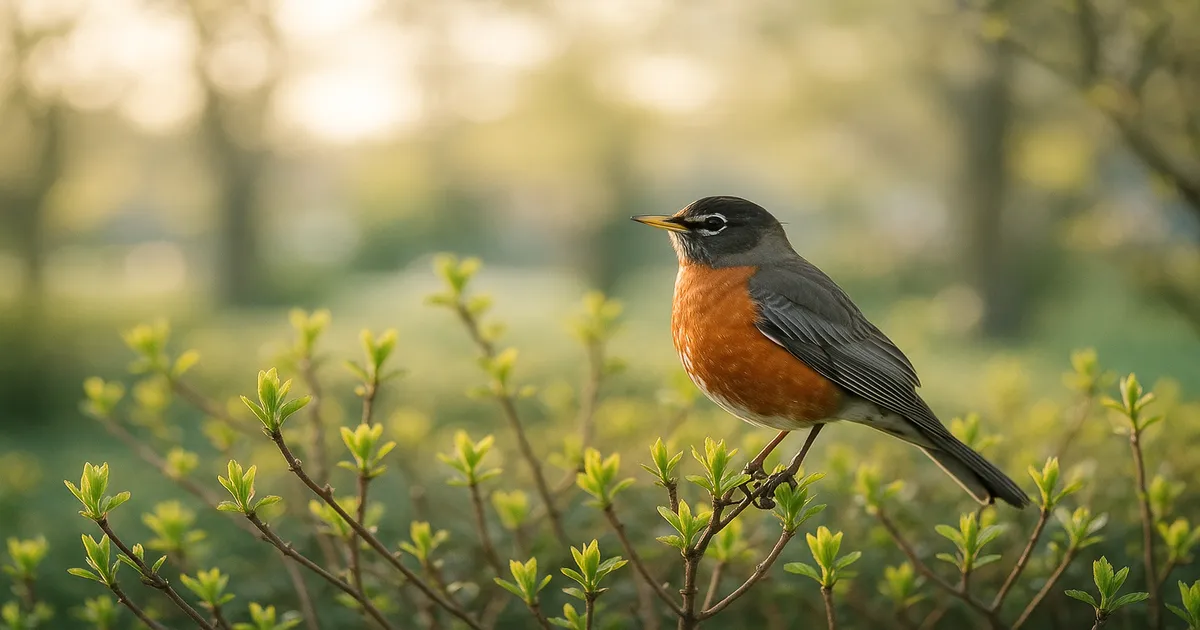
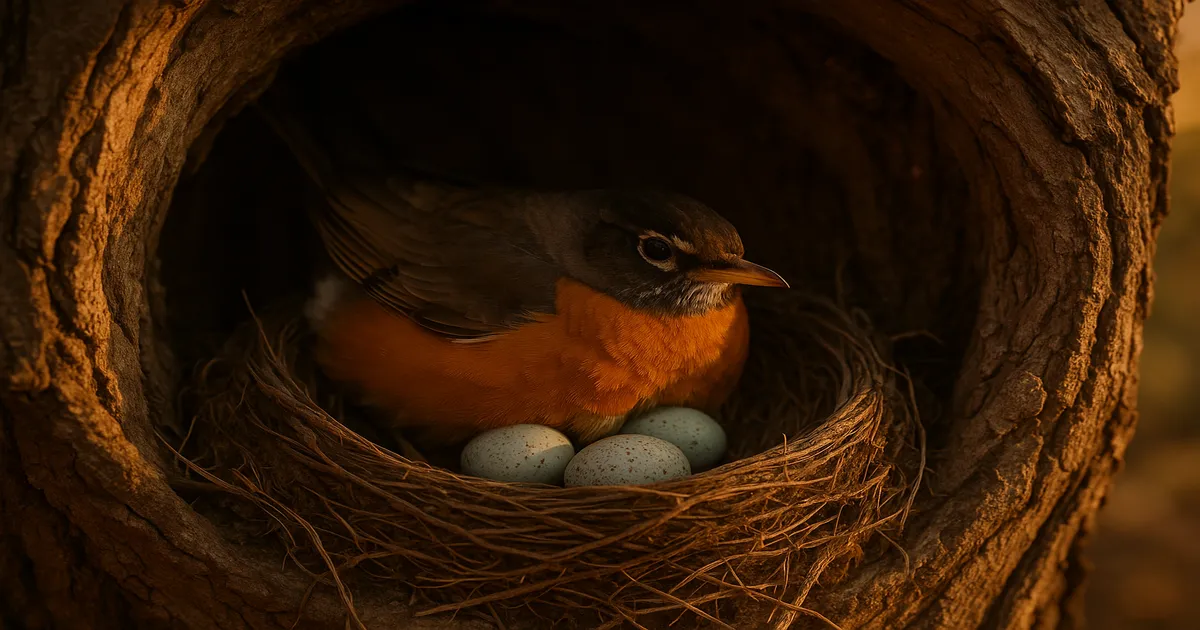
American Robin (Turdus migratorius) — About 10 inches long, dark gray-black above with a deep orange-red breast. The female is paler overall. That flute-like cheerily, cheer-up, cheerio song is often the first you’ll hear at dawn. Robins build mud-reinforced cup nests in trees, on ledges, and occasionally on porch lights.
Northern Cardinal (Cardinalis cardinalis) — About 8.75 inches long. The male is brilliant red with a prominent crest and a stout orange-red bill; the female is warm buffy-brown with reddish tinges on the wings, tail, and crest. Both sexes sing — unusual among North American songbirds. Cardinals nest in dense shrubs and thickets and are loyal to yards with good cover.
Mourning Dove (Zenaida macroura) — About 12 inches long, soft pinkish-tan with a long pointed tail edged in white. Their mournful coo-OO-oo-oo-oo is regularly mistaken for an owl by beginners. Doves build notoriously flimsy platform nests — sometimes so thin you can see the eggs from below — in trees, shrubs, or on building ledges.
Killdeer (Charadrius vociferus) — About 10.5 inches long, brown above and white below, with two bold black breast bands and a bright orange-rufous rump visible in flight. Its piercing kill-dee call is unmistakable. Killdeer nest on bare gravel, lawns, flat rooftops, and parking lot margins — often in spots that look impossibly exposed. Chicks hatch fully feathered and mobile, and start feeding themselves within hours.
Quick ID Reference
| Species | Size | Key Field Mark | Nesting Strategy |
|---|---|---|---|
| Eastern Bluebird | 7 in | Blue back + rusty breast | Cavity / nest box |
| Black-capped Chickadee | 5.25 in | Black cap + white cheeks | Cavity / nest box |
| Carolina Wren | 5.5 in | Bold white eyebrow stripe | Cavity / nest box |
| American Robin | 10 in | Orange-red breast | Open cup in trees |
| Northern Cardinal | 8.75 in | Crest + red-orange bill | Dense shrubs |
| Mourning Dove | 12 in | Long pointed white-edged tail | Flimsy platform |
| Killdeer | 10.5 in | Double black breast bands | Bare ground |
How to Get Birds to Nest in Your Yard
Put Up the Right Nest Box
Nest box dimensions matter more than most people realize. A hole that’s too large invites House Sparrows (Passer domesticus) and European Starlings (Sturnus vulgaris); too small and the target species can’t enter.
| Species | Entrance Hole | Interior Floor | Height Above Ground |
|---|---|---|---|
| Eastern Bluebird | 1.5 in (3.8 cm) | 4×4 in (10×10 cm) | 4–6 ft (1.2–1.8 m) |
| Black-capped Chickadee | 1.125 in (2.9 cm) | 4×4 in (10×10 cm) | 4–8 ft (1.2–2.4 m) |
| Carolina Wren | 1.5 in (3.8 cm) | 4×4 in (10×10 cm) | 5–10 ft (1.5–3 m) |
All boxes should have ventilation holes near the top, drainage holes in the floor, and a side or front panel that opens for monitoring and cleaning. Cedar or untreated pine are the best materials. A well-built cedar box like the Nature’s Way Cedar Bluebird House will outlast a dozen cheap plastic ones.
A few placement rules that make a real difference:
- Face the entrance east or north to avoid overheating in afternoon sun.
- Mount bluebird boxes in open areas, at least 50 feet from tree lines, on a pole with a predator baffle.
- Space bluebird boxes at least 100 yards apart — they’re territorial. Wrens and chickadees can be closer.
- Install by late February in the South, early March in the North, before birds start scouting sites.
Plant Natives — This Is the Big One
Ornithologist Doug Tallamy’s research found that a single clutch of Carolina Chickadee nestlings requires 6,000–9,000 caterpillars before fledging. Native oaks (Quercus spp.) support over 500 caterpillar species; a non-native ornamental might support fewer than five. If your yard is planted with non-native ornamentals and treated with pesticides, there simply won’t be enough insects to raise a healthy brood — regardless of how many nest boxes you put up.
Good native plant choices for most eastern yards include native oaks, wild cherries (Prunus spp.), dogwoods (Cornus spp.), and native viburnums. Even a small yard with a few well-chosen native shrubs can make a measurable difference.
Feeders and Water
A shallow birdbath with moving water attracts far more species than a static basin. Even a small dripper makes a big difference, especially in summer when natural water sources dry up. The Allied Precision Industries Water Wiggler is inexpensive and works well in any standard birdbath.
During nesting season, a few feeder choices stand out:
- Black-oil sunflower seed in a tube feeder attracts the widest range of nesting species.
- Suet is especially valuable in spring when protein demand is high — wrens and chickadees hit it hard.
- Live or dried mealworms in a platform feeder near a bluebird box can be the difference between a successful brood and a failed one.
- Safflower seed is preferred by cardinals and largely ignored by starlings and House Sparrows.
Frequently Asked Questions
Will birds nest in a brand-new nest box? Yes, often in the first season — especially bluebirds and wrens, which are quick to investigate new cavities. Put the box up by early March and monitor it weekly. If House Sparrows move in, remove their nest promptly and repeatedly until they give up.
Will birds nest in the same place every year? Many do. Bluebirds and Carolina Wrens are particularly site-faithful and will return to a successful nest box year after year. Clean the box out each fall to reduce parasite loads and make it more attractive for the following spring.
Will birds nest if I watch them too closely? Most backyard species tolerate a reasonable amount of human activity. Avoid lingering at the nest box entrance or handling eggs and young chicks unnecessarily. A quick weekly check — open the box, look in, close it — is fine and actually helps you catch problems like House Sparrow takeovers early.
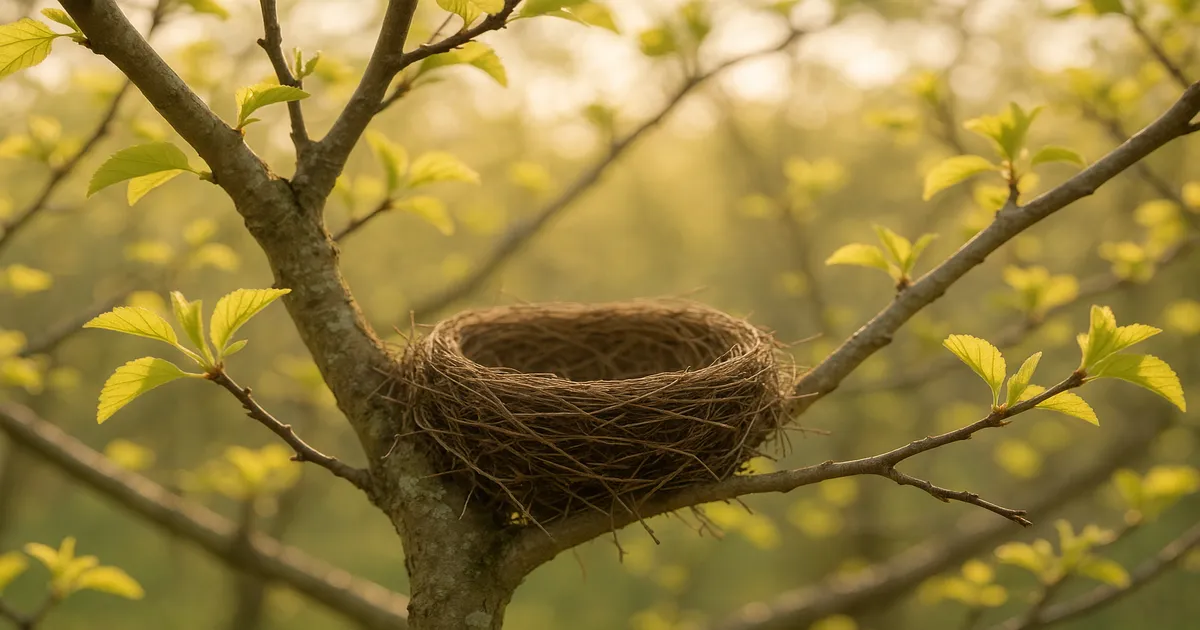
Will birds nest without a nest box? Absolutely. Open-cup nesters like robins, cardinals, and mourning doves don’t use boxes at all. Dense native shrubs, small trees, and even porch ledges all serve as nesting sites. A yard with good structural variety — shrubs of different heights, a few trees, some open ground — will attract a wider range of nesting species than a box-only setup.
Why won’t birds nest in my yard even though I have a nest box? The most common reasons are wrong placement (too close to trees or too exposed), wrong hole size, or simply not enough food nearby. Check the box specs against the table above, make sure it’s on a baffled pole away from tree lines, and consider whether your yard has enough insect-producing native plants to support a brood.