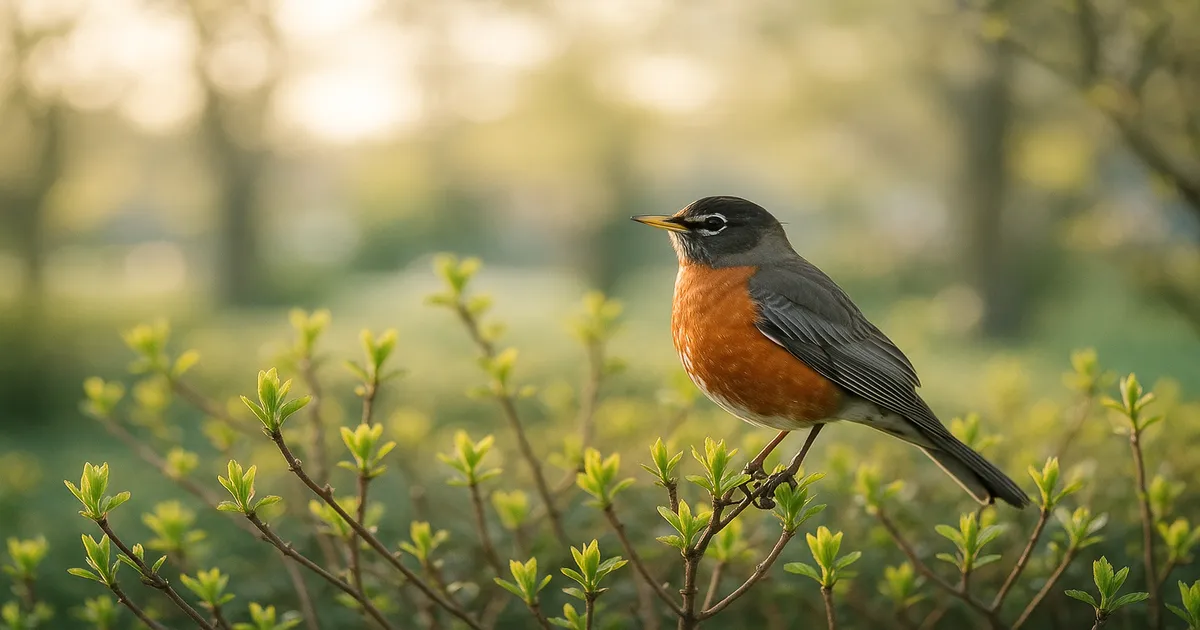
Quick Answer: You’ve almost certainly found an American Robin (Turdus migratorius) nest — those vivid turquoise-blue eggs are unmistakable. The nest and eggs are legally protected under the Migratory Bird Treaty Act, so the best thing you can do is keep your distance, carry on with life nearby, and enjoy watching the family grow.
Found a robin nest and eggs in your garden? You’re in good company. It’s one of those small, genuinely lovely surprises — maybe you spotted it while trimming a hedge, or a parent bird dive-bombed you near the back door. Either way, you’re now sharing your garden with one of North America’s most familiar birds. With a little know-how, you can make sure things go smoothly for everyone involved.
Key Facts About Robin Nests and Eggs
| Feature | Details |
|---|---|
| Egg color | Vivid, unmarked turquoise-blue |
| Clutch size | 3–5 eggs (average 4) |
| Incubation period | 12–14 days |
| Nestling period | 13–15 days |
| Post-fledging dependency | 2–3 weeks |
| Broods per year | 2–3 (sometimes 4) |
| Legal status | Protected under the Migratory Bird Treaty Act |
Should You Be Worried?
No. Robins are relatively tolerant of human activity, and the nest is more resilient than it looks. Keep disturbance to a minimum, keep cats indoors, and let the birds do what they’ve been doing for millions of years. The whole cycle — from the eggs you’re looking at now to fully independent young — takes roughly 5–6 weeks per brood.
Identifying the American Robin
Adult Male vs. Female
The American Robin is a large, plump thrush — about 9–11 inches (23–28 cm) long with a wingspan of 12–16 inches (31–41 cm). The adult male is hard to mistake: dark blackish-brown head, rich brick-red breast, broken white eye-ring, and a yellow-orange bill. The female is subtly different — her head is dark gray-brown rather than near-black, and her breast is a paler, peachy-orange. Both sexes have that upright, alert posture you’ll recognize immediately.
Juvenile Robins
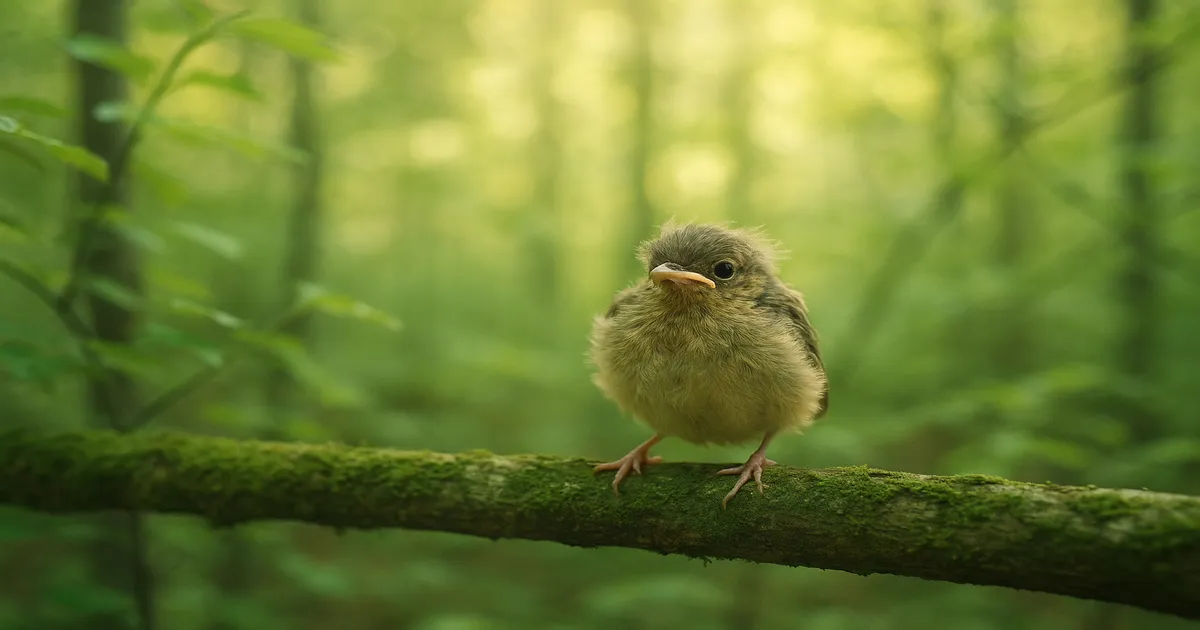
If you see young birds near the nest later in the season, don’t be thrown by their appearance. Juvenile robins have heavily spotted breasts — a throwback to their thrush ancestry — with pale buff spotting on the back and wings. They look nothing like their parents at first glance. The spots fade as they molt into first-winter plumage by late summer.
Calls and Song
The robin’s song is one of the most recognizable in North America: a rich, fluty caroling often described as “cheerily, cheer-up, cheerio”, delivered in a rising-and-falling pattern. You’ll hear it at dawn before almost anything else. Near the nest, you’re more likely to hear the sharp “tuk-tuk-tuk” alarm call — a rapid, staccato warning that something (probably you) has gotten too close.
Similar Species
A few birds share some features with robins, but none are genuinely difficult to separate:
- Varied Thrush (Ixoreus naevius): Similar size and orange breast, but has a bold black breast band, an orange eyebrow stripe, and is largely confined to Pacific Coast forests. Its song is a single eerie, buzzy whistle — nothing like the robin’s caroling.
- Spotted Towhee (Pipilo maculatus): Black head and rufous flanks, but much smaller, with white wing spots, a white belly, and a red eye. Scratches in leaf litter rather than running across open lawn.
- Eastern Towhee (Pipilo erythrophthalmus): Same story as the Spotted — smaller, white belly, prefers dense thickets.
If you’re watching a large thrush run across your grass and stop to tilt its head, it’s a robin.
The Robin Nest: Structure, Location, and Materials
What Does a Robin Nest Look Like?
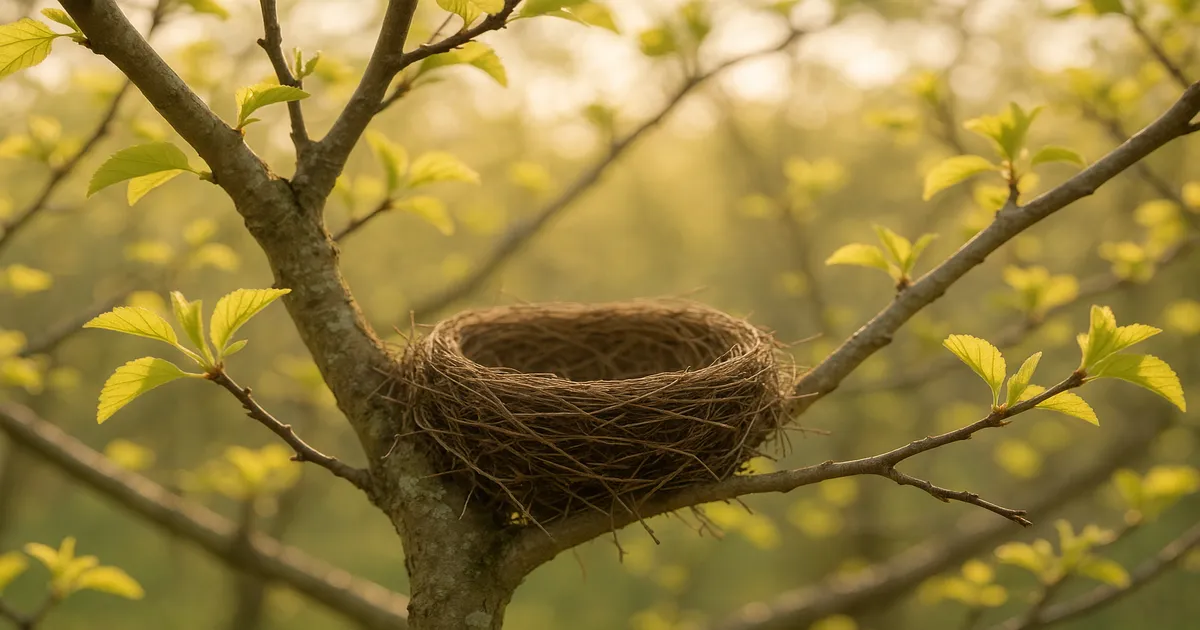
A robin nest is a substantial, well-engineered cup — roughly 6 inches (15 cm) in outer diameter, with an inner cup about 4 inches (10 cm) wide and 2.5 inches (6 cm) deep. It’s built from grasses, twigs, and plant fibers, but what really sets it apart is the mud layer. The female plasters a structural ring of mud into the nest wall, which dries hard and gives the nest its distinctive solidity. Very few North American songbirds build this way, so a mud-reinforced cup nest is a reliable sign you’re looking at a robin’s work.
Where Do Robins Nest in Gardens?
Robins are flexible nesters. Common garden sites include:
- Horizontal branches in trees or large shrubs
- Building ledges, window sills, and gutters
- Downspout brackets and drainpipe supports
- Dense climbing plants against walls or fences
Nests are typically 5–25 feet (1.5–7.6 m) off the ground, though garden nests often sit toward the lower end of that range. Robins seem to prioritize a solid, flat surface over height.
Who Builds the Nest?
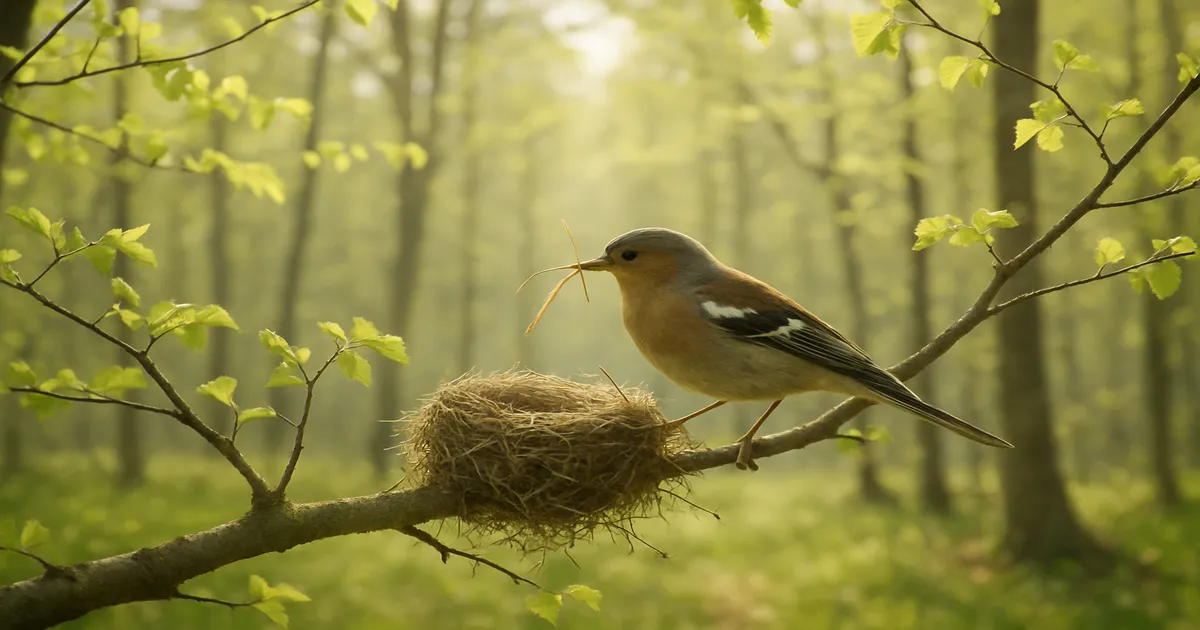
The female builds the nest alone, over 2–6 days, while the male accompanies her but contributes almost no actual material. She does all the construction; he mostly supervises.
Robin Eggs in Your Garden: Color, Clutch, and Timeline
Why Are Robin Eggs Blue?
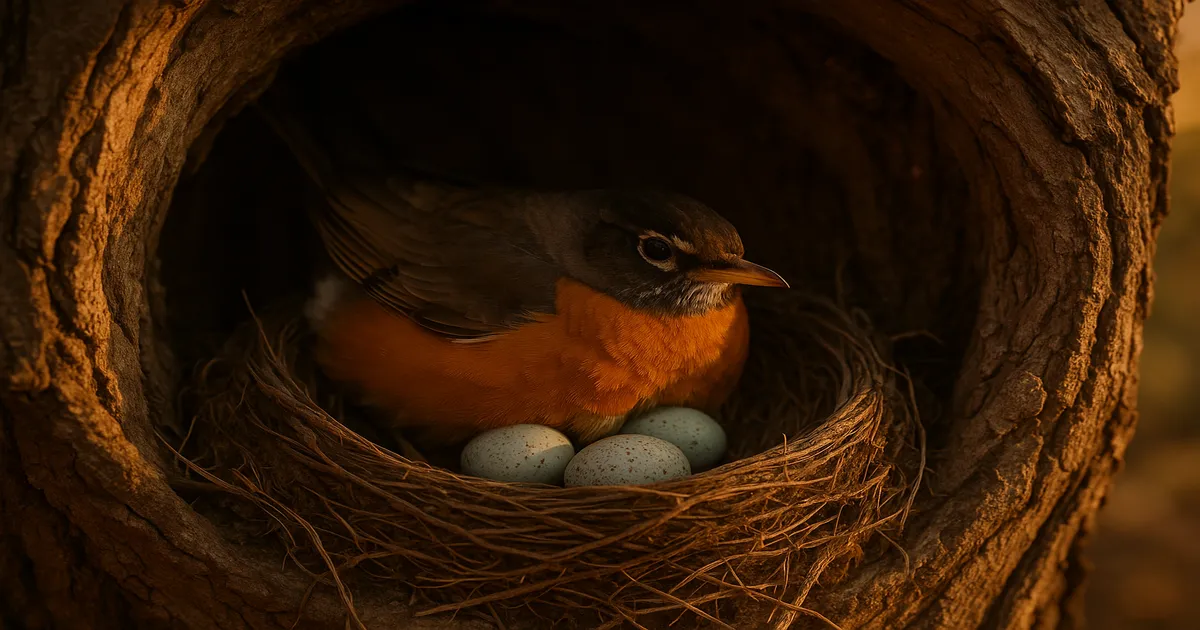
The color comes from biliverdin, a bile pigment deposited during egg formation. The shade is genuinely vivid — a bright, clean turquoise-blue with no markings. Research suggests the intensity may signal female quality to the male, with brighter eggs correlating with better parental investment. Each egg measures approximately 1.1 × 0.8 inches (28 × 20 mm).
Clutch Size and Laying
A typical clutch contains 3–5 eggs, with 4 being the average. The female lays one egg per day, usually in the morning, then begins incubating once the clutch is complete.
From Hatching to Fledging
Here’s the realistic timeline from when you find those eggs:
- Incubation: 12–14 days until hatching, performed almost entirely by the female
- Nestling period: 13–15 days in the nest — the chicks grow fast
- Post-fledging dependency: 2–3 weeks after leaving the nest; fledglings follow the male while the female starts her next nest
- Total active nest period: Roughly 5–6 weeks per brood
Robins typically raise 2–3 broods per season, sometimes 4 in warm years or southern locations. The male takes over care of the first brood’s fledglings while the female begins building the second nest, so your garden could be hosting robin activity well into late summer.
Robin Nesting Behavior: What You’ll See
The Run-Stop-Tilt
That classic sequence on the lawn is one of the most recognizable behaviors in North American birdwatching. The robin sprints a short distance, freezes, and tilts its head to one side. The prevailing view is that this is primarily visual — they’re watching for the subtle movement of a worm near the surface — though there’s ongoing debate about whether hearing plays a role too. Either way, it works.
Territorial Behavior and Alarm Calls
In spring, male robins sing persistently from exposed perches — fence posts, TV aerials, treetops — to advertise their territory. They’ll chase rival males aggressively and occasionally attack their own reflection in windows or car mirrors, which looks alarming but is harmless. Near the nest, both sexes give that rapid tuk-tuk-tuk alarm call and may fly low and close to perceived threats. It’s not personal — it’s just a bird doing its job.
Will Robins Abandon a Nest If Disturbed?
This is the question I get asked most often, and the reassuring answer is: probably not. Robins tolerate nearby human activity better than many songbirds. Walking past the nest or briefly looking at it is very unlikely to cause abandonment. Repeated disturbance — standing nearby for extended periods, touching the nest, or letting a cat roam underneath it — is a different matter. Give them space and they’ll be fine.
How to Support Robin Nest and Eggs in Your Garden
What to Do (and Not Do)
Do:
- Watch from a distance — binoculars make a real difference here (Nikon Monarch M5 8x42)
- Keep cats indoors for the full nesting cycle
- Delay pruning, mowing near the nest, or construction work until the young have fledged
- Continue using the garden normally — robins can handle that
Don’t:
- Handle eggs or nestlings
- Move or reposition the nest
- Use pesticides on the lawn or nearby beds — you’ll wipe out the earthworms the parents depend on
Feeding Robins During Nesting Season
Robins won’t touch a tube feeder full of sunflower seeds — they’re simply not built for it. What works is an open tray or platform feeder at ground level, stocked with live or dried mealworms (the single most effective option), soaked raisins (soak them first — hard raisins are a choking risk for nestlings), or halved apples and blueberries. During nesting season the parents are making dozens of foraging trips a day, so a reliable food source nearby genuinely helps.
Water
Robins are strongly attracted to moving water. A standard birdbath is good; one with a dripper or mister is noticeably better. The sound of moving water carries and draws them in reliably. Change the water every couple of days, especially in warm weather.
Garden Planting for Robins
The most useful long-term step is planting for robins’ actual needs:
- Short-mown lawn areas for earthworm foraging
- Native berry-producing shrubs: serviceberry (Amelanchier spp.), dogwood (Cornus spp.), holly (Ilex spp.), crabapple (Malus spp.)
- Leaf litter in beds — it harbors the invertebrates robins forage for in autumn and winter
One thing worth knowing: robins use open-fronted nest ledges, not enclosed nest boxes. A simple open-fronted shelf mounted under an eave works well. A standard enclosed birdhouse won’t attract them.
Legal Protections and Key Threats
Is It Legal to Move a Robin Nest?
No. The American Robin is protected under the Migratory Bird Treaty Act (MBTA), which makes it illegal to harm, capture, or possess robins, their nests, or their eggs without a federal permit. That applies even if the nest is in an inconvenient spot — a gutter, a porch light, a hanging basket. You’ll need to wait until the nest is naturally abandoned before removing it.
The Main Threats to Nesting Robins
Ground-foraging birds like robins are especially vulnerable to domestic cats, and fledglings — which spend several days on the ground before they can fly well — are at serious risk. Keeping cats indoors during nesting season is one of the most meaningful things a garden owner can do.
Window strikes are another significant threat. Robins are among the more commonly affected species, and the numbers across North America are genuinely sobering. Window collision deterrent films are effective and worth fitting if you have large glass panels near the nest. (WindowAlert UV Decals 4-Pack)
The DDT story is worth knowing: robins were among the canary-in-the-coal-mine species whose declining populations helped drive the ban on DDT in 1972. Modern neonicotinoid pesticides remain a concern, and West Nile Virus continues to cause mortality in robin populations.
How Healthy Are Robin Populations?
The American Robin is one of the most abundant birds on the continent — estimated at around 300 million individuals and listed as Least Concern by the IUCN. The overall population is stable, though some regional declines have been noted. This isn’t a species in crisis, but that’s no reason to be complacent about the threats above.
Frequently Asked Questions: Robin Nest and Eggs in Your Garden
How long does it take for robin eggs to hatch?
Robin eggs hatch after 12–14 days of incubation, performed almost entirely by the female. She begins incubating once the clutch is complete — usually 3–5 eggs laid one per day. From the last egg laid, expect chicks within two weeks.
Will a robin abandon her nest if I get too close?
A single accidental disturbance — walking past, briefly looking at the nest — is very unlikely to cause abandonment. Robins tolerate nearby human activity better than most songbirds. Repeated or prolonged disturbance is a different matter, so give the nest a wide berth and the female will almost certainly keep incubating.
Why are robin eggs blue?
The blue color comes from biliverdin, a bile pigment deposited onto the eggshell during formation. Research suggests brighter, more intensely colored eggs may signal higher female quality, potentially influencing how much the male invests in feeding the chicks. The color fades slightly as the eggs age.
Can I move a robin nest that’s in an inconvenient spot?
Not legally, and not practically either. Moving an active nest is prohibited under the Migratory Bird Treaty Act. Even setting legality aside, relocating a nest almost always results in abandonment. The nesting cycle is only 5–6 weeks — waiting it out is genuinely the easier option.
How many times a year do robins nest?
Robins typically raise 2–3 broods per year, with a fourth possible in warm years or southern locations. The male takes over care of the first brood’s fledglings while the female begins building the next nest, so a pair can keep a garden busy with nesting activity from early spring through late summer.