Quick Answer: Attract northern cardinals by offering black oil sunflower seeds on a platform or hopper feeder, planting dense shrubs and evergreens for shelter, providing fresh water year-round (heated in winter), and avoiding pesticides. Cardinals are non-migratory, so a well-set-up yard can host them every day of the year.
There’s something about that first flash of red against fresh snow that never gets old. Northern cardinals are one of the most sought-after backyard birds in North America, and for good reason — the males are stunning, the females have an understated elegance, and their sharp cheer-cheer-cheer call is instantly recognizable. The good news is that attracting them doesn’t require anything exotic. Cardinals are creatures of habit with straightforward preferences, and once you get the basics right, they tend to stick around.
This guide covers everything you need — feeders, food, shelter, water, and landscaping — to turn your yard into a reliable cardinal destination.
Choose the Right Feeder
Cardinals are stocky, mid-sized songbirds. They weigh around 1.5 ounces and measure 8 to 9 inches long, which matters when you’re picking a feeder. They need a stable perch and enough room to sit comfortably while they eat. Tube feeders with tiny perches? Cardinals will try, fail, and move on to your neighbor’s yard.
Best Feeder Types for Cardinals
| Feeder Type | Cardinal-Friendly? | Why |
|---|---|---|
| Platform / tray feeder | Excellent | Open design, plenty of room, mimics ground feeding |
| Hopper feeder | Excellent | Sturdy perches, covered seed supply, good capacity |
| Tube feeder | Poor | Perches too small, ports too narrow for their beaks |
| Ground feeding | Good | Cardinals naturally forage on the ground |
| Window feeder | Fair | Works if the ledge is wide enough |
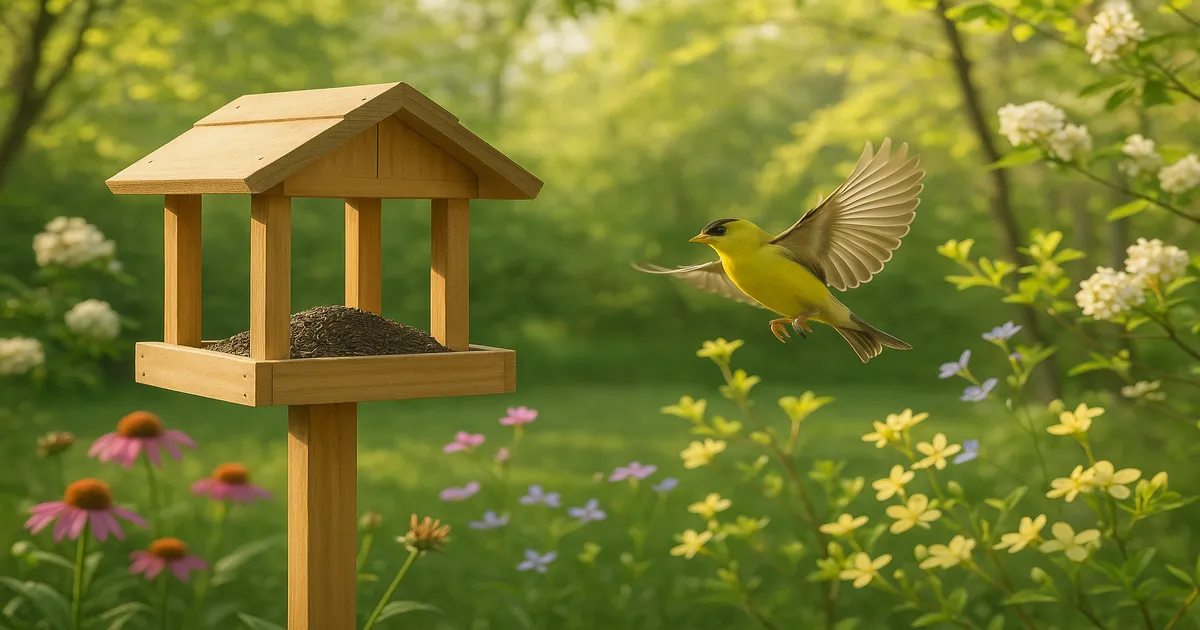
Platform feeders are the single best option. They’re simple — essentially a flat tray, sometimes with a roof — and they match how cardinals naturally eat. In the wild, cardinals spend a lot of time foraging on the ground, picking through leaf litter for seeds and insects. A platform feeder at hip height is basically an elevated version of that behavior.
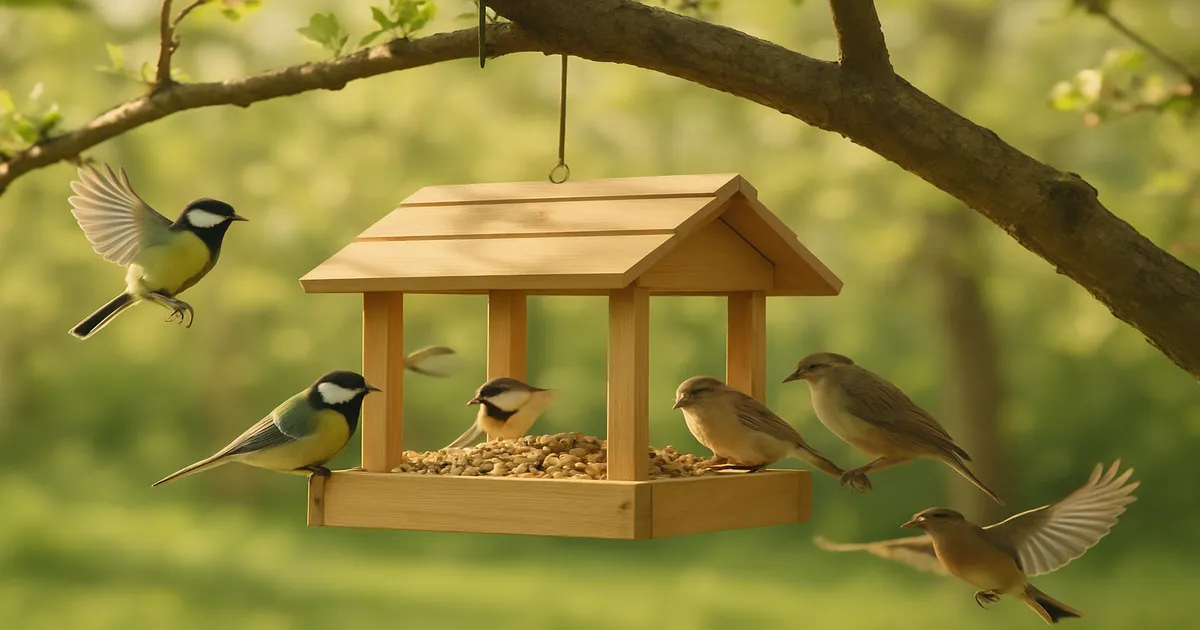
Hopper feeders are a close second. They hold more seed, keep it drier, and still offer the wide ledges cardinals need. Look for one with a weight-sensitive perch if squirrels are a problem.
Feeder Placement Tips
- Place feeders 10 to 15 feet from dense shrubs or trees. Cardinals like a quick escape route but won’t feed in deep cover.
- Avoid wide-open areas with no nearby shelter — cardinals are cautious and want cover close by.
- Mount feeders at 4 to 6 feet off the ground. This height suits their comfort zone and makes squirrel baffles more effective.
- Cardinals are early risers and late feeders. They’re often the first birds at the feeder at dawn and the last ones before dark, so keep feeders stocked.
Feed Them What They Actually Want
I’ve tried every seed mix on the market — cardinals ignore most of them. They’ll pick through a generic blend, toss the milo and millet aside, and eat only the sunflower seeds. Save yourself the mess and give them what they’re after from the start.
Black Oil Sunflower Seeds: The Best Choice
Black oil sunflower seeds are the undisputed champion for cardinals. They have thinner shells (easier for cardinals to crack), higher fat content, and more meat per seed than striped sunflower. Cardinals will eat them all day, every day, every season.
Safflower seeds are a strong secondary option. Cardinals like them, and most squirrels and grackles don’t — which is a useful combination if you’re dealing with feeder bullies.
What Cardinals Eat: A Complete Breakdown
| Food Type | Examples | When They Eat It |
|---|---|---|
| Seeds | Black oil sunflower, safflower, cracked corn | Year-round staple |
| Berries and fruit | Dogwood, mulberry, wild grape, sumac | Fall and winter |
| Insects | Beetles, crickets, caterpillars, grasshoppers | Spring and summer (especially when feeding young) |
| Buds and blossoms | Elm, maple buds | Early spring |
During nesting season, cardinals shift heavily toward insects. Up to a third of their diet becomes protein-rich bugs, which is another reason to avoid pesticides — you’re eliminating their food source right when they need it most.
Plant Dense Shelter and Nesting Cover
You can have the best feeder and seed on the block, but if your yard is a barren lawn with a few ornamental trees, cardinals won’t stay long. They need dense cover for roosting, nesting, and hiding from predators like hawks and cats.
Best Shrubs and Trees for Cardinals
Cardinals nest in thick, tangled vegetation, typically 3 to 10 feet off the ground. They favor:
- Evergreens — Eastern red cedar, arborvitae, dense spruce, and holly. These provide year-round cover, which is critical for a bird that doesn’t migrate.
- Dense deciduous shrubs — Privet, dogwood, hawthorn, and dense viburnums. These offer summer nesting sites and often produce berries.
- Thickets and hedgerows — If you have room, let a section of your yard grow a little wild. A mix of native shrubs planted close together creates exactly the kind of tangled cover cardinals prefer.
Berry-Producing Plants Cardinals Love
Planting berry-producing natives does double duty — shelter and food. Cardinals regularly eat berries from:
- Dogwood (Cornus spp.) — a top-tier cardinal plant
- Winterberry holly (Ilex verticillata) — bright red berries persist into winter
- Eastern red cedar (Juniperus virginiana) — berries and dense evergreen cover
- Mulberry — messy but productive; cardinals go through them fast
- Staghorn sumac — clusters of fuzzy red berries last well into winter
- Wild grape — let it climb a fence or trellis
If you’re starting from scratch, prioritize a few evergreens for immediate year-round cover, then fill in with berry producers. Within two to three seasons, you’ll have a yard that practically runs itself.
Provide Water Year-Round
Fresh water is one of the most overlooked tools for attracting cardinals. Every bird needs to drink and bathe, and in areas where natural water sources freeze in winter, a reliable water feature can be the single thing that sets your yard apart.
Birdbath Basics
- Use a shallow basin — 1 to 2 inches deep at the center, with a gradual slope. Cardinals are medium-sized but still prefer shallow water.
- Place it near cover but not directly under branches where predators could ambush from above.
- Change the water every 2 to 3 days in warm weather to prevent mosquito breeding.
Winter Water Matters
This is where a lot of birders miss an opportunity. When temperatures drop below freezing and every puddle and stream turns to ice, a heated birdbath becomes a magnet for wildlife. Cardinals don’t migrate — they’re dealing with the same cold you are — and they need liquid water every single day.
A simple birdbath de-icer or a birdbath with a built-in heating element keeps water just above freezing without running up your electric bill. It’s one of the most effective winter birding investments you can make.
Stop Using Pesticides
This one is straightforward. Pesticides kill the insects that cardinals feed to their young. Herbicides eliminate the native plants that produce the seeds and berries cardinals depend on. If you’re spraying your yard regularly and wondering why you don’t see many birds, there’s your answer.
Cardinals eat a significant amount of insects during breeding season — beetles, caterpillars, crickets, and grasshoppers. A pesticide-treated lawn is a food desert for nesting birds.
You don’t have to let your yard go completely feral. But shifting toward organic lawn care, tolerating a few aphids, and letting native plants do their thing will make a measurable difference in the number of birds your yard supports — not just cardinals, but dozens of species.
Understand Cardinal Behavior
Knowing a few things about how cardinals operate will help you set up your yard more effectively and appreciate what you’re seeing at the feeder.
Male vs. Female Cardinals
The bright red male gets all the attention, but the olive-brown female is the one doing most of the work during nesting season. She builds the nest, incubates the eggs, and does the majority of feeding for the first brood. The male’s job is to defend territory, sing, and bring food to the female while she’s on the nest.
One of the more charming cardinal behaviors: during courtship, the male will pick up a seed and feed it directly to the female, beak to beak. If you see this at your feeder in early spring, nesting is imminent.
Year-Round Residency
Unlike warblers or tanagers, northern cardinals do not migrate. They’re year-round residents across their range, which spans most of the eastern and central United States and extends into Mexico. This means your investment in feeders, shelter, and water pays off twelve months a year. The pair that visits your feeder in July will likely be the same pair cracking sunflower seeds in January.
Ground Feeding Habits
Cardinals spend a surprising amount of time on the ground. You’ll often see them hopping through leaf litter under feeders, picking up dropped seeds. Some birders scatter a small amount of seed directly on the ground or on a low tray to accommodate this preference. If you do, keep the area clean and remove old, wet seed regularly to prevent mold.
Honestly, some of my most reliable cardinal sightings aren’t at the feeder at all — they’re underneath it, working through whatever the finches and chickadees knocked down.
A Simple Setup That Works
If you’re starting from zero and want cardinals visiting within a few weeks, here’s the minimum effective setup: