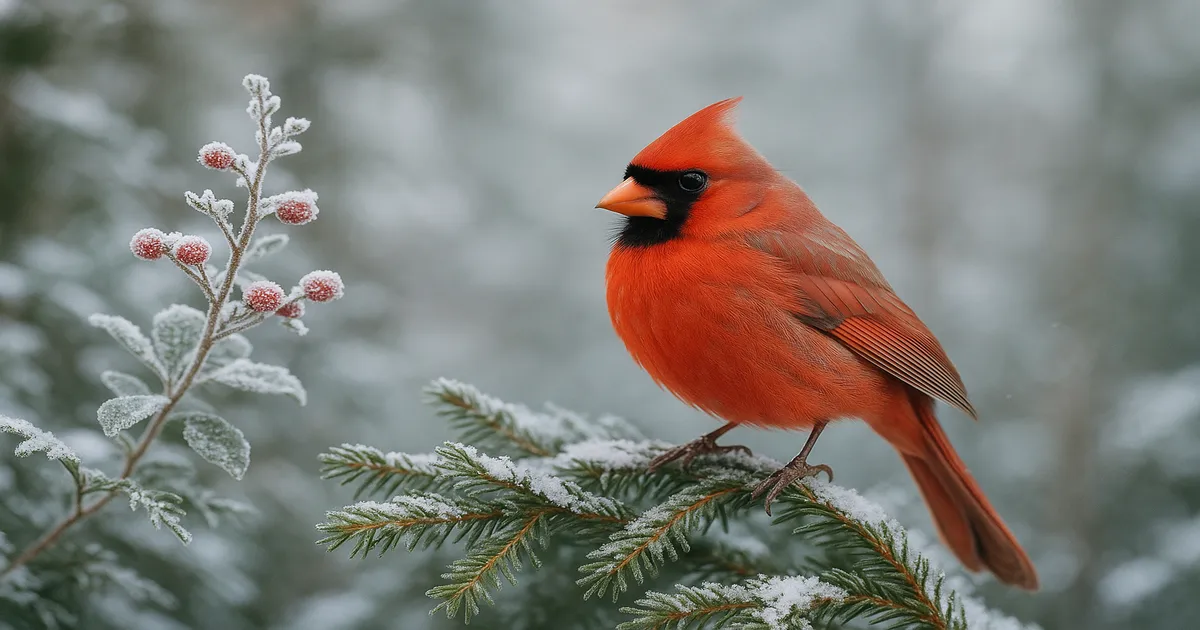
Quick Answer: That brilliant red bird with a crest in your yard is almost certainly a Northern Cardinal (Cardinalis cardinalis) — and no, it’s not rare. With an estimated 120 million individuals across North America, it’s one of the most common backyard birds on the continent. If the bird you’re puzzling over is buffy-brown with reddish tinges and a crest, that’s a female Northern Cardinal, not a different species entirely.
What Is This Bird? Identifying the Northern Cardinal
The Most Likely Candidate
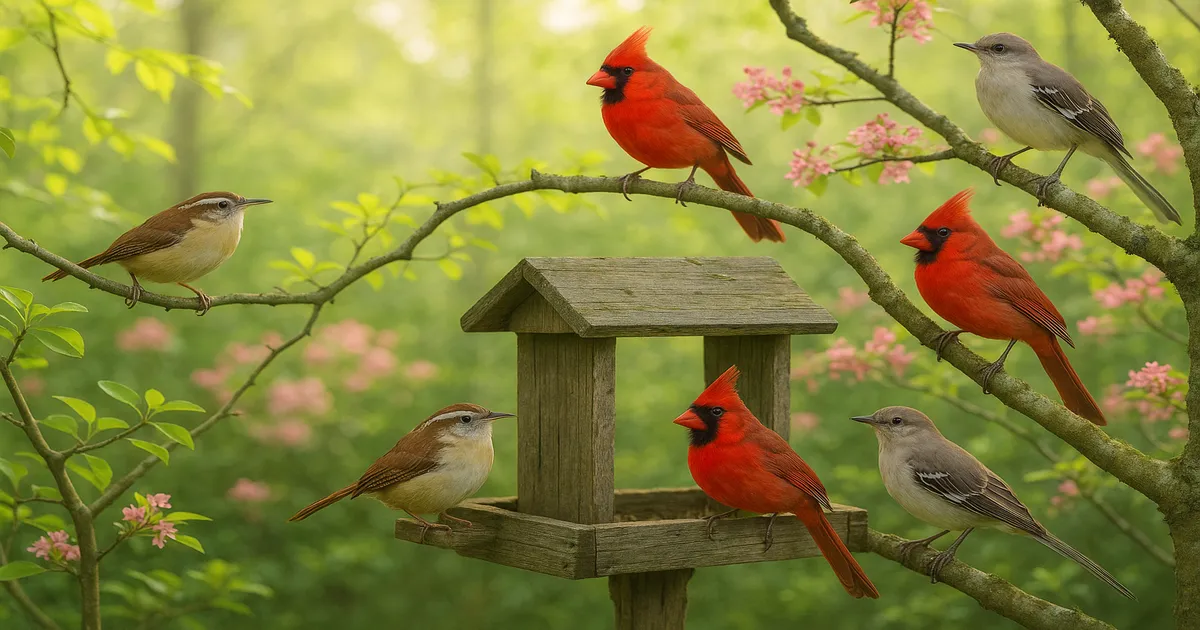
If you spotted a stunning all-red bird with a pointed crest and a thick orange-red bill, you’ve already solved the mystery. That’s a Northern Cardinal — the single most-searched “what is this bird?” species in North America, and for good reason. The male is genuinely one of the showiest birds on the continent.
The female is where most people get tripped up. She’s warm buffy-brown with reddish wings, tail, and crest, plus that same chunky orange-red bill. She looks so different from her mate that she generates her own flood of identification questions every year. Same species, totally different look.
Is It Rare?
Not even close. The Northern Cardinal is a year-round resident across a vast swath of North America, and its population is actually growing. Millions of birders see them every single day. That said, “common” doesn’t mean unimpressive — a male cardinal on a snow-dusted branch is a genuinely spectacular sight, and their behavior will surprise you once you start paying attention.
How to Identify the Northern Cardinal
Male Cardinal: Field Marks at a Glance
The male is hard to mistake once you know what you’re looking at:
- All-red body — the only entirely red crested bird in North America
- Bold black mask covering the face, throat, and chin
- Bright orange-red conical bill — thick and powerful, built for cracking seeds
- Prominent triangular crest raised when alert, flattened when relaxed
- Long, rounded tail, slightly darker red than the body
No seasonal plumage change to worry about — males look essentially the same year-round.
Female Cardinal: The Bird Everyone Gets Wrong
The female Northern Cardinal is one of the most misidentified birds in North America. She’s warm buffy-brown overall with distinct reddish tinges on her crest, wings, and tail. Her mask is softer and less defined than the male’s, but it’s there. That thick, conical orange-red bill? Identical to his — and it’s your single best field mark for confirming she’s a cardinal and not something else entirely.
New birders routinely submit female cardinal photos thinking they’ve found something exotic. Once you clock that bill shape and the crest, the ID clicks immediately.
Juvenile Cardinals: One Key Field Mark Gives Them Away
Juveniles look similar to the female — buffy-brown with reddish tinges — but with one dead-giveaway difference: their bill is dark gray to blackish rather than orange-red. That dark bill is the most reliable way to separate a young bird from an adult female. By late fall of their first year, juveniles begin molting into adult-like plumage, and young males show patchy red coming in gradually through their first winter.
Size, Shape, and That Unmistakable Crest
Cardinals are stocky and full-chested, measuring about 8.75 inches (22 cm) from bill tip to tail — roughly robin-sized but chunkier. Wingspan runs 10–12 inches (25–31 cm). That large triangular crest is the silhouette feature that gives them away even in low light. A decent pair of binoculars makes confirming these field marks much easier from across the yard. (Nikon Monarch M5 8x42)
Calls and Songs: Identify a Cardinal by Ear
The cardinal’s song is loud, clear, and carries a long way — a series of slurred whistles often described as cheer-cheer-cheer or birdy-birdy-birdy. You’ll also hear a sharp, metallic chip note from dense shrubs, one of the most distinctive call notes in backyard birding once you learn it.
Both sexes sing, which is unusual among North American songbirds. The female often sings from the nest, likely to signal food needs to the male. If you hear cardinal song and can’t find a red bird, look for the buffy-brown one.
Where Do Northern Cardinals Live?
Range Across North America
The Northern Cardinal doesn’t migrate — at all. It’s a permanent year-round resident wherever it lives, covering an enormous chunk of the continent: all of the eastern U.S. from Maine south through Florida, west through the Great Plains, and into the Southwest (Arizona, New Mexico, and parts of southern California). Cardinals have also pushed north into southern Canada — Ontario, Quebec, and even Nova Scotia — over the past century, with introduced populations in Hawaii and Bermuda.
Why Cardinals Love Suburban Yards
Cardinals are edge birds. They thrive at the interface between open areas and woodland — hedgerows, brushy thickets, shrubby garden borders, and overgrown fence lines. They avoid dense, unbroken forest interior and open grassland without shrub cover. Suburban yards, with their mix of ornamental shrubs, open lawn, and feeders, are basically purpose-built cardinal habitat.
A hundred years ago, cardinals were largely absent from New England and the upper Midwest. Suburban development created ideal edge habitat, bird feeders provided reliable winter food, and milder winters reduced cold-weather mortality. The result has been one of the most dramatic range expansions of any North American songbird — and it’s still ongoing.
Northern Cardinal Behavior: What You’re Seeing in Your Yard
Why Is That Red Bird Attacking My Window?
Simple answer: the male sees his own reflection and thinks it’s a rival. During breeding season, territorial instincts run high, and he’ll attack that “intruder” relentlessly — sometimes for weeks. Nothing is wrong with the bird. The fix is to break up the reflection using window decals or exterior screens applied to the outside of the glass.
Mate Feeding: The ‘Kissing’ Cardinals Explained
If you’ve seen two cardinals touching bills at your feeder, you’ve witnessed mate feeding — a courtship behavior where the male passes a seed beak-to-beak to the female. It genuinely looks like a kiss. This continues while the female incubates eggs, likely helping her stay on the nest longer. It’s one of the best things to watch at a winter feeder.
Flock Behavior and Daily Rhythm
Outside of breeding season, cardinals form loose flocks of 5–20 or more birds, often mixing with other species at feeders. There’s a clear pecking order — males dominate females, adults dominate juveniles. Cardinals are most active at dawn and dusk, typically the first birds at the feeder in the morning and the last ones as light fades. In summer they disappear into dense shade during the hottest part of the day; in winter they’re more active throughout.
What Do Northern Cardinals Eat? Feeder Tips
Natural Diet
Seeds dominate the cardinal’s year-round diet. Wild favorites include dogwood (Cornus spp.), wild grape (Vitis spp.), mulberry (Morus spp.), holly (Ilex spp.), and pokeweed (Phytolacca americana). During breeding season, insects become much more important — beetles, caterpillars, grasshoppers, and spiders are all fair game, and nestlings are fed almost exclusively on insects.
Best Foods and Feeders
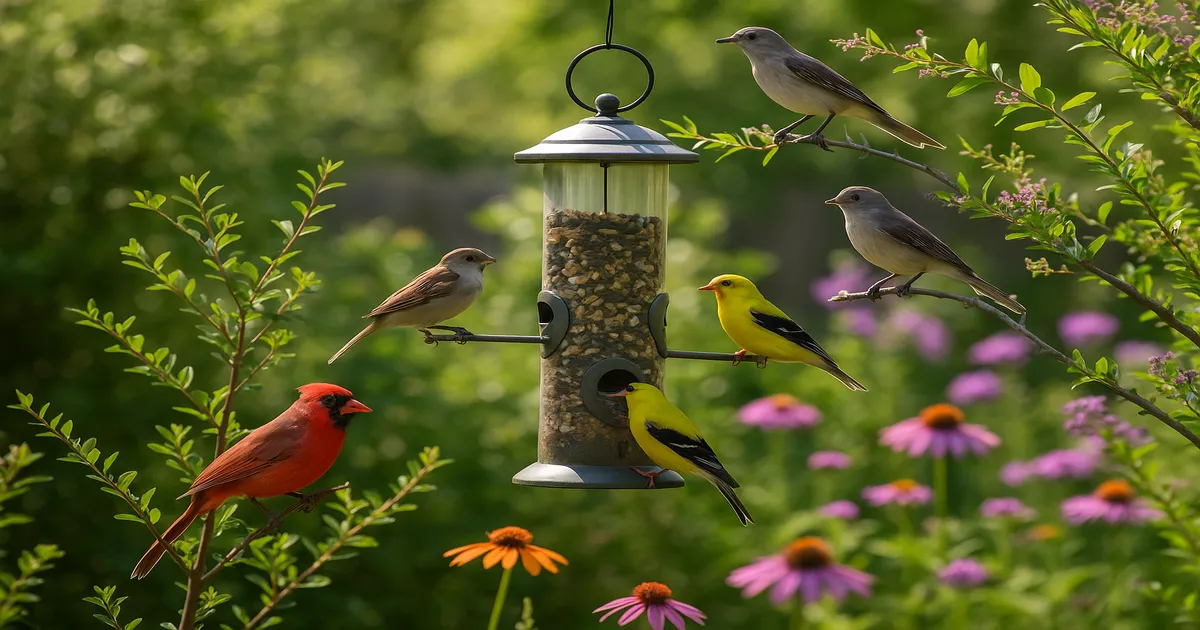
Black-oil sunflower seeds are the answer, full stop. The thin shell is easy for their powerful bill to crack. Safflower is a strong second choice — squirrels and European Starlings tend to leave it alone, so you get more cardinals and fewer freeloaders. White proso millet, cracked corn, and peanut pieces (out of shell) round out the menu.
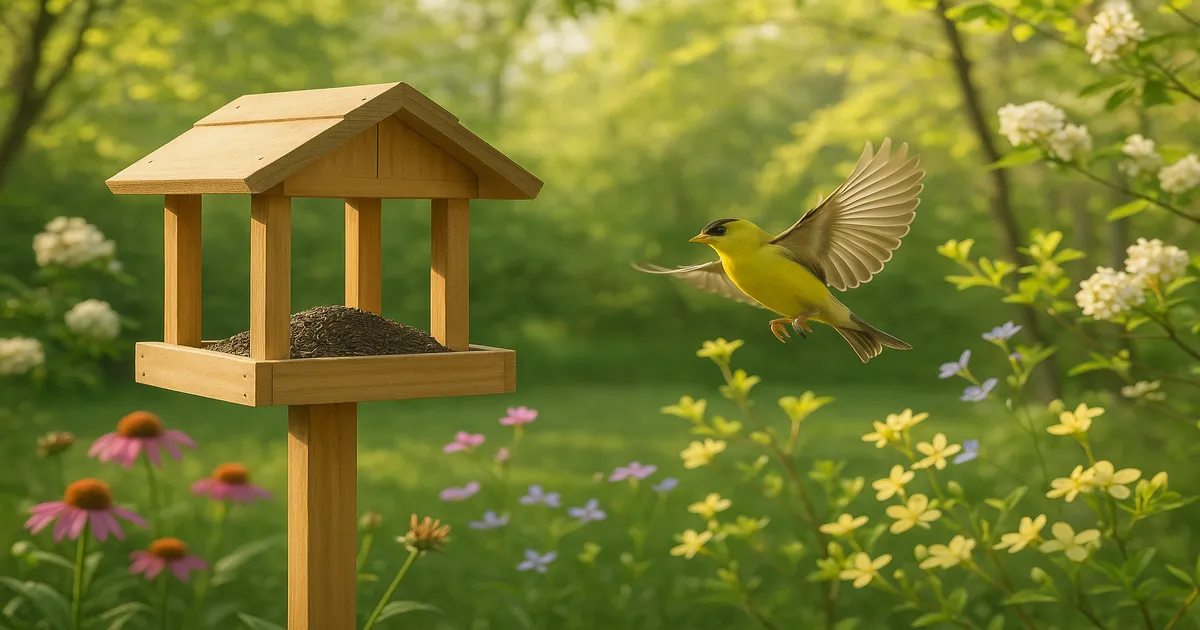
Platform and hopper feeders are the clear winners for feeder style. Cardinals are big birds and want room to perch and turn around — small tube feeders with tiny perches don’t work well for them. They’ll also feed directly on the ground, so scattering seed below your main feeder is a perfectly legitimate strategy.
Fresh water matters too. Cardinals bathe frequently and are strongly drawn to yards with a reliable water source. A heated birdbath in winter is especially effective at pulling them in. Clean it every few days and keep it full.
Birds That Look Like Cardinals: Solving Common Mix-Ups
Pyrrhuloxia: The Southwest Look-Alike
The Pyrrhuloxia (Cardinalis sinuatus) is the one species that genuinely resembles a cardinal — same family, similar crest, overlapping range in Arizona, New Mexico, and Texas. But the Pyrrhuloxia is gray overall with red limited to the crest tips, wings, face, and tail. The bill is the clincher: curved and parrot-like with a yellowish tone, completely unlike the cardinal’s straight conical orange-red bill. If the bill curves, it’s a Pyrrhuloxia.
House Finch and Purple Finch
The House Finch (Haemorhous mexicanus) is the species beginners most often mistake for a cardinal. Both have red on them, but the similarities end there. House Finches are much smaller (about 6 inches / 15 cm), with red limited to the head, breast, and rump, a streaked brown belly, no crest, and no black mask. The Purple Finch (Haemorhous purpureus) throws people off with its raspberry-wine coloring, but it’s heavily streaked, has no crest, and no black mask. The female Purple Finch has a bold white eyebrow stripe — a very useful field mark once you know to look for it.
Quick Comparison Table
| Feature | N. Cardinal | Pyrrhuloxia | House Finch | Purple Finch |
|---|---|---|---|---|
| Size | 8.75 in | 8.75 in | ~6 in | ~6 in |
| Overall Color | All red (♂) | Gray + red accents | Red head/breast only | Raspberry-red, streaked |
| Crest | Yes, prominent | Yes, longer | No | No |
| Black Mask | Yes, bold | Faint | No | No |
| Bill Shape | Thick, conical, orange-red | Curved, parrot-like, yellowish | Small finch bill | Small finch bill |
| Streaking | None | None | Belly streaked | Heavily streaked |
Is the Northern Cardinal Rare? Conservation Status
No. Partners in Flight estimates the population at approximately 120 million individuals, the IUCN lists it as Least Concern, and North American Breeding Bird Survey data shows a stable to slightly increasing trend. By any measure, this is a thriving species.
That doesn’t mean individual birds have it easy. Domestic and feral cats kill an estimated 1.3–4 billion birds annually in the U.S., and cardinals — ground-level foragers that they are — are especially exposed. Window strikes kill an estimated 600 million to 1 billion birds per year, and territorial males flying aggressively near buildings show up frequently in those statistics. Habitat loss of shrubby edge habitat and pesticide reduction of insect prey are real concerns too, even if they haven’t dented the overall population yet.
The actions that actually matter for backyard conservation:
- Keep cats indoors — the single highest-impact thing most people can do for backyard birds
- Apply window collision deterrents — exterior screens, tape patterns, or decals on the outside of glass
- Plant native shrubs — hollies, viburnums, dogwoods, and spicebush provide food and nesting cover
- Reduce or eliminate pesticide use — especially during breeding season when nestlings need insects
- Participate in citizen science — Project FeederWatch and the Great Backyard Bird Count both monitor cardinal populations and contribute real conservation data
Cardinals are protected under the Migratory Bird Treaty Act, making it illegal to harm them, possess them, or take their eggs — worth knowing if you find a nest in your yard.
Frequently Asked Questions
What is this bird — is it rare if it’s all red with a crest?
Almost certainly not. An all-red bird with a prominent crest is a male Northern Cardinal, one of the most abundant birds in North America with a population around 120 million. It’s classified as Least Concern by the IUCN, and its range has been expanding for decades. You’ve spotted a common and thriving species.
What does a female Northern Cardinal look like?
The female is warm buffy-brown overall with reddish tinges on her crest, wings, and tail. She has a softer black mask than the male and the same thick, conical orange-red bill — that bill shape is the best field mark for confirming the ID. She looks so different from the male that she’s frequently reported as an unknown bird, but the crest and bill give her away every time.
Why is a red bird repeatedly attacking my window?
A male Northern Cardinal attacking a window is seeing his own reflection and treating it as a rival male in his territory. This is most common during breeding season (roughly February through August in most of the range) and can persist for several weeks. The most effective fix is to break up the reflection from the outside — window decals or exterior screens both work well. The bird isn’t injured or ill; he’s just being a cardinal.
What is the best food to attract Northern Cardinals to a feeder?
Black-oil sunflower seeds are the top choice — cardinals crack the thin shells easily and strongly prefer them over most other feeder foods. Safflower seeds are an excellent alternative, with the bonus that squirrels and European Starlings tend to avoid them. Offer these in a platform or hopper feeder with enough room for the birds to perch comfortably.
Do Northern Cardinals migrate in winter?
No. Northern Cardinals are year-round, non-migratory residents throughout their entire range. The cardinal at your feeder in January is almost certainly the same bird that nested nearby last spring. They may make very short local movements in response to food availability, but nothing that qualifies as true migration — which is a big part of what makes them such a reliable backyard bird in every season.