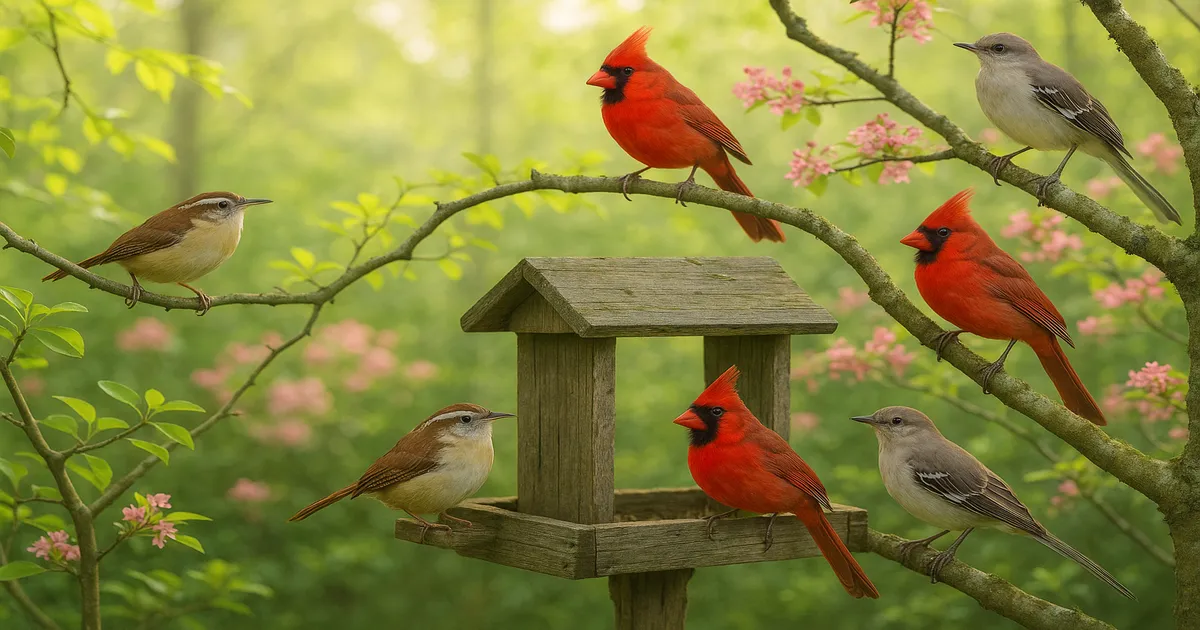
Quick Answer: If you’re searching “what is this bird? South Carolina USA,” you’re probably looking at a Northern Cardinal, Carolina Wren, or American Robin. This guide covers field marks, sounds, behavior, and feeding tips for South Carolina’s most common birds — organized by habitat so you can nail the ID fast.
If you’ve typed “what is this bird? South Carolina USA” into a search bar, you’re in good company. South Carolina is one of the most bird-rich states in the eastern US, and the geography explains why. The state spans five distinct habitat zones — the Blue Ridge foothills, the Piedmont, the Sandhills, the Coastal Plain, and the Atlantic Coast — which means a birder in Greenville and a birder in Myrtle Beach are often looking at completely different species. This guide focuses on the birds most likely to trigger that “what on earth is that?” moment, wherever you are in the state.
What Is This Bird? South Carolina’s Most Common Species
The five birds generating the most identification questions across South Carolina:
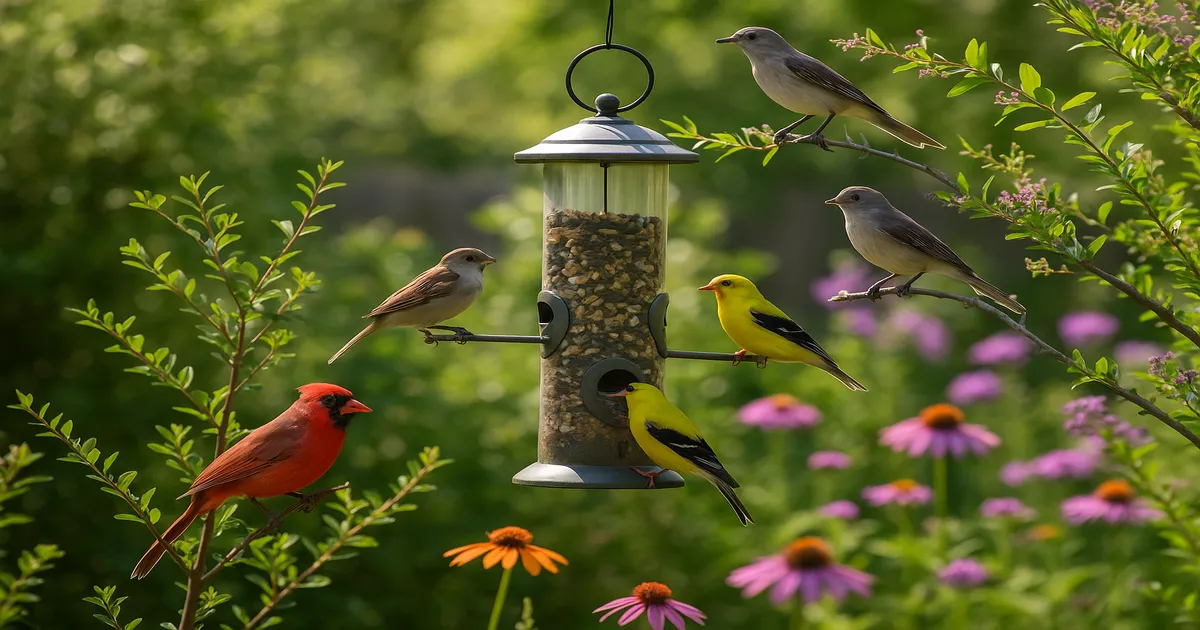
- Northern Cardinal (Cardinalis cardinalis) — brilliant red (male) or warm brown with red tones (female); crested; year-round at feeders statewide
- Carolina Wren (Thryothorus ludovicianus) — small, loud, rufous-brown with a bold white eyebrow stripe; found in every backyard with shrubs
- American Robin (Turdus migratorius) — large thrush with an orange-red breast; common on lawns, especially in winter flocks
- House Finch (Haemorhous mexicanus) — streaky brown with red on the head and upper breast; often confused with the cardinal
- Mourning Dove (Zenaida macroura) — slender, long-tailed gray-brown dove; almost always on the ground or at a feeder
Field Marks: Identifying South Carolina’s Backyard Birds
Northern Cardinal: The Only Crested Red Bird in South Carolina
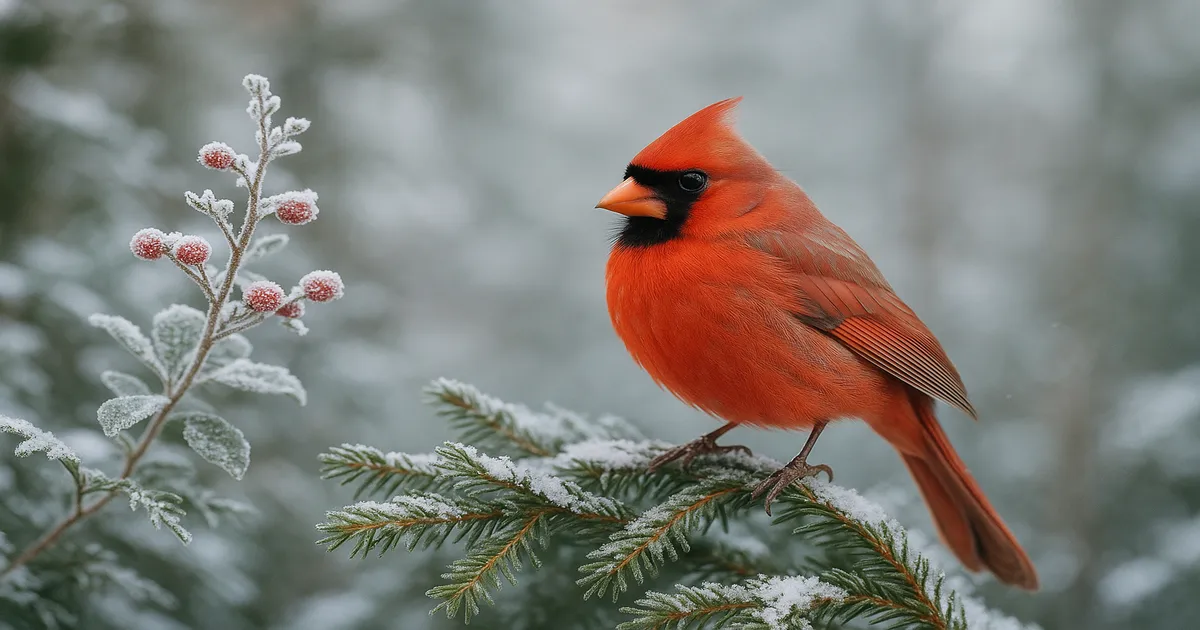
The fastest field mark: it’s the only crested, all-red bird in the state. The male is brilliant scarlet from bill to tail, with a pointed crest and a heavy orange-red bill. The black mask covering the face and throat is distinctive, but if you see a crested red bird at your feeder, you don’t need much else.
Females trip people up constantly. They’re warm buffy-brown with reddish tinges on the crest, wings, and tail — but they keep the same pointed crest and heavy orange-red bill as the male. That bill is the key. A brownish bird with an orange conical bill and a crest is a female cardinal, full stop.
Juveniles look like females but have a dark, dusky bill rather than orange-red. Young males begin showing red patches by late summer of their first year, producing some genuinely confusing in-between plumages.
- Size: 8.75 inches (22 cm)
- Shape: Stocky, long tail, large crested head
- Bill: Very large, conical, orange-red in adults
Carolina Wren: Small, Loud, and Impossible to Miss
The bold white supercilium — that bright stripe above the eye — is your anchor field mark. Pair it with the warm rufous-brown back, buffy-orange underparts, and a tail cocked almost straight up, and you’ve got a Carolina Wren. No other common wren in South Carolina has this combination.
Male and female Carolina Wrens look identical. You genuinely cannot tell them apart in the field. They’re small — about 5.5 inches (14 cm) — but they have an outsize personality and an even more outsize voice.
American Robin: The Large Orange-Breasted Thrush on Your Lawn
Robins are big. At around 10 inches (25 cm), they’re noticeably larger than most backyard songbirds. The brick-red to orange-red breast against a dark gray-black back is the field mark everyone knows. Males have a darker, nearly black head; females are paler with a gray head and softer orange-buff breast.
Juveniles have a heavily spotted breast — typical of thrushes — but the large size and upright posture still give them away.
Quick Visual Comparison: Size, Color, and Key Field Marks
| Species | Length | Key Color | Crest | Bill Shape | Habitat |
|---|---|---|---|---|---|
| Northern Cardinal | 8.75 in (22 cm) | Red (M) / Buffy-brown (F) | Yes | Heavy, conical | Backyard, shrubs, edges |
| Carolina Wren | 5.5 in (14 cm) | Rufous-brown / Buffy | No | Slightly downcurved | Dense cover, brush |
| American Robin | 10 in (25 cm) | Orange-red breast | No | Straight, medium | Lawns, open areas |
| House Finch | 6 in (15 cm) | Streaky brown, red head | No | Short, curved | Feeders, suburbs |
| Mourning Dove | 12 in (30 cm) | Gray-brown | No | Small, pointed | Ground, open areas |
Where These Birds Live Across South Carolina
Backyard and suburban birds: Cardinals and Carolina Wrens are genuinely statewide. You’ll find them from the mountains to the coast, as long as there’s some shrubby cover nearby. Cardinals prefer forest edges and hedgerows; wrens want the densest, messiest cover they can find — brush piles, overgrown corners, the gap under your deck.
Coastal Plain and marsh: Head to the ACE Basin or Huntington Beach State Park and the community shifts dramatically. Marsh Wrens replace Carolina Wrens in the spartina grass. Painted Buntings appear along shrubby edges in winter. Robins winter here in enormous flocks — sometimes thousands of birds — moving through open fields and fruiting trees.
Blue Ridge foothills and Piedmont: Upstate South Carolina gets a few species that rarely appear on the coast, including Dark-eyed Juncos in winter and Ruffed Grouse at the highest elevations. Cardinals and wrens remain common up to about 3,500 feet (1,070 m).
Forest interior: Congaree National Park and Francis Beidler Forest in the Four Holes Swamp are exceptional sites. Beidler in particular is prime Carolina Wren territory — the swamp forest understory is exactly what they love, and Prothonotary Warblers are a bonus in summer.
Bird Songs: Identify South Carolina Birds by Sound
Northern Cardinal
The cardinal’s song is a loud, clear whistle — “cheer-cheer-cheer” or “birdy-birdy-birdy” or “what-cheer-what-cheer.” One thing that surprises people: female cardinals also sing, which is unusual among North American songbirds. She’ll often sing from the nest. The alarm call is a sharp metallic “chip” — once you know it, you’ll hear it constantly. Cardinals start singing in late winter, sometimes as early as January in South Carolina, which is one of the first signs that breeding season is approaching.
Carolina Wren
I’ve watched people spin around their yard trying to locate the source of this sound, convinced they’re hearing something much larger. The Carolina Wren’s song — a ringing “tea-kettle, tea-kettle, tea-kettle” — is shockingly loud for a bird that weighs less than an ounce. Males sing every month of the year, including January and February, making them one of the easiest birds to locate by sound in the dead of winter. The alarm call is a harsh, scolding “cheh-cheh-cheh” that you’ll recognize immediately once you’ve heard it.
American Robin
The robin’s song is what most people picture when they think of birdsong — a rich, rolling “cheerily, cheer-up, cheerio.” They start before dawn and are often the last bird singing at dusk. The call note is a sharp “tut-tut-tut” and the flight call is a high “seep.”
Sound Apps Worth Using
Merlin Bird ID by Cornell Lab is the one I recommend without hesitation. The Sound ID feature identifies birds in real time through your phone’s microphone, and it works remarkably well across South Carolina’s varied habitats. It’s free and covers every species in this guide. Pair it with eBird to see what’s been reported recently at locations near you.
Behavior Clues for South Carolina Bird ID
How the bird moves: Robins run across lawns in a stop-run-tilt pattern — sprint a few steps, freeze, tilt the head to spot a worm. Cardinals hop along the ground beneath feeders. Carolina Wrens creep and hop through dense cover, probing bark and leaf litter with that slightly downcurved bill.
Tail position: The cocked tail is the Carolina Wren’s signature. When a wren perches, that tail goes almost straight up — you’ll recognize it instantly after seeing it once. Cardinals sit with the tail hanging down and the crest raised when alert.
Flock behavior: Carolina Wrens are almost never in flocks. They travel in pairs year-round, staying within a few feet of each other throughout the day. Cardinals are loosely social in winter — 10 or 15 at a feeder at once is common. Robins winter in massive flocks and move through fruiting trees like a wave.
Why that red bird is attacking your window: It’s a territorial response to a reflection. The male cardinal sees his own image and interprets it as a rival. He’ll attack repeatedly, sometimes for weeks. Break up the reflection with window film, strips of fabric hung outside the glass, or soap on the exterior surface. It’s harmless to the bird in most cases, just exhausting to watch. American Robins do the same thing in spring — if a bird is hammering your window, it’s almost certainly one of these two species.
A good pair of binoculars makes a real difference when you’re trying to confirm field marks from inside the house. (Nikon Monarch M5 8x42)
Feeding South Carolina Birds
Northern Cardinals are seed specialists. The single best offering is black-oil sunflower seed on a platform or hopper feeder. Safflower is a close second — and most squirrels and European Starlings won’t touch it, so switching to safflower is an easy way to keep your feeder from being monopolized. Cardinals are too large and heavy for tube feeders with small perches, so stick with a platform or hopper style.
Carolina Wrens are insectivores first. At feeders, suet is their top pick — they’ll cling to a suet cage readily. Live or dried mealworms on a platform feeder are the fastest way to make wrens comfortable visiting your yard. Peanut pieces work well too. They almost never use tube feeders.
American Robins don’t typically use feeders at all. Offer fruiting shrubs instead — dogwood, American holly, and native viburnums are all excellent choices — or put out a shallow birdbath. Robins will hit a birdbath hard, especially in winter. (Allied Precision Industries Heated Bird Bath Model 965)
For nesting: Carolina Wrens take readily to nest boxes with a 1.5-inch entrance hole. A box mounted 5–10 feet up on a fence post or tree, near dense cover, will often be claimed within a season. (Coveside Conservation Products Wren House)
Native Plants That Pull Birds In
For cardinals: dogwood, American holly, viburnum, and elderberry — all native to South Carolina, all producing fruit that cardinals work through fall and winter. Dense shrubs like native azalea and beautyberry provide nesting cover.
For Carolina Wrens: leave a brush pile. A loose pile of branches in a corner of your yard is prime wren habitat and costs nothing.
Look-Alike Species: Don’t Confuse These South Carolina Birds
Red birds that aren’t cardinals: The crest eliminates every other red species immediately.
- House Finch: Red only on the head and upper breast; streaked brown flanks; no crest; much smaller
- Purple Finch (Haemorhous purpureus): Raspberry-washed rather than true red; no crest; notched tail; uncommon winter visitor in SC
- Scarlet Tanager (Piranga olivacea): Brilliant scarlet body with jet-black wings; no crest; slimmer build; summer breeder in SC forests
Brown wrens: The bold white eyebrow is your anchor. A wren with a crisp white supercilium in a suburban or woodland setting is almost certainly a Carolina Wren.
- House Wren: Much grayer-brown; no white eyebrow; smaller; found in SC mainly as a migrant and winter visitor
- Winter Wren: Tiny and very dark brown; heavily barred; extremely short tail; no white eyebrow; found in SC in winter in dense forest
Large thrushes: Juvenile robins have spotted breasts, which can cause confusion with Hermit Thrushes or Wood Thrushes. Size is the key — robins are noticeably larger than either, and the plain gray-brown back (no spots) distinguishes them from most other spotted-breast species.
Seasonal Patterns and Conservation Status
Both the Northern Cardinal and the Carolina Wren are permanent residents — present in South Carolina every day of the year, with no migration. The cardinal has expanded its range northward significantly over the past century, largely because of suburban bird feeding.
Robins are more complicated. Large flocks winter in South Carolina, but the birds nesting in your yard in summer may not be the same individuals that show up in those winter flocks. They’re present year-round as a species, but individual birds move around more than most people realize.
Cardinals and wrens nest from roughly March through August. Cardinals may raise two to four broods; wrens typically raise two or three. Cardinal nests are open cups in dense shrubs, 3–10 feet up. Wren nests are domed structures with a side entrance, built in almost any cavity — hanging flower baskets, old boots, nest boxes, even open garages.
Both species are listed as Least Concern by IUCN, with stable to increasing populations. The main threats to cardinals are window strikes and outdoor cats. Carolina Wrens are vulnerable to severe cold snaps at their northern range limits, but in South Carolina that’s rarely an issue. The bigger ongoing threat for wrens is pesticide use, which reduces the insect prey they depend on year-round.
Best Places to Watch Birds in South Carolina
- Congaree National Park — Cardinals and Carolina Wrens in the forest edges; excellent for forest-interior species year-round
- Huntington Beach State Park — Coastal and shrub-edge species; reliable for Painted Buntings in winter; one of the best all-around sites in the state
- ACE Basin — Marsh and wetland birds; Marsh Wrens, waterfowl, wading birds; extraordinary during migration
- Francis Beidler Forest — Old-growth swamp forest; Carolina Wrens everywhere; Prothonotary Warblers in summer
Early morning is always the most productive time. For cardinals specifically, winter mornings at a well-stocked platform feeder can be spectacular — I’ve counted 20 individuals at once in January. Carolina Wrens sing loudest and most persistently from February through April, making that the easiest time to locate and observe them.
Use eBird’s “Explore” feature to find nearby hotspots and see what’s been reported recently at specific locations near you.
FAQ: What Is This Bird? South Carolina USA
Q: What is the small, loud brown bird singing in my South Carolina backyard? Almost certainly a Carolina Wren. Look for the bold white eyebrow stripe and the tail cocked upward. The song — a ringing “tea-kettle, tea-kettle, tea-kettle” — is surprisingly loud for a bird that weighs less than an ounce.
Q: What is the red bird at my South Carolina feeder? If it has a crest, it’s a Northern Cardinal — the only crested red bird in the state. Males are all red; females are buffy-brown with reddish tinges and the same orange-red bill and crest. House Finches are smaller, lack a crest, and show red only on the head and upper breast.
Q: Are there Painted Buntings in South Carolina? Yes. Painted Buntings breed along the coastal plain from roughly Georgetown County south, and a separate wintering population moves through in fall and winter. Huntington Beach State Park is one of the most reliable spots in the state to find them.
Q: Why is a bird attacking my window? It’s almost always a male Northern Cardinal or American Robin responding to his own reflection. He sees a rival and attacks. Break up the reflection with window film or strips of fabric hung on the outside of the glass. Window alert decals can help prevent strikes year-round. (WindowAlert UV Liquid)
Q: What is the best app for identifying birds in South Carolina? Merlin Bird ID by Cornell Lab is the clear choice. The Sound ID feature listens in real time and identifies birds by their calls — it works well across all of South Carolina’s habitat types and is completely free.