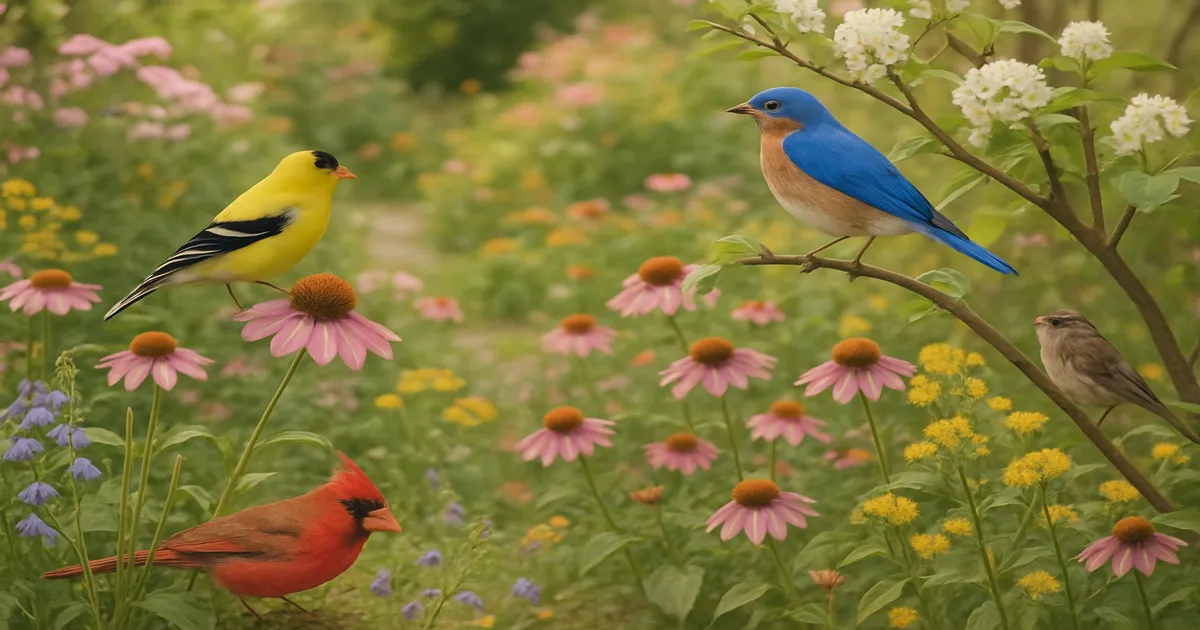
Quick Answer: The fastest way to get bird feed is to grab a bag of black-oil sunflower seed at any Walmart, Tractor Supply, or garden center — it attracts more species than any other single seed. If you’re searching for “Heartopia” specifically, it may be a niche brand or a mobile game; jump to the relevant section below. Place your feeder within 3 feet (0.9 m) of a window or beyond 30 feet (9 m) to protect birds from glass strikes.
Searching for how to get bird feed for a Heartopia feeder — or just trying to figure out what “Heartopia” even means in this context — you’re not alone. The term is genuinely ambiguous, and this guide handles all the possibilities honestly before getting into what actually matters: how to buy, choose, and use bird feed to build an active, healthy backyard feeding station.
What Is Heartopia Bird Feed?
Brand, Game, or Something Else?
Straight answer: “Heartopia” doesn’t appear in any major ornithological database, field guide, or national bird-feed retailer catalog as of this writing. That puts it in one of three categories:
- A niche or regional brand — small-batch bird feed products often fly under the radar of big online indexes
- A mobile or casual game — several bird-themed apps use feeding as a core mechanic
- A misspelling — it may be a brand name you heard rather than read
If you think it’s a physical product, here’s the search sequence worth trying: check Amazon and Chewy first (both carry hundreds of specialty brands), then run a Google Shopping search with the name in quotes. If that turns up nothing, call your nearest wild bird specialty store or farm co-op — staff there know regional brands that never make it to big-box shelves.
If Heartopia is a game, in-game bird feed is almost always earned through daily login rewards, quests, or in-app purchases. The game’s official FAQ or community Discord will give you faster, more accurate answers than I can.
How to Get Bird Feed If You Can’t Find Heartopia Products
Can’t track it down? Start with black-oil sunflower seed. It’s the most versatile option on the market, and the rest of this guide covers everything you need to set up a feeder that actually gets used.
How to Get Bird Feed: Where to Buy
Big-Box and Garden Center Options
You don’t need a specialty store to get started. These carry reliable seed year-round:
- Walmart — usually the cheapest per pound; read labels carefully, quality varies
- Tractor Supply Co. — excellent bulk options, often the best value for high-volume feeders
- Home Depot / Lowe’s — decent selection, especially in spring and fall
- PetSmart — smaller bags and higher price per pound, but convenient in urban areas
Expect to pay roughly $0.50–$0.80 per pound for black-oil sunflower in bulk, and $1.50–$3.00 per pound for premium blends or nyjer (thistle) seed.
Online Sources for Bird Seed and Feeders
Online is where bulk buying makes the most sense. The price-per-pound drops significantly on 20–40 lb bags, and you skip hauling heavy sacks through a parking lot.
- Amazon — wide selection, competitive pricing
- Chewy — strong on suet and specialty blends; good subscription discounts
- Wild Birds Unlimited (wbu.com) — premium blends formulated for regional bird populations
- Duncraft — excellent for feeders and harder-to-find seed types like bulk safflower
Specialty Stores and Co-ops
A Wild Birds Unlimited or similar shop will give you better seed quality and more useful advice than any big-box store. Bulk bins mean you’re not paying for packaging, and fast seed turnover means you’re not getting stale stock. Farm co-ops are an underrated option — they often sell black-oil sunflower in 50 lb bags at prices that make Walmart look expensive.
What to Look for on the Label
Buy it:
- High percentage of black-oil sunflower, nyjer, or safflower
- No artificial dyes
- A clear ingredient list with recognizable seeds
Leave it on the shelf:
- Milo (red sorghum) as a primary ingredient — most songbirds ignore it
- Oats, wheat, or flax as filler — they bulk up weight without attracting birds worth watching
- Cracked corn leading a “songbird blend” — fine for doves and sparrows, but a magnet for European Starlings
Choosing the Right Bird Feed: Seed Types and the Birds They Attract
Black-Oil Sunflower Seed
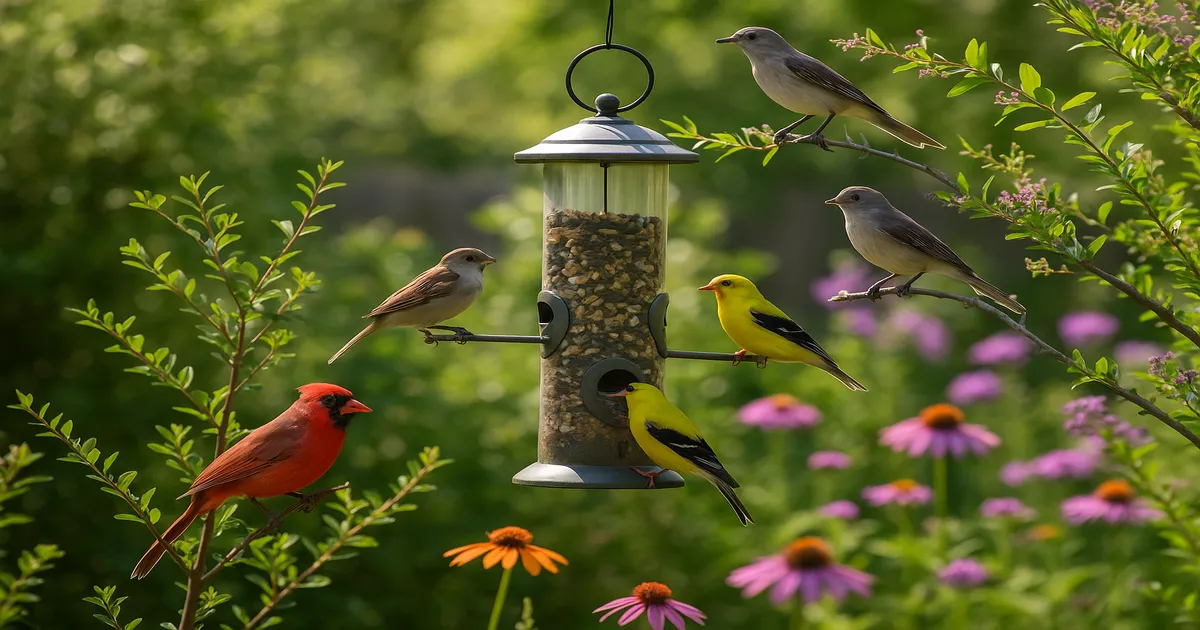
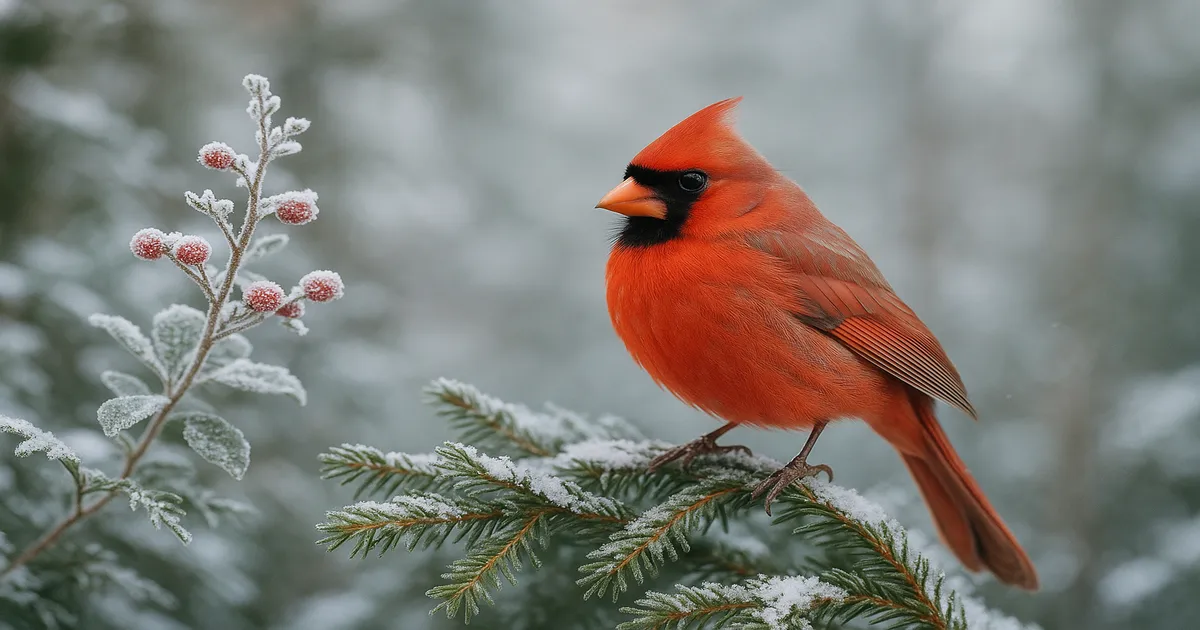
This is the one seed to start with, full stop. Its thin shell is easy for small birds to crack, the kernel is high in fat and protein, and it pulls in an impressive range of species: Northern Cardinal (Cardinalis cardinalis), Black-capped Chickadee (Poecile atricapillus), American Goldfinch (Spinus tristis), House Finch (Haemorhous mexicanus), Dark-eyed Junco (Junco hyemalis), and White-breasted Nuthatch (Sitta carolinensis), among others. Works in tube, hopper, and platform feeders.
Nyjer (Thistle) Seed
Nyjer is the go-to for goldfinches. It’s heat-sterilized to prevent sprouting and requires a tube feeder with small ports — a standard feeder will dump it straight onto the ground. Pine Siskin (Spinus pinus) and Common Redpoll (Acanthis flammea) will also show up at nyjer feeders during winter irruption years. Worth adding if finches are a priority.
Safflower Seed
Safflower has a slightly bitter taste that squirrels and European Starlings (Sturnus vulgaris) tend to avoid — which is reason enough to love it. Northern Cardinals take to it readily, and House Finches and Mourning Doves (Zenaida macroura) will eat it too. Use it in hopper or platform feeders.
White Proso Millet
Scatter this on a low platform tray or directly on the ground for Dark-eyed Juncos, White-throated Sparrows (Zonotrichia albicollis), Song Sparrows (Melospiza melodia), and doves. Especially useful in fall when migrating sparrows are moving through.
Suet Cakes
Rendered beef fat pressed into cakes is hard to beat for Downy Woodpeckers (Dryobates pubescens), Hairy Woodpeckers (Dryobates villosus), White-breasted Nuthatches, and Black-capped Chickadees. Hang a wire suet cage from a tree or feeder pole. Pull suet in summer heat — above roughly 90°F (32°C) it goes rancid and can mat feathers.
Nectar for Hummingbirds and Orioles
Mix your own: 4 parts water to 1 part plain white sugar, boiled and cooled. Skip the red dye — it’s unnecessary and potentially harmful. Ruby-throated Hummingbirds (Archilochus colubris) dominate eastern feeders; Anna’s (Calypte anna), Black-chinned (Archilochus alexandri), and Rufous (Selasphorus rufus) are among the species common at western feeders. Baltimore Orioles (Icterus galbula) will use nectar feeders with larger ports and go after halved oranges with real enthusiasm.
Peanuts and Fruit
Shelled peanut halves bring in Blue Jays (Cyanocitta cristata), Tufted Titmice (Baeolophus bicolor), and woodpeckers. Dried or fresh fruit — raisins, halved grapes, apple slices — attracts American Robins (Turdus migratorius), Cedar Waxwings (Bombycilla cedrorum), and orioles, particularly during migration.
Feeder Types at a Glance
| Feeder Type | Best Feed | Target Species |
|---|---|---|
| Tube feeder | Black-oil sunflower, nyjer | Chickadees, finches, nuthatches |
| Hopper feeder | Sunflower, safflower, blends | Cardinals, jays, finches |
| Platform/tray feeder | Millet, sunflower, peanuts | Doves, sparrows, juncos, jays |
| Suet cage | Suet cakes | Woodpeckers, nuthatches, creepers |
| Nectar feeder | Sugar water | Hummingbirds, orioles |
| Ground tray | Millet, cracked corn | Sparrows, juncos, doves, towhees |
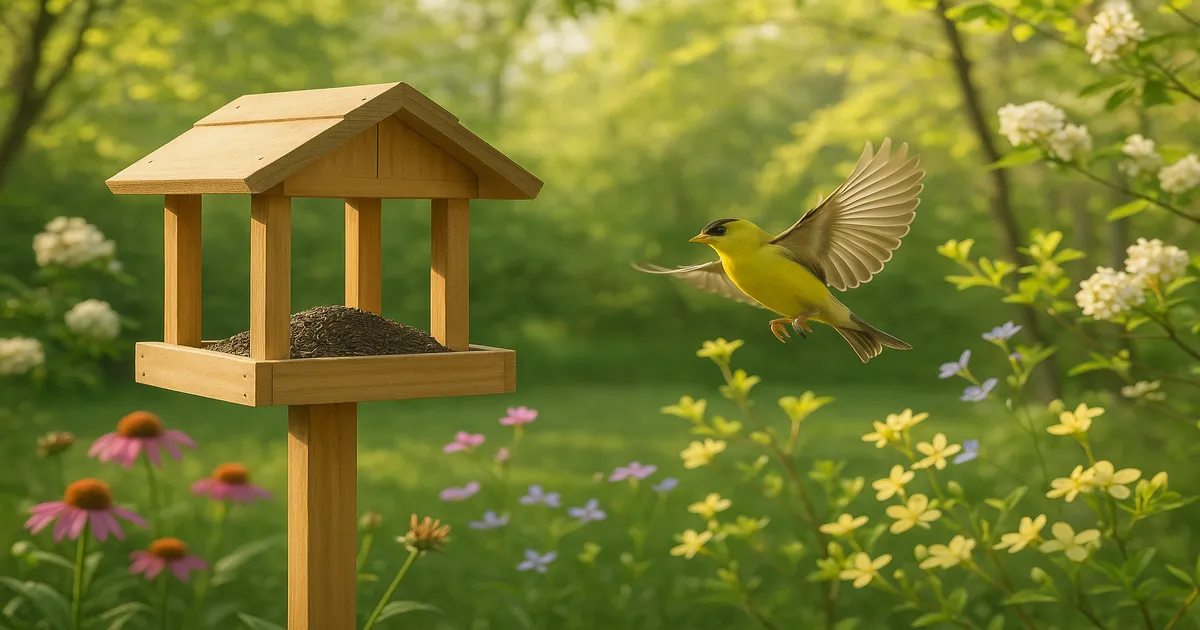
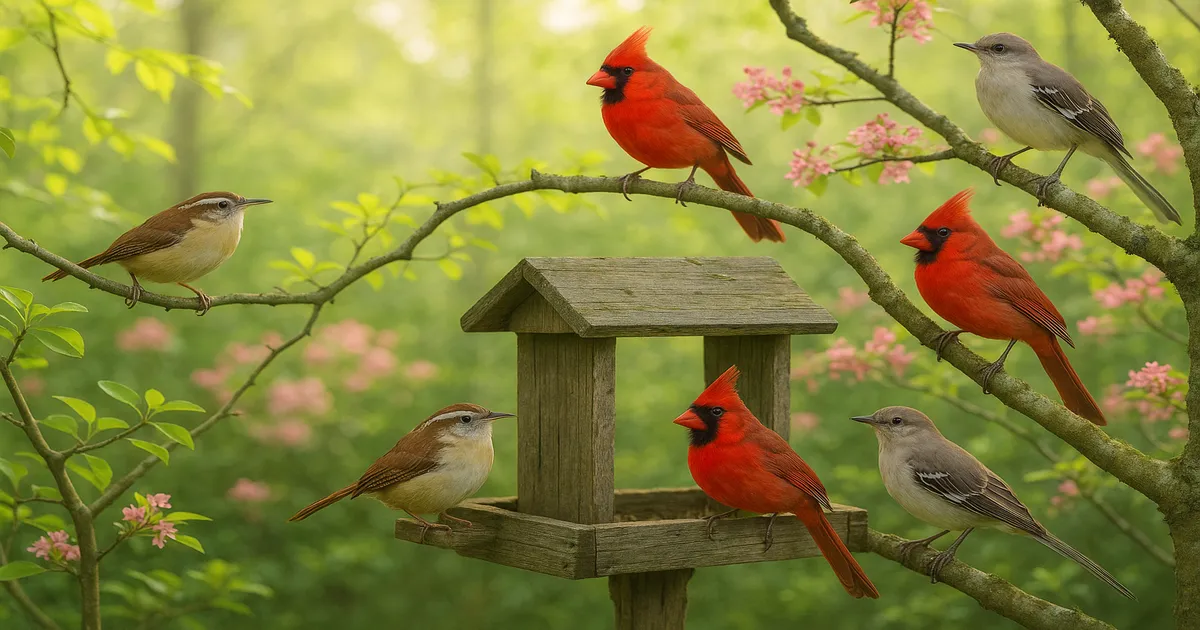
If you’re picking just one feeder to start, go with a platform or hopper. They’re accessible to the widest range of species and easy to fill and clean. Cardinals in particular prefer a stable platform over a swinging tube.
Feeder Placement for Safety and Activity
The 3-Foot / 30-Foot Rule
Window strikes kill an estimated 600 million birds per year in the U.S. — a figure from the most rigorous peer-reviewed estimate (Loss et al. 2014, The Condor); older figures of “up to 1 billion” reflect the high end of a wide range. The Cornell Lab of Ornithology recommends placing feeders either within 3 feet (0.9 m) of glass — so a startled bird can’t build enough speed to injure itself — or beyond 30 feet (9 m) away. The danger zone is 5–25 feet: far enough to accelerate, close enough to hit hard.
If your best placement option falls in that middle range, apply window collision tape or decals to break up the reflection.
Cover, Sightlines, and Water
Place feeders near shrubs or trees so birds have a quick escape route and a staging perch. Don’t bury the feeder in dense cover, though — birds need sightlines to spot approaching cats and hawks. About 10 feet from a shrub edge is a reasonable middle ground.
Moving water is a genuine force multiplier. Birds detect a dripper or fountain by sound and will investigate from surprising distances. A solar-powered dripper added to a birdbath will noticeably increase species variety, especially during migration.
Feeder Maintenance and Seasonal Tips
Cleaning Your Feeder
Clean every 1–2 weeks — weekly in humid summer weather. Dirty feeders spread Salmonella, Aspergillus mold, and House Finch eye disease (Mycoplasma gallisepticum), a bacterial infection that causes swollen, crusty eyes and can devastate local feeder populations. Cleaning is a conservation act, not just housekeeping.
Method: Empty old seed, scrub with hot soapy water using a dedicated brush, soak in a 10% bleach solution (1 part bleach to 9 parts water) for 2–3 minutes, rinse thoroughly, and air dry completely before refilling.
Seasonal Feeding Calendar
- Winter: Peak feeder dependency. Keep feeders full, add high-fat suet, and watch for irruptive species like Common Redpoll and Pine Siskin across the northern half of the continent.
- Spring: Put out nectar feeders by late April across most of North America ahead of returning hummingbirds. Add fruit for migrating thrushes and waxwings.
- Summer: Pull suet when temperatures regularly exceed 90°F (32°C). Expect fledglings at feeders — awkward landings, constant begging calls, the works.
- Fall: Add extra millet and peanuts to catch passing sparrows and migrants. This is one of the most rewarding feeder seasons for sheer variety.
Frequently Asked Questions
What is the best bird feed to attract the most species?
Black-oil sunflower seed covers the most ground — cardinals, chickadees, finches, nuthatches, jays, and more. Add nyjer for goldfinches and white proso millet for ground-feeding sparrows and juncos. Those three seeds together will account for the vast majority of common feeder birds in North America.
How do I get birds to come to my feeder for the first time?
Patience is the main ingredient. Place the feeder near natural cover, use black-oil sunflower seed, and add a water source if you can. Birds need time to discover a new food source — anywhere from a few days to a few weeks. Scattering a small amount of seed on top of the feeder or on the ground nearby can help draw initial attention.
How often should I refill and clean my feeder?
Refill before the feeder runs completely empty — birds will stop visiting if it stays bare for long. Clean every 1–2 weeks with a 10% bleach solution, rinse well, and let it dry fully before refilling. In hot or humid weather, check more frequently for mold or clumped seed.
What bird feed should I avoid?
Skip cheap “wild bird mixes” where milo, oats, wheat, or flax lead the ingredient list — most songbirds kick them out of the feeder onto the ground. Avoid anything with artificial dyes. You’re paying for filler that creates mess and mold under your feeder. Spend a little more on a high-sunflower blend and you’ll get better birds with less waste.
Is it safe to feed birds year-round?
Yes, with a few caveats. Pull suet in summer heat, keep nectar fresh (change it every 2–3 days in warm weather to prevent fermentation), and stay on top of cleaning. In bear country, bring feeders in at night from spring through fall. Otherwise, year-round feeding is fine and genuinely beneficial during harsh winters and migration.