Quick Answer: Learning how to draw a bird easy comes down to one principle — every bird is a collection of basic geometric shapes. Start with ovals and circles for the body and head, add a triangle for the bill, and block in the major color regions. The three best beginner subjects are the American Robin, Black-capped Chickadee, and Northern Cardinal: bold colors, simple silhouettes, and birds you can watch out your window.
All birds reduce to geometry. Once you see a chickadee as two circles or a robin as a horizontal egg, the drawing process stops feeling mysterious and starts feeling manageable. And here’s the part most beginner drawing guides skip: understanding real bird anatomy — actual proportions, actual color regions, actual posture — makes your simplified drawings more recognizable, not less. You don’t need to draw every feather. You need to draw the right shapes in the right places.
This guide covers three iconic backyard birds, each chosen because they’re structurally simple, visually distinct, and easy to observe.
Bird Anatomy Basics Every Beginning Artist Should Know
Key Body Regions That Double as Drawing Landmarks
Before you put pencil to paper, it helps to know what you’re actually looking at on a bird. These aren’t just scientific terms — they’re the color boundaries and structural edges that define a species in a drawing.
- Crown — the top of the head; usually your first color block
- Lore — the small zone between the eye and the bill base; this tiny area affects the bird’s entire “expression”
- Supercilium — the eyebrow stripe above the eye; critical for sparrows and warblers, subtle in the three species here
- Mantle — the upper back; typically the largest single color field on a perched bird
- Wing coverts — layered feathers that create the “panel” look on a folded wing
- Primary projection — how far the wingtip extends past the shorter feathers; longer in migratory species
- Rump — the lower back just above the tail; often a contrasting color
- Tarsus — the visible “leg” (technically the fused tarsometatarsus bone); getting this length right matters enormously
- Culmen — the ridge along the top of the upper bill; its curve defines the bill’s character
Five Essential Body Shapes for Beginner Bird Drawing
| Shape | Example Species | Artist’s Shorthand |
|---|---|---|
| Round/plump sphere | Black-capped Chickadee | Tennis ball body + slightly smaller round head |
| Horizontal oval | American Robin | Egg lying on its side |
| Upright oval | Northern Cardinal | Egg standing on end |
| Slim cylinder | Great Blue Heron | Stacked ovals on stilts |
| Compact wedge | White-breasted Nuthatch | Arrowhead with no visible neck |
Understanding Proportion: Head, Body, Tail, and Leg Ratios
Two details affect species recognizability in a sketch more than anything else: bill shape and tarsus length. A robin with legs that are too long looks like a shorebird. A cardinal with a tiny bill loses its whole personality.
The general rule: most perching birds have a head that’s roughly one-third the length of the body. The chickadee is a notable exception — its head is proportionally much larger, which is exactly what gives it that endearing, round-headed look. Get that ratio right and the species identification almost takes care of itself.
How to Draw a Bird Easy: The American Robin
Robin Size, Shape, and Silhouette for Artists
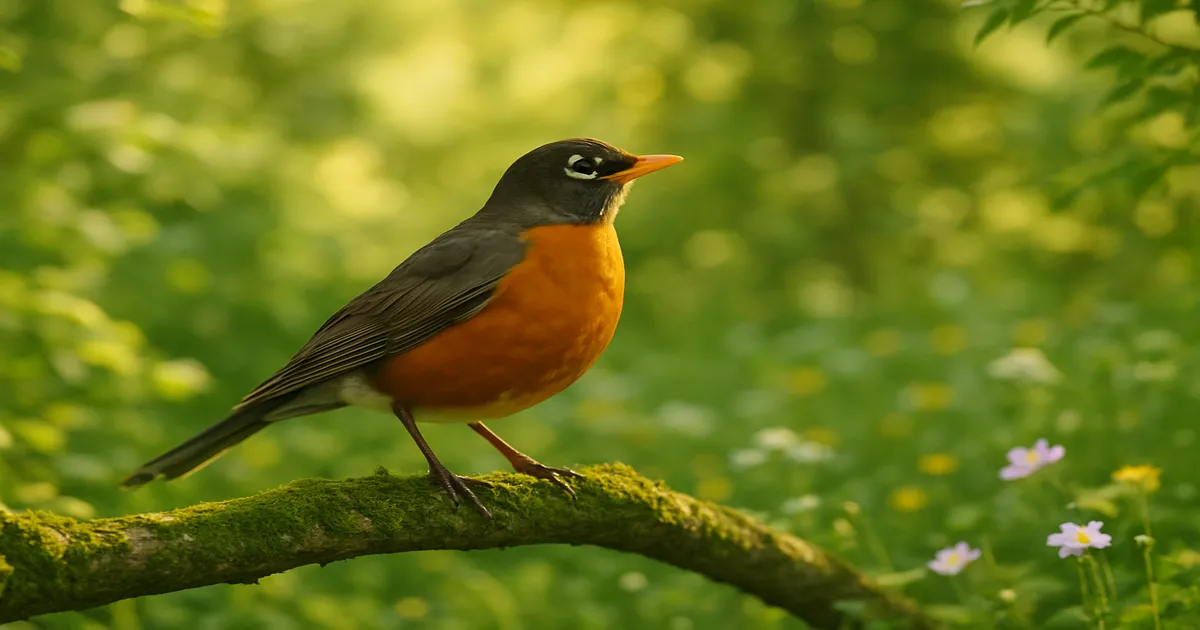
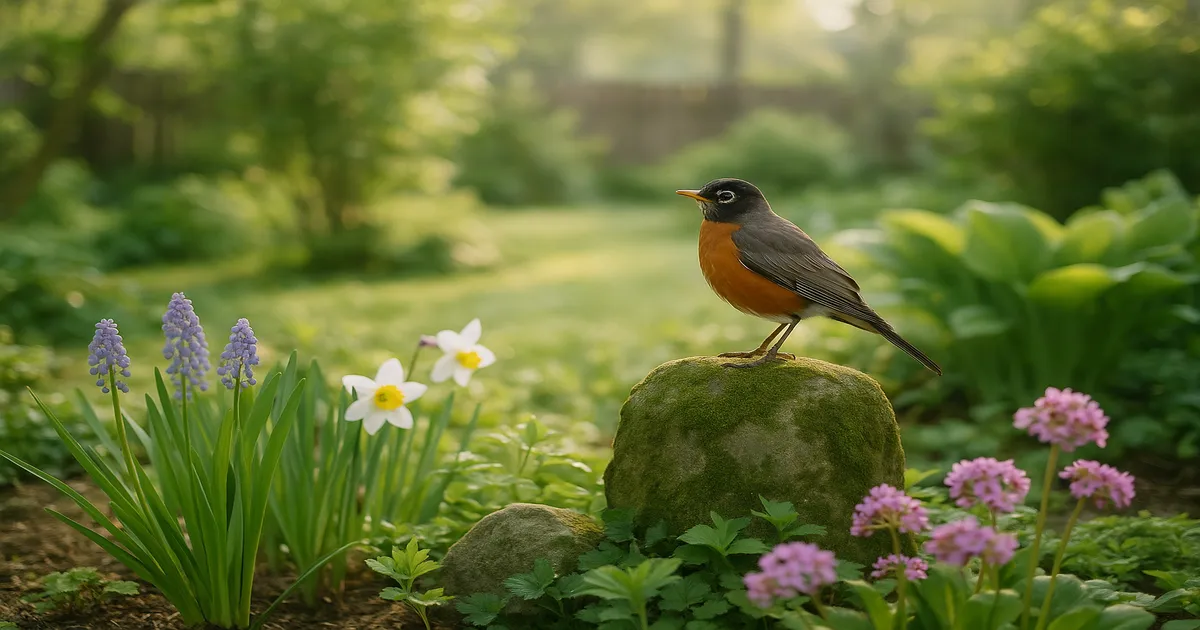
The American Robin (Turdus migratorius) is about 10 inches (25 cm) long with a full, round breast that dominates the silhouette. Think of a horizontal egg — wide in the middle, slightly tapered at both ends — with a smaller circle attached at the front-top for the head. That breast isn’t just decorative; it’s the structural center of gravity for the whole drawing.
The tail is a flat, rectangular fan, not pointed. Keep it wide and squared-off.
Color Blocking the Robin: Two-Tone Contrast Made Simple
The robin’s color scheme is almost perfectly designed for beginners: dark gray-black above, brick-red below. Start your color blocking by dividing the body roughly in half, then let the orange-red shape of the breast dominate the lower two-thirds of the body front.
The back, wings, and tail are all one dark gray-black value — no need to differentiate them at the beginner stage. That clean two-tone contrast is what makes the robin instantly readable from a distance.
Key Details That Make a Robin Recognizable
Once the shapes and color blocks are in place, a few small marks do a lot of work:
- White eye crescents — broken white arcs above and below the eye; skip these and the face looks blank
- Yellow-orange bill — slender and mostly straight, with a very slight downward curve at the tip
- White throat with dark streaking — a small detail that adds character
- White undertail coverts — visible when the bird tilts forward
Male robins have a deeper brick-red breast and a blacker head with strong contrast. Females are paler overall — more washed-out orange-brown on the breast, dark gray rather than black on the head. Drawing from life, the female looks noticeably softer.
Robin Posture and Behavior to Capture
The classic robin pose — upright on a lawn, head cocked to one side — is a foraging posture. Robins use vision (not hearing) to locate earthworms, tilting their head to get a better angle on the ground. It’s a dynamic, characterful pose that’s also structurally simple to draw.
Early spring mornings on dewy lawns are ideal for observation. In winter, check fruiting trees like crabapple and holly — robins gather in flocks and stay put long enough to sketch. Overcast light eliminates the harsh shadows that obscure the dark back.
How to Draw a Bird Easy: The Black-capped Chickadee
Why the Chickadee Is the Best Beginner Bird Subject
The Black-capped Chickadee (Poecile atricapillus) is, in my opinion, the single most beginner-friendly bird subject in North America. It’s 4.7–5.9 inches (12–15 cm) long, and its entire form reduces to two circles and three bold color blocks. There’s almost no way to make it unrecognizable if you get the basic shapes right.
Male and female look identical, which simplifies things further.
Breaking the Chickadee Into Two Circles and Three Color Blocks
Start with a large circle for the body and a slightly smaller circle for the head, overlapping slightly at the neck. Now add three color blocks in this order:
- Black cap — covers the entire crown and nape, from bill base over the top of the head
- Bright white cheek patch — a clean white oval sitting between the cap and the bib
- Black bib — covers the chin and throat, sharply defined against the white cheek
Everything else — the gray back, white belly, buffy flank wash — is secondary detail that adds realism once the basics are locked in.
Getting the Head-to-Body Ratio Right
This is the single most important proportion in a chickadee drawing. The head should look almost as large as the body — bigger than you’d expect. That oversized, round head is what gives the chickadee its characteristic appeal and makes the illustration instantly recognizable. If your chickadee looks wrong, the head is probably too small.
Adding Realistic Detail: Flanks, Wing Edging, and Bill
The gray back and wings have subtle white edging on the feathers — a soft, textured effect you can suggest with a few light strokes rather than drawing every feather. The flanks carry a warm buffy-rusty wash that’s most pronounced in fresh fall plumage.
The bill is short, stubby, and almost conical — very small relative to the head. Don’t exaggerate it. One of the most common mistakes beginners make is drawing chickadee bills too large, which instantly makes the bird look like something else.
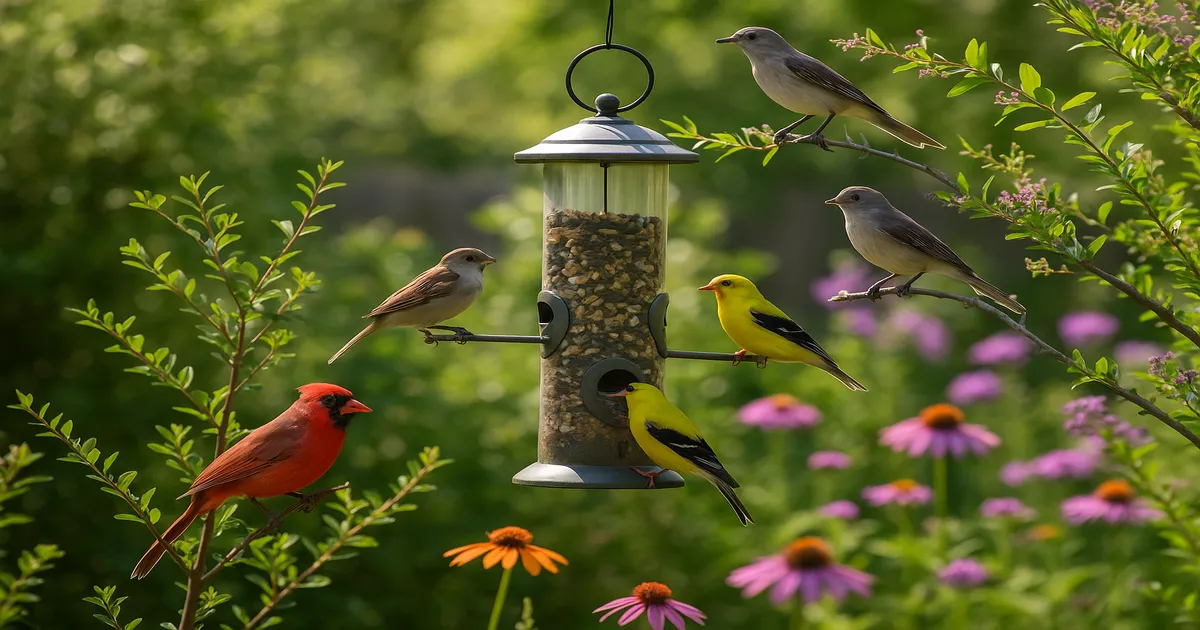
For a dynamic pose, try drawing the chickadee hanging upside-down from a branch tip — a natural foraging posture and one of the most distinctive silhouettes in backyard birding. A tube feeder stocked with black-oil sunflower seeds will give you endless live reference, since chickadees visit constantly and pause on nearby branches after grabbing a seed.
How to Draw a Bird Easy: The Northern Cardinal
Cardinal Shape and Silhouette: The Upright Oval
The Northern Cardinal (Cardinalis cardinalis) is about 8.3–9.1 inches (21–23 cm) long, and its body shape is fundamentally different from the robin’s. Where the robin lies horizontal, the cardinal sits upright — a vertical egg with a long tail extending below. That posture gives the cardinal a proud, alert quality worth capturing.
The tail is relatively long and narrow, not the wide fan of the robin. Keep it slender.
Drawing the Cardinal’s Most Distinctive Features: Crest and Bill
Two features define the cardinal’s silhouette more than anything else.
The crest: A raised, pointed triangular extension of the crown. It’s not always fully erect — a relaxed cardinal holds it lower, an alert one raises it sharply. Either way, it should read as a distinct point above the crown line. Without it, the bird looks like a generic finch.
The bill: Large, conical, and built for cracking tough seeds. It’s much chunkier than the robin’s slender bill — more triangular in profile, with a curved culmen. Don’t undersize it.
Male vs. Female Cardinal: Two Different Color Palettes to Practice
The cardinal offers a rare opportunity to practice two completely different color approaches on the same species.
The male is brilliant all-red with a black mask that encircles the bill base and extends through the lores and around the eye. That mask is a key detail — it frames the face and gives the male cardinal its intense, slightly fierce expression. Without it, the red face looks unfinished.
The female is warm buffy-brown overall, with red-tinged crest, wings, and tail. She’s subtler and honestly more challenging to draw convincingly than the male. The same black mask is present but less dramatic against the brown face. Master the male first, then tackle the female — the contrast in approach is genuinely useful drawing practice.
Capturing the Cardinal’s Upright Perching Posture
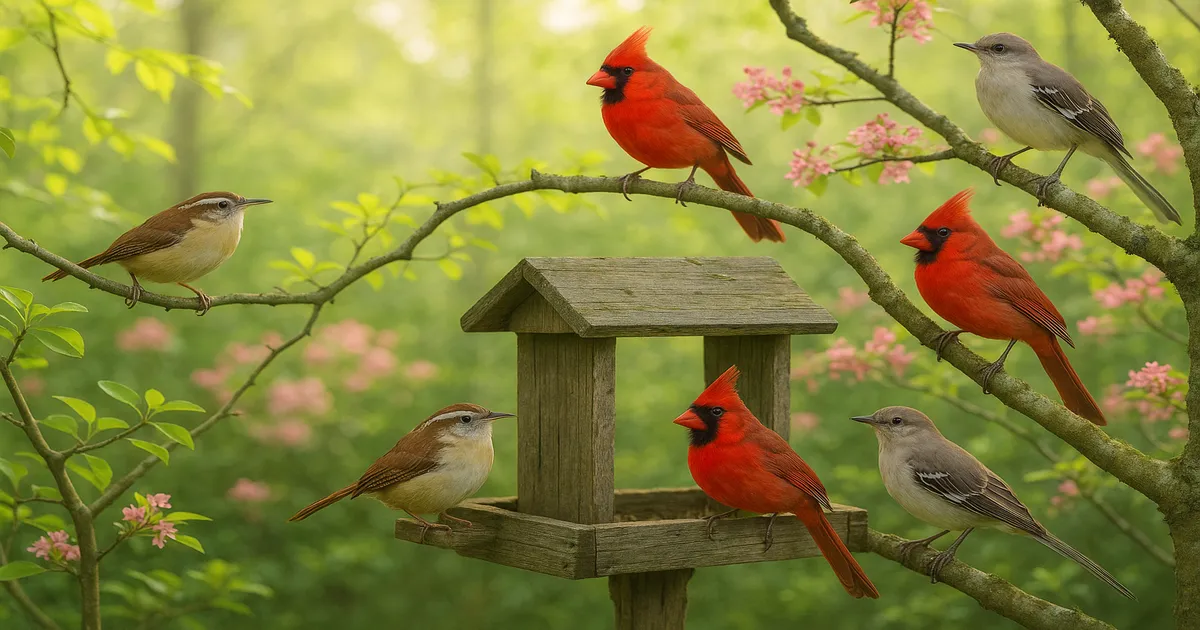
Cardinals tend to visit platform feeders at dawn and dusk. They perch upright and stay relatively still, making them excellent subjects for sketching from a window. The combination of bold color, strong silhouette, and deliberate posture makes the cardinal ideal for practicing confident, decisive color work.
Comparing the Three Species: Shape, Color, and Difficulty
| Feature | Chickadee | Robin | Cardinal |
|---|---|---|---|
| Body shape | Two spheres | Horizontal egg | Vertical egg + crest |
| Head-to-body ratio | Very high (key feature) | Moderate | Moderate |
| Color complexity | Three bold blocks | Two-tone | Bold (male) / Subtle (female) |
| Bill shape | Short, stubby cone | Slender, straight | Large, thick cone |
| Relative difficulty | Easiest | Intermediate | Slightly more advanced |
Which Bird Should You Draw First?
Start with the chickadee. Two circles, three color blocks, no sexual dimorphism to worry about. It’s the most forgiving subject at the beginner stage, and getting the head-to-body ratio right teaches you a proportion lesson that applies to every bird you’ll draw.
Move to the robin next — the horizontal egg body and two-tone color blocking introduce a different silhouette type. The cardinal is the most rewarding of the three but requires the most commitment: crest, heavy bill, and two distinct color palettes.
Common Beginner Mistakes and How Ornithology Fixes Them
These are the errors I see most consistently, and they all have the same fix: look at the real bird.
- Bill too large — especially common with robins; the robin’s bill is slender and modest, not finch-like
- Legs too long — tarsi are shorter than most beginners assume; overly long legs make a perching bird look like a wading bird
- Body too symmetrical — real birds taper toward the tail; a perfectly oval body looks like an egg, not a bird
- Head too small — nearly universal in beginner drawings; when in doubt, make the head bigger
If your robin drawing looks vaguely like a Varied Thrush (Ixoreus naevius), check your field marks — the Varied Thrush has an orange supercilium and a bold black breast band that the robin lacks. Accurate field marks are what separate species in art, just as they do in the field.
Observing Real Birds to Improve Your Drawing
Best Times and Places to Watch Robins, Chickadees, and Cardinals
Live observation beats any reference photo, and all three species are genuinely easy to find.
Robins are most visible on dewy lawns in early spring mornings — the run-stop-tilt foraging behavior is easy to watch and sketch. In winter, check fruiting trees; flocks will linger for hours. Chickadees are year-round feeder visitors, most active in the morning. Make a soft pishing sound (a repeated pshhh) near shrubby cover and chickadees will often pop into view within seconds. Cardinals peak at feeders at dawn and dusk — they’re often the first and last birds at the feeder in low light.
How to Use a Feeder as a Live Reference
Keep a small sketchbook near your feeder window. Quick gesture sketches of posture and proportion are more valuable at the learning stage than detailed renderings. Five minutes of daily feeder sketching improves bird drawing faster than any tutorial.
The chickadee’s grab-and-go feeding behavior gives you a natural rhythm: bird arrives, grabs seed, flies to a nearby branch, pauses to crack it open. That branch pause is your window — usually 5–15 seconds of a relatively still bird in decent light.
Photography Tips for Capturing Bird Poses to Sketch From
- Robins: Overcast light eliminates harsh shadows on the dark back; backlit shots reveal the warm glow of the breast
- Chickadees: Use a fast shutter speed (1/1000 sec or faster) to freeze constant head movements; a mirrorless camera with burst mode helps (Sony Alpha a6400)
- Cardinals: Dawn and dusk light flatters the red plumage; a male cardinal against winter snow is a classic composition worth pursuing
A good pair of binoculars (Nikon Monarch M5 8x42) lets you study posture and proportion from a comfortable distance without flushing the birds — the kind of close observation that feeds good drawing.
Conservation Context: Why These Birds Matter Beyond the Page
American Robin
With an estimated 300 million individuals, the American Robin is one of the most abundant birds in North America (IUCN: Least Concern). Abundance doesn’t mean invulnerable, though. Window strikes, outdoor cats, pesticide-contaminated earthworms, and West Nile virus all take real tolls. Applying window collision deterrents (WindowAlert Ultraviolet Decals) to large glass panes is one of the simplest things a backyard birder can do.
Black-capped Chickadee
Approximately 34 million individuals strong, the Black-capped Chickadee is one of the most resilient small birds on the continent (IUCN: Least Concern). Climate change is quietly reshaping its world, though: the contact zone with the Carolina Chickadee (Poecile carolinensis) is shifting northward, with hybridization occurring along the boundary as ranges overlap in new ways.
Northern Cardinal
The Northern Cardinal is a genuine conservation success story. Its range has expanded northward over the past century, partly because backyard feeders provide reliable winter food in regions where cardinals couldn’t previously survive. It remains Least Concern and is one of the few species that has genuinely benefited from suburban development.
Artists who draw birds tend to pay closer attention to them — and people who pay attention to birds tend to advocate for them. That’s not a small thing.
Frequently Asked Questions About How to Draw a Bird Easy
What is the easiest bird to draw for beginners?
The Black-capped Chickadee. Its body reduces to two circles, its color pattern is three bold blocks (black cap, white cheek, black bib), and male and female look identical — no added complexity from sexual dimorphism. The only real challenge is getting the oversized head-to-body ratio right.
How do you draw a realistic bird step by step?
Start with the correct body shape for your species — a horizontal egg for a robin, a vertical egg for a cardinal, two spheres for a chickadee. Add the head circle, then rough in the bill and tail. Block in the major color regions before adding any fine detail. Finish with field marks: eye rings, mask, crest, wing edging. Realistic results come from accurate proportions, not from drawing every feather.
What basic shapes are used to draw a bird?
Most birds reduce to ovals and circles for the body and head, a triangle or cone for the bill, a rectangle or fan for the tail, and thin cylinders for the legs. The specific combination and proportion of these shapes is what distinguishes species — a chickadee’s two near-equal circles look nothing like a heron’s stacked ovals on long stilts, even though both use the same basic vocabulary.
How do you draw a bird that actually looks like a specific species?
Focus on the two or three field marks that make that species unmistakable: for the cardinal, it’s the crest and heavy conical bill; for the robin, it’s the two-tone color split and white eye crescents; for the chickadee, it’s the head-to-body ratio and the three-block color pattern. Nail the proportions — bill length relative to head size, tarsus length, tail width — and your simplified drawing will still read as the correct species.
What field guide is most useful for bird drawing reference?
The Sibley Guide to Birds is the standard recommendation for artists because Sibley’s illustrations show multiple plumages and postures for each species, with consistent scale across plates. It’s more useful as a drawing reference than photo-based guides, which often show birds in awkward or foreshortened poses.