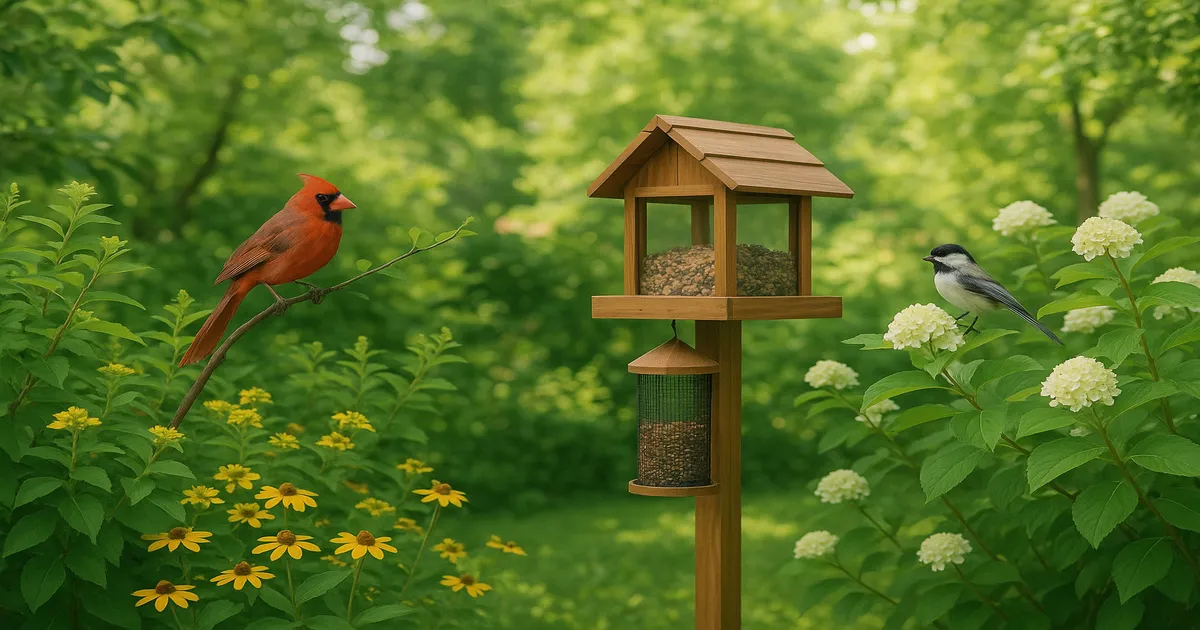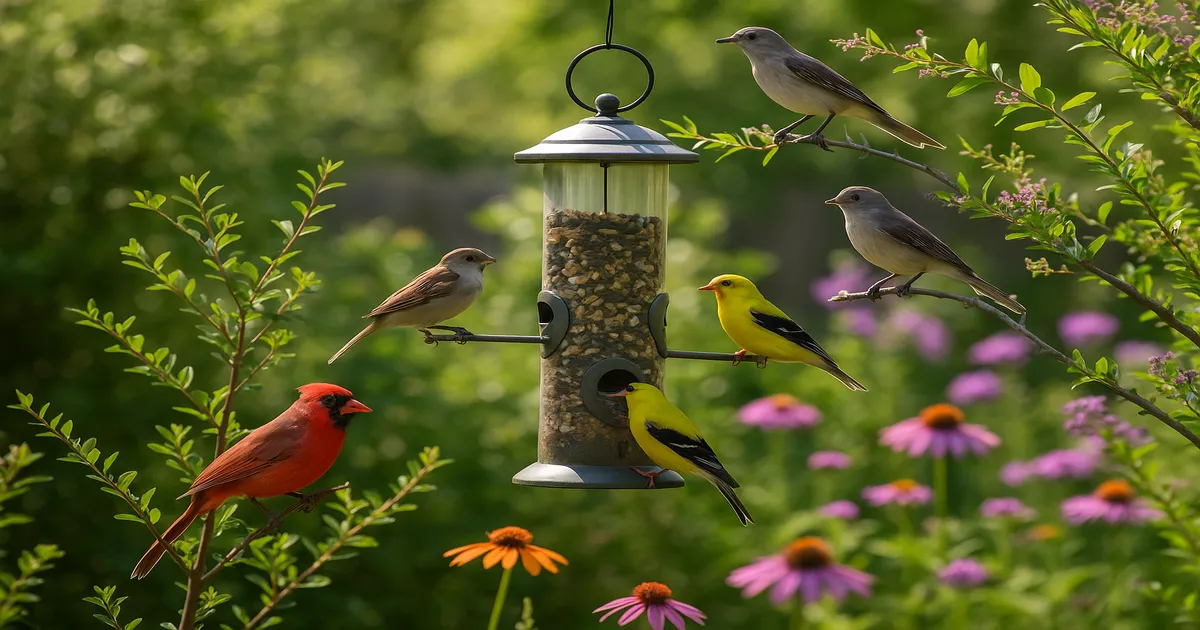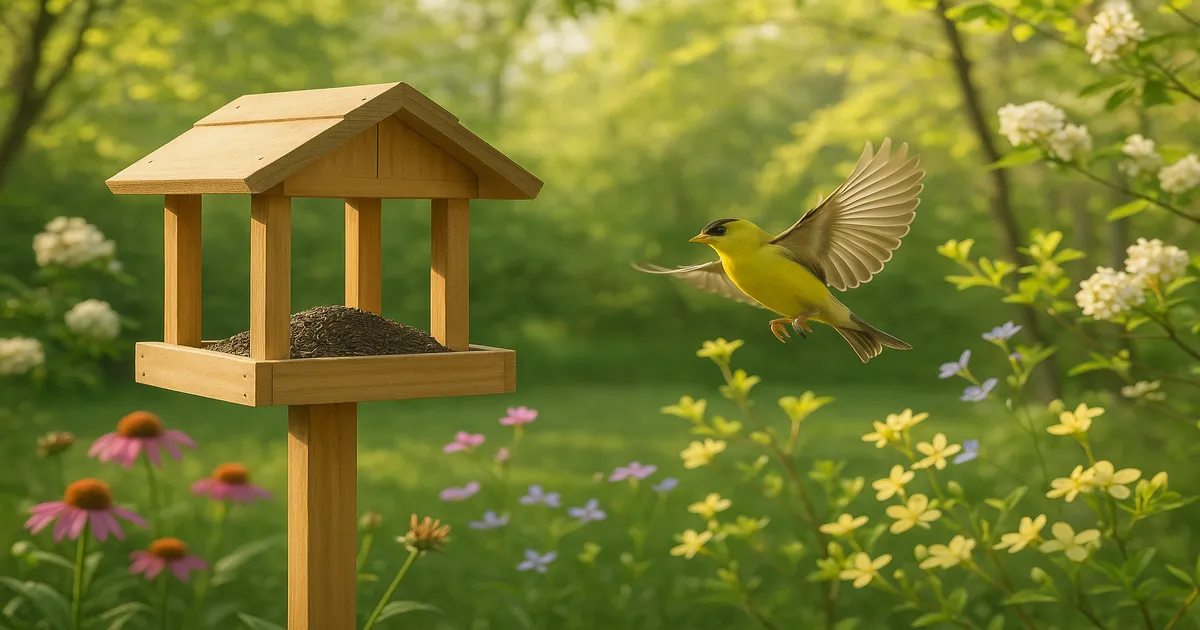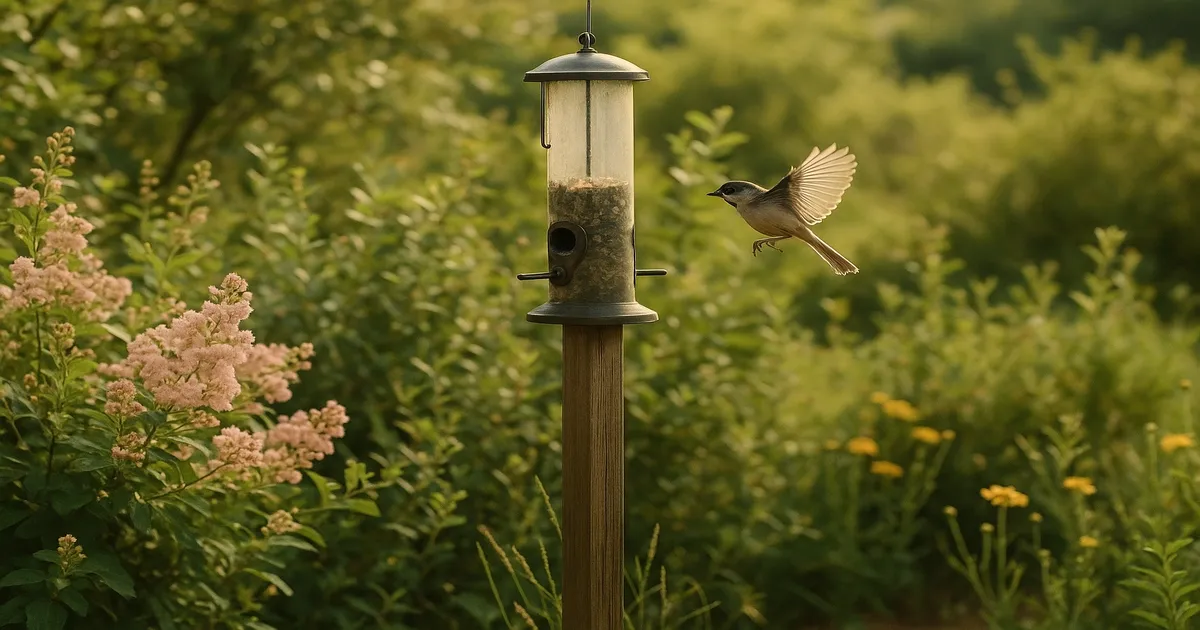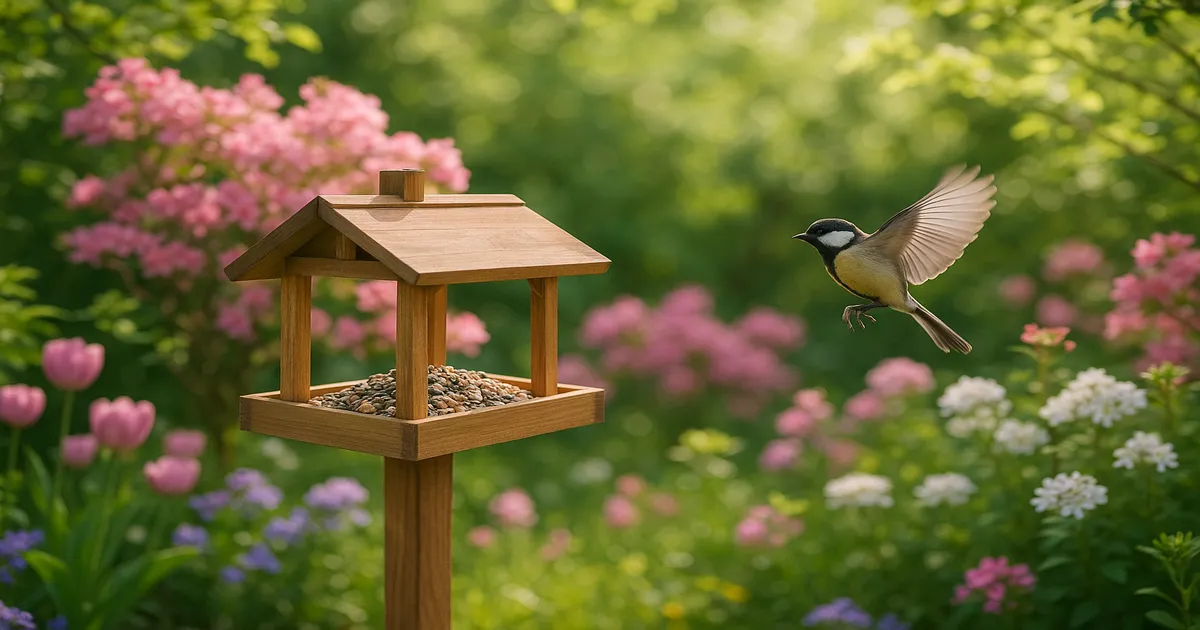
Quick Answer: To attract birds to your garden, focus on five things: black-oil sunflower seed (the single best all-around food), fresh water, layered vegetation for shelter, nest boxes for cavity nesters, and reducing pesticide use. Get these right and you’ll draw a steady stream of visitors year-round.
Knowing how to attract birds to your garden is really about thinking like a bird. The species most likely to respond — Northern Cardinal (Cardinalis cardinalis), American Robin (Turdus migratorius), Black-capped Chickadee (Poecile atricapillus), American Goldfinch (Spinus tristis), Downy Woodpecker (Dryobates pubescens), House Finch (Haemorhous mexicanus), Dark-eyed Junco (Junco hyemalis), and Ruby-throated Hummingbird (Archilochus colubris) — all need the same basics: food, water, shelter, and safety. Get those four things right and the birds will find you.
How to Attract Birds to Your Garden: The Five Essentials
- Food: Black-oil sunflower seed attracts the widest variety; supplement with nyjer, suet, and hummingbird nectar
- Fresh water: A clean birdbath with moving water outperforms almost any feeder
- Layered vegetation: Ground cover, shrubs, mid-story trees, and canopy each serve different species
- Nest boxes: Chickadees and other cavity nesters will use them readily
- Pesticide reduction: Insects are the protein source that even seed-eating birds feed to their nestlings
Which Birds Can You Realistically Expect?
That depends on your region, but the eight species covered here are among the most widespread garden birds in North America. Cardinals, chickadees, Downy Woodpeckers, and House Finches are year-round residents across most of their ranges. Juncos arrive in fall and leave in spring. Ruby-throated Hummingbirds show up from late April in the South, reaching northern gardens by mid-May, and most depart by October. Goldfinches are present year-round in many areas but shift southward in winter — and look so different between seasons that beginners sometimes think they’re two separate species.
Know Your Garden Birds: Identification at a Glance
Northern Cardinal: The Red Showstopper
The cardinal is about 8.75 inches (22 cm) long with a wingspan of roughly 12 inches (30 cm). The male is unmistakable — all-red plumage, a prominent pointed crest, and a heavy orange-red bill. The female is warm buffy-brown with reddish tinges on the crest, wings, and tail, and she shares the male’s distinctive orange-red bill and black mask. Both male and female cardinals sing, which is genuinely unusual among North American songbirds. Listen for rich, loud whistled phrases like “cheer-cheer-cheer” and a sharp metallic “chip” alarm call.
American Robin: The Lawn Worm Hunter
At about 10 inches (25 cm), the robin is one of the larger garden birds. Males have a dark gray-black head and back with a brick-red breast; females are paler overall with a noticeably gray head. Juveniles show the classic thrush hallmark — a heavily spotted breast. The melodic, caroling song (“cheerily, cheer-up, cheerio”) is one of the first sounds of spring mornings, often starting well before sunrise.
Black-capped Chickadee: The Acrobatic Regular
Tiny at about 5.25 inches (13 cm), the chickadee is identified instantly by its black cap and bib, white cheeks, and buffy flanks. Sexes look nearly identical. The two-note whistled “fee-bee” is the song; the “chick-a-dee-dee-dee” is the alarm call — more “dee” notes signal higher perceived danger. A single chickadee at your feeder is often the scout for a whole mixed flock, so when one shows up, watch for nuthatches and woodpeckers to follow.
American Goldfinch: The Seasonal Transformer
Goldfinches undergo two complete molts per year — the only North American finch to do so — which explains why the brilliant lemon-yellow male with a jet-black cap you see in summer looks like a dull olive bird in winter. Females are yellow-green year-round with no black cap. At about 5 inches (13 cm), they’re compact and acrobatic. The bouncy “po-ta-to-chip” flight call is the quickest way to locate them overhead.
Downy Woodpecker: The Bark Gleaner
The smallest woodpecker in North America at about 6.75 inches (17 cm), the Downy has a black-and-white checkered back and clean white underparts. Males have a small red patch on the back of the head; females don’t. The call is a flat, high “pik” — easy to learn and useful for spotting them before you see them. Their bounding, undulating flight is a reliable field mark in the garden.
House Finch: The Year-Round Streaky Visitor
Males show rosy-red on the head, breast, and rump against a brown-streaked body. Females are plain brown and heavily streaked throughout — no red at all. At about 6 inches (15 cm), they’re medium-small with a slightly curved upper bill. House Finches are social and tend to arrive at feeders in small groups, often lingering long enough for a good look.
Dark-eyed Junco: The Winter Snowbird
Juncos are about 6.25 inches (16 cm) long. The most common form in the East — the Slate-colored — has a dark slate-gray hood and back, white belly, and a pale pink bill. The clincher field mark: white outer tail feathers that flash like tiny flags when the bird flushes. Females are brownish-gray where males are slate. When the first junco shows up in October, winter is genuinely on its way.
Ruby-throated Hummingbird: The Tiny Hoverer
At just 3.75 inches (9.5 cm) and barely 0.1–0.2 oz (2.4–6 g), the Ruby-throated Hummingbird is the smallest bird in this guide. Males have an iridescent green back and a ruby-red gorget that looks black in poor light. Females and immatures are green above with white underparts and white-tipped, rounded tails — no red gorget. Their wings beat at roughly 53 times per second, which produces that distinctive hum. They can also fly backwards, which never gets old to watch.
Setting Up Your Garden to Attract Birds
Layered Vegetation: Mimicking Nature in a Small Space
The most bird-rich spot in any landscape is the edge — where woodland meets open lawn or meadow. Birds get dense cover for shelter and nesting alongside open ground for foraging. Even a small shrub border between lawn and fence mimics this structure effectively. Think in four layers:
- Ground cover — Low plants, leaf litter, and mulched beds attract ground foragers like juncos and robins
- Shrubs — Dense shrubs provide nesting sites for cardinals and Song Sparrows, plus berry crops for winter visitors
- Mid-story trees — Crabapple or serviceberry offer fruit, insects, and song perches
- Canopy — Mature trees attract woodpeckers, nuthatches, and orioles that won’t drop to a lower garden
You don’t need all four layers across your entire yard. A corner with shrubs beneath a small tree makes a real difference.
Nest Boxes: Attract Birds to Your Garden Year After Year
Cavity nesters like Black-capped Chickadees, Eastern Bluebirds, and Tree Swallows (Tachycineta bicolor) can’t excavate their own holes and depend on existing cavities — or nest boxes. A standard chickadee box has a 1⅛-inch entrance hole; bluebird boxes need a 1½-inch hole. Mount boxes on a pole with a baffle to deter predators, face the entrance away from prevailing weather, and clean them out each autumn. A well-placed nest box will be occupied faster than you’d expect.
Water: The Most Underrated Attractant
A clean birdbath with moving water outperforms almost any feeder for sheer variety of visitors. Robins, warblers, and thrushes that never touch seed will come to water. Add a solar-powered dripper or wiggler to create movement — birds detect the sound and sight of dripping water from a surprising distance. In winter, a heated birdbath is one of the most useful investments you can make; open water is genuinely scarce when everything else freezes.
What to Feed Garden Birds
Black-Oil Sunflower Seed: The One Seed Worth Buying
If you only stock one food, make it black-oil sunflower. The thin shells are easy for small birds to crack, the fat content is high, and the list of species that eat it is enormous — cardinals, chickadees, goldfinches, House Finches, nuthatches, woodpeckers, and more. A quality hopper feeder stocked with black-oil sunflower will outperform any fancy seed mix.
Nyjer for Goldfinches and Small Finches
Nyjer (sometimes sold as thistle seed) is the go-to food for goldfinches and siskins. It needs a feeder with small ports — standard tube feeder ports are too large and the seed spills. A mesh sock feeder is inexpensive and works well. Keep nyjer dry; it goes rancid quickly in damp conditions and birds will stop using it.
Suet for Woodpeckers and Chickadees
Suet is rendered beef fat, usually pressed into cakes with seeds or peanut bits. It’s high-energy and especially valuable in cold weather. Mount a wire suet cage on or near a tree trunk to attract Downy Woodpeckers, chickadees, and nuthatches. Avoid standard suet in very hot weather — it goes rancid and can mat feathers. Use a no-melt formula from June through August instead.
Hummingbird Nectar: The Correct Recipe
Make your own: 4 parts water to 1 part plain white granulated sugar, boiled to dissolve, then cooled before filling the feeder. That’s it. No red dye — it’s unnecessary and potentially harmful. Skip honey (it ferments quickly), brown sugar, and artificial sweeteners. In warm weather, clean the feeder every 2–3 days to prevent mold. A good red hummingbird feeder doesn’t need colored solution to attract birds — the red plastic does the job.
Seeds to Avoid
Most budget seed mixes are padded with milo (sorghum), red millet, and filler grains that desirable birds kick off the feeder and leave to rot. Milo primarily attracts House Sparrows and European Starlings — exactly the species most gardeners want less of. Spend a little more on straight seeds and you’ll waste far less.
Feeder Placement and Window Strikes
Place feeders either within 3 feet of a window or more than 30 feet away. That sounds counterintuitive, but it’s based on collision physics: a bird that hits glass from 3 feet away hasn’t built up enough speed to injure itself seriously. At 30 feet, birds have time to see the glass as a barrier. The dangerous zone is 5–25 feet, where birds reach full flight speed before impact. For any window that gets strikes, apply decals or tape strips on the outside surface to break up the reflection. A pack of window collision deterrent decals applied in a grid pattern is the simplest fix.
Cardinals are notorious for attacking their own reflections in spring — the male reads it as a territorial rival. The same window decal fix works here.
Seasonal Garden Bird Calendar
Spring: Get your hummingbird feeder up a week before you expect the first birds — early scouts move fast. Cardinals and chickadees start nesting from March onward, so dense shrubs and nest boxes become especially valuable now.
Summer: Don’t panic if feeder traffic drops. Insects are abundant and most birds switch to high-protein natural food for raising young. Goldfinches are the last songbirds to nest, timing their breeding to peak thistle seed availability in July and August.
Autumn: The junco’s arrival in October is one of the best moments in the garden calendar. Goldfinches form loose flocks and descend on nyjer feeders in numbers. Robins shift from worms to fruit and gather in berry-laden trees.
Winter: Consistency matters most now. Birds build their foraging routes around reliable food sources — if your feeder goes empty for a week in January, some birds won’t come back. Keep sunflower seed stocked, add suet for woodpeckers and chickadees, and scatter white millet on the ground for juncos.
Frequently Asked Questions
How long does it take to attract birds to a new garden feeder? Anywhere from a day to a few weeks, depending on how much bird activity is already in your area. Placing the feeder near existing cover speeds things up. Chickadees are usually the first to find a new feeder; other species follow once they see birds feeding there.
What is the single best plant to attract birds to a garden? Native berry-producing shrubs give the most return for the space. Serviceberry (Amelanchier spp.) is hard to beat — it produces fruit in early summer when little else is ripe, and it attracts a wide range of species from robins to waxwings. Crabapple and native viburnums are close runners-up for winter fruit.
How do I keep squirrels off my bird feeders? A squirrel-proof hopper feeder with a weight-activated mechanism is the most reliable solution. Pole-mounted feeders with a squirrel baffle also work well. Avoid placing feeders within 10 feet of a fence, tree, or structure a squirrel can launch from.
Do I need to clean my bird feeders, and how often? Yes — dirty feeders spread disease, particularly House Finch eye disease (Mycoplasmal conjunctivitis). Clean tube and hopper feeders every 2 weeks with a 10% bleach solution, rinse thoroughly, and let them dry before refilling. Birdbaths need fresh water every 2–3 days.
Will attracting birds also attract rats or other pests? Spilled seed on the ground is the main culprit. Use a tray catch under your feeder, switch to no-waste seed mixes (hulled sunflower, for example), and rake up spilled seed regularly. Avoid leaving mealworms or fruit out overnight.
A good pair of binoculars makes every feeder session more rewarding — you’ll catch field marks and behaviors you’d otherwise miss entirely. (Nikon Monarch M5 8x42)