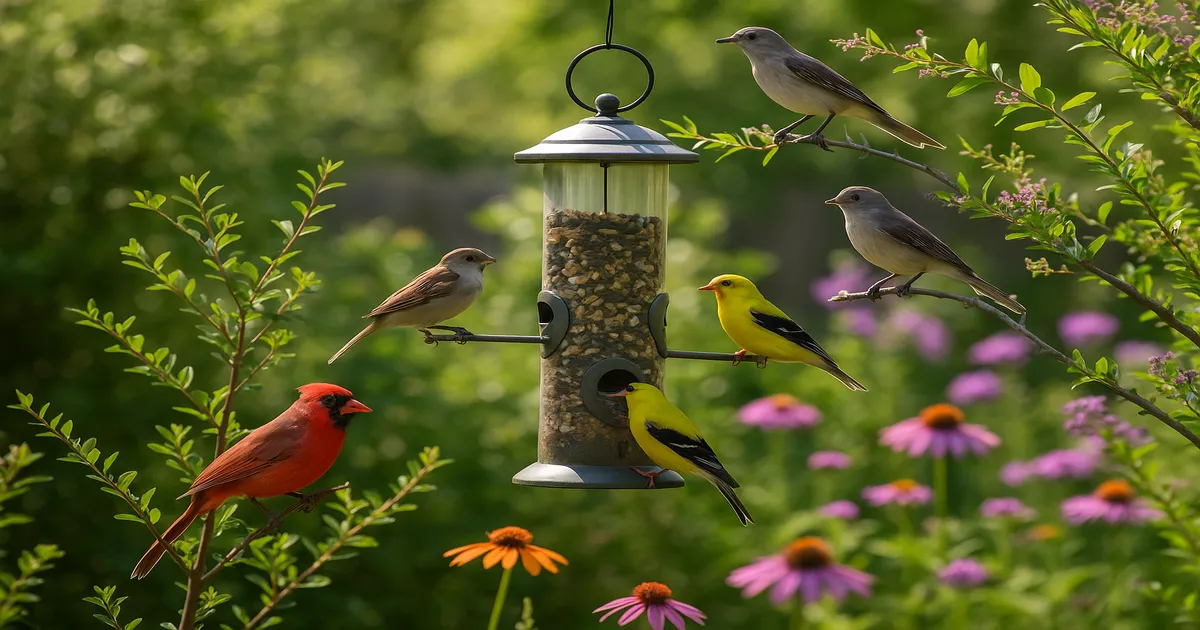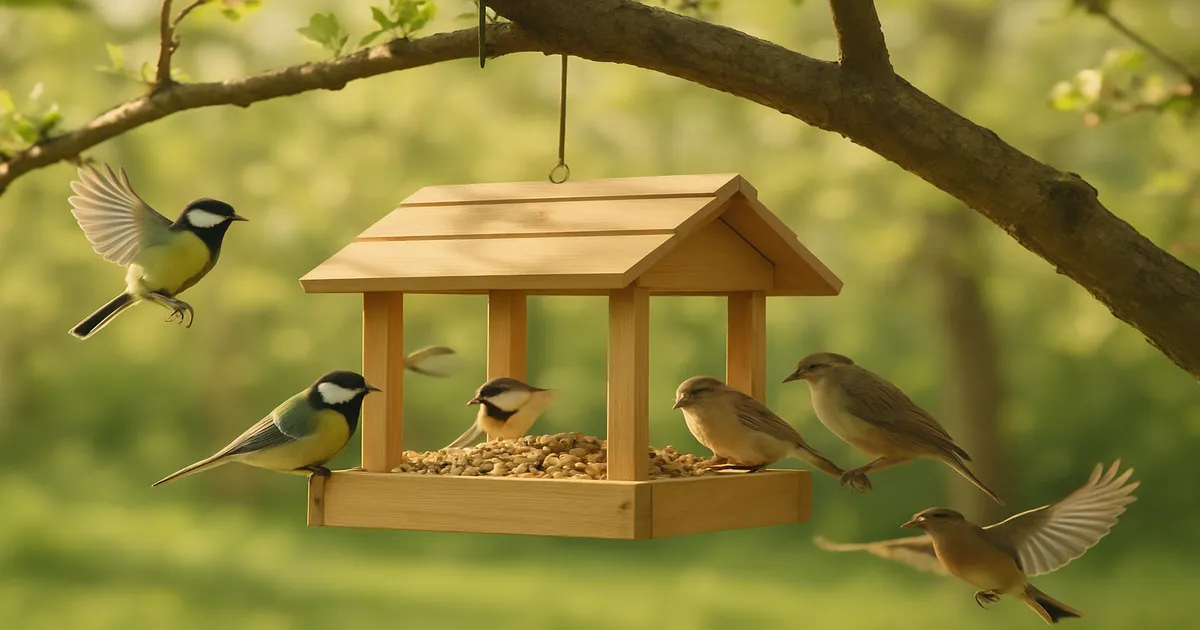
Quick Answer: To attract birds to feeders, start with black-oil sunflower seed in a tube feeder placed near shrubs or trees, add a clean water source, and keep everything fresh. Get those four things right and you’ll likely see your first visitors — chickadees, House Finches, Mourning Doves, or House Sparrows — within a few days. One feeder is enough to begin.
Getting birds to visit your feeders isn’t complicated, but it rewards a little strategy. The birders I know who attract the most species aren’t necessarily the ones with the most feeders — they’re the ones who’ve matched their setup to what birds actually need. This guide covers how to attract birds to feeders from the ground up: food, feeder types, placement, hygiene, and the habitat tweaks that make everything work better.
Know Your Visitors: Common Feeder Birds to Expect
Year-Round Regulars: Chickadees, Cardinals, and Nuthatches
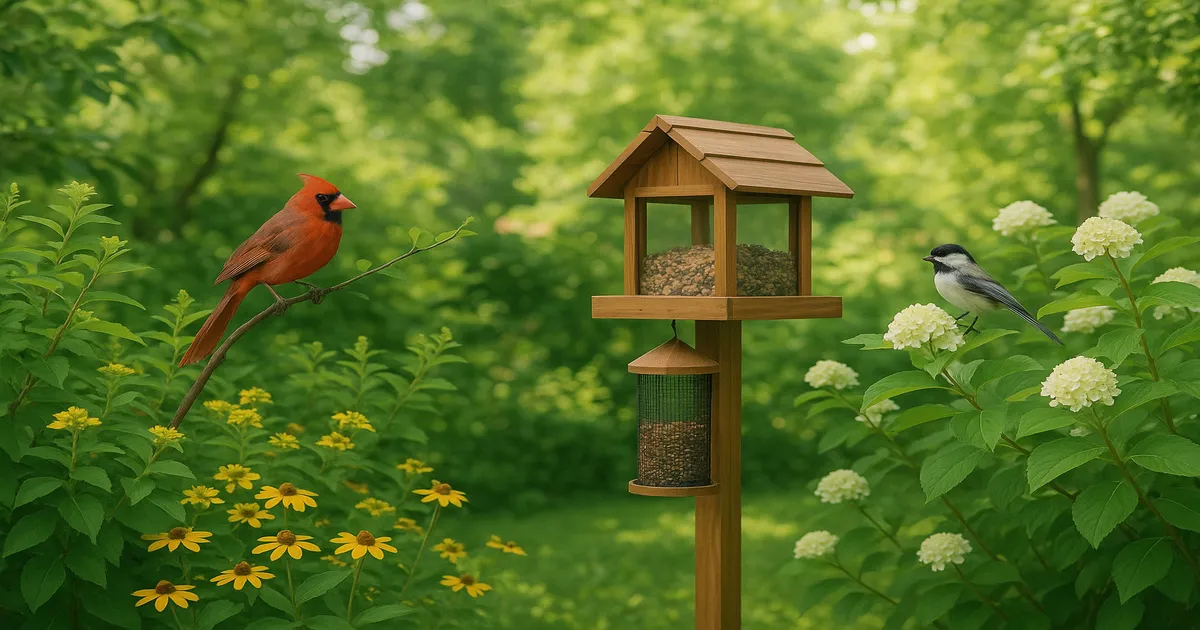
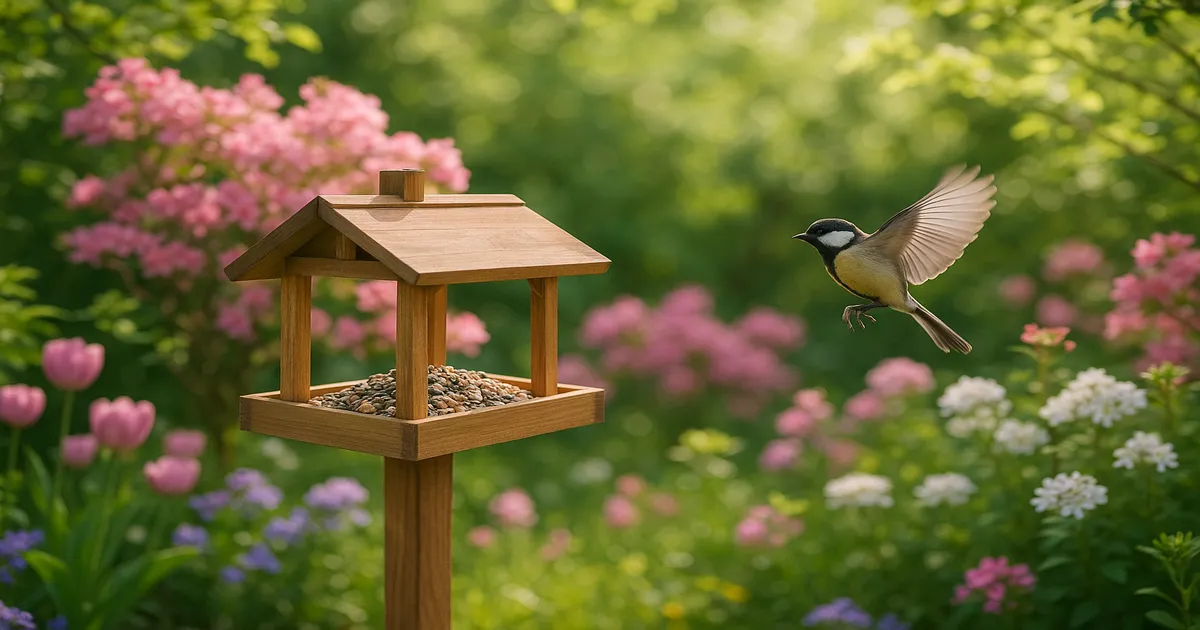
These birds will anchor your feeder activity in almost any season. The Black-capped Chickadee (Poecile atricapillus) — about 4.7–5.9 inches long — is usually the first species to discover a new feeder. Bold and curious, it grabs a seed and darts off to cache it somewhere nearby. The Northern Cardinal (Cardinalis cardinalis), at 8.3–9.1 inches, is the bird that makes new birders fall in love with the hobby. The male’s all-red plumage is hard to miss, but the female deserves a second look too — warm buffy-brown with a heavy orange bill and subtle red tones in the wings and tail. The White-breasted Nuthatch (Sitta carolinensis) is the one creeping headfirst down your tree trunk toward the feeder. No other common feeder bird does that.
The Downy Woodpecker (Dryobates pubescens) — North America’s smallest woodpecker at 5.5–6.7 inches — rounds out the year-round crew. It visits suet cages readily and occasionally tube feeders, and it’s almost always present wherever mature trees grow.
Seasonal Visitors: Goldfinches, Juncos, and Grosbeaks
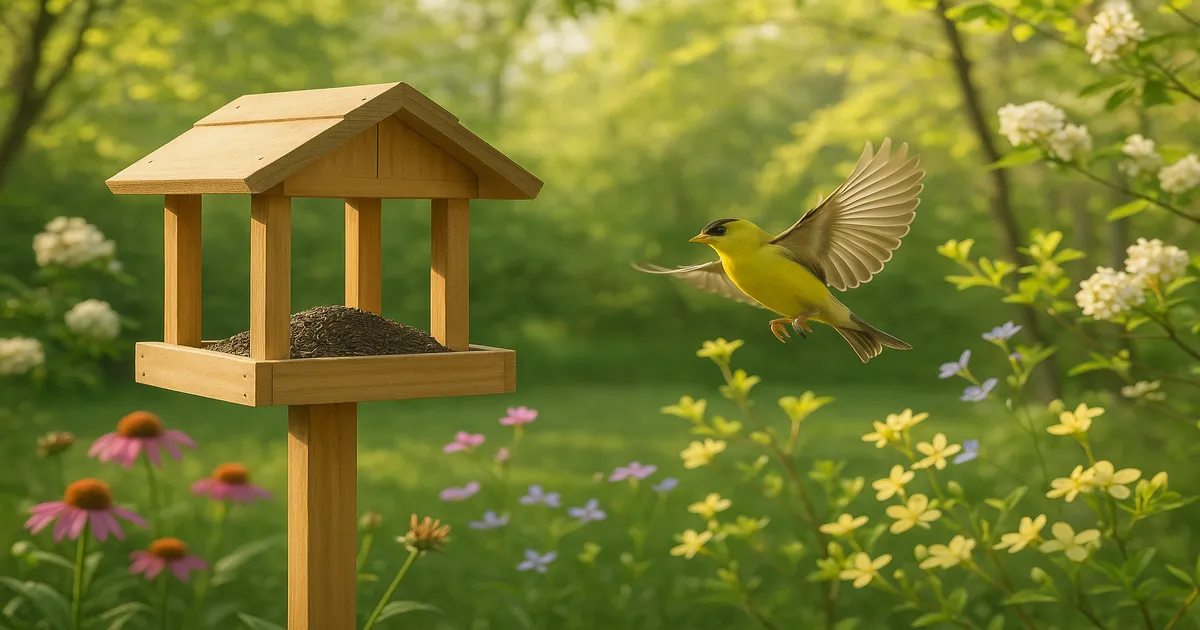
The American Goldfinch (Spinus tristis) is present year-round across much of North America, but feeder visits spike in winter when flocks descend on nyjer feeders. In breeding plumage, the male’s canary-yellow and jet-black is almost absurdly bright. In winter, both sexes fade to a dull olive-yellow that trips up a lot of beginners.
Dark-eyed Juncos (Junco hyemalis) are classic winter feeder birds across most of the continent. Watch for the white outer tail feathers flashing as they flush — instant field mark. The Rose-breasted Grosbeak (Pheucticus ludovicianus) is a spring migrant worth watching for at sunflower feeders, particularly during May. The male’s rose-red breast patch on a black-and-white body is jaw-dropping, and they’ll linger at a well-stocked feeder for days during migration.
Irruptive Species: Redpolls and Pine Siskins
Some winters bring bonuses. Common Redpolls (Acanthis flammea) and Pine Siskins (Spinus pinus) are irruptive species — they move south in large numbers only when their northern food sources fail. In irruption years, a nyjer feeder can suddenly host dozens of siskins. In other winters, you might not see either. Keeping a nyjer feeder stocked through November dramatically increases your chances of catching these birds when they do move through.
Unwanted Guests: House Sparrows and European Starlings
House Sparrows (Passer domesticus) and European Starlings (Sturnus vulgaris) are non-native species that can dominate feeders and crowd out native birds. There’s no perfect fix. For starlings, an upside-down suet cage works well — starlings struggle to cling inverted while Downy Woodpeckers manage it easily. For House Sparrows, dropping millet from open platform feeders reduces their numbers somewhat, and tube feeders with short perches favor smaller native finches.
Quick-Reference: Common Feeder Birds
| Species | Size | Key Field Marks | Feeder Preference |
|---|---|---|---|
| Black-capped Chickadee | 4.7–5.9 in | Black cap/bib, white cheeks | Tube, suet, platform |
| Northern Cardinal | 8.3–9.1 in | Red (♂) or buffy-brown (♀), crest, orange bill | Platform, hopper |
| American Goldfinch | 4.3–5.1 in | Yellow/olive; black wings | Nyjer sock, tube |
| Dark-eyed Junco | 5.5–6.3 in | White outer tail feathers, pink bill | Ground, platform |
| White-breasted Nuthatch | 5.1–5.5 in | Headfirst descent, bold black cap | Suet, tube |
| Downy Woodpecker | 5.5–6.7 in | Small bill, black-and-white, red nape patch (♂) | Suet cage |
| House Finch | 5.1–5.5 in | Red head/breast (♂), streaked brown (♀) | Tube, platform |
| Mourning Dove | 9.1–13.4 in | Long pointed tail, black spots on wings | Ground, platform |
| Blue Jay | 9.8–11.8 in | Blue crest, bold white spots, black necklace | Hopper, platform |
How to Attract Birds to Feeders: Choosing the Right Feeder
Tube Feeders: Best for Finches, Chickadees, and Nuthatches
A tube feeder with multiple ports is the single best starting feeder. Fill it with black-oil sunflower seed and you’ll cover chickadees, nuthatches, House Finches, and goldfinches. Look for metal ports rather than plastic — squirrels destroy plastic ports quickly, sometimes within a season.
Platform and Tray Feeders: Ideal for Cardinals, Juncos, and Doves
Cardinals need wide, stable perches. They’re big birds with big bills and they don’t cling like finches do. A platform or tray feeder at mid-height — around 4–5 feet off the ground — suits them well. Mourning Doves and juncos prefer feeding on or near the ground; a low tray or scattered seed works better for them than any hanging feeder.
Suet Cages: How to Attract Woodpeckers to Your Yard
Suet cages are non-negotiable if you want woodpeckers. Look for a cage with a tail prop — an extended bottom piece that lets Downy and Hairy Woodpeckers (Dryobates villosus) brace their stiff tail feathers while feeding, mimicking how they work a tree trunk. An upside-down design is worth the extra cost: woodpeckers and chickadees handle it easily, starlings generally can’t.
Nyjer (Thistle) Feeders: The Secret to Attracting Goldfinches
Nyjer seed is tiny and requires a feeder with very small ports — a standard tube feeder’s ports are too large and the seed just falls through. Mesh sock feeders or dedicated nyjer tubes work best. Goldfinches are the primary target, but Pine Siskins and Common Redpolls will pile onto these feeders in irruption winters.
Hopper Feeders: A Versatile All-Rounder
Hopper feeders hold a large volume of seed and attract the widest variety of species — Blue Jays, cardinals, chickadees, and nuthatches all use them. The downside is they’re harder to clean thoroughly, and seed can get wet and mold at the bottom. Empty and scrub them more often than you think you need to.
What to Look for in Feeder Quality
Buy the best feeder you can afford once rather than replacing cheap ones every season. Metal or thick recycled plastic construction, removable bases for cleaning, and metal ports that resist squirrel damage are worth paying for. A squirrel baffle — a dome above a hanging feeder or a pole-mounted cylinder below — is close to essential unless you enjoy watching squirrels empty your feeders in twenty minutes.
Feeder Comparison
| Feeder Type | Best For | Food Used | Pros | Cons |
|---|---|---|---|---|
| Tube | Finches, chickadees, nuthatches | Sunflower, nyjer | Versatile, easy to hang | Small capacity |
| Platform/Tray | Cardinals, doves, juncos | Mixed seed, sunflower | Accessible to large birds | Exposed to weather/squirrels |
| Suet Cage | Woodpeckers, chickadees | Suet cakes | Attracts species tube feeders miss | Messy in heat |
| Nyjer Sock/Tube | Goldfinches, siskins, redpolls | Nyjer seed | Highly targeted | Only works for small finches |
| Hopper | Wide variety | Sunflower, mixed | High capacity | Harder to clean |
Best Foods to Attract the Most Birds
Black-oil sunflower seed is the one to start with. Its thin shell is easy for small birds to crack, the kernel is large relative to the shell, and the fat content is high. Nearly every species in this article will eat it. Sunflower chips (hulled kernels) are worth considering if you want to eliminate the shell mess under feeders.
Nyjer seed is what goldfinches go wild for, and it’s the top choice for Pine Siskins and Common Redpolls in irruption winters. One caveat: nyjer goes stale faster than sunflower and loses its oils. If your goldfinches seem uninterested, replace the seed before you replace the feeder.
Safflower seed has a slightly bitter taste that many squirrels and European Starlings avoid, while cardinals, chickadees, and House Finches eat it readily. Switching a feeder or two over to safflower genuinely reduces squirrel pressure — not a complete fix, but a noticeable one.
White proso millet is the preferred seed for juncos, Mourning Doves, and native sparrows like White-throated (Zonotrichia albicollis) and White-crowned (Zonotrichia leucophrys) Sparrows. Scatter it on a low tray or directly on the ground. Avoid cheap “wild bird mix” that’s mostly milo, red millet, wheat, or oats — birds largely ignore these fillers, they pile up under feeders, and they attract rodents.
Suet is rendered beef fat pressed into cakes, usually with seeds or nuts added. It’s especially valuable in cold weather. Avoid plain suet cakes in summer — they melt and go rancid fast. Switch to no-melt formulas once temperatures consistently hit 80°F (27°C).
Halved oranges and grape jelly attract Baltimore Orioles (Icterus galbula) during spring and summer. Put out an orange half and a small dish of jelly by late April if you’re in oriole territory — they’ll find it. Hummingbird feeders with a 4:1 water-to-sugar solution bring in Ruby-throated Hummingbirds (Archilochus colubris) in the East and multiple species in the West.
Foods to skip: milo, wheat, oats, red millet, bread, crackers, or anything moldy. Moldy seed can be fatal to birds — discard it immediately.
Feeder Placement: Where to Put Bird Feeders for Maximum Activity
Window strikes kill an estimated 300–600 million birds annually in North America. Place feeders either within 3 feet of a window — so birds can’t build up fatal speed — or beyond 30 feet away. The middle distance is the danger zone.
Put feeders within 10–15 feet of dense shrubs or trees. Birds need escape cover and won’t linger at a feeder where they feel exposed to hawks. In my experience, feeders near a dense shrub or brush pile get discovered faster and attract steadier traffic than feeders sitting in the middle of an open lawn.
Height guidelines:
- Ground level or low tray (0–2 ft): Juncos, Mourning Doves, native sparrows
- Mid-height (4–6 ft): Cardinals, chickadees, most songbirds — the sweet spot for most feeders
- High-mounted (8+ ft): Blue Jays, larger birds; also useful for keeping feeders away from cats and raccoons
If you run multiple feeders, space them at least 10–15 feet apart and out of sight of each other where possible. Dominant species like Blue Jays and cardinals will monopolize a single feeder. Spreading them out lets subordinate birds — goldfinches, chickadees — feed without constant displacement.
Fresh water is one of the most powerful attractants there is, and it’s consistently overlooked. A simple birdbath works, but moving water works better — the sound of dripping carries and draws birds from a distance. A solar-powered dripper added to an existing birdbath is an inexpensive upgrade with a real payoff.
If your feeders are in the middle-distance danger zone from windows, add decals or tape to break up the glass reflection. Decals need to be spaced no more than 2 inches apart horizontally and 4 inches vertically to be effective.
Seasonal Strategies for Attracting Birds Year-Round
Spring: Add a nyjer feeder by late March to catch returning goldfinches in fresh breeding plumage. Watch sunflower feeders during May for Rose-breasted Grosbeaks — they’re one of the most striking feeder visitors of the year and will sometimes stay for several days. Put out oranges and grape jelly by late April if you’re in oriole territory.
Summer: Birds have more natural food available, so feeder traffic drops. Reduce seed volume to prevent spoilage — rancid seed turns birds off fast. Switch to no-melt suet or pull suet feeders entirely in heat. Change hummingbird nectar every 2–3 days; it ferments quickly in warm weather.
Fall: Stock up on sunflower seed and suet by October. Juncos typically arrive with the first cold fronts — their appearance is one of the reliable seasonal markers in birding. Check eBird for Pine Siskin and redpoll reports to your north; if it’s shaping up to be an irruption year, get your nyjer feeder stocked and ready.
Winter: This is when feeder watching really delivers. Natural food is scarce, birds are concentrated, and species like White-throated Sparrows and juncos make the yard feel entirely new. High-fat foods — suet, peanuts, sunflower — are what birds need most in cold weather. Keep feeders stocked consistently. Birds that have come to rely on a food source during a cold snap are genuinely at risk if the feeder suddenly goes empty.
Feeder Hygiene and Maintenance
Clean feeders every 1–2 weeks in normal conditions, more often in wet or humid weather. Use a 10% bleach solution — one part bleach to nine parts water — scrub all surfaces, rinse thoroughly, and let the feeder dry completely before refilling. This isn’t optional: dirty feeders spread Salmonellosis and House Finch Eye Disease (Mycoplasmal conjunctivitis), a bacterial infection that causes swollen, crusty eyes and spreads rapidly through feeder flocks.
A few habits that prevent most problems:
- Remove and discard wet or clumped seed immediately
- Use feeders with drainage holes so water doesn’t pool
- Rake up seed hulls under feeders regularly — decomposing hulls harbor bacteria and attract rodents
- If you see a bird with swollen or crusted eyes at your feeder, take the feeder down, clean it thoroughly, and leave it down for two weeks to let the flock disperse
Frequently Asked Questions
How long does it take for birds to find a new feeder? Usually 1–2 weeks, sometimes faster. Chickadees are typically the scouts — once they find it, other species follow. Placing the feeder near existing bird activity, like a shrub where birds already perch, speeds things up considerably.
What is the best bird feeder for beginners? A tube feeder filled with black-oil sunflower seed. It’s versatile, easy to hang, easy to clean, and attracts the widest range of common feeder birds. Add a suet cage once you’re comfortable, then a nyjer feeder if you want goldfinches.
Why aren’t birds coming to my feeder? The most common reasons: the seed is old or stale, the feeder is too exposed with no nearby cover, or there simply hasn’t been enough time yet. Check the seed first — if it smells musty or feels damp, replace it. Then look at placement relative to shrubs and trees.
Do I need to feed birds year-round? No, but consistency helps. If you start in winter and stop abruptly during a cold snap, birds that have come to rely on your feeder are left without a food source they were counting on. If you want to scale back in summer when natural food is abundant, do it gradually.
How do I keep squirrels off my bird feeders? A pole-mounted baffle below the feeder or a dome baffle above it stops most squirrels. Switching to safflower seed reduces squirrel interest at platform and hopper feeders. Caged feeders — a wire cage surrounding the feeder that only small birds can pass through — are the most reliable solution for persistent squirrels.
` format. No raw [PRODUCT_LINK] placeholders remain.
Removed Sections
- Removed standalone “Feeder Quality and Durability” H3 — content folded into preceding paragraph
- Removed “Foods to Avoid” as a separate bulleted list — folded into the food section as a final paragraph for better flow
- The article originally ended mid-sentence (“attract rod”) — completed the hygiene section properly and added the eye disease response protocol