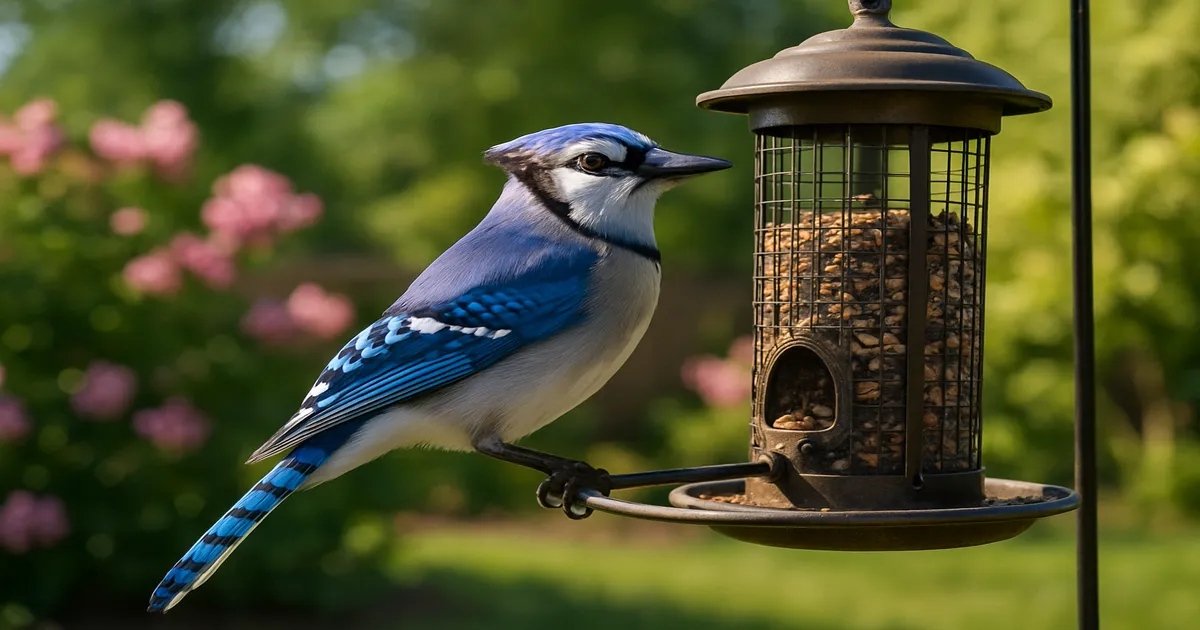
Quick Answer: If you’re here for gear, the Woodlink Absolute II is the best all-around feeder for Blue Jays — durable, large, and genuinely squirrel-resistant without locking out the jays. For optics, the Nikon Prostaff 3S 8x42 delivers excellent glass at a fair price. If you’re here to identify the bird or sort out its look-alikes, read on — this article covers everything from field marks to migration quirks to the Toronto franchise that borrowed the name.
The search “blue jays vs blue jays” comes up because the name belongs to two very different things: a bold, crested corvid that’s one of eastern North America’s most recognizable backyard birds, and a Major League Baseball team that borrowed its name from that species. This article covers the Blue Jay (Cyanocitta cristata) in depth — how to identify it, attract it, distinguish it from its look-alikes, and gear up to watch it properly. We’ll address the Toronto connection too, because the bird deserves the credit.
Blue Jays vs. Blue Jays: Which One Are You Looking For?
The Bird: Blue Jay (Cyanocitta cristata) at a Glance
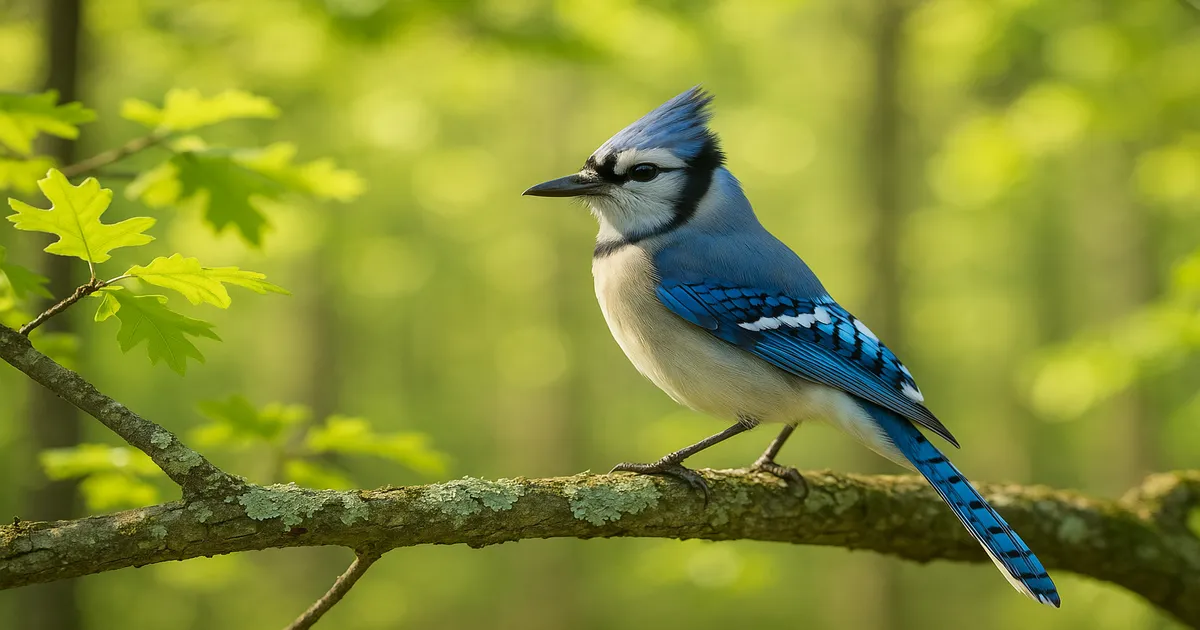
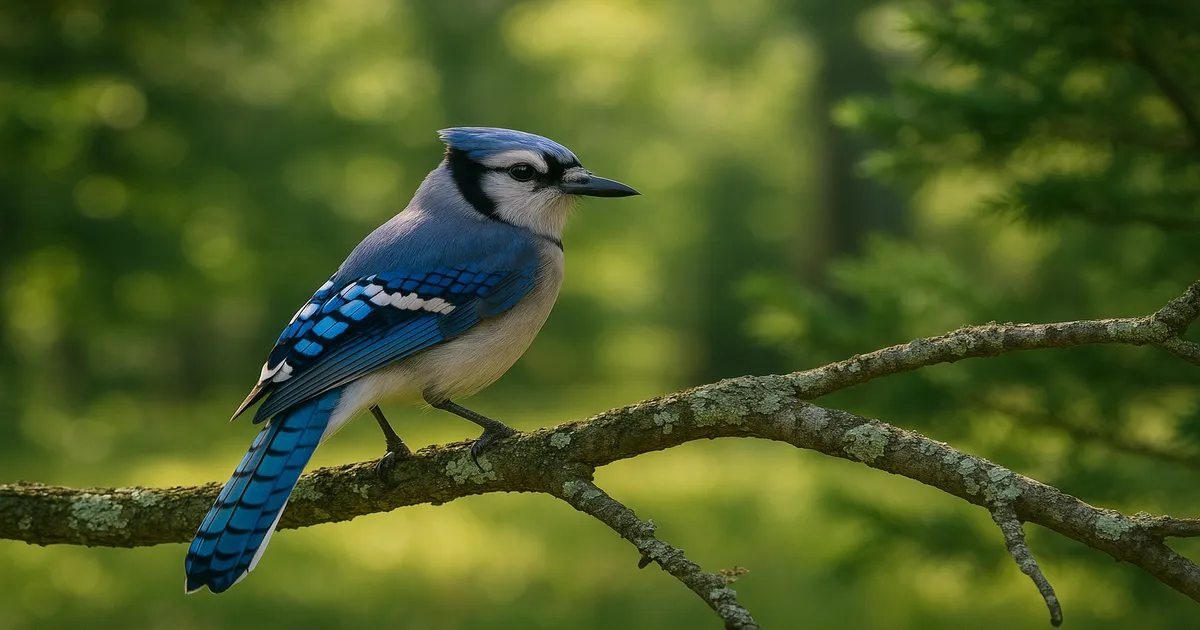
The Blue Jay is a large, crested songbird — about 9–12 inches (23–30 cm) long — found year-round across eastern and central North America. It’s hard to miss: cobalt blue above, white below, with a bold black necklace and a pointed blue crest that rises when the bird is agitated. Loud, smart, and ecologically important, it’s the subject of most of this article.
- Size: 9–12 in (23–30 cm); wingspan 13–17 in (34–43 cm)
- Key marks: Blue crest, white face, black necklace, white tail corners
- Range: Eastern and central US and southern Canada, year-round
- Best feeder food: Whole peanuts in the shell
The Team: Toronto Blue Jays in Brief
The Toronto Blue Jays are MLB’s only Canadian franchise and two-time World Series champions (1992, 1993). Their logo draws directly from Cyanocitta cristata. If you landed here for baseball content, there’s a brief section near the end. The bird came first.
Top Gear Picks for Blue Jay Watchers
- Best feeder: Woodlink Absolute II — wide perch rail, metal construction, adjustable squirrel guard
- Best optics: Nikon Prostaff 3S 8x42 — wide field of view, solid glass, reasonable price
- Best budget attractant: Kaytee Peanut Feeder loaded with shell peanuts
What to Look For in Blue Jay Birding Gear
Feeder Size and Landing Platform Width
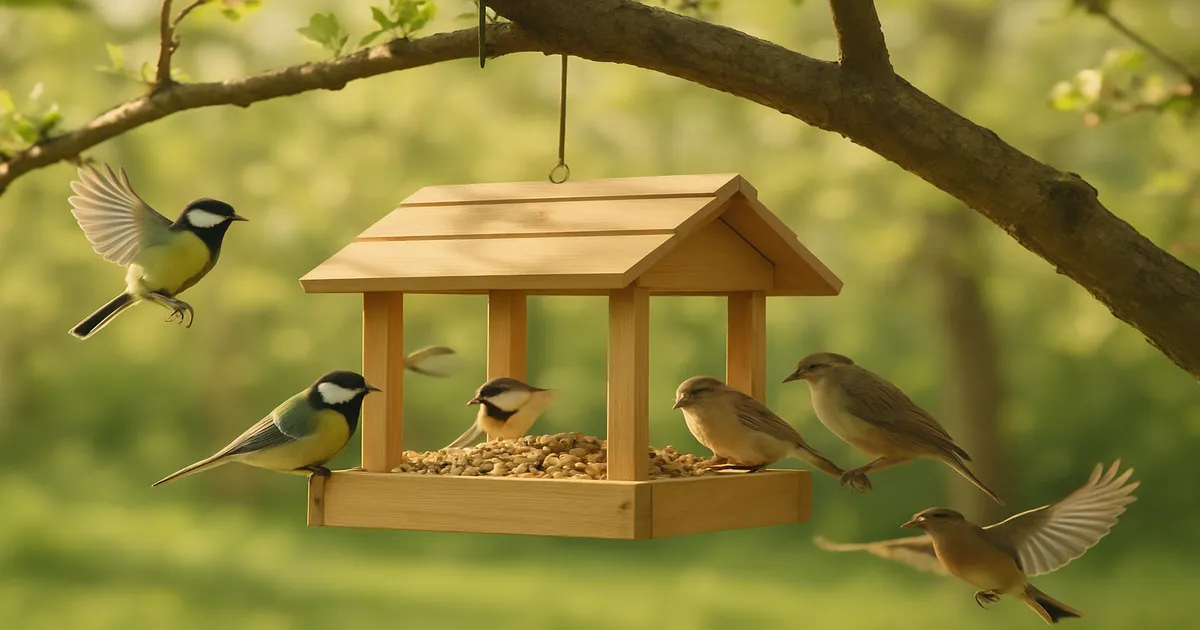
Blue Jays are big birds — among the largest regular feeder visitors in eastern North America. Tube feeders designed for finches are essentially useless for them; the perches are too short and the ports too small. Platform feeders and hopper feeders with wide tray extensions are what you want. A landing area of at least 8 inches (20 cm) gives a jay room to land, assess, and feed without feeling cramped.
Squirrel-Proofing vs. Blue Jay Access
Here’s the real tension: Blue Jays weigh 2.5–3.5 oz (70–100 g), which is heavy enough to trip some weight-activated squirrel-proof mechanisms. A feeder calibrated to stop a 12-ounce squirrel should let a 3-ounce jay through — but cheaper mechanisms aren’t always that precise. Look for feeders with an adjustable weight sensitivity dial, and test it with your local birds before you declare victory.
Durability and Weather Resistance
Plastic feeders crack in hard winters and fade in summer UV. If you’re feeding Blue Jays year-round, powder-coated steel or heavy-gauge wire mesh is worth the upfront cost. A feeder that lasts five years at twice the price of one that lasts two is the better deal.
Ease of Cleaning and Refilling
Blue Jays cache food aggressively, so they’ll empty a feeder fast. High-capacity hoppers (10–12 lbs of seed) cut down on refill trips. For cleaning, look for feeders that disassemble easily — moldy seed is a genuine health hazard, and you’ll need to scrub the tray every couple of weeks in wet weather.
Binoculars for Backyard Use
For feeder watching at close range (15–40 feet / 4.5–12 m), 8x magnification is ideal. Higher magnification narrows your field of view and makes it harder to track fast-moving jays through branches. An 8x42 configuration gives you a wide, bright image that works equally well in the yard and on a trail.
Budget vs. Long-Term Value
I’ve watched new birders buy a $12 plastic platform feeder, see it warp by March, and buy a better one anyway. The Kaytee peanut feeder is a genuine exception — cheap and effective for its specific purpose. For a general-purpose hopper, spending $50–$70 once beats spending $30 twice.
At-a-Glance Comparison: Best Blue Jay Birding Products
| Product | Best For | Key Feature | Price |
|---|---|---|---|
| Perky-Pet Squirrel-Be-Gone Max | Budget beginners | Weight-activated closure | $ |
| Kaytee Peanut Feeder | Fast, cheap jay attraction | Wire mesh, whole peanuts | $ |
| Woodlink Absolute II | Overall feeder performance | All-metal, wide perch rail | $$ |
| Duncraft Squirrel-Proof Selective | Squirrel-heavy yards | Cage excludes squirrels, not jays | $$ |
| Nikon Prostaff 3S 8x42 | Backyard and field optics | Wide FOV, waterproof | $$ |
| Sibley’s Birds East | ID and look-alike comparison | 650+ species, multi-plumage art | $ |
Perky-Pet Squirrel-Be-Gone Max Bird Feeder
A reasonable starting point for anyone new to feeding Blue Jays on a tight budget. The weight-activated closure works well against squirrels, and the hopper holds about 2 lbs of seed — enough to last a couple of days with regular jay traffic. The catch: on the tightest sensitivity setting, Blue Jays are heavy enough to trip the mechanism. Dial it back, test it, adjust.
Key specs:
- Weight-activated port closure
- ~2 lb seed capacity
- Multiple feeding ports
- Plastic construction
Pros
- Affordable and widely available
- Effective against squirrels on appropriate settings
- Decent capacity for the price
- Easy to find replacement parts
Cons
- Plastic cracks in harsh winters
- May exclude Blue Jays if sensitivity isn’t adjusted
- Smaller capacity means frequent refills
Best for: New backyard birders who want a budget squirrel deterrent and are willing to spend five minutes adjusting the sensitivity dial for jay access.
Kaytee Peanut Feeder for Blue Jays
Peanuts in the shell are the single most reliable Blue Jay attractant I know of. This simple wire-mesh cylinder holds whole shell peanuts and lets jays grip the mesh, extract a nut, and cache it in seconds. It’s inexpensive, easy to fill, and it works.
Key specs:
- Wire mesh cylinder design
- Open-access, no weight mechanism
- Accommodates whole peanuts in shell
- ~3 lb capacity
Pros
- Extremely effective at drawing Blue Jays quickly
- Low cost — easy to justify as a trial
- Simple design, nothing to break or adjust
- Easy to fill and hang
Cons
- Zero squirrel deterrence — pair with a pole-mounted baffle
- Mesh can rust if peanuts stay wet; let it dry between refills
- Only works well with peanuts; not versatile for seed mixes
Best for: Anyone who wants the fastest possible results attracting Blue Jays. Add a squirrel baffle and you’ve got a solid, low-cost setup for under $30.
Woodlink Absolute II Squirrel Resistant Bird Feeder
My top overall recommendation for Blue Jay feeders. The Absolute II is all-metal, holds about 12 lbs of seed, and has a wide perch rail that suits Blue Jays’ preference for a solid landing platform. The weight-sensitivity adjustment is precise enough to let jays feed while stopping squirrels — which is harder to pull off than it sounds.
Key specs:
- All-metal (steel) construction
- ~12 lb seed capacity
- Adjustable weight-sensitivity squirrel guard
- Removable bottom tray
Pros
- Metal construction handles harsh winters without cracking or warping
- Large capacity dramatically reduces refill frequency
- Wide perch rail is comfortable for large birds like Blue Jays
- Adjustable sensitivity threads the needle between squirrels and jays
Cons
- Heavier and bulkier than plastic options — hanging hardware needs to be sturdy
- Higher upfront cost
- Assembly takes patience the first time
Best for: Birders who want a durable, high-capacity feeder that genuinely deters squirrels without shutting out Blue Jays.
Duncraft Squirrel-Proof Selective Feeder
The Duncraft Selective wraps a powder-coated steel cage around an inner tube feeder. The cage openings are sized to exclude squirrels and large bully birds, but Blue Jays — slender despite their length — can typically reach through to access seed. It’s a clever passive design, though I’d call it “test with your local birds” gear rather than a guaranteed solution, since individual jay size varies.
Key specs:
- Powder-coated steel outer cage
- Inner tube feeder, ~3 lb capacity
- Designed for smaller seed (sunflower, safflower)
- Rust-resistant finish
Pros
- Genuinely squirrel-proof without a weight mechanism
- Allows Blue Jay access in most cases
- Rust-resistant finish holds up well outdoors
- No adjustment needed — passive design
Cons
- Some larger Blue Jays may struggle with cage geometry
- Inner tube limits seed variety — no whole peanuts
- Smaller capacity than hopper-style feeders
Best for: Squirrel-heavy yards where weight-activated mechanisms have failed and you need a passive, mechanical solution.
Nikon Prostaff 3S 8x42 Binoculars
For backyard Blue Jay watching, you don’t need $500 glass. The Prostaff 3S 8x42 delivers fully multi-coated optics, a wide field of view, and waterproof/fogproof construction at a price that won’t sting. I’ve used these at feeders and in the field — they’re sharp, comfortable, and the 8x magnification is exactly right for tracking fast-moving jays through canopy. The eye cups are stiff out of the box but loosen with use.
Key specs:
- 8x magnification, 42mm objective lens
- Fully multi-coated optics
- Waterproof and fogproof
- ~21 oz (595 g)
- Long eye relief for eyeglass wearers
Pros
- Excellent optical quality for the price tier
- Wide field of view — ideal for tracking active birds
- Comfortable eye relief
- Durable enough for regular field use
Cons
- Not a premium optic — serious listers will eventually want to upgrade
- Eye cups feel stiff initially
- Slightly heavier than some competitors in this range
Best for: Backyard birders and casual field birders who want genuinely good glass without crossing into premium price territory.
Sibley’s Birds East Field Guide
David Allen Sibley’s eastern guide is the one I reach for when a look-alike question comes up at the feeder. It covers 650+ species with multiple plumage illustrations per bird — juvenile, adult, worn summer plumage, all on the same page. For sorting Blue Jay from Steller’s Jay, the scrub-jays, Indigo Bunting, and Eastern Bluebird, nothing else comes close in the eastern guide category.
Key specs:
- 432 pages, 650+ species
- Multiple age/sex illustrations per species
- Range maps throughout
- Compact format fits a jacket pocket
Pros
- Unmatched illustration quality for an eastern guide
- Covers all Blue Jay look-alikes with direct comparison possible
- Compact enough for field use
- Trusted by serious birders for decades
Cons
- Eastern edition only — you’ll need the western guide for Steller’s Jay in its core range
- Text density can feel overwhelming for absolute beginners
- No audio component (use the Merlin app alongside it)
Best for: Anyone serious about Blue Jay identification and look-alike comparison — and honestly, anyone birding east of the Rockies.
Our Verdict: Best Blue Jay Gear by Use Case
Best Overall Feeder: The Woodlink Absolute II. Metal construction, large capacity, and a precise weight-sensitivity adjustment make it the most complete feeder for Blue Jay watching. It’s the one I’d buy starting from scratch.
Best Budget Pick: The Kaytee Peanut Feeder loaded with whole shell peanuts. It costs less than a lunch out and will have Blue Jays in your yard within days. Add a squirrel baffle and the whole setup runs under $30.
Best for Squirrel-Heavy Yards: The Duncraft Squirrel-Proof Selective Feeder. When squirrels have defeated every weight-activated mechanism you’ve tried, the passive cage design is your next move.
Best Binoculars: The Nikon Prostaff 3S 8x42 — the best entry-to-mid binocular for Blue Jay watchers who want quality glass without a premium price tag.
Best Field Guide: Sibley’s Birds East — essential for identification, look-alike comparison, and understanding the full picture of what you’re seeing at your feeder.
One thing no product can replicate: a native oak tree. A mature oak is a Blue Jay magnet year-round, and a moving-water birdbath will draw them in for bathing as reliably as any feeder. Both are free or close to it, and they do more for long-term jay habitat than anything you can buy.
Blue Jays vs. Look-Alikes: Field Marks and Quick Comparisons
Key Field Marks of the Blue Jay (Cyanocitta cristata)
The Blue Jay is hard to misidentify once you’ve seen one. The combination of vivid cobalt blue upperparts, white face and underparts, and a bold black necklace across the throat is unique among eastern birds. The pointed blue crest is the signature feature — it rises when the bird is alert or agitated and flattens during feeding or submission.
In flight, watch for white corners on the tail and white spots on the wing coverts. They flash distinctively and help confirm a flying jay at distance. The bill is strong and straight, built for cracking hard nuts. Overall length runs 9–12 inches (23–30 cm), wingspan 13–17 inches (34–43 cm).
Male vs. Female vs. Juvenile Blue Jays
Males and females look identical in the field — sexual dimorphism is essentially absent. Males average very slightly larger, but that’s not useful without a bird in hand. During courtship, the male feeds the female, which is the most reliable behavioral cue for sorting sexes.
Juveniles look like washed-out adults: duller blue tones, a less crisp necklace, and a brownish-gray cast to the face and crest. By their first fall, they’re molting into adult-like plumage and become increasingly difficult to separate from adults.
Blue Jay vs. Steller’s Jay
The Steller’s Jay (Cyanocitta stelleri) is the Blue Jay’s closest relative and western counterpart. The fastest field mark: Steller’s has an entirely dark head, back, and breast — no white on the face at all. The body transitions from black or dark gray at the top to blue on the lower half. Its crest is also longer and more dramatic.
Range does most of the work here. Steller’s is a western mountain bird, and the two species’ ranges barely overlap. If you’re in the Rockies or west of them and see a crested jay, it’s almost certainly a Steller’s.
Blue Jay vs. Scrub-Jays
All three scrub-jays share one immediately obvious difference from the Blue Jay: no crest. The Florida Scrub-Jay (Aphelocoma coerulescens) is pale blue and gray with a white throat and a brownish back patch, restricted to Florida scrub habitat — one of the easiest range-limited IDs in North America. The California Scrub-Jay (Aphelocoma californica) and Woodhouse’s Scrub-Jay (Aphelocoma woodhouseii) are western birds with no meaningful range overlap with the Blue Jay.
If it has a crest, it’s not a scrub-jay.
Blue Jay vs. Indigo Bunting and Eastern Bluebird
Two species that trip up new birders because they’re blue — but size alone should settle it. The Indigo Bunting (Passerina cyanea) is sparrow-sized, about 5 inches (13 cm) long, with an all-blue body and no white, no crest, and no black markings. The Eastern Bluebird (Sialia sialis) is about 7 inches (18 cm) with a rusty-orange breast and blue restricted to the back, wings, and head. Neither has a crest or anything like the Blue Jay’s bold necklace.
Quick ID Comparison Table
| Feature | Blue Jay | Steller’s Jay | Scrub-Jays | Indigo Bunting | Eastern Bluebird |
|---|---|---|---|---|---|
| Crest | Yes, blue | Yes, dark | No | No | No |
| White on face | Yes | No | Partial | No | No |
| Black necklace | Yes | No | None/partial | No | No |
| Rusty breast | No | No | No | No | Yes |
| Size | Large (9–12 in) | Large | Medium | Small (5 in) | Small (7 in) |
| Range | East/Central | West | West/FL | East/Central | East/Central |
Habitat, Range & Migration
Geographic Range
The Blue Jay is a year-round resident across most of the eastern and central United States and southern Canada — from the Atlantic coast west to roughly the 100th meridian, and from Florida north through all Canadian provinces east of the Rockies. The range has been quietly expanding westward, with increasing records in Montana, Wyoming, and occasionally the Pacific Northwest.
Preferred Habitats
Blue Jays are strongly associated with oak woodland — acorns drive their diet, their caching behavior, and their ecological role. They’ve adapted readily to suburban neighborhoods, city parks, forest edges, and riparian corridors. A mature tree-lined street in any eastern city is Blue Jay habitat. Dense, unbroken coniferous forest is about the only landscape they consistently avoid.
Partial Migration
This is one of the most underappreciated facts about the species. Blue Jays are only partially migratory — some individuals are year-round residents, others migrate south in fall and return in spring, and the same individual may migrate one year and stay put the next. The triggers aren’t fully understood, which makes Blue Jays genuinely interesting from a behavioral ecology standpoint.
Southward movement peaks in October, with flocks of five to fifty birds — occasionally hundreds — moving along coastlines and ridge lines in loose, straggling streams.
Best Sites for Watching Blue Jay Migration
- Cape May Point, NJ — peak October counts can reach thousands of jays in a single day
- Hawk Mountain, PA — classic ridgeline site with strong October jay movement
- Holiday Beach Conservation Area, ON — arguably the best spot in Canada for fall jay counts
Blue Jay Behavior, Diet & Ecology
Acorn Caching: The Blue Jay’s Ecological Role
A single Blue Jay may cache 3,000–5,000 acorns in a single season, carrying multiple nuts at once in an expandable throat pouch. Many of those caches are never retrieved — and those forgotten acorns germinate. Blue Jays are among the primary agents of oak forest regeneration in eastern North America, spreading oaks faster and farther than gravity alone ever could. The bird people dismiss as a feeder bully is, ecologically speaking, a forest engineer.
Vocal Mimicry: Why Blue Jays Imitate Hawks
Blue Jays are exceptional mimics. Their most famous trick is imitating Red-tailed Hawks (Buteo jamaicensis) and Red-shouldered Hawks (Buteo lineatus) with startling accuracy. The leading theory is that it serves two purposes: testing whether a real hawk is present (a real hawk would respond) and clearing a feeder of smaller, more timid birds. I’ve watched jays do exactly this — scream a hawk call, wait for the feeder to empty, then drop in alone.
Mobbing and Social Intelligence
Blue Jays are vigorous mobbers. They’ll loudly harass owls, hawks, cats, and humans near a nest, often recruiting other species to join in. Outside breeding season, they operate in loose family groups with a sentinel system — one bird watches while others feed, then roles rotate. It’s cooperative behavior that reflects genuine social intelligence.
What Blue Jays Eat
- Acorns: Up to 50% of fall and winter diet
- Other nuts and seeds: Beechnuts, hickory nuts, corn, sunflower seeds
- Fruit and berries: Elderberry, wild grape, dogwood
- Insects: Beetles, grasshoppers, caterpillars — especially important in summer and for feeding nestlings
- Eggs and nestlings: Documented but far less frequent than their reputation suggests; studies show nest predation in only a small percentage of observed foraging bouts
Breeding Season
Blue Jays are monogamous and form long-term pair bonds. Nesting runs April through July, peaking in May–June. The nest is a bulky cup of twigs, bark strips, and mud, typically placed 10–25 feet (3–7.5 m) up in a tree fork. Clutch size is 3–6 eggs (usually 4–5), olive to buff with brown spotting. Incubation takes 17–18 days, with the female on the nest and the male bringing food. Young fledge at 17–21 days, and family groups stay together through the summer.
Conservation Status & Threats
Population Trends
The Blue Jay holds an IUCN status of Least Concern, with a North American population estimated around 17 million individuals. That sounds reassuring, but Breeding Bird Survey data shows a decline of roughly 27% since 1966. Abundant doesn’t mean stable, and this trend is worth watching.
West Nile Virus
West Nile Virus is the most significant documented modern threat to Blue Jay populations. The species is highly susceptible — mortality rates during outbreak years have been severe in some regions, and corvids broadly are among the hardest-hit bird families. Habitat loss and window strikes are additional pressures. If you have large windows, window collision deterrents (WindowAlert UV Liquid Decal) are a simple and effective way to reduce strike mortality for jays and other species.
The Toronto Blue Jays: The Baseball Connection
The Toronto Blue Jays joined the American League in 1977 as one of two expansion franchises that year. The team’s name was chosen by fan vote, and the logo has always referenced Cyanocitta cristata directly — the original design featured a realistic blue jay head, and later redesigns have kept the bird central. The franchise won back-to-back World Series titles in 1992 and 1993, the only Canadian team to win the championship. Rogers Centre (formerly SkyDome) in Toronto is their home. The bird, for the record, has been around considerably longer.
Frequently Asked Questions: Blue Jays vs. Blue Jays
Q: Is the Toronto Blue Jays logo based on a real bird? Yes. The logo is directly modeled on Cyanocitta cristata, the Blue Jay native to eastern North America. The team’s name was chosen by fan vote in 1976 before the franchise’s first season in 1977.
Q: How do I tell a Blue Jay apart from a Steller’s Jay? Look at the face. Blue Jays have a white face and white underparts with a black necklace. Steller’s Jays have an entirely dark head and breast — no white at all. Range helps too: if you’re west of the Rockies, it’s almost certainly a Steller’s Jay.
Q: Do Blue Jays stay year-round or migrate? Both, depending on the individual. Blue Jays are partially migratory — some birds are permanent residents, others move south in fall and return in spring. The same individual may behave differently from one year to the next. Peak southward movement happens in October.
Q: What’s the best food to attract Blue Jays to my yard? Whole peanuts in the shell are the single most reliable attractant. Sunflower seeds and shelled corn also work well. A wire-mesh peanut feeder like the Kaytee model is the fastest way to get results.
Q: Are Blue Jays bad for other birds at the feeder? They’re dominant and will displace smaller birds temporarily, but their reputation as nest predators is overstated. Studies show nest predation makes up a small fraction of their observed foraging behavior. The bigger issue at feeders is their size — they can monopolize a platform feeder if you let them. Offering multiple feeding stations helps spread the traffic.