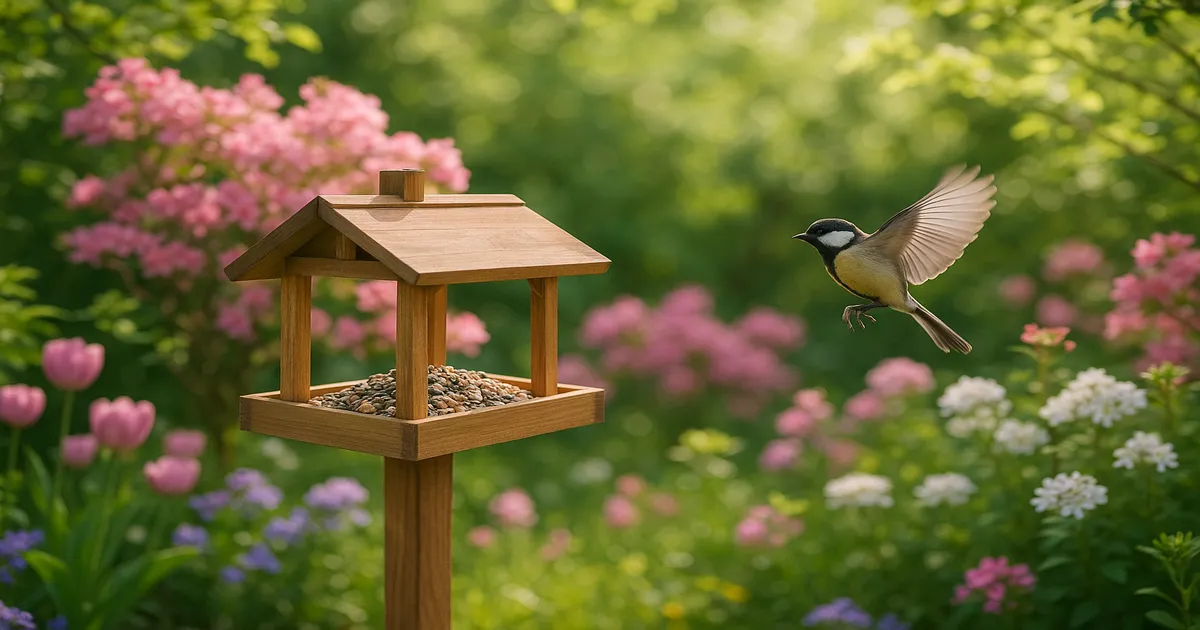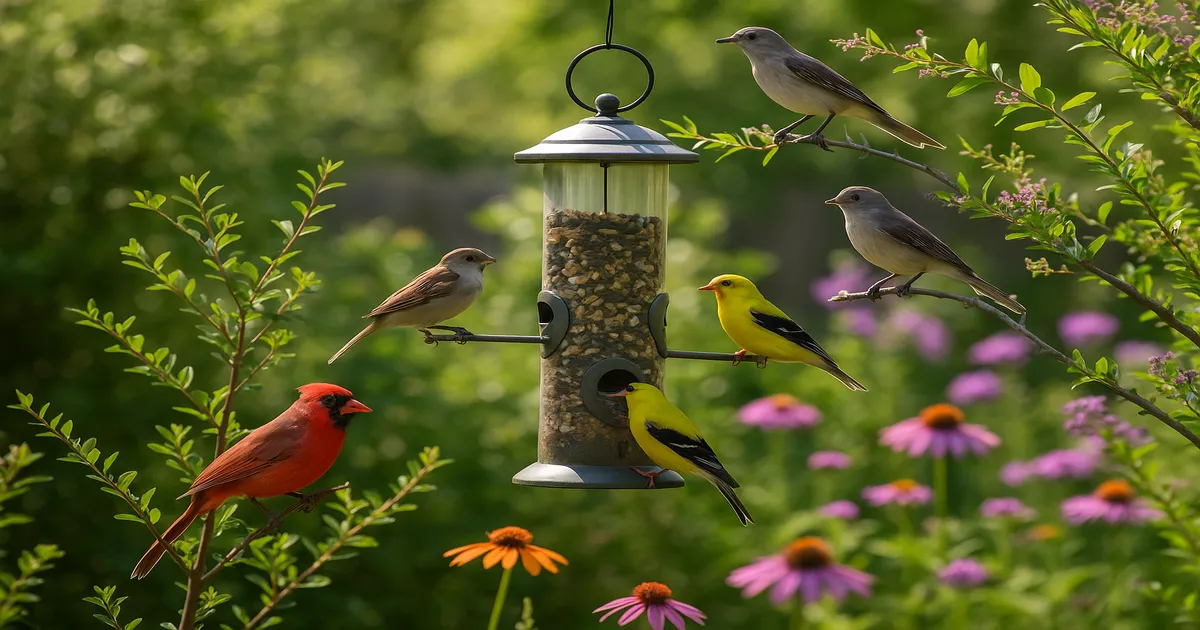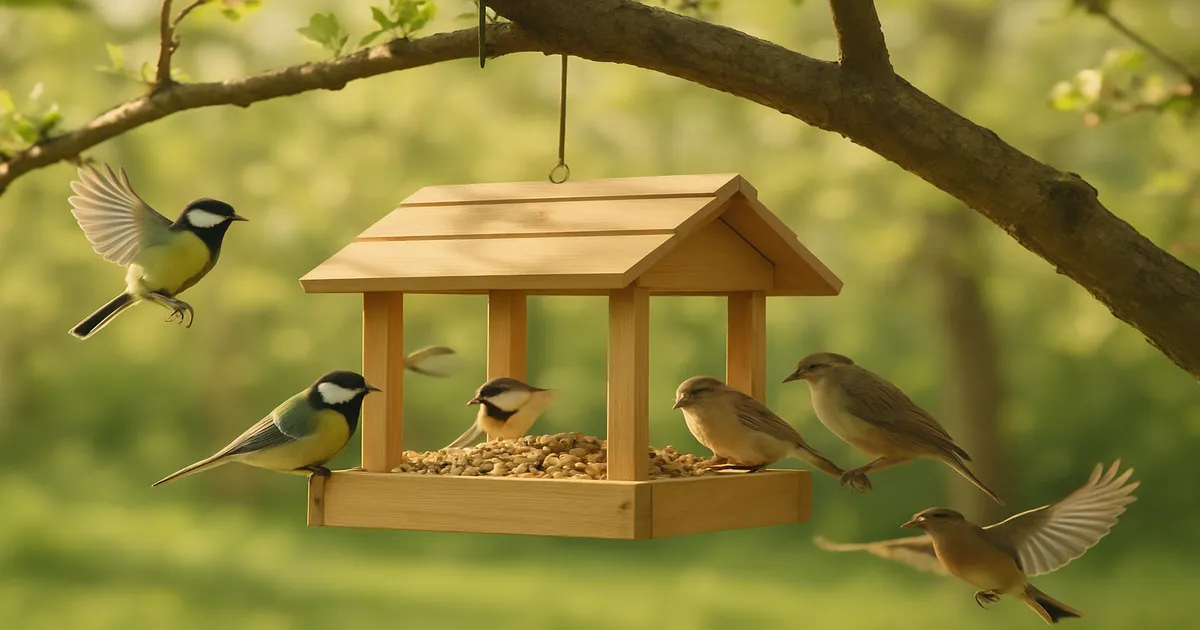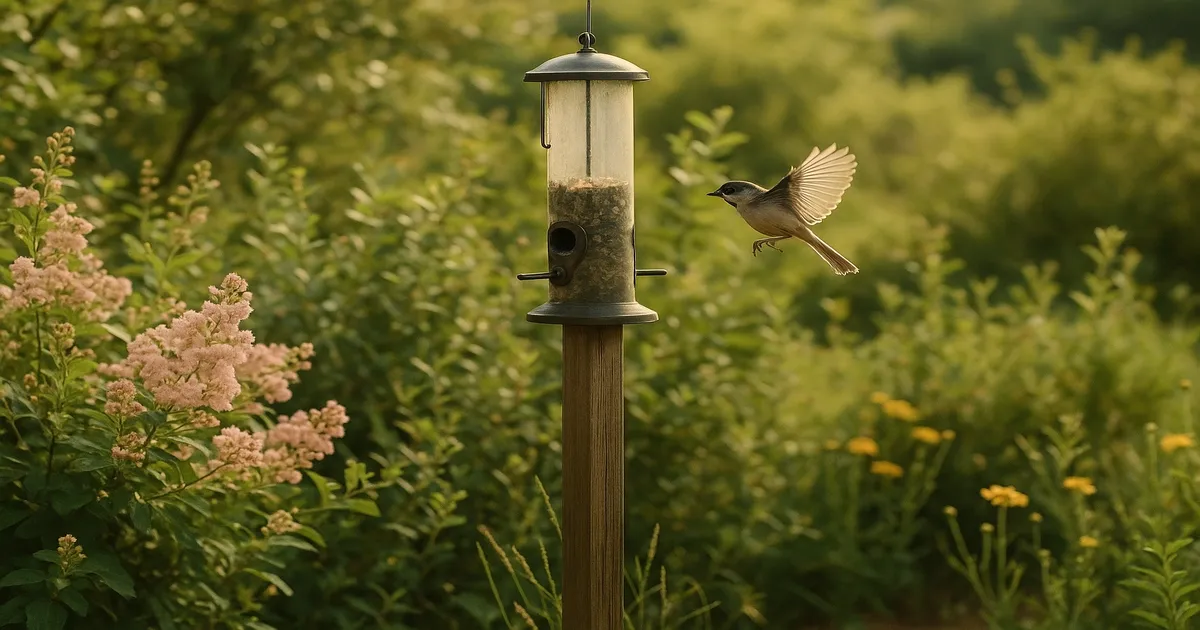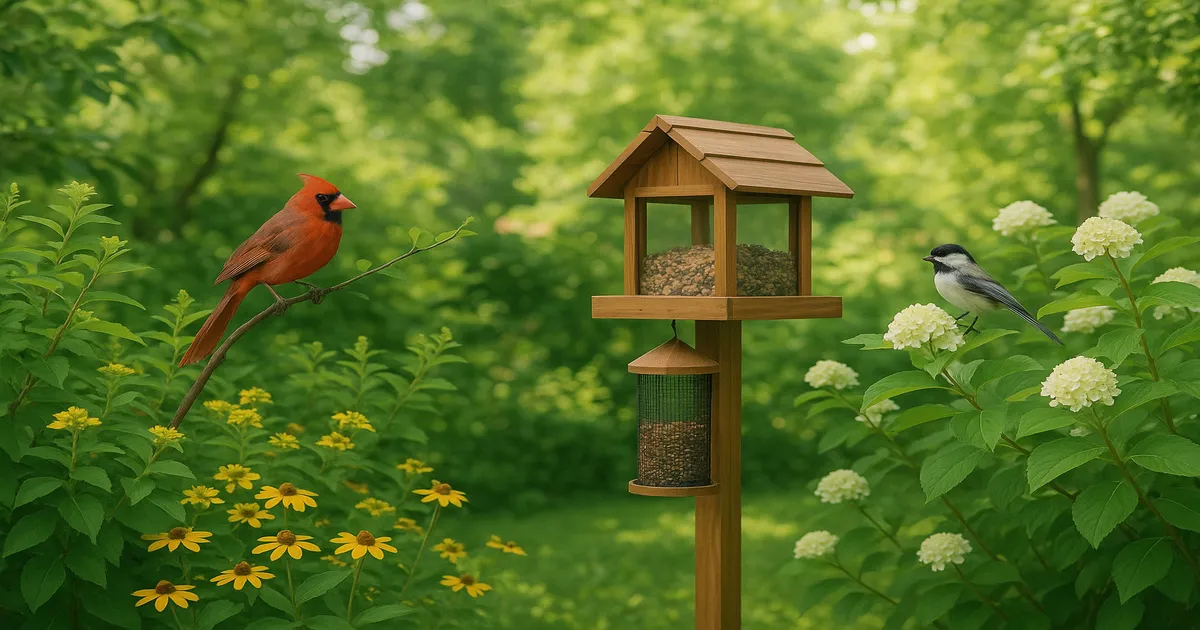
Quick Answer: To attract birds and squirrels, offer black-oil sunflower seeds, nyjer, suet, and corn in a mix of feeder styles, keep a clean water source nearby, and add native plants for shelter and natural food. Most North American backyards can reliably host 10 or more bird species and at least one squirrel species with surprisingly little effort. The guide below covers exactly which species to expect, what to feed them, and how to set up your yard for maximum action.
If you’ve ever wondered how to attract birds and squirrels to your backyard, the good news is that you’re already halfway there. Most suburban yards already have trees, open ground, and some shrubs — the basic ingredients wildlife needs. A well-placed feeder and a birdbath can transform a quiet yard into a busy wildlife hub within days. This guide walks through every step: which species to expect, what to feed them, how to set up your space, and how to keep things running cleanly and safely.
Meet the Visitors: Bird and Squirrel Species You Can Attract
Northern Cardinal
The Northern Cardinal (Cardinalis cardinalis) is about 8.75 inches (22 cm) long with a raised crest and a heavy orange-red bill. Males are brilliant scarlet with a black mask; females are warm buffy-brown with reddish tints on the crest, wings, and tail — and the same bold bill. Quick ID tip: crest plus orange bill equals cardinal, even if the bird isn’t red.
Black-capped Chickadee
The Black-capped Chickadee (Poecile atricapillus) is tiny at about 5.25 inches (13 cm), but it has more personality per ounce than almost anything else at the feeder. Black cap, white cheeks, gray back — unmistakable. Males and females look identical. Listen for the namesake chick-a-dee-dee-dee call; more dee notes signals higher alarm, usually a perched predator nearby.
American Robin
At about 10 inches (25 cm), the American Robin (Turdus migratorius) is hard to miss — upright posture, brick-red breast, yellow bill. Males have a darker, nearly black head; females are noticeably paler and browner. Robins rarely visit seed feeders, but they’ll work your lawn for earthworms and flock to berry-laden shrubs in fall and winter.
American Goldfinch
The American Goldfinch (Spinus tristis) is a compact 5 inches (13 cm). Breeding males are lemon-yellow with jet-black wings and a black forehead patch; winter birds molt into muted olive-yellow, which trips up a lot of people. Listen for the po-ta-to-chip call in undulating flight — once you know it, you’ll hear goldfinches everywhere.
Downy Woodpecker
The Downy Woodpecker (Dryobates pubescens), at about 6.75 inches (17 cm), is the smallest woodpecker in North America and one of the most feeder-friendly. Black-and-white checkered back, white underparts — males add a small red patch on the back of the head. Key ID tip: the bill is noticeably stubby, much shorter relative to head size than the otherwise similar Hairy Woodpecker (Dryobates villosus).
White-breasted Nuthatch
The White-breasted Nuthatch (Sitta carolinensis) is about 5.75 inches (15 cm) long and does something no other common feeder bird does — it walks headfirst down tree trunks. Blue-gray back, black cap (gray in females), clean white face and underparts. That nasal yank-yank-yank is one of the more distinctive sounds of eastern and central North American feeders.
House Finch
The House Finch (Haemorhous mexicanus) is about 6 inches (15 cm) long with a curved, seed-cracking bill. Males show rosy-red on the head, breast, and rump — how vivid that red gets depends on carotenoid intake during the summer molt, which is genuinely interesting biology. Females are plain brown and heavily streaked. House Finches sing constantly and are present year-round across virtually all of North America.
Dark-eyed Junco
The Dark-eyed Junco (Junco hyemalis) is about 6.25 inches (16 cm) long, and its arrival in your yard is one of the reliable signals that winter is coming. Eastern “Slate-colored” birds show dark slate-gray hoods and white bellies; western “Oregon” juncos have a black hood and rufous flanks. Those white outer tail feathers flash in flight — easy to spot as a flock scatters from the ground.
Mourning Dove
The Mourning Dove (Zenaida macroura) is slender and elegant at about 12 inches (31 cm), with a long pointed tail and a small round head. Soft grayish-brown overall with iridescent neck patches and a mournful ooh-woo-woo-woo call that people frequently mistake for an owl. Doves feed almost exclusively on the ground, so you’ll find them working beneath your feeders rather than on them.
Blue Jay
The Blue Jay (Cyanocitta cristata) is about 11 inches (28 cm) of brilliant blue, white, and black — unmistakable. Males and females look identical. Blue Jays get a bad reputation for bullying feeders, but they’re among the most entertaining birds you can host. They’re remarkable mimics, often imitating Red-shouldered Hawks (Buteo lineatus) convincingly enough to scatter every other bird in the yard.
Eastern Gray Squirrel
The Eastern Gray Squirrel (Sciurus carolinensis) is what most people picture when they think “backyard squirrel.” Body length 9–12 inches (23–30 cm), with a bushy tail nearly as long again. Salt-and-pepper gray with white underparts and a frosted tail. If you have nut-bearing trees anywhere nearby, you already have gray squirrels.
Fox Squirrel
The Fox Squirrel (Sciurus niger) is noticeably bigger than the gray — body up to 15 inches (38 cm) and weight up to 37 oz (1,050 g). Most have rusty-orange underparts and a grizzled back, though coloration varies considerably by region. Fox Squirrels prefer open, edge habitats and are less common in dense suburban areas than Eastern Grays.
Bonus species: In the northern US, Canada, and mountain regions, watch for the American Red Squirrel (Tamiasciurus hudsonicus) — a feisty, territorial little squirrel with rusty-red fur and a machine-gun chatter that’s impossible to miss.
How to Attract Birds and Squirrels: Food, Feeders, and Setup
Best Foods for Each Species
Black-oil sunflower seeds are the single best all-around choice — cardinals, chickadees, nuthatches, House Finches, and many others eat them readily. Nyjer (thistle) seed is the go-to for goldfinches and other small finches. Millet and cracked corn bring in juncos, Mourning Doves, and Blue Jays.
A few species-specific tips:
- Cardinals: Black-oil sunflower seeds and safflower — squirrels tend to avoid safflower, which is a useful bonus
- Goldfinches: Nyjer seed; also love coneflower and thistle seedheads left standing in the garden
- Juncos and doves: White millet scattered on the ground or on a low platform
- Blue Jays: Whole peanuts in the shell and acorns — they’ll carry off several at a time
Suet cakes are non-negotiable if you want Downy Woodpeckers and nuthatches. Keep a suet feeder up year-round; in warm weather, use no-melt suet formulas to avoid a rancid mess.