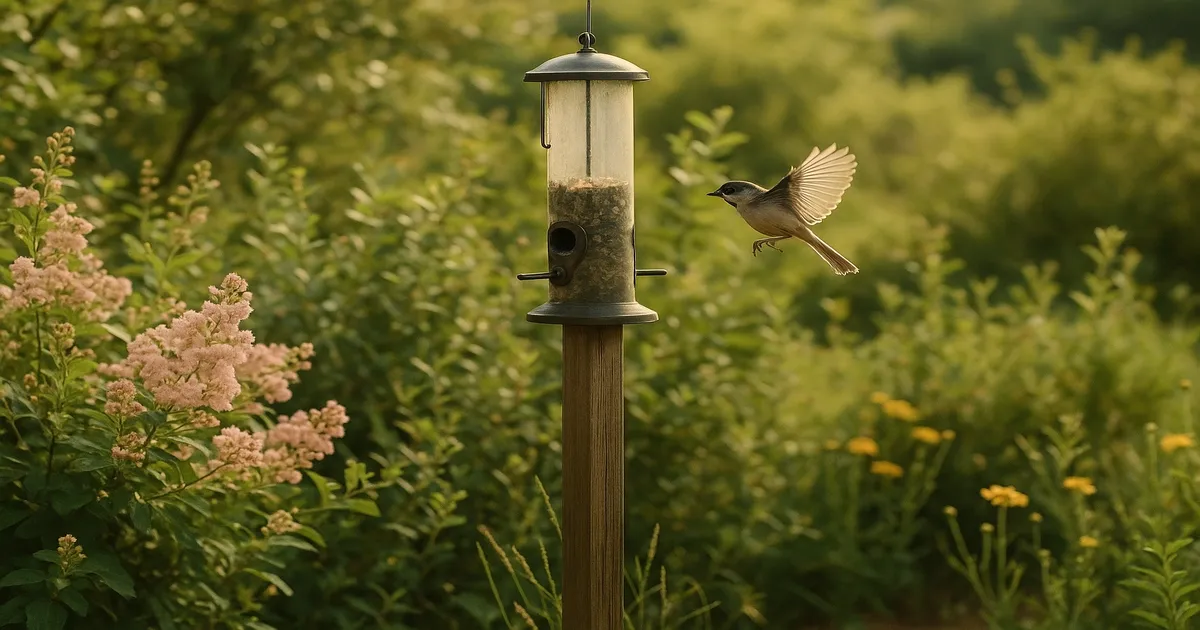
Quick Answer: The real culprit isn’t your bird feeder — it’s the seed that piles up on the ground beneath it. Switch to low-spillage seeds like nyjer, hulled sunflower, and safflower; use tube or caged feeders; rake fallen seed daily; and consider removing feeders at night. You don’t have to choose between birds and a rat-free yard.
Figuring out how to attract birds but not rats is one of the most common frustrations in backyard birding, and the good news is that it’s genuinely solvable. Rats aren’t drawn to your feeder — they’re drawn to the buffet you’re inadvertently laying out on the ground beneath it. Fix that, and you fix most of the problem.
Why Bird Feeders Attract Rats
How Seed Spillage Creates the Problem
Rats aren’t usually climbing your pole to raid the feeder. What they’re after is the seed that spills, falls, or gets flicked to the ground during normal bird activity. That seed sits there all day and all night — a reliable, calorie-dense food source in exactly the kind of sheltered suburban habitat where rats already live.
Norway rats (Rattus norvegicus) are burrowers that thrive near human structures. Roof rats (Rattus rattus) are better climbers and more common in southern and coastal states — and yes, they can reach elevated feeders if there’s a route up. Both species overlap heavily with the suburban yards where most of us do our birding.
The timing makes things worse: birds feed during the day, rats feed at night. Everything that hits the ground between dawn and dusk is sitting there waiting for rats from dusk to dawn. Once they’ve found your yard, they establish regular travel routes and return every night.
Birds Most Likely to Create Rat-Attracting Spillage
These are all birds you probably want in your yard. The goal isn’t to exclude them — it’s to manage how they feed.
Mourning Doves: High-Volume Ground Feeders
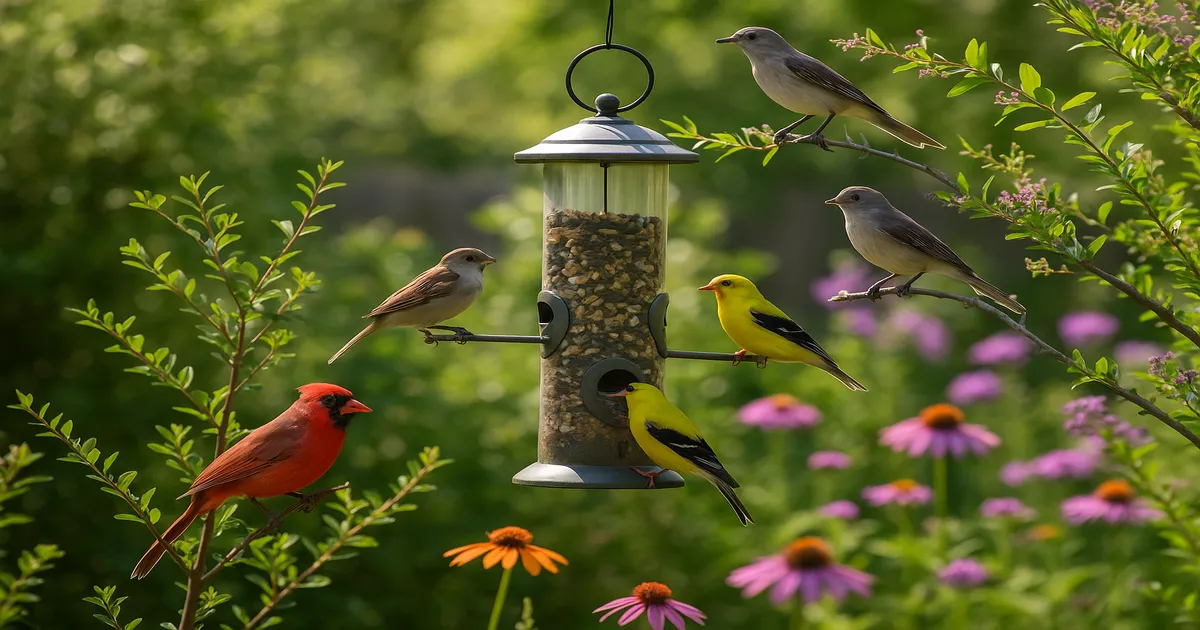
Mourning Doves (Zenaida macroura) are about 12 inches (31 cm) long with soft grayish-brown plumage, a long pointed tail, and that unmistakable hollow cooing. They’re ground feeders by nature, consuming large quantities of millet, cracked corn, and sunflower. A flock of doves under a platform feeder is basically a rat advertisement.
House Sparrows: Flock Foragers That Scatter Seed
House Sparrows (Passer domesticus) are small — about 6.25 inches (16 cm) — with streaky brown plumage and a habit of descending in noisy, competitive flocks. That competition is the problem. They scratch and fling seed aggressively, and what lands on the ground stays there.
Northern Cardinals: Messy Hullers
The Northern Cardinal (Cardinalis cardinalis) is a stunning bird — males are brilliant all-red with a black mask; females are warm buffy-brown with reddish tinges on the crest, wings, and tail, and the same orange-red bill. At about 8.75 inches (22 cm), they have powerful conical bills built for cracking seeds. They hull sunflower seeds and drop the shells, which pile up fast beneath feeders.
Dark-eyed Juncos: Ground Scratchers
Dark-eyed Juncos (Junco hyemalis) arrive across most of the lower 48 states in October and stay through April, foraging almost exclusively on the ground. The slate-colored form — dark gray hood, white belly, white outer tail feathers — is the most widespread. They scratch through fallen seed constantly, keeping the ground disturbed and seedy. Medium rat risk, but worth managing.
The Cleanest Feeder Birds: Low-Spillage Species to Prioritize
American Goldfinch: The Tube Feeder Specialist
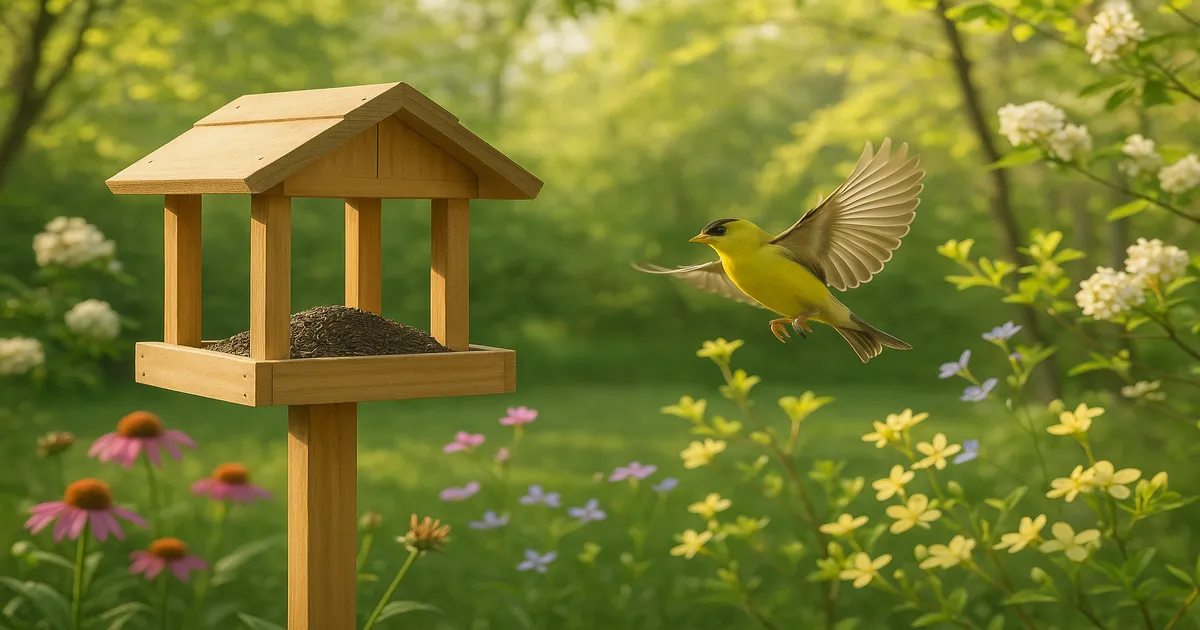
American Goldfinches (Spinus tristis) are small — about 5 inches (13 cm) — and among the tidiest feeder visitors you can attract. Males in breeding plumage are brilliant lemon-yellow with jet-black wings and a black forehead patch; in winter they fade to dull olive-yellow. They cling directly to tube feeder ports and consume nyjer seed almost entirely in place, with minimal fallout. Pair goldfinches with a quality nyjer tube feeder and you’ve got one of the cleanest setups possible.
Black-capped Chickadee: The Grab-and-Go Cacher
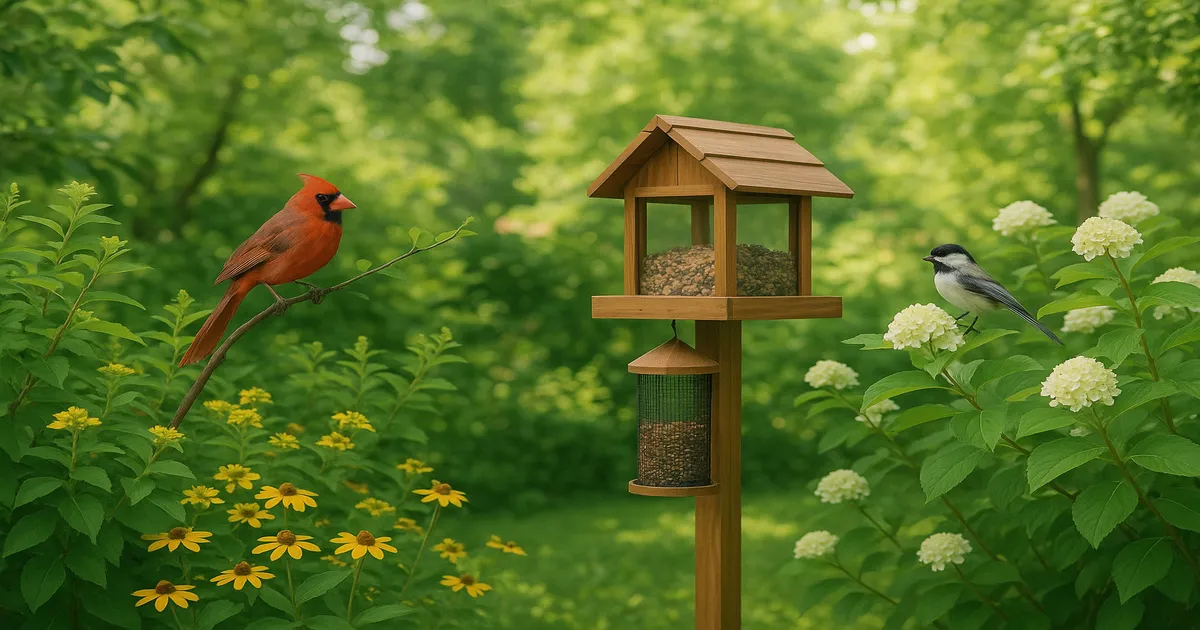
Black-capped Chickadees (Poecile atricapillus) are easy to identify — black cap and bib, white cheeks, gray back, about 5.25 inches (13 cm) long. Their chick-a-dee-dee-dee call is one of the most recognizable sounds in North American birding. They grab one seed at a time and fly off to cache it in bark or foliage, which means almost nothing hits the ground at the feeder. (Carolina Chickadees, Poecile carolinensis, behave the same way and replace Black-capped Chickadees across the southeastern U.S.)
White-breasted Nuthatch: Minimal Ground Impact
The White-breasted Nuthatch (Sitta carolinensis) is that gray-backed, black-capped bird that creeps headfirst down tree trunks — the only common feeder bird that does this. At about 5.75 inches (15 cm), it’s a solitary, deliberate feeder that caches seeds one at a time. Nuthatches produce almost zero ground mess. Very low rat risk.
House Finch: Manageable With the Right Setup
House Finches (Haemorhous mexicanus) are medium-risk. Males have a red-to-orange wash on the head, breast, and rump; females are plain brown with heavy streaking and no distinct facial pattern. They’re messier than chickadees or nuthatches, but switching them to hulled sunflower in a tube feeder with a catch tray brings the spillage down considerably.
Spillage Risk at a Glance
| Bird | Spillage Risk | Rat Attraction |
|---|---|---|
| Mourning Dove | Very High | High |
| House Sparrow | High | High |
| Northern Cardinal | Medium-High | Medium-High |
| Dark-eyed Junco | Medium | Medium |
| House Finch | Medium | Medium |
| American Goldfinch | Low | Low |
| Black-capped Chickadee | Low | Low |
| White-breasted Nuthatch | Very Low | Very Low |
Best Bird Seeds That Don’t Attract Rats
Top Low-Risk Seeds: Nyjer, Hulled Sunflower, and Safflower
Nyjer (thistle) is the gold standard for rat prevention. The seeds are tiny — too small to interest rats — and when used in tube feeders with small ports, spillage is minimal. Goldfinches, Pine Siskins, and Common Redpolls love it. (Common Redpolls are irruptive winter visitors across the northern U.S. and Canada, so don’t expect them every year.)
Hulled sunflower — also called sunflower chips or hearts — is the smarter swap for black-oil sunflower. You get the same birds: cardinals, chickadees, finches, nuthatches. No shell debris piling up on the ground. It costs more per pound, but you’re paying for less mess and less rat bait.
Safflower is worth keeping in the mix. Cardinals love it, squirrels tend to ignore it, and it’s less attractive to rodents than sunflower in shell. Not a perfect solution, but a solid medium-risk option.
High-Risk Seeds to Avoid: Cracked Corn, Millet, and Peanuts in Shell
- Cracked corn is arguably the most rat-attractive thing you can put in a feeder. Doves and sparrows love it; rats love it more.
- White proso millet is the go-to food for juncos and sparrows, but it ends up scattered on the ground almost immediately. Use it sparingly in a covered platform feeder and clean it daily.
- Peanuts in shell are a rat magnet — rats will cache whole peanuts aggressively. Shelled peanut pieces in a covered mesh feeder are a better option if you want to attract woodpeckers and nuthatches.
Suet, Fruit, and Nectar
Suet is low-risk if you use a caged suet feeder — rats can reach exposed suet blocks, but a cage makes access difficult. Fruit (orange halves and berries for orioles and mockingbirds) should be removed each evening. Nectar feeders for hummingbirds carry virtually no rat risk; sugar water just doesn’t interest rodents.
How to Attract Birds But Not Rats: Feeder Setup and Placement
Best Feeder Types for Minimizing Spillage
Tube feeders with small ports are your best all-around option — they limit seed access to one bird at a time and cut scatter significantly. Caged or squirrel-proof tube feeders add another layer by physically excluding larger animals. Nyjer socks work well for goldfinches specifically. Platform feeders are high-risk unless you’re cleaning them daily and using only hulled seed.
Height, Location, and Baffles
Mount feeders on smooth metal poles — not wood, not near fences or walls. Roof rats are agile climbers that use fences, tree branches, and structural edges to reach elevated feeders. A wrap-around squirrel and rat baffle mounted at least 4 feet (1.2 m) high will stop most rats from climbing the pole. Keep feeders at least 10 feet (3 m) from any fence, wall, or overhanging branch.
Catch Trays and Ground Management
A seed-catcher tray mounted below your feeder captures fallen seed before it hits the ground — empty it every day. This is one of the most underrated tools in rat prevention. For ground-feeding birds like juncos and doves, a ground tray with a hardware cloth base elevates the seed slightly and allows drainage, which keeps the area tidier than bare soil.
Raking or sweeping beneath feeders every evening takes about two minutes and makes a real difference if you have rat pressure.
Should You Remove Feeders at Night?
It works — rats that find no food at night will eventually move on. But bringing feeders in every evening is genuinely inconvenient, and most people don’t stick with it. A more sustainable approach is combining the right seeds, the right feeders, and daily ground cleanup. That eliminates most of the rat attraction without requiring you to move anything.
Seasonal Management to Reduce Rat Pressure Year-Round
Fall and Winter: Peak Risk Season
Natural food sources decline in fall, which drives rats to seek reliable alternatives — right when feeder bird activity peaks. Tighten up your hygiene routine in October and keep it tight through March. Dark-eyed Juncos arrive around that time and add ground-feeding pressure through the winter months.
Spring and Summer: Rat Breeding Season
Rats breed prolifically — up to five to seven litters per year — and a reliable seed source can sustain a population explosion through spring and summer. Meanwhile, many feeder birds become less feeder-dependent as insects return. Chickadees feed their nestlings almost exclusively on insects and caterpillars; they don’t need your sunflower seeds in June.
Scaling back to nyjer only (for goldfinches) and suet in summer keeps the most desirable birds coming while dramatically reducing the food available to rodents.
Seasonal Seed Guide
- Fall–Winter: Hulled sunflower, nyjer, safflower, suet — skip the millet and corn
- Spring: Begin reducing platform feeders as ground-feeding birds disperse to breed
- Summer: Nyjer and suet only; remove fruit daily; skip cracked corn entirely
- Year-round: Never leave seed on the ground overnight
Feeder Hygiene and Yard Practices That Deter Rats
Cleaning Routine
- Daily: Rake or sweep fallen seed from beneath feeders; empty and wipe seed-catcher trays
- Weekly: Scrub feeders with a dilute bleach solution (1 part bleach to 9 parts water), rinse thoroughly, and let dry before refilling
- Seed storage: Keep seed in metal containers with tight-fitting lids (Vittles Vault Outback 50 lb Airtight Pet Food Container) — plastic bins are no match for a determined rat
Eliminate Other Attractants
Feeders are rarely the only rat attractant in a yard. Check for open compost bins, brush piles or wood stacks near the feeder area (rats use these as cover), pet food left outside overnight, and standing water. A yard that offers food, water, and shelter is a rat paradise regardless of what you’re doing at the feeder.
Natural Deterrents: What Works and What Doesn’t
Peppermint oil and predator urine get mentioned a lot online. The evidence for both is weak — rats habituate to scent deterrents quickly, and there’s no substitute for removing the food source. A well-managed yard beats any spray.
One thing worth saying directly: cats are not the answer. They’re ineffective at controlling established rat populations, and they’re a serious threat to birds. Don’t rely on them for either problem.
Frequently Asked Questions
Does bird seed attract rats?
Bird seed itself isn’t uniquely attractive to rats — the real problem is seed that accumulates on the ground beneath feeders. Rats are opportunistic and will eat almost anything, but the spillage beneath a poorly managed feeder creates a reliable food source that’s hard for them to resist. Manage the ground, and you manage the rats.
What bird feeder does not attract rats?
Tube feeders with small ports — especially nyjer tube feeders — are the lowest-risk option. Caged or squirrel-proof tube feeders add another layer of protection. Combine a tube feeder, nyjer or hulled sunflower seed, and a seed-catcher tray emptied daily, and you’ve got about as rat-resistant a setup as backyard bird feeding allows.
Should I stop feeding birds if I have rats?
No, but change how you’re feeding them. Switch to low-spillage seeds, upgrade to tube or caged feeders, clean beneath feeders every evening, and store seed in sealed metal containers. Stopping altogether is rarely necessary — and even when people try it, the rats usually just find another food source nearby.
Do rats climb bird feeder poles?
Yes. Norway rats are capable climbers, and Roof Rats — common in southern and coastal states — are exceptionally agile. A smooth metal pole with a quality wrap-around baffle mounted at least 4 feet (1.2 m) high will stop most of them. Wood poles, chain-link fences, and nearby branches are all rat highways — cut off those access routes first.
What is the best bird seed that doesn’t attract rodents?
Nyjer (thistle) is the top choice — the seeds are too small to interest rats and virtually all of it gets consumed at the feeder. Hulled sunflower is the best option for attracting a wider variety of birds without the shell debris that piles up on the ground. Safflower is a solid third choice. Avoid cracked corn, white proso millet, and peanuts in shell if rat pressure is a concern.