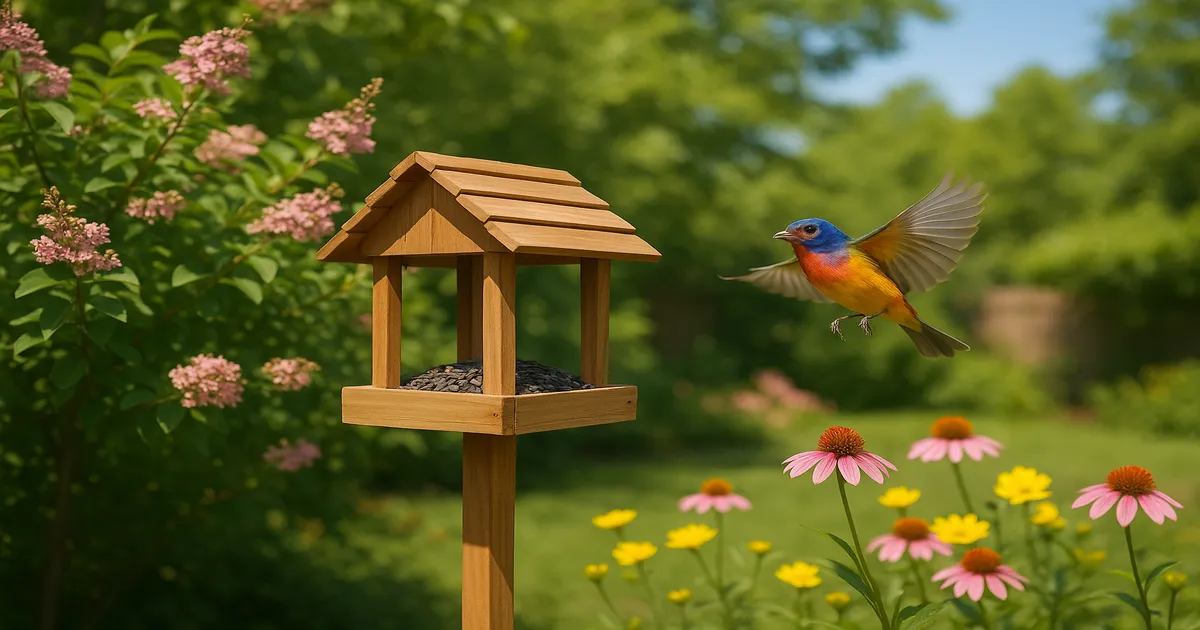
Quick Answer: To attract birds for photography, you need three things working together: the right food and habitat features to pull birds in, natural-looking perches positioned where you want to shoot, and timing your sessions around peak activity at dawn and dusk. Different species need different setups — a hummingbird garden looks nothing like a winter feeder station for cardinals — and the sections below break it all down by species, habitat, gear, and ethics.
Getting great bird photos starts long before you raise the camera. The real work — the work that separates consistently stunning images from lucky snapshots — happens in how you attract birds for photography and set up your environment. Think of your yard or shooting location as a studio you’re designing, not just a place you happen to visit with a long lens.
Here’s a quick-start checklist if you want results today:
- Put out black-oil sunflower seed in a tube feeder
- Add a dripping water feature near cover
- Place a natural branch or lichen-covered stick near your feeder as a landing perch
- Pick your shooting position and stay consistent — birds learn where you sit
- Go out within an hour of sunrise
That’s the foundation. Everything else is refinement.
Best Bird Species to Target for Photography
Northern Cardinal
The Northern Cardinal (Cardinalis cardinalis) is probably the most-searched backyard photography subject in North America, and for good reason — a male in winter snow is almost impossibly photogenic. He’s about 8.75 inches (22 cm) long with all-red plumage, a pointed crest, and a heavy orange-red bill.
Don’t overlook the female. Her warm buffy-brown tones with a reddish crest and wings, paired with the same black mask and orange bill, make for subtler but genuinely beautiful images. Juveniles carry a darker, dusky bill through their first winter — worth noting if you’re captioning photos.
What draws them in: Black-oil sunflower seed and safflower are the two best options. Cardinals prefer platform or hopper feeders where they can perch comfortably. They’re also among the first birds at feeders in early morning and late evening — exactly the light you want.
American Goldfinch
The American Goldfinch (Spinus tristis) gives you two completely different photography subjects depending on the season. The breeding male’s canary-yellow body and jet-black cap against summer green is electric. By winter, that same bird is dull olive-buff — still worth shooting, but a completely different mood.
At about 5 inches (13 cm), goldfinches are small and active. Nyjer (thistle) seed in a sock or tube feeder pulls them in reliably. Their bouncy, undulating flight and the distinctive “po-ta-to-chip” call will announce their arrival before you see them.
Eastern and Western Bluebird
Eastern Bluebirds (Sialia sialis) and Western Bluebirds (Sialia mexicana) are cavity nesters, which means a well-placed nest box is essentially a photography blind — the birds come to you, repeatedly, on a predictable schedule. Males of both species are stunning: the Eastern has royal-blue upperparts and a rusty-orange breast; the Western adds chestnut-brown to the back and flanks, with a blue throat rather than the Eastern’s white.
Mealworms are the single most effective lure for bluebirds. Place a shallow dish of live or dried mealworms near your nest box and position yourself downwind with a clear sightline. Bluebirds have an upright perching posture and drop to the ground to catch prey — anticipate that drop for an action shot. A cedar bluebird nest box mounted on a smooth metal pole (with a baffle to deter predators) will have you set up for seasons of reliable photography.
Ruby-throated and Anna’s Hummingbird
Ruby-throated Hummingbirds (Archilochus colubris) breed across the eastern half of North America and migrate south by October; Anna’s Hummingbirds (Calypte anna) are year-round Pacific Coast residents. Both reward patience and fast glass. The Ruby-throated male’s gorget can look flat black in shade and burst into iridescent ruby in direct sun — understanding that variable quality will save you a lot of frustration over “dark throat” images.
A nectar feeder with a 1:4 sugar-to-water ratio (no red dye needed) is the obvious draw , but native flowering plants like trumpet vine, salvia, and bee balm create far more natural-looking images. Position a thin, lichen-covered twig near the feeder — hummingbirds perch more than most people realize, and a perched bird gives you time to nail focus.
Dark-eyed Junco
The Dark-eyed Junco (Junco hyemalis) is winter’s most reliable feeder bird across most of North America. The “Slate-colored” form in the East is clean dark-gray above and white below; the “Oregon” form in the West adds a black hood and warm brown flanks. Both flash white outer tail feathers in flight — a detail worth capturing.
Juncos feed mostly on the ground under feeders. Shoot low and level. Lie down if you can. White millet scattered on bare ground or a low platform feeder is all it takes.
American Robin
The American Robin (Turdus migratorius) gets overlooked because it’s everywhere — but that ubiquity is exactly what makes it a great subject for practicing behavioral photography. Watch for the classic run-stop-tilt-pull sequence as it hunts earthworms. That cocked-head pose, where the bird is using monocular vision to spot movement underground, is one of the most satisfying shots to nail.
At about 10 inches (25 cm), robins are forgiving for beginners still dialing in autofocus. No feeder needed — a well-watered lawn and a birdbath will do it.
Other High-Value Species
| Species | Top Attraction | Best Season |
|---|---|---|
| Black-capped Chickadee (Poecile atricapillus) | Sunflower seed; will feed from hand | Year-round |
| Tufted Titmouse (Baeolophus bicolor) | Sunflower seed, peanuts | Year-round |
| Downy Woodpecker (Dryobates pubescens) | Suet cake | Year-round |
| Red-bellied Woodpecker (Melanerpes carolinus) | Suet, peanuts | Year-round |
| Cedar Waxwing (Bombycilla cedrorum) | Berry-producing shrubs, water | Irruptive/year-round |
| Baltimore Oriole (Icterus galbula) | Halved oranges, grape jelly | May–August |
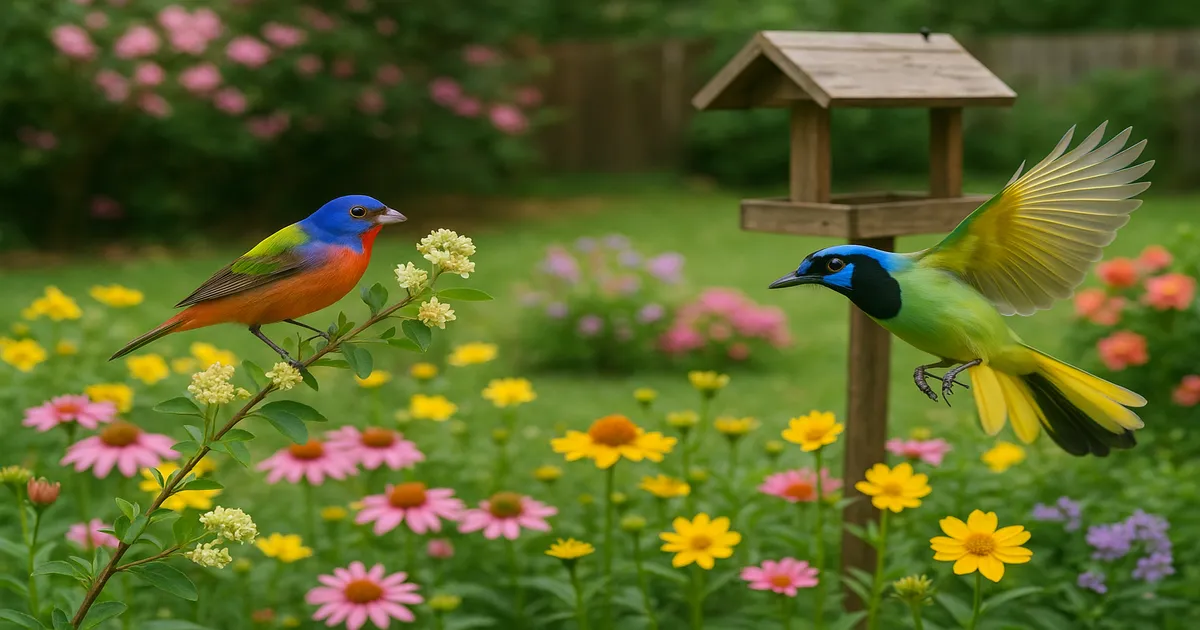
| Painted Bunting (Passerina ciris) | Millet, native grasses | Apr–Sep (SE/South-Central US) |
| Indigo Bunting (Passerina cyanea) | Nyjer, millet | May–Sep migration/breeding |
| Rose-breasted Grosbeak (Pheucticus ludovicianus) | Sunflower seed | Apr–May migration |
How to Attract Birds for Photography: Habitat Setup
Backyard and Suburban Setups
Most serious bird photographers start here, and you can build an excellent portfolio without ever leaving your yard. The key is thinking like a set designer. You want birds to land where the background is clean, the light is good, and you have a clear angle.
Mature trees, shrub borders, and brush piles provide cover that makes birds feel safe enough to linger. Native plantings — oaks, coneflowers, serviceberries — do double duty as food sources and natural perches.
Natural-Looking Perches Near Your Feeders
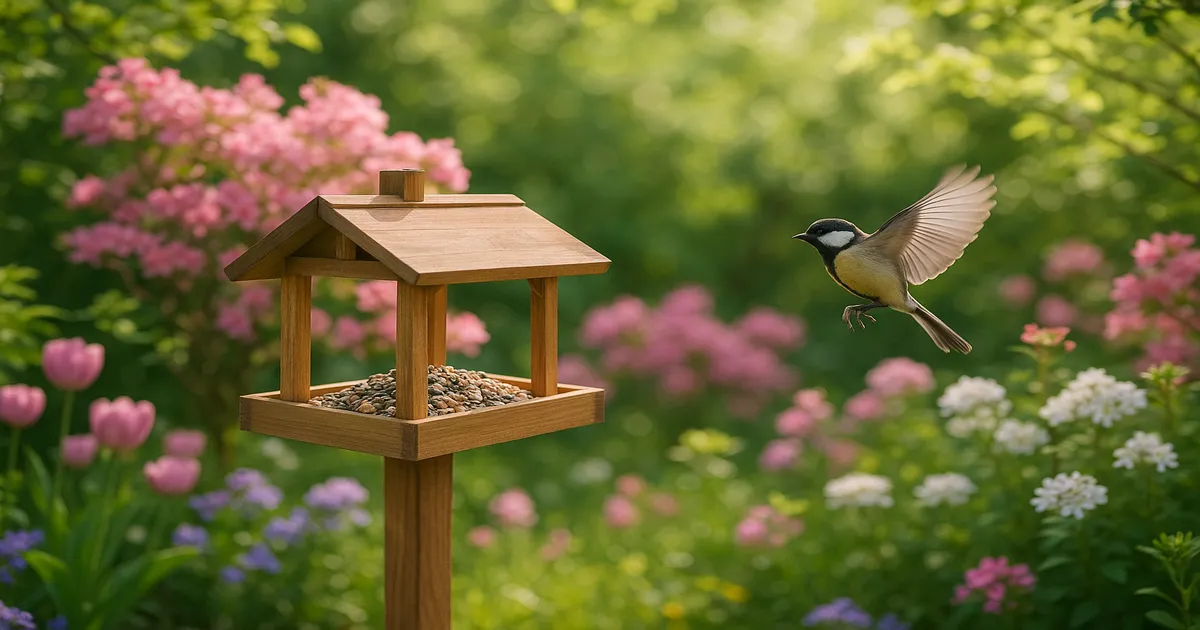
This is the single highest-impact change most backyard photographers can make. Instead of shooting birds clinging to a plastic feeder port, place a natural branch, piece of driftwood, or lichen-covered stick nearby. Birds use it as a staging perch before feeding — and you get a frame that looks like pure wilderness.
- Wedge a 3–4 foot branch into the ground or a heavy pot near your feeder
- Choose branches with texture: lichen, moss, interesting bark
- Position it so the background is distant foliage (for smooth bokeh), not a fence or wall
- Vary the height — some species prefer low perches, others like elevation
Forest Edge, Fields, and Wetlands
Forest edges concentrate species diversity — woodland birds and open-country birds meet in the same spot. Eye-level perches in shrubby understory are common, and dappled light creates mood.
Open fields offer fence posts and utility wires as natural perches, and birds that sing from exposed spots to mark territory. Eastern and Western Meadowlarks (Sturnella magna and S. neglecta) are field-edge gold.
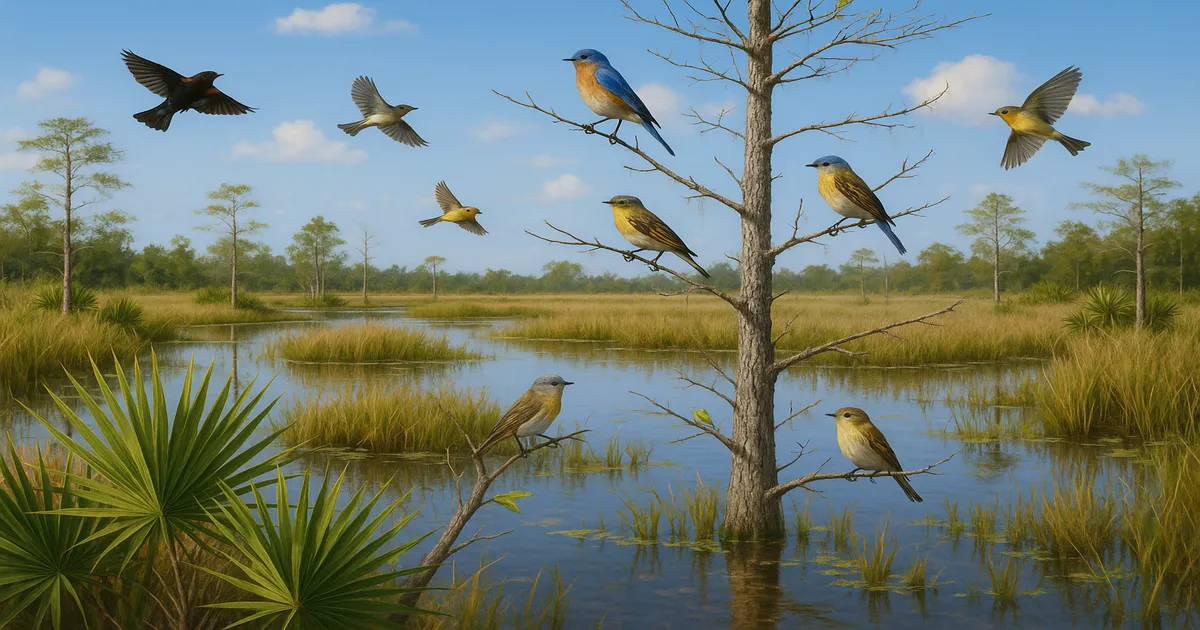
Wetlands reward early risers. Morning mist over open water, a Great Blue Heron (Ardea herodias) hunting in still light, reflections doubling the image — it’s a different genre entirely from feeder photography, and it’s worth the wet boots.
Food, Feeders, and Water: Attracting Birds for Photography Fast
Seed Selection by Species
The right food pulls the right birds. Offering everything in one hopper often just means you’re feeding House Sparrows. Target your setup:
- Black-oil sunflower seed — Cardinals, chickadees, nuthatches, titmice, grosbeaks
- Safflower — Cardinals strongly prefer it; squirrels and starlings typically ignore it
- Nyjer (thistle) — Goldfinches, Pine Siskins (Spinus pinus), Common Redpolls (Acanthis flammea)
- White millet — Juncos, sparrows, doves (scatter on ground or use a low platform)
- Peanuts (shelled) — Jays, woodpeckers, nuthatches, titmice
Suet, Nectar, Fruit, and Mealworms
Suet cakes are the fastest way to attract woodpeckers and work year-round, though they go rancid quickly in summer heat — switch to no-melt suet dough in warm months . Halved oranges and grape jelly on a platform feeder are nearly irresistible to Baltimore Orioles in May. Live mealworms outperform dried ones for bluebirds by a significant margin — a dish of live mealworms will have bluebirds landing within minutes if they’re in the area.
Feeder Placement for Photography
Place feeders at a distance where you can fill the frame with your longest lens — typically 15–25 feet (4.5–7.5 m) from your shooting position for a 500mm equivalent setup. The background matters as much as the feeder placement: position feeders so the backdrop is distant trees or open sky, not a wall or cluttered yard. Shoot from a fixed position consistently. Birds habituate to a person or blind in the same spot within a few days.
Water Features
Moving water is the most underused attraction tool in bird photography. A dripper or mister draws species that never touch feeders — warblers, thrushes, and vireos during migration . Even a simple birdbath with a solar-powered fountain pump will noticeably increase your species count.
Position the bath in open shade (full sun grows algae fast) with a clear approach from above and a clean background behind it.
Camera Settings and Gear for Bird Photography
Shutter Speed
For perched birds, 1/500s is usually enough to freeze incidental movement. For birds in flight or active feeders, 1/1000s–1/2000s is the working range. Hummingbirds need at least 1/2000s to freeze wing beats — 1/4000s or faster if you want individual feathers sharp. Raise ISO to 800–1600 if that’s what it takes to hit those speeds. Sharp beats noise every time.
Focal Length and Working Distance
For most backyard species, a 500mm equivalent is the practical minimum — a 100–500mm zoom on a full-frame body or a 100–400mm on a crop sensor (Canon RF 100-500mm f/4.5-7.1L IS USM). Smaller birds like warblers and goldfinches need every millimeter you can get. Most backyard setups work well at 15–25 feet (4.5–7.5 m). Never push closer than the point where a bird flushes — that’s your working distance limit.
Blinds, Lighting, and Autofocus
A portable pop-up blind lets you shoot from close range without disturbing birds . Your car works just as well — many birds will approach a parked vehicle far more closely than a person standing in the open. Keep a window mount handy.
Golden hour light — the first hour after sunrise and the last before sunset — wraps feathers in warm, directional light that flatters detail and color. Overcast days are excellent for feather texture because diffuse light eliminates harsh shadows and blown highlights. Avoid harsh midday sun, which creates deep eye shadows and washes out color.
Use continuous autofocus (AI Servo on Canon, AF-C on Nikon/Sony) for any moving bird. Burst mode at your camera’s highest frame rate increases your odds of nailing the peak moment — the full wing extension, the open bill mid-song. Storage is cheap; the moment isn’t repeatable.
Ethical Bird Photography
Feeder Hygiene
A busy feeder is a disease vector if you don’t maintain it. Salmonella and avian pox spread quickly when birds congregate around soiled seed. Clean feeders every 1–2 weeks with a 10% bleach solution, rinse thoroughly, and let dry completely before refilling. Rake up seed hulls beneath feeders regularly. If you see sick or lethargic birds at your station, take feeders down for two weeks. It’s frustrating for photography, but it’s the right call.
Nest Disturbance
Photographing at an active nest is where the most well-intentioned photographers cause real harm. Repeated approaches stress breeding adults, can expose nest locations to predators, and may cause abandonment. The best nest photography happens from a significant distance with a long lens, with visits kept brief and infrequent. If a bird is giving alarm calls or performing distraction displays, you’re too close. Back off.
Playback
Broadcast calls are effective, controversial, and genuinely harmful when overused. During breeding season, playback can exhaust territorial males and disrupt nesting. In migration hotspots where many photographers gather, the cumulative effect multiplies. Use playback sparingly — a few seconds, not minutes — and never at known nest sites. Many sanctuaries prohibit it entirely, and those rules exist for good reason.
Citizen Science
Log your sightings on eBird and iNaturalist. Your photography sessions generate useful data for researchers tracking population trends and range shifts. It takes two minutes and it’s a meaningful return on time you’re already spending in the field.
Frequently Asked Questions About Attracting Birds for Photography
What is the best food to attract birds for photography?
Black-oil sunflower seed is the single most versatile option — it draws cardinals, chickadees, nuthatches, titmice, and grosbeaks. Add nyjer for goldfinches, white millet scattered on the ground for juncos and sparrows, and suet for woodpeckers. If you want bluebirds, skip the seed entirely and put out live mealworms.
How far should I set up my feeder from my shooting position?
For a 500mm equivalent lens, 15–25 feet (4.5–7.5 m) is the sweet spot. That distance lets you fill the frame with most backyard species while keeping enough working room that birds don’t flush when you adjust your position. Smaller birds like warblers may require you to close the gap slightly.
Do I need a blind to photograph birds in my backyard?
Not necessarily. Birds habituate to a person sitting in the same spot within a few days, especially if you move slowly and wear muted colors. A blind helps when you want to get closer than birds will normally allow, or when you’re shooting in a location where you can’t establish a regular presence. Your car is a surprisingly effective free alternative.
What time of day is best for bird photography?
The hour after sunrise is hard to beat — birds are actively feeding, the light is warm and directional, and the world is quiet enough that you can hear what’s coming before you see it. The hour before sunset is a close second. Midday is generally worth skipping unless it’s overcast, which actually produces excellent soft light for feather detail.
Is it ethical to use audio playback to attract birds for photography?
Used briefly and sparingly — a few seconds of playback, then silence — it’s generally low-impact outside of breeding season. During spring and summer, territorial males will respond aggressively to playback and can exhaust themselves defending against a phantom rival. At popular birding spots where multiple photographers are using playback simultaneously, the stress on birds compounds quickly. When in doubt, skip it. A well-set-up feeder station will deliver better and more relaxed subjects anyway.