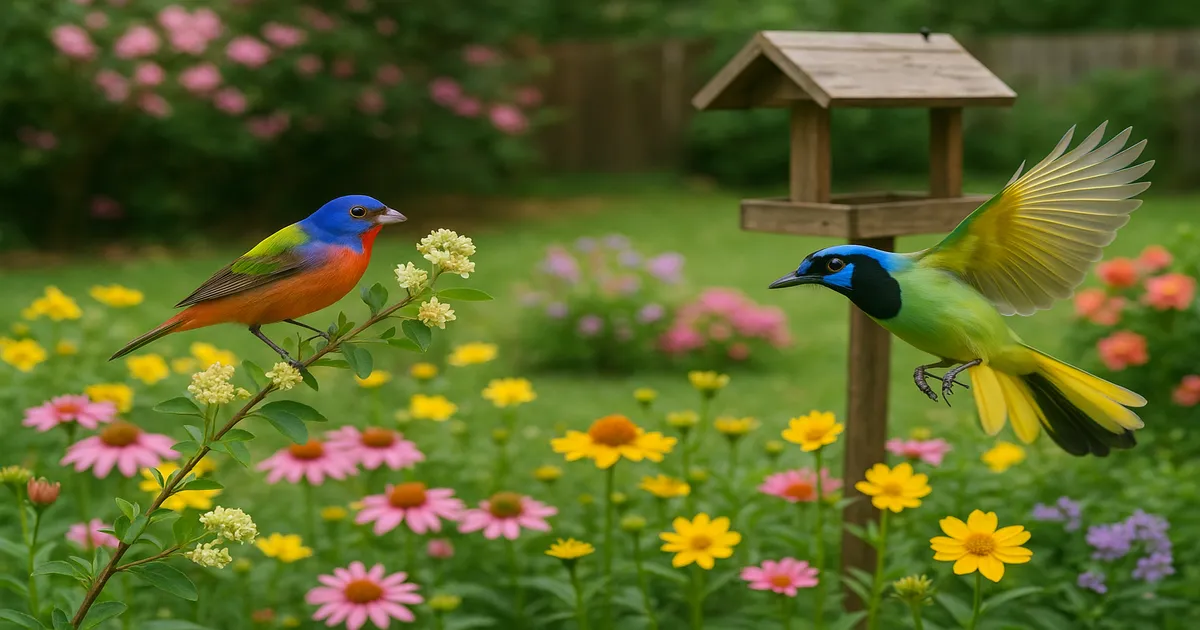
Quick Answer: Attracting exotic birds in North America means two different things depending on the species. Visually stunning native birds like the Painted Bunting (Passerina ciris) can be drawn to your yard with white proso millet, dense shrub cover, and fresh water. Others, like the Elegant Trogon (Trogon elegans), simply can’t be lured to a feeder and require a trip to the right canyon in southeastern Arizona. Knowing which category your target bird falls into is the most important first step.
If you’ve been searching for how to attract exotic birds, you’ve probably noticed the term covers a lot of ground. It might mean the male Painted Bunting blazing at your feeder like a stained-glass window come to life, or a flock of Monk Parakeets (Myiopsitta monachus) screeching over a Miami suburb. Both count. The strategies, though, are completely different.
What Do We Mean by ‘Exotic Birds’ in North America?
Native Showstoppers
Some of North America’s most spectacular birds are fully native — they just happen to look like they escaped from a tropical aviary. The Painted Bunting is the obvious example, but the Purple Gallinule (Porphyrio martinica) with its iridescent plumage and candy-colored bill qualifies too. These species can sometimes be attracted to backyards in the right regions, especially with targeted food and habitat.
Established Introduced Species
A second category consists of birds that arrived via the pet trade or accidental release and now breed wild across parts of North America. This group includes the Monk Parakeet, Nanday Parakeet (Aratinga nenday), Rose-ringed Parakeet (Psittacula krameri), Red-whiskered Bulbul (Pycnonotus jocosus), Eurasian Collared-Dove (Streptopelia decaocto), and Pin-tailed Whydah (Vidua macroura). They’re established residents in specific cities and regions — find the right neighborhood and you’ll encounter them regularly.
Range-Edge Rarities
Then there are species whose primary range lies in Mexico or Central America but spill into the extreme southern U.S. in small numbers. The Elegant Trogon is the classic example — reliable in a handful of Arizona canyons and nowhere else north of the border. For true vagrants that wander unpredictably, eBird alerts are your best tool.
Species Profiles: Identifying Exotic Birds in North America
Painted Bunting: North America’s Living Rainbow
The male Painted Bunting is genuinely hard to believe the first time you see one. About 5.5 inches (14 cm) long, with a cobalt-blue head, lime-green back, and vivid red underparts, it looks photoshopped. The female is a rich yellow-green — actually quite bright for a female songbird — with a subtle eye ring. First-year males wear patchy intermediate plumage during their first fall and winter. The song is a rich, sweet warble; the call is a sharp metallic chip.
Varied Bunting: The Hidden Gem of the Desert Southwest
The Varied Bunting (Passerina versicolor) is criminally underrated. Males are deep purple-blue with a red nape patch and reddish-purple rump — in flat light they look nearly black, but in direct sun the colors are extraordinary. Females are plain brownish-gray and nearly identical to female Indigo Buntings (Passerina cyanea), though slightly browner with a more curved bill. The song is a thin, high warble, less rich than the Painted Bunting’s.
Green Jay: The Jewel of the Rio Grande Valley
At 10–11 inches (26–29 cm), the Green Jay (Cyanocorax yncas) is a corvid that looks like it belongs in a rainforest. Brilliant green back, yellow-green belly, black bib and face mask, blue crown — and in flight, those yellow outer tail feathers flash like a signal flag. Sexes look alike. The calls are loud and raucous, a harsh cheh-cheh-cheh mixed with bell-like notes. Birders visiting the Rio Grande Valley for the first time are often more bowled over by Green Jays than anything else on their list.
Purple Gallinule: The Iridescent Marsh Walker
The Purple Gallinule might be the most underappreciated bird in North America. Adults are iridescent purple-blue below and green above, with a red-and-yellow bill, powder-blue frontal shield, and vivid yellow legs. Length runs 13–14.6 inches (33–37 cm). Juveniles are buffy-brown with a greenish back and dull bill — they look like a completely different species. Calls are loud, chicken-like clucking and a rapid kek-kek-kek series.
Elegant Trogon: Arizona’s Most Sought-After Canyon Bird
Male Elegant Trogons have a metallic green head and back, bright red belly, white chest band, and a long tail that shows crisp black-and-white barring on the underside. About 11–12 inches (28–30 cm) long. Females replace the green with brown and show a white ear patch. The yellow, serrated bill is distinctive in both sexes. You’ll almost always hear a trogon before you see it — a series of loud, coarse, frog-like co-ah, co-ah, co-ah calls that carry well through canyon habitat.
Eurasian Collared-Dove: The Continent-Crossing Newcomer
The Eurasian Collared-Dove is now one of the most widespread birds in North America, remarkable given it wasn’t established here until the 1980s. It’s a pale sandy-gray dove, about 11–12 inches (28–30 cm), with a thin black collar on the hindneck and white tail corners visible in flight. The three-note coo-COO-coo call — emphasis on the middle syllable — is unmistakable once you know it.
Red-whiskered Bulbul: Florida’s Crested Garden Bird
The Red-whiskered Bulbul is a striking bird once you track it down in Miami-Dade County. It has a tall, pointed black crest, red cheek patch, white underparts with a brown breast band, and vivid red undertail coverts. About 7–9 inches (18–23 cm) long. The calls are loud, cheerful, and bubbling — often described as pettigrew or kick-pettigrew. You’ll hear them in suburban gardens well before you spot them in the canopy.
Monk, Nanday, and Rose-ringed Parakeets: Urban Parrot Colonies
These three introduced parakeets are most reliably found in urban and suburban flocks. The Monk Parakeet is bright green with a gray face and breast, orange-pink bill, and blue flight feathers — about 11–12 inches (28–30 cm). The Nanday Parakeet is similar in size but unmistakable: solid black head and bill, blue chest wash, and red thighs. The Rose-ringed Parakeet is the largest at 15–17 inches (38–43 cm) including its long tail; males have a rose-pink and black neck collar that females lack. All three are extremely loud.
Pin-tailed Whydah: The Long-Tailed Surprise
Breeding male Pin-tailed Whydahs are genuinely startling — a sparrow-sized bird with four black tail streamers up to 8 inches (20 cm) long, black-and-white body plumage, and a brilliant red bill. Females and non-breeding males are streaky brown, but that red bill is retained year-round and is the key field mark. The species is a brood parasite of waxbills, so wherever you find whydahs, look for Orange-cheeked Waxbills (Estrilda melpoda) or Scaly-breasted Munias (Lonchura punctulata) nearby.
Where to Find Exotic Birds: Habitat and Range Guide
Painted and Varied Buntings: Brushy Edges and Desert Washes
Painted Buntings need dense brushy cover — thickets, hedgerows, overgrown field edges, riparian scrub. The eastern population breeds along the coastal plain from North Carolina south through Florida and winters primarily in Florida and the Caribbean; feeder activity peaks from October through April. The western population breeds from Kansas and Oklahoma through Texas into northern Mexico, wintering further south.
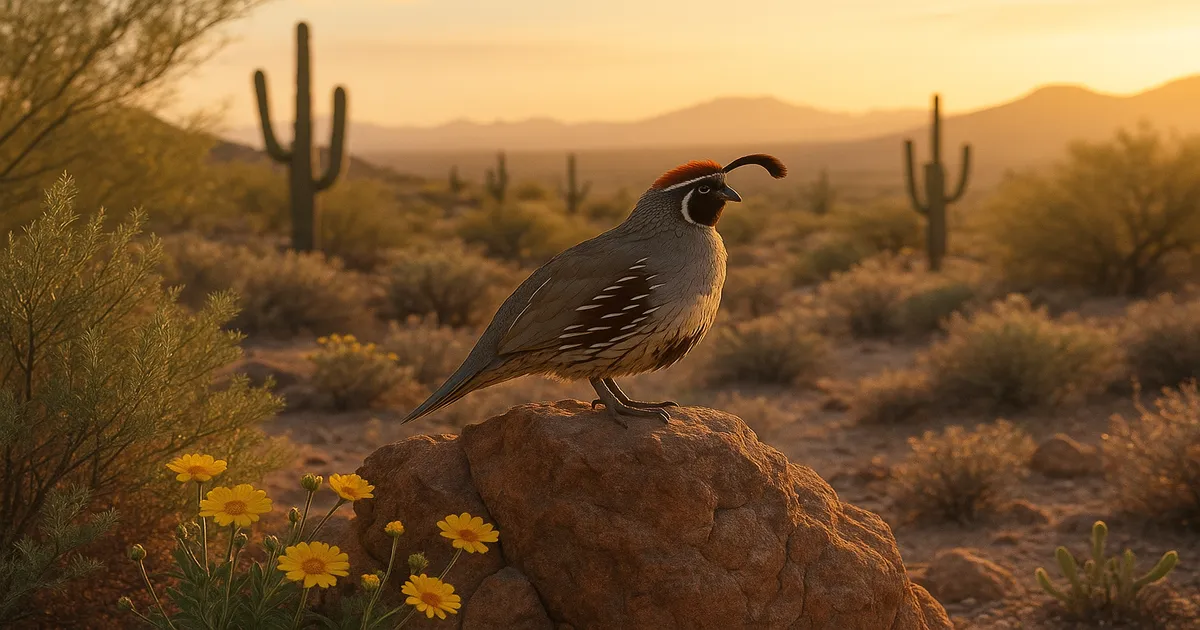
Varied Buntings are birds of thorny desert scrub, dry washes, and canyon thickets in the arid Southwest. In the U.S., look for them in the Big Bend region of Texas and in southern Arizona and New Mexico. They’re not feeder regulars — finding them usually means hiking brushy canyon habitat.
Green Jay: Lower Rio Grande Valley Only
In the United States, the Green Jay exists exactly one place: the Lower Rio Grande Valley of southern Texas. It doesn’t wander. Santa Ana National Wildlife Refuge, Bentsen-Rio Grande Valley State Park, and the town of Alamo are all reliable spots. Green Jays are year-round residents, so there’s no wrong season to visit.
Purple Gallinule: Freshwater Marshes of the Southeast
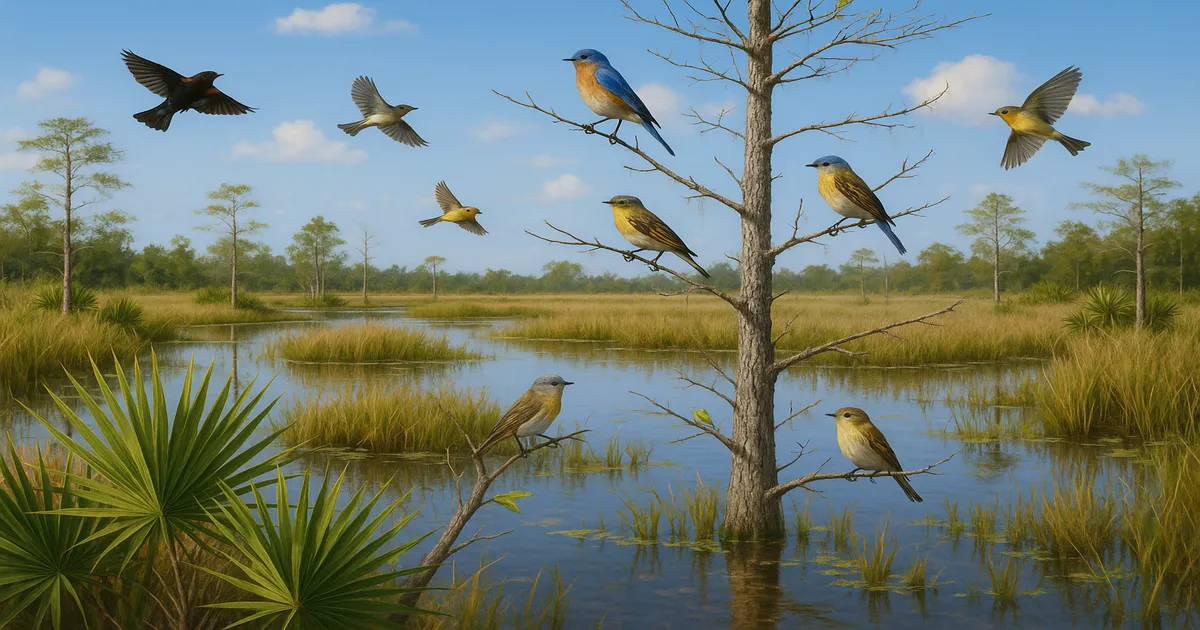
Purple Gallinules breed in freshwater marshes across the southeastern U.S., from Virginia south through Florida and west to Texas, wherever there’s dense emergent vegetation — lily pads, pickerelweed, water hyacinth. They winter in southern Florida and the tropics. Vagrants are the wildcard: Purple Gallinules have a well-documented tendency to appear almost anywhere in spring, sometimes far north of their normal range.
Elegant Trogon: Southeastern Arizona’s Sky Island Canyons
The best U.S. sites for Elegant Trogon are Madera Canyon (Santa Rita Mountains), Cave Creek Canyon (Chiricahua Mountains), and Ramsey Canyon (Huachuca Mountains) — all in southeastern Arizona, all between roughly 4,000–6,500 feet (1,219–1,981 m) elevation. Most birds arrive in April or May and depart by October, though a handful overwinter in the warmest canyons during mild years. Walking the canyon trails and listening for that distinctive call is more reliable than staking out any single feeding station.
Introduced Species: Where Parakeets, Bulbuls, and Whydahs Have Settled
- Monk Parakeet: Established in Florida (statewide), Texas (Dallas–Fort Worth, Houston), and New York; look for their large communal stick nests on utility poles and stadium lights
- Nanday Parakeet: Concentrated in Florida, especially the Tampa Bay area and South Florida
- Rose-ringed Parakeet: Small but established populations in South Florida and the Los Angeles area
- Red-whiskered Bulbul: Miami-Dade County is your best bet; a small population also exists in the Los Angeles area
- Pin-tailed Whydah: Southern California and South Florida, usually in areas with introduced waxbill populations
- Eurasian Collared-Dove: Essentially everywhere in the contiguous U.S. at this point
How to Attract Exotic Birds: Feeders, Plants, and Habitat Setup
Best Feeders and Seed for Buntings and Whydahs
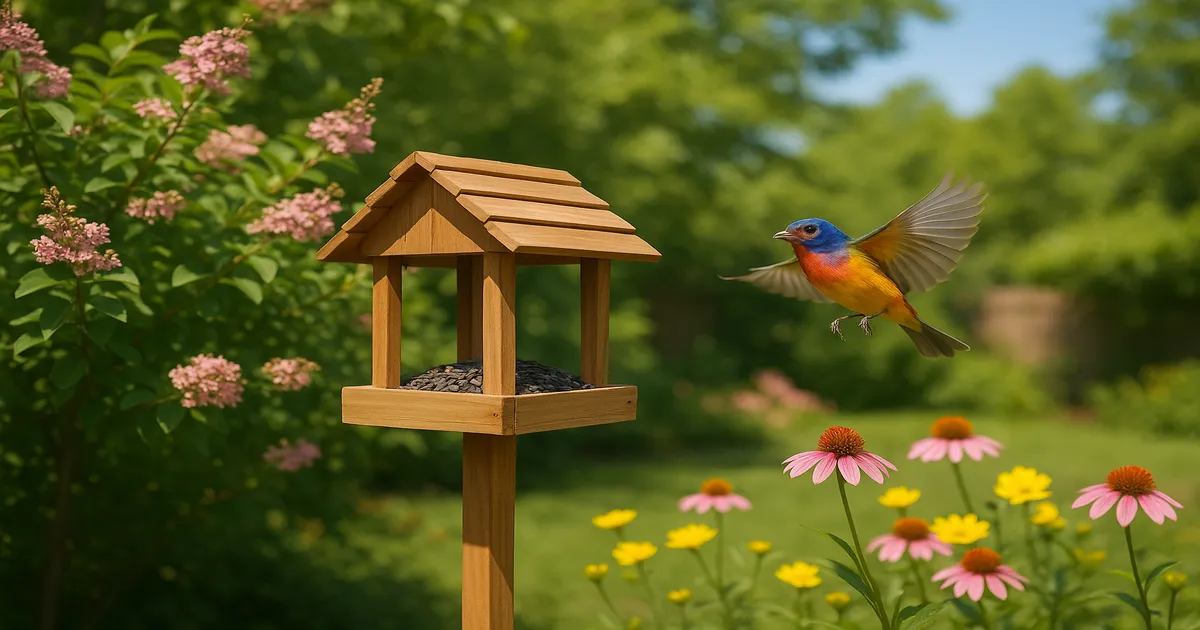
White proso millet in a low platform or tube feeder is the single most effective setup for Painted Buntings. Place it within 10–15 feet of dense shrub cover so birds feel secure while feeding. A platform feeder like the Woodlink Going Green Platform Feeder works well because buntings prefer to feed low to the ground. Skip the mixed “wild bird” blends — buntings will pick through them looking for millet and waste the rest. For the seed itself, a dedicated white proso millet bag keeps things simple and cost-effective.
Buntings are skittish. An exposed feeder in the middle of an open yard will see far less traffic than one near the edge of a thicket. For Pin-tailed Whydahs, the same millet setup works — but you need to already be in an area where they’re established, and ideally have waxbills nearby.
Platform Feeders for Jays and Doves
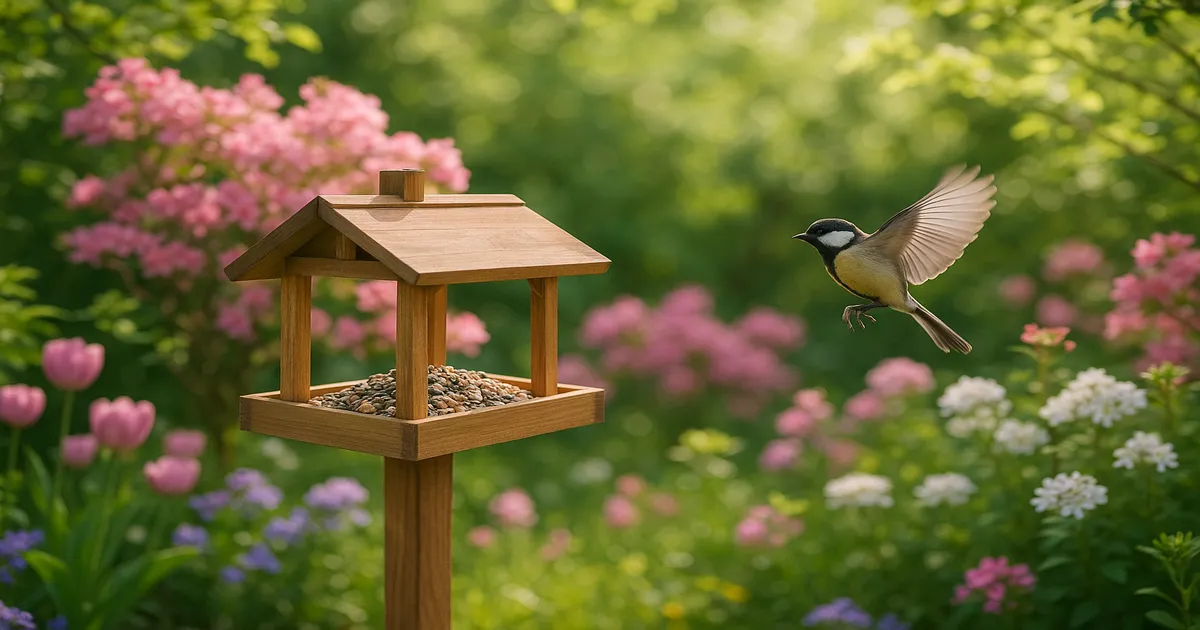
In the Rio Grande Valley, a platform feeder stocked with peanuts, sunflower hearts, and fresh fruit will get Green Jay attention quickly. An open tray-style feeder like the Aspects 367 Vista Dome gives jays room to land and maneuver. Eurasian Collared-Doves prefer feeding on or near the ground — a low platform or ground tray with cracked corn and sunflower suits them well.
Fruit Stations and Native Plantings for Bulbuls and Parakeets
In Miami-Dade County, Red-whiskered Bulbuls respond well to fruit stations with papaya, berries, or figs. Planting fruiting trees and shrubs — figs, native beautyberry (Callicarpa americana), and similar species — creates a year-round food source more reliable than any feeder. Monk and Nanday Parakeets will visit platform feeders with fruit and sunflower, but they’re just as happy raiding mature fruiting trees in the yard.
Water Features: The Most Underused Tool in Backyard Birding
Fresh moving water attracts more birds than most feeders. A dripper or mister attached to a birdbath is highly effective for Painted Buntings — in my experience, it often outperforms the seed feeder during hot weather. A simple dripper like the Allied Precision Industries Water Wiggler keeps the water moving and the mosquitoes down. Keep the bath shallow (no more than 2 inches/5 cm deep) and change the water every couple of days.
Native Shrubs and Dense Cover
Painted Buntings won’t stick around a yard that’s all lawn and open space. They need brushy edges. Plant dense native shrubs — beautyberry, elderberry (Sambucus canadensis), native grasses, wild plum — to create the tangled edge habitat they breed and forage in. Even a hedgerow along a fence line makes a meaningful difference.
Aquatic Habitat for Purple Gallinule
If you have a backyard pond in the Southeast, adding floating aquatic plants — water lilies, pickerelweed (Pontederia cordata), water hyacinth — gives Purple Gallinules the habitat structure they need. They walk on floating vegetation, so surface coverage matters more than water depth. That said, you’re creating suitable habitat and hoping one shows up, not guaranteeing a visit.
A Note on Window Safety
Place feeders either within 3 feet (1 m) or beyond 30 feet (9 m) of windows to cut collision risk. If your feeders sit in the danger zone, window alert decals like Feather Friendly DIY Dots break up the reflection without blocking your view.
Some Exotic Birds Simply Won’t Come to You
One thing worth saying plainly: don’t spend time setting up feeders for species that don’t use them. The Elegant Trogon, Purple Gallinule, and Varied Bunting require you to go to them. For those species, the right move is booking a trip to the right habitat at the right time of year. No feeder setup substitutes for being in Madera Canyon in May with a decent pair of binoculars — something like the Nikon Monarch M5 8x42 gives you enough reach and low-light performance for canyon birding without breaking the bank.
Frequently Asked Questions
What is the easiest exotic bird to attract to a backyard feeder? The Painted Bunting is the top answer for most of the eastern and southern U.S. White proso millet in a low platform feeder near dense shrubs is all you need — if you’re in their range during winter (Florida) or breeding season (Texas, Oklahoma, the Carolinas), they’ll find it.
Can I attract exotic birds if I don’t live in Florida or Texas? For feeder birds, your options thin out considerably north of those states. Eurasian Collared-Doves are now found nearly everywhere, and Monk Parakeets have established colonies in New York and Chicago. For truly spectacular species, a targeted trip to the right region will always beat waiting for something to show up in your yard.
Do I need a special feeder to attract Painted Buntings? Nothing exotic required. A low platform feeder or a simple tube feeder filled with white proso millet does the job. The more important variable is cover — place the feeder near dense shrubs, not in the open.
When is the best time of year to look for exotic birds? It depends on the species. For Painted Buntings at Florida feeders, October through April is peak season. For Elegant Trogons in Arizona, May and June are the most reliable months. For introduced parakeets and doves, any time of year works since they’re year-round residents.
Is it legal to feed introduced parakeets and other non-native birds? Generally yes, though regulations vary by state. Florida, for example, has no restrictions on feeding established introduced species like Monk Parakeets. Check your state wildlife agency’s guidelines if you’re unsure, and be aware that some introduced species — particularly parakeets — can cause agricultural damage in large numbers.