Quick Answer: That baby robin on the ground is almost certainly fine. Most “rescued” baby robins are healthy fledglings doing exactly what nature intended — hopping around while their parents watch from nearby. Unless the bird is naked, injured, or a cat has touched it, the best thing you can do is walk away.
If you’ve found yourself frantically searching “will this baby robin be okay,” take a breath — you’re probably looking at a perfectly healthy bird. The American Robin (Turdus migratorius) has an evolutionary strategy that puts young birds on the ground before they can fully fly, and it works remarkably well when humans don’t interfere. The hard part is resisting the urge to help.
Will This Baby Robin Be Okay? Start Here.
The Most Likely Scenario: It’s a Fledgling and It’s Fine
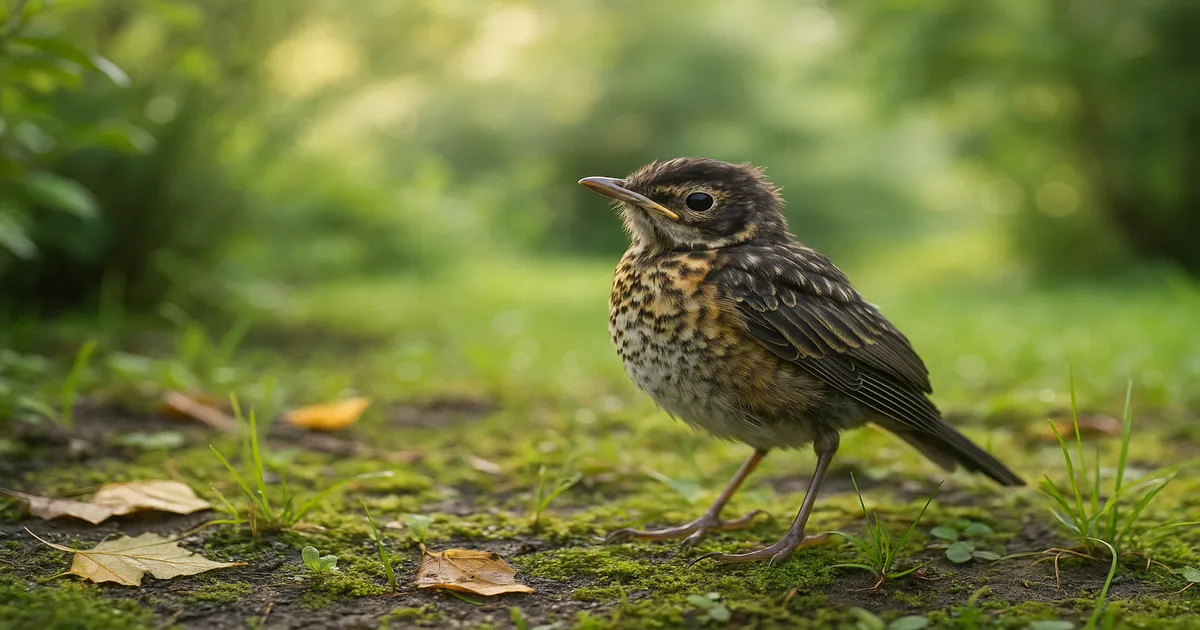
If the bird you found is fully feathered, has alert eyes, and is hopping around under its own power, it’s a fledgling — and it’s doing exactly what it should be doing. Robin fledglings spend 10–15 days on the ground after leaving the nest. During that time, the parents continue to feed and protect them. Those parents are almost certainly nearby, watching you watch their kid.
The raspy, persistent begging call fledglings make is what usually draws human attention. It sounds desperate. It isn’t.
When You Should Actually Intervene
Two situations genuinely warrant action:
- The bird is a nestling — pink skin visible, eyes closed or barely open, little to no feathers. This bird fell or was knocked from a nest and needs help getting back.
- The bird is injured — bleeding, a drooping wing, or it’s been in a cat’s mouth even briefly (more on that below).
A healthy fledgling on the ground doesn’t need you. A naked nestling or an injured bird does.
Fledgling or Nestling? The ID That Changes Everything
What a Fledgling Robin Looks Like
Fledgling robins are already close to adult size — roughly 9–11 inches (23–28 cm). They’re fully feathered with a short tail, bright alert eyes, and they move with purpose. They can hop and flutter, even if sustained flight isn’t quite there yet. They look like a bird, not like a hatchling.
What a Nestling Robin Looks Like
A nestling is unmistakably helpless. Pink or grayish skin shows through sparse down, the eyes are closed or just cracking open, and the bird can barely hold its head up. If this is what you’re looking at, it needs intervention — either a return to the nest or a call to a wildlife rehabilitator.
Why the Spotted Breast Confuses People
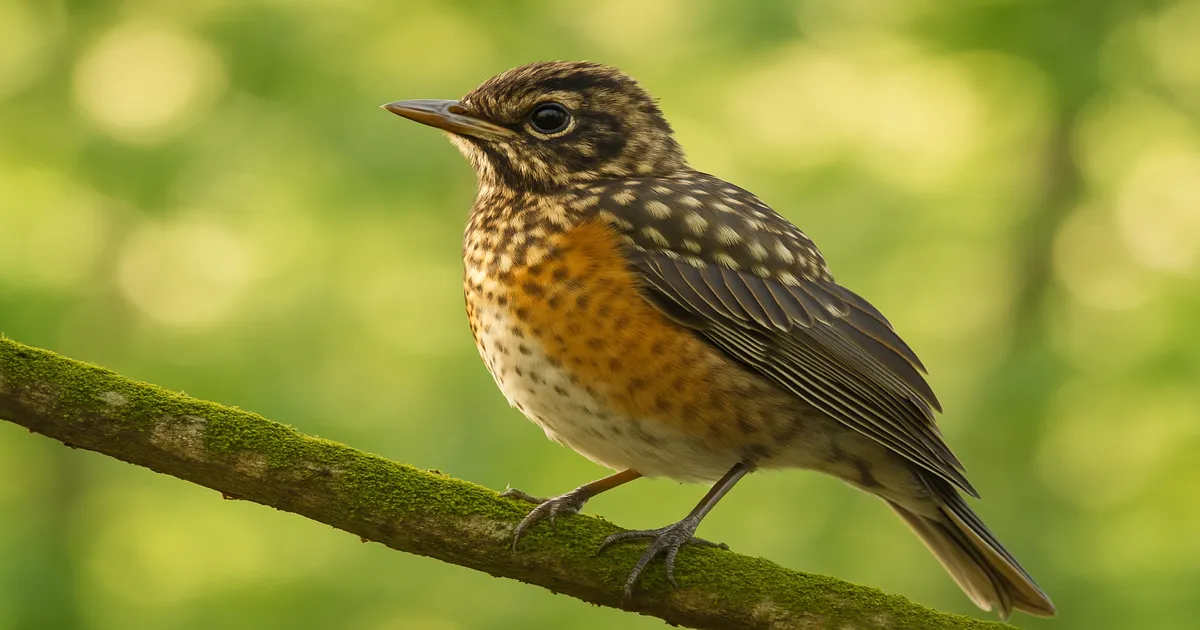
Juvenile robins look nothing like the bird on the Christmas card. Instead of a clean orange breast, fledglings have dark spots scattered across an orange-buff background, plus pale, scaly-looking markings on the back. People often don’t recognize them as robins at all and assume something is wrong.
Nothing is wrong. That’s simply juvenile plumage — completely normal, not a sign of illness or injury.
What to Do If You Find a Baby Robin
Step 1: Watch From a Distance Before Doing Anything
Back away at least 30 feet and watch for 30–60 minutes. I know that feels like a long time when you’re worried, but it’s the most important step. Parent robins will not approach their young while you’re standing over them — your presence is the problem, not their absence.
If you hear a sharp, rapid tut-tut-tut alarm call from nearby shrubs or trees, that’s the parents telling you to get lost. They’re there. A decent pair of binoculars makes it much easier to watch from a respectful distance without disturbing the birds. (Nikon Monarch M5 8x42)
Step 2: If It’s a Fledgling, Leave It Where It Is
Put it down and walk away. Moving a fledgling to a “safer” location can actually make things worse by separating it from parents who are searching for it by sound and location. If it’s on a busy road or driveway, you can gently move it a few feet into nearby vegetation. That’s the limit of your intervention.
Step 3: If It’s a Nestling, Try to Return It to the Nest
Look for the nest within 10–15 feet of where you found the bird. Robin nests are cup-shaped, made of grass and mud, and typically placed 5–25 feet (1.5–7.6 m) up in a tree, shrub, or on a building ledge. If you can reach it, place the nestling back in. The parents will return.
The myth that human scent causes abandonment is false. Birds have a very limited sense of smell. Touching a baby robin will not cause its parents to reject it — this is one of the most persistent and damaging myths in wildlife care, and it has led to countless unnecessary “rescues.”
Step 4: When to Call a Wildlife Rehabilitator
Contact a licensed wildlife rehabilitator if:
- The bird is bleeding or has a visible injury
- A cat has touched it — even without visible wounds, cat bacteria (Pasteurella multocida) can cause fatal infections within 24–48 hours
- It’s a nestling and you cannot locate or reach the nest
- After a full hour of observation, no parent has appeared and the bird is cold or lethargic
To find a rehabber near you, search the National Wildlife Rehabilitators Association directory or call your state’s fish and wildlife agency.
The Biggest Threats to Fledglings: Cats and Well-Meaning Humans
Why Free-Roaming Cats Are So Dangerous
Cats kill an estimated 1.3–4 billion birds annually in the United States, and ground-dwelling fledglings are among the easiest targets. A robin that can’t yet fly is no match for even a slow or elderly cat. If there’s a cat in your neighborhood — yours or a neighbor’s — that’s the real threat to that baby bird, not the fact that it’s on the ground.
The single most helpful thing you can do during fledgling season is keep cats indoors for a few days while the young birds develop flight capability. It’s not complicated, and it genuinely saves lives.
How ‘Rescuing’ a Healthy Fledgling Can Harm It
Even the most skilled wildlife rehabilitator cannot replicate what robin parents do. The parents know exactly what their chick needs, they’re present around the clock, and they’re teaching the bird to be a robin — something no human can fully substitute. Separating a healthy fledgling from its parents, with the best of intentions, is often the worst outcome for the bird.
The hardest part of wildlife watching is learning when not to act.
How to Identify an American Robin at Every Life Stage
Adult Male
The adult male is one of North America’s most recognizable birds. Look for the jet-black head, bright brick-red to burnt-orange breast, yellow-orange bill, and broken white eye-ring (white arcs above and below the eye, not a complete ring). The white lower belly is often overlooked but useful when the bird is in flight. Upperparts are slate-gray.
Adult Female
Females follow the same pattern but with the contrast dialed down. The head is dark gray rather than black, and the breast is a duller, washed-out orange. Look at head contrast and breast saturation together rather than either alone — either feature by itself can mislead you.
Juvenile Robin
As covered above, the heavily spotted breast on an orange-buff background is the hallmark of a young robin. Add scaly-looking markings on the back, a shorter tail, and a duller bill, and you have a bird that surprises even experienced birders the first time they see it. Size is your best reassurance — at 9–11 inches, a juvenile robin is already noticeably larger than any other spotted thrush you’re likely to encounter in a suburban yard.
Look-Alikes Sometimes Confused With Baby Robins
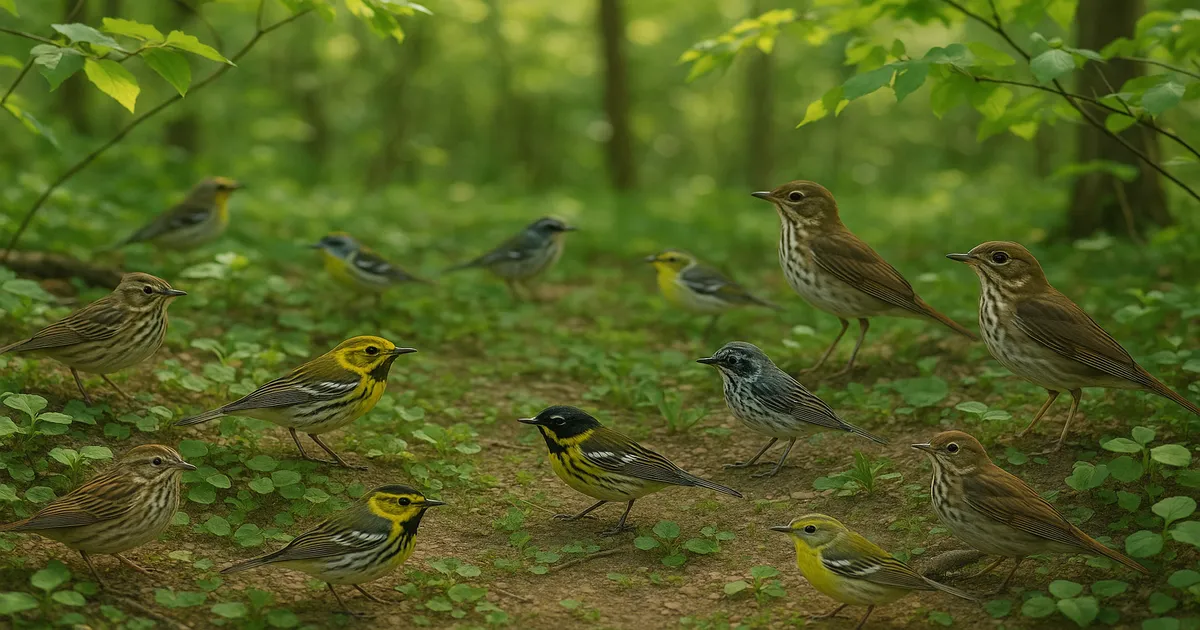
- Hermit Thrush (Catharus guttatus): Much smaller (about 6.7 inches/17 cm), spots on a white — not orange — breast, and a distinctive habit of slowly raising and lowering its reddish-brown tail. A forest bird, not a lawn bird.
- Wood Thrush (Hylocichla mustelina): Smaller than a robin, bold round black spots on a white breast, rich rufous-brown upperparts. A forest interior specialist with one of the most beautiful songs in North America.
- Spotted Towhee (Pipilo maculatus): Smaller, with a thick seed-cracker bill, white belly, and orange-rufous sides. Found in dense brush, not open lawns, and only in the western half of the continent.
If the spotted bird you found is large, orange-breasted, and in a suburban yard — it’s a robin.
Robin Nesting Biology: Why Fledglings End Up on the Ground
Robins raise 2–3 broods between March and July across most of North America, which is why fledgling encounters are common all summer long. The female incubates 3–5 of those famous pale blue eggs for 12–14 days. Nestlings then spend 13–15 days in the nest before fledging — leaving before they can truly fly.
This isn’t an accident. It’s an evolved survival strategy. A nest full of fully grown chicks is a predator jackpot — one visit from a crow or a raccoon and the entire brood is gone. By spreading fledglings across the ground in different locations, the parents dramatically reduce the odds of losing everyone at once. The ground phase is the plan, not a problem.
Parent robins don’t abandon their young when they leave the nest. They continue to find and feed each fledgling throughout the ground phase, homing in on the chick’s begging calls. That tut-tut-tut alarm call you hear when you approach? That’s a parent telling you to back off.
Making Your Yard Safer for Robins During Fledgling Season
A birdbath with a dripper or small fountain will attract robins faster than almost anything else you can do for them. Moving water catches their attention from a distance. Keep the basin shallow — no deeper than 2–3 inches — and change the water regularly.
Robins aren’t feeder birds and won’t touch a tube of sunflower seeds, but mealworms on a platform feeder are a different story — especially useful if you’re trying to support a pair with a nearby nest. If you want to offer mealworms, dried ones work fine and are far less hassle than live.
For plants, robins reliably visit yards with native fruiting shrubs and trees: dogwood (Cornus spp.), hawthorn (Crataegus spp.), holly (Ilex spp.), crabapple (Malus spp.), serviceberry (Amelanchier spp.), and elderberry (Sambucus spp.) are all excellent choices.
On the lawn side, avoid synthetic pesticides and herbicides. Robins are earthworm specialists, which makes them acutely vulnerable to chemical treatments. They were among the first birds documented dying from DDT accumulation — the research at Michigan State University in the 1950s and 60s was part of what inspired Rachel Carson’s Silent Spring. Mowing less frequently during fledgling season also helps, since taller grass gives grounded birds somewhere to hide.
A few other quick wins: check window wells before mowing (fledglings can fall in and become trapped), and reduce window strike risk with UV-reflective decals or tape during peak fledgling activity.
Frequently Asked Questions About Baby Robins
Will this baby robin be okay if I leave it alone?
Almost certainly yes, if it’s fully feathered and moving around on its own. Back away at least 30 feet, wait 30–60 minutes, and watch for a parent to return. The vast majority of baby robins found on the ground are healthy fledglings that need nothing from you except to be left alone.
How long do baby robins stay on the ground after leaving the nest?
Fledgling robins typically spend 10–15 days on the ground after leaving the nest. During this time, the parents continue to find and feed them while they build strength and practice flying. By the end of this period, they’re capable of sustained flight and become increasingly independent.
Should I pick up a baby robin I found on the ground?
Only if it’s a nestling (no feathers, eyes closed) or visibly injured. A fully feathered fledgling should be left exactly where it is — or moved a few feet into nearby vegetation if it’s in immediate danger. Picking up a healthy fledgling and bringing it inside separates it from its parents and almost always does more harm than good.
What do I feed a baby robin if it seems injured or orphaned?
Don’t try to feed it yourself — contact a licensed wildlife rehabilitator immediately. Improper feeding (bread, milk, or even well-intentioned worms given incorrectly) can injure or kill a baby bird. While you wait for help, keep the bird warm and in a dark, quiet container. Don’t offer water by dropper, which can cause aspiration.
Why does the baby robin I found have spots — is it sick?
Not at all. The spotted breast is completely normal juvenile plumage. Young robins have dark spots on an orange-buff breast and pale scaly markings on their back — that’s how the species looks before the first molt. Many people don’t recognize spotted juveniles as robins, but the heavy spotting is a sign of a healthy, normal fledgling, not illness or injury.