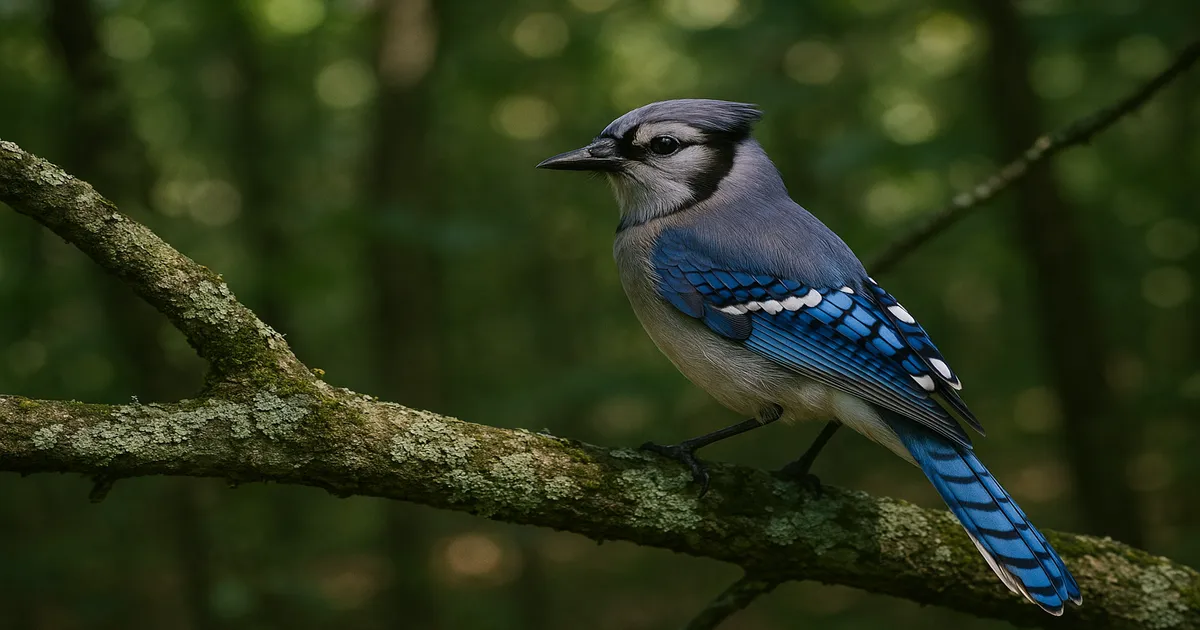
Quick Answer: A Blue Jay (Cyanocitta cristata) looks different most often because it’s a juvenile with duller, washed-out plumage, an adult going through its annual molt with patchy or missing feathers, or a bird viewed in poor lighting — which makes its structural blue color appear gray or brown. Less commonly, you might actually be looking at a different species entirely.
If you’ve ever watched a feeder visitor and thought “why does this blue jay look different?”, you’re not alone — and the answer is almost never what people expect. Most folks assume they’re seeing a female, a sick bird, or a rare color morph. In reality, the explanation is usually much more straightforward. Once you know what to look for, these “strange” jays start making perfect sense.
Standard Blue Jay Appearance: Know the Baseline
Before getting into what makes a Blue Jay look odd, it helps to have the classic adult firmly in mind.
Key Field Marks of a Typical Adult Blue Jay
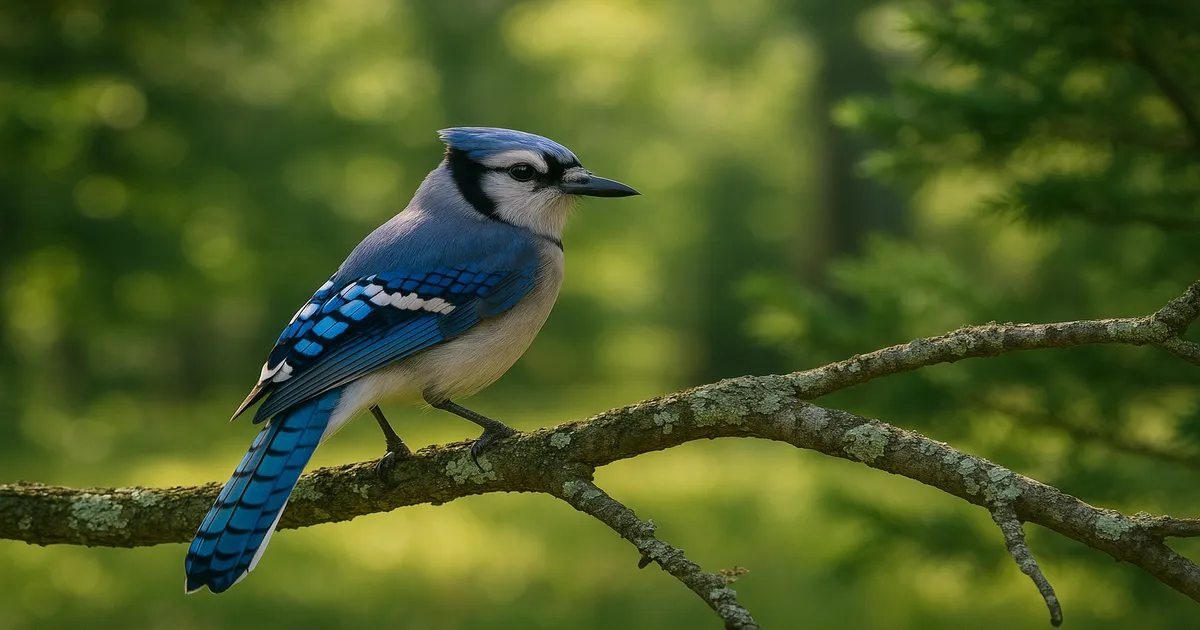
A healthy adult Blue Jay is hard to mistake. Look for:
- Crest: Tall, pointed, brilliant blue — raised when alert, flattened when calm
- Face: White with a bold black necklace wrapping from the breast up through the throat and around behind the crest
- Wings and tail: Deep blue with bold white spots, black barring, and white tail corners that flash in flight
- Underparts: Pale gray to white on the breast and belly
- Bill: Strong, stout, black — built for cracking nuts
Size, Shape, and Body Structure
Blue Jays are stocky, full-chested birds — about 9.8–11.8 inches (25–30 cm) long with a wingspan of roughly 13.4–16.9 inches (34–43 cm) and a weight of about 2.5–3.5 oz (70–100 g). They’re noticeably larger than a House Sparrow and roughly the same length as an American Robin, though bulkier. That corvid heft is part of what makes them so recognizable at the feeder.
Do Male and Female Blue Jays Look Different?
No — and this surprises most people. Blue Jays are sexually monomorphic, meaning males and females are essentially identical in plumage. The only reliable way to tell them apart is DNA testing or watching who sits on the nest (almost always the female). If a Blue Jay at your feeder looks “different” and your first instinct is “maybe it’s a female,” that’s almost certainly not the explanation.
Why Does This Blue Jay Look Different? Juveniles Are Usually the Answer
This is where most of the confusion comes from, and it’s completely understandable — juvenile Blue Jays look noticeably unlike their parents.
What Juvenile Blue Jays Look Like
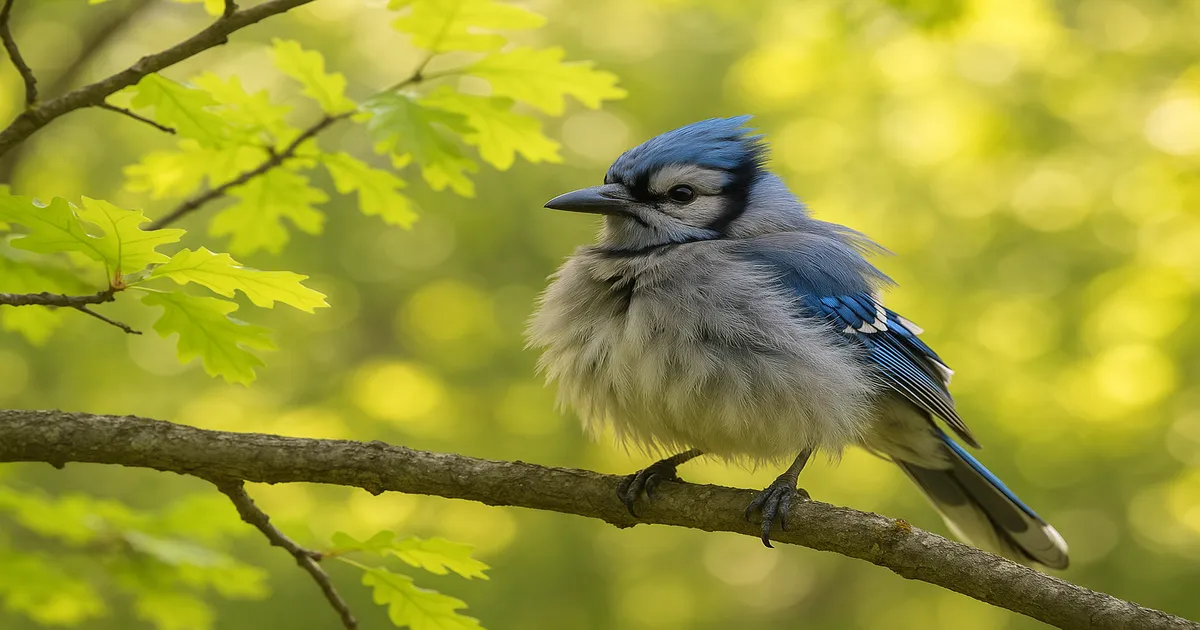
Juvenile Blue Jays share the same basic shape and pattern as adults, but everything is softer and duller:
- Overall plumage is grayer and less saturated — that brilliant blue is muted to something closer to a blue-gray wash
- The crest is shorter and less defined
- The black necklace is blurry rather than crisp
- Wing markings are less sharply patterned
- Facial contrast is reduced — the white face doesn’t pop the way it does on adults
I’ve watched experienced birders do a double-take at juveniles in late July, convinced they were looking at something unusual. They’re just young birds.
When Juveniles Are Visible
Blue Jays fledge in late May through July, so that’s when you’ll start seeing these dull-looking birds at feeders. They remain visibly distinct from adults through late summer and into early fall — roughly June through September is prime time for juvenile confusion.
The First Prebasic Molt: How Juveniles Become Adults
Starting around July or August of their first year, juvenile Blue Jays begin replacing their dull feathers with adult-like plumage in what’s called the first prebasic molt. This runs through October, and by late fall most first-year birds are nearly indistinguishable from adults — though some may show subtly duller tones through their first winter if you’re really paying close attention.
Molting Adults: Why Blue Jays Look Patchy or Ragged
If you see a Blue Jay in late summer that looks like it’s having a rough time, it’s probably just molting. This is the second most common reason for feeder-side confusion.
The Annual Prebasic Molt
Every year after breeding season, adult Blue Jays go through a complete molt — replacing every feather on their body. This happens from roughly July through September. It’s energetically demanding, and the results can look alarming if you don’t know what’s happening.
A Blue Jay in active molt can appear genuinely bizarre:
- Missing or stubby crest feathers — some birds look nearly bald on the head
- Asymmetric wing patterns — feathers on one wing may be further along than the other
- Ragged or incomplete tail — tail feathers drop and regrow in sequence
- Bare patches on the head and face
If you see a ragged, patchy Blue Jay in August, that bird is almost certainly healthy. Molt looks rough, but it’s a normal process. Between juveniles fresh off the nest and adults deep in molt, August feeders can host some genuinely strange-looking birds — and both groups will look sharp again by October.
The Science of Blue Jay Color: Why Lighting Changes Everything
Structural Color vs. Pigment
Blue Jays aren’t blue the way a blueberry is blue. There is no blue pigment in their feathers. Instead, the color comes from microscopic structures in the feather barbs — tiny air-filled spheres arranged to scatter short-wavelength light through a process called coherent scattering. The feather itself is actually brownish-gray underneath; it’s the physics of light interaction that creates the blue we see.
Because the color is structural rather than pigment-based, it’s completely dependent on lighting angle. A Blue Jay in deep shade, or viewed backlit with the sun in front of it, can look shockingly dull — gray, washed-out, or even brownish. Step that same bird into direct sunlight and it’s electric blue. Overcast days mute the color significantly too.
Try This With a Blue Jay Feather
If you ever pick one up, hold it so light hits it directly — vivid blue. Then hold it up to a light source so the light shines through it — dull brown-gray. The blue disappears completely. That’s structural color in action, and it’s the same reason a living bird can look so different depending on where it’s standing.
A good pair of binoculars makes a real difference when you’re trying to assess color in tricky light. (Nikon Monarch M5 8x42) Getting a clear, close view of the feather structure and necklace pattern is often what settles the ID.
Why Does This Blue Jay Look Different? It Might Be Another Species
Range is your first filter. Most “weird Blue Jays” are exactly that — Blue Jays. But a few species cause genuine confusion.
Steller’s Jay: The Western Look-Alike
The Steller’s Jay (Cyanocitta stelleri) is the Blue Jay’s closest relative and the species most often confused with it. The front half of a Steller’s Jay — head, crest, and breast — is sooty black, not white and gray. There are no white spots on the wings. Steller’s Jays are birds of western mountain forests, found from Alaska south through the Rockies and along the Pacific Coast into Central America. The ranges barely overlap. If you’re anywhere west of the Great Plains and you see a crested jay, assume Steller’s until proven otherwise.
Florida Scrub-Jay and Other North American Jays
The Florida Scrub-Jay (Aphelocoma coerulescens) is restricted to Florida scrub habitat and is unmistakable once you know it: no crest, no black necklace, blue-and-gray with a white forehead and a distinctive white supercilium. Western readers might encounter Woodhouse’s Scrub-Jay (Aphelocoma woodhouseii) or California Scrub-Jay (Aphelocoma californica) — both are crestless and lack the bold black-and-white facial pattern of Blue Jays.
Smaller Blue Birds Sometimes Confused With Blue Jays
Beginners occasionally flag Indigo Buntings or Eastern Bluebirds as unusual Blue Jays. The size difference alone should settle it — an Indigo Bunting (Passerina cyanea) is barely 5 inches (13 cm) long, roughly half a Blue Jay’s length. Eastern Bluebirds (Sialia sialis) have rusty-orange breasts and a gentle, thrush-like shape. Neither has a crest or that corvid bulk.
A regional field guide is the fastest way to sort these out. (Sibley’s Birds East)
Blue Jay Behavior That Can Make Them Seem Unfamiliar
Hawk Mimicry
Blue Jays are exceptional vocal mimics. They regularly produce near-perfect imitations of Red-shouldered Hawk (Buteo lineatus), Red-tailed Hawk (Buteo jamaicensis), and Broad-winged Hawk (Buteo platypterus) calls. I’ve been fooled by this more times than I’d like to admit. The behavior may alert other jays to real hawk presence — or scatter competing birds from a feeder. Either way, if you hear a hawk call and a Blue Jay flies out of the tree, the jay was probably responsible.
Crest Position as a Mood Indicator
A Blue Jay with its crest fully raised is alert, alarmed, or aggressive. A bird with its crest flattened is relaxed or focused on feeding. The same individual can look noticeably different based on crest angle alone — worth keeping in mind when you’re watching feeder behavior.
Migration Brings Unfamiliar Birds
Blue Jays are partially migratory. Fall migration peaks from September through November; spring migration runs from late March through mid-May. These movements bring birds from different populations through areas where they’re not normally seen, and migrating jays often travel in loose, purposeful flocks. A directional stream of Blue Jays moving along a coastline or ridge in October is one of the genuinely underrated spectacles of eastern birding.
Attracting and Observing Blue Jays at Your Feeder
Best Foods for Blue Jays
Whole peanuts in the shell are the single best Blue Jay food — they’ll come from a surprising distance for them. After that:
- Shelled peanuts
- Black-oil sunflower seeds
- Cracked corn
- Striped sunflower seeds
Skip the nyjer/thistle. Blue Jays have no interest in it.
Feeder Styles Blue Jays Prefer
Blue Jays need room to maneuver. Platform feeders and hopper feeders work best. Peanut wreaths are remarkably effective and entertaining to watch. Tube feeders work but aren’t their preference — they’ll cling awkwardly to reach the ports.
One thing to expect: Blue Jays often grab food and fly off to cache it rather than eating at the feeder. A jay stuffing three peanuts into its bill at once and disappearing is doing exactly what it’s supposed to do.
Blue Jay Conservation: Population Trends and How to Help
Blue Jays are listed as Least Concern by the IUCN, with a population estimated around 17 million individuals. But North American Breeding Bird Survey data shows roughly a 27% decline since 1966, with the steepest drops in the northeastern U.S. That’s not a crisis, but it’s a trend worth watching.
West Nile Virus hit Blue Jay populations hard after it arrived in North America in 1999. The species has shown some recovery, but the virus remains a significant mortality factor. Window strikes kill large numbers annually — Blue Jays are fast, large birds that frequent suburban areas, which is a bad combination for glass collisions. Outdoor cats take a heavy toll on fledglings, which spend time on the ground after leaving the nest. And the long-term loss of oak-dominated forests removes the food source Blue Jays depend on most.
Simple actions that help:
- Install window collision deterrents on the outside of glass — they’re far more effective than interior decals
- Keep cats indoors, especially May through August when fledglings are on the ground
- Plant native oaks — even a single tree in a suburban yard provides significant food resources
- Log your sightings through eBird or Project FeederWatch — citizen science data genuinely shapes conservation decisions
Blue Jays are fully protected under the Migratory Bird Treaty Act, so it’s illegal to harm them, collect their feathers, or disturb active nests.
Frequently Asked Questions
Why does my Blue Jay look dull gray instead of bright blue?
Almost certainly a lighting issue. Blue Jay color is structural — produced by light-scattering nanostructures in the feather barbs, not pigment — so it fades dramatically in shade or when the bird is backlit. If the bird looks otherwise normal in shape and pattern, lighting is the explanation. A bird in active molt (July through September) can also look dull or patchy.
What does a juvenile Blue Jay look like?
Juvenile Blue Jays have the same basic pattern as adults but everything is softer: duller blue-gray plumage, a blurry black necklace instead of a crisp one, less defined wing markings, and a shorter crest. They fledge from late May through July and remain visibly distinct through late summer. By October of their first year, most are nearly indistinguishable from adults.
Do male and female Blue Jays look different from each other?
No. Blue Jays are sexually monomorphic — males and females have identical plumage and cannot be reliably told apart in the field. The only behavioral clue is that the incubating bird on a nest is almost always the female.
What bird looks like a Blue Jay but has a black head?
Almost certainly a Steller’s Jay. It shares the Blue Jay’s pointed crest and blue body but has a sooty black head, crest, and breast with no white facial markings. Steller’s Jays are western birds — Rockies and Pacific Coast — so if you’re east of the Great Plains, you’re almost certainly looking at a Blue Jay in unusual lighting or molt rather than a Steller’s.
Why does a Blue Jay feather look brown when held up to the light?
The blue isn’t from pigment — it’s structural color created by microscopic air-filled spheres in the feather barbs that scatter blue light toward the viewer. Backlight the feather and that scattering effect breaks down, revealing the feather’s underlying brownish-gray color. It’s the same physics that makes the sky blue.