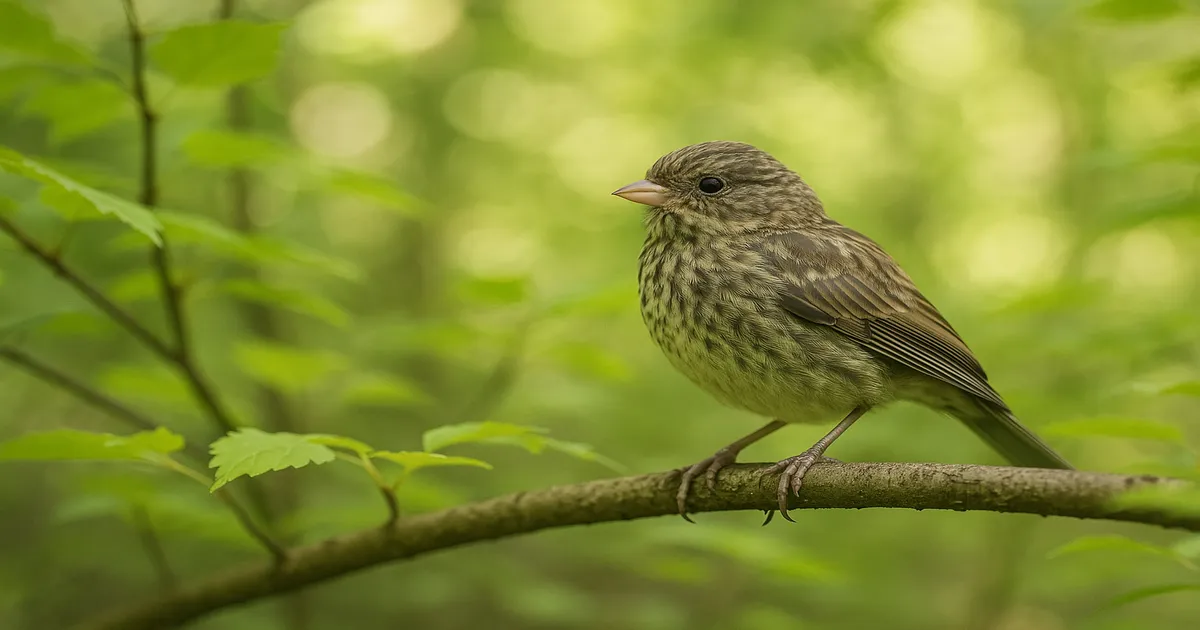
Quick Answer: A juvenile Dark-eyed Junco (Junco hyemalis) looks streaked, buffy, and nothing like the clean-hooded adult — and that’s completely normal. Young juncos wear a heavily streaked juvenile plumage before molting into adult-like feathers between July and September. If the bird has white outer tail feathers, it’s almost certainly a healthy junco doing exactly what it should be doing.
If you’ve found yourself staring at a streaky, sparrow-like bird at your feeder and asking “what is wrong with this juvenile dark-eyed junco?”, the answer is almost always: nothing. Juvenile plumage is one of the most dramatic transformations in backyard birding, and juncos are a prime example. The bird you’re looking at isn’t sick, injured, or a different species — it’s just young.
What Does a Normal Juvenile Dark-Eyed Junco Look Like?
Adult Dark-eyed Juncos are clean, crisp birds — dark hood, white belly, bold flash of white in the tail. Juveniles look like a completely different animal. They’re streaked all over, warm buffy-brown rather than slate gray, and they lack the hood entirely. This isn’t a deformity or a sign of disease. It’s juvenile plumage, and every junco goes through it.
The One Field Mark That Confirms It’s a Junco at Any Age
White outer tail feathers. Even the scruffiest juvenile junco will flash those bold white outer tail feathers when it moves or flies. That mark is present from the moment the bird leaves the nest and never goes away. If you see white outer tail feathers on a streaky sparrow-shaped bird, you’re looking at a junco — full stop.
Streaked Plumage, Buffy Tones, and the Missing Hood
The breast, flanks, and back are heavily streaked with dark brown on a pale buff background. The bird looks far more like a generic sparrow than anything you’d associate with the familiar winter junco. There’s also a faint supercilium — a pale eyebrow stripe — that gives the face a patterned look quite unlike any adult.
The clean gray or black hood that defines adult juncos is completely absent in juveniles. Instead, the head is warm buffy-brown with streaking. The overall color palette is much warmer and softer than any adult, regardless of subspecies.
Buffy Wingbars Adults Don’t Have
Here’s a detail most people miss: juvenile juncos show two pale buffy wingbars that adults simply don’t have. If you’re seeing wingbars on what you think is a junco, that’s actually confirming it’s a juvenile rather than ruling it out.
How Long Does Juvenile Plumage Last?
Not long. Juveniles begin molting into first-basic (first-winter) plumage at around 6–8 weeks after fledging, typically July through September. By fall migration in September and October, most birds look close to adult. The window when you’re likely to see full juvenile plumage is roughly late June through August.
Understanding Junco Molt: Why Young Birds Look ‘Half-and-Half’
The Three Key Molts in a Dark-Eyed Junco’s Life
| Molt | Timing | Result |
|---|---|---|
| Prejuvenal molt | In the nest; complete by fledging | Full juvenile plumage — streaked throughout |
| First prebasic molt | July–September, first year | First-basic plumage; partial — body feathers replaced, some juvenile flight feathers retained |
| Definitive prebasic molt | July–September annually | Full adult plumage |
What a Bird Mid-Molt Actually Looks Like
This is the most common source of alarm I hear from backyard birders. A junco caught mid-molt in August can look genuinely alarming — patchy, asymmetrical, scruffy, with streaked juvenile feathers sitting next to clean adult-type feathers still growing in. The head can look half-hooded, half-streaked. Wings may look uneven. The bird looks like it lost a fight with a lawnmower.
It hasn’t. It’s molting. This is normal, healthy, and temporary.
After the post-juvenile molt, young birds look much closer to adults — but not identical. First-year males often retain brownish tones in the hood and show less crisp contrast between the hood and belly. Some retained juvenile flight feathers look worn or mismatched compared to the fresh feathers growing in around them. It’s subtle, but visible if you know to look.
Is the Juvenile Junco Injured or Sick? How to Tell
Normal Fledgling Behavior on the Ground
Young juncos leave the nest at just 9–13 days old — well before they can fly properly. They spend several days hopping around on the ground and in low shrubs while their parents continue feeding them. If you find a young junco on the ground in June or July, there’s a very good chance it’s a healthy fledgling with adults nearby.
One thing that alarms people: the begging call. Juvenile juncos give a persistent, high-pitched thin “seee” call that sounds distressed. It isn’t. It’s just how they tell their parents where they are.
Signs of a Genuinely Injured or Ill Bird
Here’s what actually warrants concern:
- Can’t move away from danger — a healthy fledgling will hop or flutter away from you
- Visible wounds — blood, exposed flesh, or a wing drooping asymmetrically
- Labored breathing — open-mouthed breathing while at rest
- Allows itself to be picked up easily — wild birds don’t do this unless something is seriously wrong
- Eyes closed or partially closed while sitting in the open
Observe from a distance for at least 30 minutes before doing anything. Look for adults coming in to feed the bird. If the fledgling is in immediate danger from a cat or traffic, you can move it a few feet to nearby cover — the parents will find it by sound. If you see genuine signs of injury or illness, contact a licensed wildlife rehabilitator. Don’t attempt to raise it yourself.
Juvenile Junco Look-Alikes: Ruling Out Other Species
Juvenile Chipping Sparrow vs. Juvenile Dark-Eyed Junco
Juvenile Chipping Sparrows (Spizella passerina) are the most frequent mix-up — they’re streaked below with buffy tones and appear in the same habitats at the same time of year. The critical difference: no white outer tail feathers. The Chipping Sparrow also has a slightly finer bill and a more distinctly patterned face with a dark eye line. Flush the bird. If those white tail feathers don’t flash, it’s not a junco.
Song Sparrow, Lincoln’s Sparrow, and Swamp Sparrow
Song Sparrows (Melospiza melodia) have heavy breast streaking that converges into a central spot, prominent dark malar stripes, and a long rounded tail with no white. They also pump their tail in flight — juncos don’t. Once you’ve noticed that tail pump, you’ll never confuse the two again.
Lincoln’s Sparrows (Melospiza lincolnii) have fine, delicate streaking on a buffy breast band and a distinctive gray face. Swamp Sparrows (Melospiza georgiana) show a rufous wing panel and favor wetter habitats. Neither has white outer tail feathers. In all cases, the white tail feather test settles it instantly.
Quick Identification Checklist
- White outer tail feathers — the single most reliable mark at any age
- Pale conical bill — pinkish-ivory, present from hatching
- Streaked breast on a buffy background — juvenile plumage
- Compact, round-headed shape — classic junco build
- Double-scratch ground foraging — hopping forward with both feet simultaneously
- Sharp “tick” call note — one of the most distinctive sparrow calls in North America
A good pair of close-focusing binoculars makes all the difference when you’re trying to nail down these field marks from across the yard. (Nikon Monarch M5 8x42)
Habitat, Range, and When to Expect Juvenile Juncos
Dark-eyed Juncos breed across an enormous range — from Alaska and northern Canada south through the Appalachians, Rocky Mountains, and Sierra Nevada. They favor coniferous and mixed forests, forest edges, and mountain meadow clearings with brushy undergrowth. In the southern Appalachians, they breed above about 3,000 feet (900 m); in the north, they breed down to sea level.
Juvenile juncos are most visible from late June through September as birds fledge and begin dispersing from breeding areas. The scruffiest, most confusing birds — those caught mid-molt — turn up in August. By September and October, most have completed their post-juvenile molt and look close to adult. Fall migration runs from September through November, and juncos are often among the first sparrows to show up at winter feeders.
In winter, juncos form loose flocks of 15–30 birds in open woodlands, brushy fields, suburban yards, and parks. Some mountain populations skip long-distance migration entirely and simply move to lower elevations when snow arrives — so if you live near the Appalachians, Rockies, or Sierra Nevada, you may have juncos year-round.
Attracting Juvenile Juncos at Your Feeder
White proso millet is the single best seed for juncos — above everything else on the list. Cracked corn is readily taken, and hulled sunflower chips are a good cold-weather option. Skip whole sunflower seeds; the thick hull isn’t worth the effort to most juncos.
Juncos are committed ground feeders. Scatter seed directly on the ground beneath shrubs, or use a low platform feeder — they’ll rarely touch a tube feeder. Nearby shrub cover is non-negotiable. Juncos are nervous, quick-to-flush birds, and they feed most confidently when escape cover is within a few feet.
Ground-foraging birds are disproportionately vulnerable to free-roaming cats. Keeping cats indoors is the single most effective thing you can do for them. Window strikes are also a real risk — juncos flushed from ground feeding often fly directly into low windows. Placing collision deterrent film or decals on nearby glass will significantly reduce strikes. (WindowAlert UV Liquid) And don’t worry if the juvenile birds at your late-summer feeder look scruffy and patchy — that’s just molt, and they’ll look sharp by October.
If you want to go deeper on junco identification across all six subspecies groups, the Sibley Guide to Birds is the field guide I’d reach for first.
Frequently Asked Questions
Why does my juvenile dark-eyed junco look streaked and nothing like an adult?
Juvenile juncos wear a completely different plumage from adults — heavily streaked on the breast, flanks, and back, with warm buffy-brown tones replacing the clean hood. This is normal juvenile plumage that every junco wears from fledging until its first molt at around 6–8 weeks of age. The white outer tail feathers are still present and confirm the identification.
How can I tell if a young junco on the ground is injured or just a fledgling?
A healthy fledgling will hop or flutter away from you, give persistent thin begging calls, and show no visible wounds. An injured bird typically can’t move away from danger, may have a drooping or asymmetrical wing, breathes with its mouth open while resting, or allows itself to be picked up. Observe from a distance for 30 minutes and look for attending adults before doing anything.
How long does it take for a juvenile junco to get its adult plumage?
The post-juvenile molt begins at roughly 6–8 weeks after fledging, typically July through September. By fall migration, most birds look close to adult. First-year birds may retain brownish tones in the hood and worn flight feathers through their first winter, but they’re broadly adult-like by the time they reach winter feeding areas.
What sparrow looks most like a juvenile dark-eyed junco?
Juvenile Chipping Sparrows are the most frequent confusion species — streaked, buffy, and similar in size. Song Sparrows, Lincoln’s Sparrows, and Swamp Sparrows can also cause confusion. The fastest way to rule them all out: check for white outer tail feathers. None of those species have them; every junco does, even as a juvenile.
Why does my junco look patchy and scruffy in late summer?
A patchy or asymmetrical junco in July or August is almost certainly mid-molt — transitioning from streaked juvenile plumage to first-basic plumage. Streaked juvenile feathers sit alongside clean adult-type feathers still growing in, creating a disheveled, mismatched look. It’s temporary and completely normal. The bird will look tidy again within a few weeks.