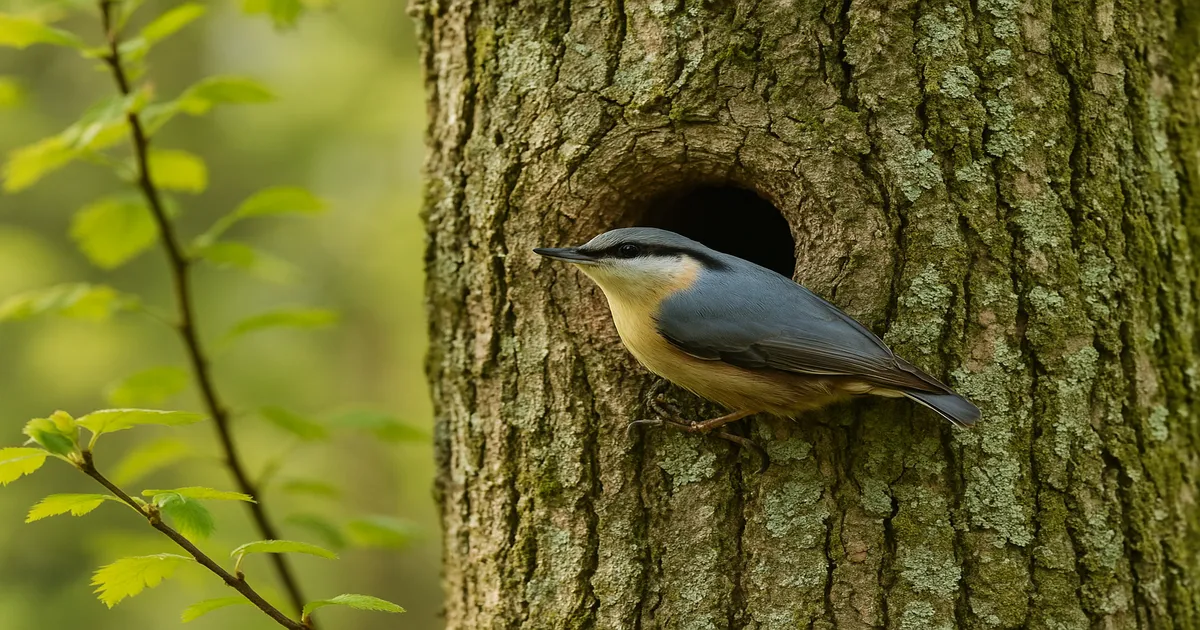
Quick Answer: A nuthatch nest is built inside a natural tree cavity or an abandoned woodpecker hole, lined with a soft cup of animal fur, feathers, and fine plant fibers over a coarser base of bark strips and leaves. All four North American nuthatch species follow this basic pattern, though they differ in cavity preferences, lining materials, and some remarkable entrance-hole behaviors — like resin-daubing and insect-sweeping — that set them apart from nearly every other bird on the continent.
What Does a Nuthatch Nest Look Like Inside?
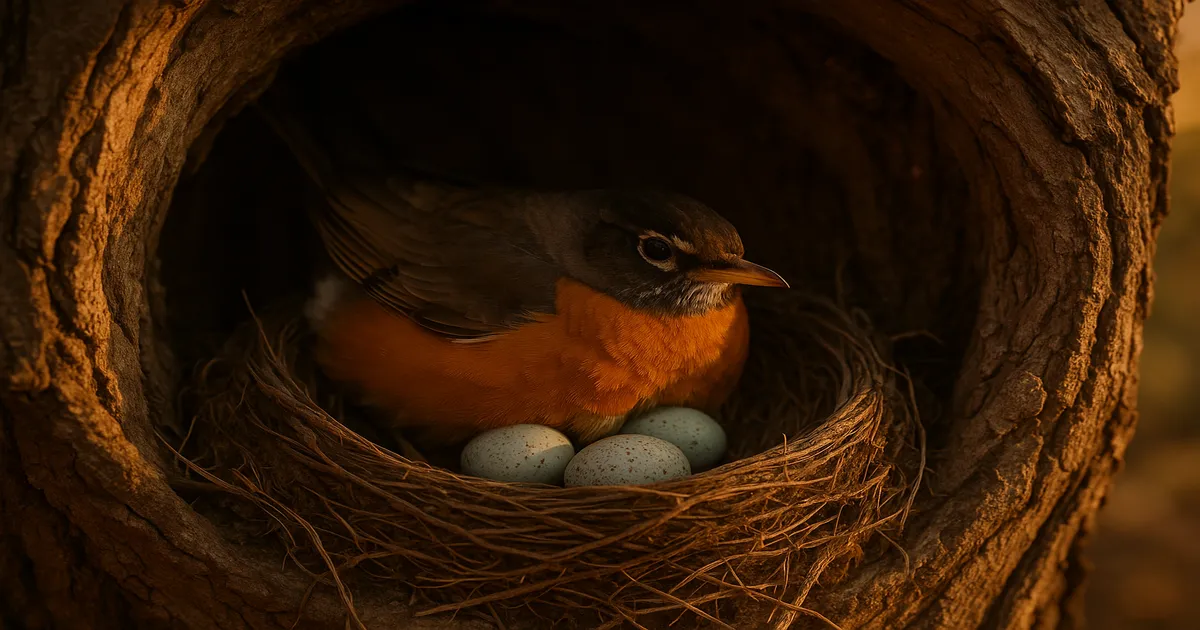
If you’ve spotted a small bird repeatedly entering a tree hole, here’s what’s happening in there: nuthatch nests are tidy, insulated cups tucked deep inside a cavity. You won’t see the nest from the outside — just the entrance hole. Inside, think layers. Coarse bark and debris form the base; a warm inner cup of fur and feathers sits at the center.
The four North American species — White-breasted Nuthatch (Sitta carolinensis), Red-breasted Nuthatch (Sitta canadensis), Pygmy Nuthatch (Sitta pygmaea), and Brown-headed Nuthatch (Sitta pusilla) — all use this cavity-nesting approach. Each has its own quirks, and a couple of them do things at the nest entrance that most birders have never heard of.
Outer layer: bark, twigs, and debris
The foundation is a loose collection of coarse materials — bark strips, small twigs, dead leaves, and occasionally bits of grass. This outer layer isn’t tidy. It fills the bottom of the cavity and gives the softer inner cup something to sit on. The female does most of the building, making repeated trips over one to two weeks.
Inner lining: fur, feathers, and soft plant fibers
The inner lining is where the nest gets genuinely impressive. Nuthatches pack the cup with animal fur — deer hair is a favorite for White-breasted Nuthatches — along with feathers, fine grasses, and soft plant down. The fur component can be substantial; the finished cup looks almost mammal-like in its softness. This insulation matters because the female incubates alone, and a well-lined nest helps hold egg temperature during her brief absences while the male brings food.
Cavity size and depth
White-breasted Nuthatches prefer cavities with an entrance hole of roughly 1.25 inches (3.2 cm) in diameter — just large enough for the bird to squeeze through, small enough to exclude most competitors. The cavity itself is typically several inches deep, with the nest cup sitting well below the entrance. A shallow cavity exposes eggs and nestlings to predators; a deeper one forces a predator to reach further in, which most won’t bother doing.
Bill-sweeping: the behavior most people don’t know about
White-breasted Nuthatches will pick up crushed insects — often beetles — and rub them in long, sweeping arcs around the entrance hole and inside the cavity. The leading hypothesis is that chemicals from the insects deter squirrels and other cavity competitors. Watch for it: the bird moves in slow, deliberate strokes across the bark, almost ritualistic in appearance. If you see it, nesting is either underway or about to begin.
Where Nuthatches Build Their Nests
Natural cavities vs. old woodpecker holes
Nuthatches are secondary cavity nesters — they don’t excavate their own holes. They rely entirely on existing cavities: natural rot holes in older trees or abandoned woodpecker cavities. Downy Woodpecker (Dryobates pubescens) and Hairy Woodpecker (Dryobates villosus) holes are commonly adopted. This dependence on existing cavities is why mature trees and dead snags matter so much. Without woodpeckers doing the excavation work, nuthatch nesting opportunities shrink fast.
Preferred trees and nest height
White-breasted Nuthatches favor large-diameter deciduous trees — oaks (Quercus spp.), hickories (Carya spp.), maples (Acer spp.), and beeches (Fagus spp.). In the West, ponderosa pine (Pinus ponderosa) and mixed conifer-oak forests take over. Nests are typically 15–60 feet (4.5–18 m) above the ground, though birds will nest lower when cavities are scarce. Red-breasted Nuthatches stick to conifer forests: spruce, fir, hemlock, and pine.
Will nuthatches use nest boxes?
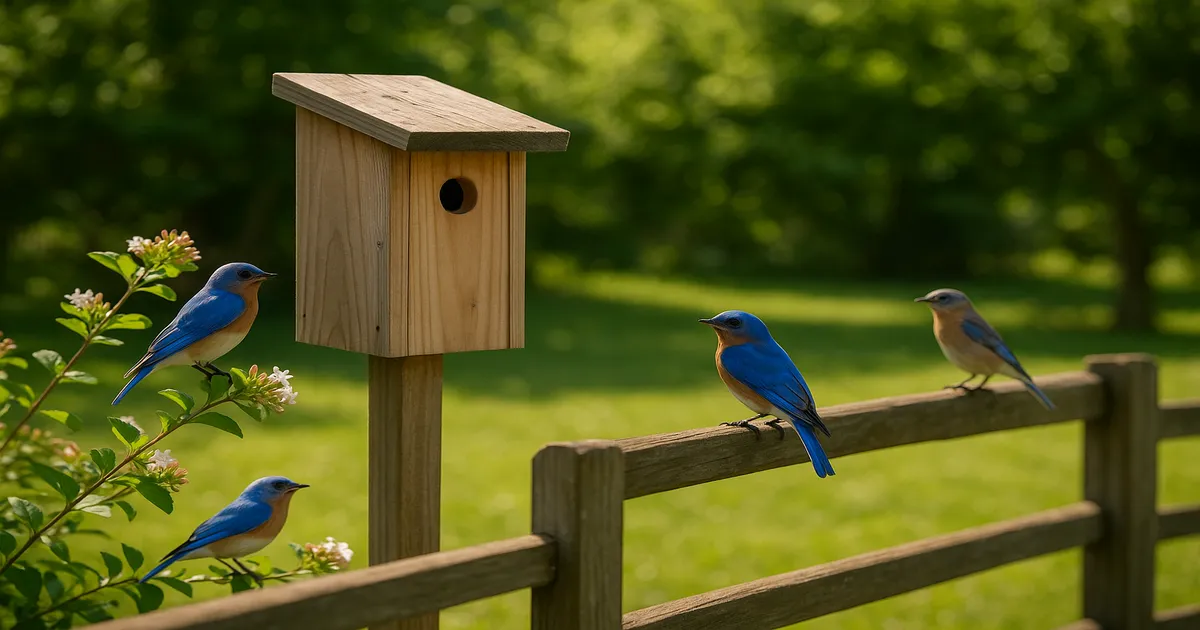
White-breasted Nuthatches will use nest boxes if the specs are right. Here’s what works:
- Floor dimensions: 4 × 4 inches (10 × 10 cm)
- Interior depth: 8–10 inches (20–25 cm)
- Entrance hole diameter: 1.25 inches (3.2 cm)
- Mounting height: 12–20 feet (3.6–6 m) on a tree trunk
- Placement: Edge of mature deciduous woodland, away from busy areas
A cedar nest box designed for small cavity nesters works well here — something like the Coveside Conservation Products Nuthatch House, which is built to the right dimensions and holds up outdoors. Mount it on a tree rather than a pole; nuthatches seem to want the feel of an actual trunk. Red-breasted, Pygmy, and Brown-headed Nuthatches rarely use standard backyard boxes — their habitat requirements are too specific.
Nesting Differences Among the Four Species
White-breasted Nuthatch
The most widespread species. Nests in deciduous and mixed-forest cavities, lines the nest generously with fur and feathers, and may sweep insects around the entrance as described above. Clutch is typically 6–8 eggs. One brood per year.
Red-breasted Nuthatch and resin-daubing
The Red-breasted Nuthatch does something no other North American bird does as consistently: it collects sticky conifer resin and daubs it around the entrance hole of its nest cavity. Both sexes carry resin in their bills and apply it in rings around the hole. The sticky barrier is thought to deter predators and competing cavity nesters. The birds themselves avoid the resin by flying directly into the hole rather than landing at the entrance — an elegant workaround to a problem they created.
Pygmy Nuthatch and cooperative breeding
Pygmy Nuthatches nest almost exclusively in ponderosa pine cavities in the western mountains. Helper males — often offspring from previous years — assist the breeding pair with incubation, brooding, and feeding nestlings. Clutch size ranges from 4–9 eggs, typically 6–7. They also roost communally in cavities during cold nights, sometimes packing dozens of birds into a single hole to conserve heat. For a bird that weighs less than a AA battery, it’s a remarkable survival strategy.
Brown-headed Nuthatch
A bird of the southeastern pine savannas, strongly tied to longleaf pine (Pinus palustris) and other open pine forests. Like the Pygmy, it uses cooperative breeding with helper birds. It requires dead pine snags for nesting — a habitat feature that’s become scarce due to fire suppression and land conversion across the Southeast. The species is considered a conservation priority in several states as a result.
| Species | Cavity Preference | Key Nest Behavior | Clutch Size |
|---|---|---|---|
| White-breasted | Deciduous trees | Bill-sweeping with insects | 5–9 (typically 6–8) |
| Red-breasted | Conifer trees | Resin-daubing at entrance | 4–7 |
| Pygmy | Ponderosa pine | Cooperative breeding | 4–9 (typically 6–7) |
| Brown-headed | Pine snags (SE US) | Cooperative breeding | 4–7 |
Eggs, Incubation, and Nesting Timeline
What nuthatch eggs look like
Nuthatch eggs are creamy white to pale pinkish-white, speckled with reddish-brown and gray spots that concentrate toward the larger end. They’re small — roughly 0.7 inches (1.8 cm) long. The female incubates alone. For White-breasted Nuthatches, incubation runs 13–14 days; Red-breasted is slightly shorter at 12–13 days. While she sits, the male brings food to the cavity entrance — courtship feeding that continues well into the nestling period.
White-breasted Nuthatch nestlings spend 18–26 days in the cavity before fledging, then remain dependent on their parents for another 2–4 weeks. All four species raise one brood per year. If a nest fails early, some pairs attempt a replacement clutch, but second broods after successful fledging don’t happen.
When do nuthatches nest?
Earlier than most people expect. White-breasted Nuthatches begin reinforcing pair bonds in January and February, with males singing persistently from late winter. Nest construction typically begins in March–April, with eggs laid April–May. Timing shifts with latitude — birds in the Deep South may be laying by late March, while those in southern Canada might not start until May.
Month-by-month (White-breasted Nuthatch):
- Jan–Feb: Pair bond reinforcement; males begin singing; courtship feeding starts
- Feb–Mar: Nest site selection; repeated visits to candidate cavities
- Mar–Apr: Nest construction (primarily by female)
- Apr–May: Egg laying and incubation
- May–Jun: Nestlings in cavity; male delivering food
- Jun–Jul: Fledglings out of nest; family group foraging together
Identifying Nuthatches at the Nest
White-breasted Nuthatch
About 5.1–5.5 inches (13–14 cm) long. Clean white face and underparts, blue-gray back, jet-black cap (males) or dark gray cap (females). Rusty-chestnut flanks visible when the bird clings headfirst to a trunk. Long, slightly upturned bill. The headfirst descent is the giveaway — no other common backyard bird does it.
Red-breasted Nuthatch
Smaller at about 4.3 inches (11 cm). Bold white eyebrow stripe, black cap, rich rusty-orange underparts. Once you’ve seen one, the color combination is unmistakable. Outside irruption years, expect them only in or near conifer forests.
Pygmy and Brown-headed Nuthatches
Both are tiny — around 3.9–4.3 inches (10–11 cm) — with gray-brown or warm brown caps that lack the strong contrast of the other two species. A small pale nape spot is visible at close range. Range is the easiest separator: Pygmy in western ponderosa pine forests, Brown-headed in southeastern pine savannas.
Calls during nesting season
- White-breasted: Nasal, laughing “yank-yank-yank” — like a tiny car horn
- Red-breasted: Higher, more rapid “ank-ank” — a tin trumpet quality
- Pygmy: Rapid, squeaky “pi-pi-pi” — often in excited chattering bursts from groups
- Brown-headed: Squeaky “dee-dee” — frequently compared to a rubber duck
Learn the White-breasted “yank” call first. Once it’s in your ear, you’ll realize these birds are around far more often than you thought. A good pair of binoculars helps confirm the ID once you’ve tracked the sound to a tree — something like the Nikon Monarch M5 8x42 gives you enough brightness and field of view to pick out a nuthatch clinging to bark in dappled light.
Attracting Nesting Nuthatches
Leave dead trees standing. This is the single most impactful thing you can do. Dead snags create natural cavities, attract the woodpeckers whose holes nuthatches later adopt, and support the insects nuthatches feed on. One dead oak does more for nesting nuthatches than half a dozen nest boxes.
Put up the right nest box. For White-breasted Nuthatches: 4 × 4 inch floor, 8–10 inch depth, 1.25-inch entrance hole, mounted 12–20 feet up on a tree at the edge of mature deciduous woodland.
Feed them through the breeding season. Breeding adults need high-energy food, and they cache it too. Suet is the top choice during the nestling period when protein demand peaks — a no-melt suet cake in a cage feeder like the Perky-Pet Squirrel-Be-Gone Suet Feeder keeps starlings from monopolizing it. Black-oil sunflower seeds and peanuts round out the menu. Nuthatches will carry peanuts off repeatedly, caching them in bark crevices nearby. (Wagner’s Deluxe Blend Wild Bird Food)
Regional habitat notes:
- East and Midwest: Mature deciduous woodland; oaks are the best single investment
- West and Pacific Northwest: Mixed conifer-oak or ponderosa pine habitat
- Rocky Mountains: Ponderosa pine stands for Pygmy Nuthatches
- Southeast: Open pine savanna with dead snags; supporting longleaf pine restoration in your region makes a real difference for Brown-headed Nuthatches
Frequently Asked Questions About Nuthatch Nests
What does a nuthatch nest look like inside?
A nuthatch nest has two distinct layers: a coarse outer base of bark strips, twigs, and dead leaves, topped with a dense inner cup of animal fur, feathers, and fine plant fibers. Deer hair is a common material for White-breasted Nuthatches. The finished cup is surprisingly soft — almost mammal-like. You won’t see it from outside the cavity; only the entrance hole is visible.
Do nuthatches reuse the same nest cavity each year?
They often return to the same territory and may reuse a favored cavity, but they typically build a fresh nest lining each season. A pair that successfully fledged young from a cavity will often prospect that same hole the following winter. If a squirrel or another bird claims it first, they’ll look elsewhere.
Why do Red-breasted Nuthatches put sap around their nest hole?
Red-breasted Nuthatches collect sticky conifer resin and apply it in rings around the entrance hole — a behavior called resin-daubing. The sticky barrier is thought to deter predators and competing cavity nesters. The nuthatches themselves avoid the resin by flying directly into the hole rather than landing at the entrance first.
How do I tell a nuthatch nest apart from a chickadee nest?
Both are cavity nests with soft inner linings, so the nests look fairly similar. The easiest distinguishing feature is the builder: nuthatches are larger, have that distinctive upturned bill, and move headfirst down trunks. Black-capped Chickadees (Poecile atricapillus) typically excavate their own cavities in soft, rotted wood, while nuthatches always use existing holes. Nuthatch nests also tend to use more animal fur and less moss than chickadee nests.
What size entrance hole does a nuthatch need in a nest box?
White-breasted Nuthatches need a 1.25-inch (3.2 cm) entrance hole — small enough to exclude European Starlings while still letting the nuthatch pass through easily. Red-breasted Nuthatches can use a slightly smaller hole of around 1.125 inches (2.9 cm), but they rarely take to standard backyard boxes given their preference for conifer forest habitat.