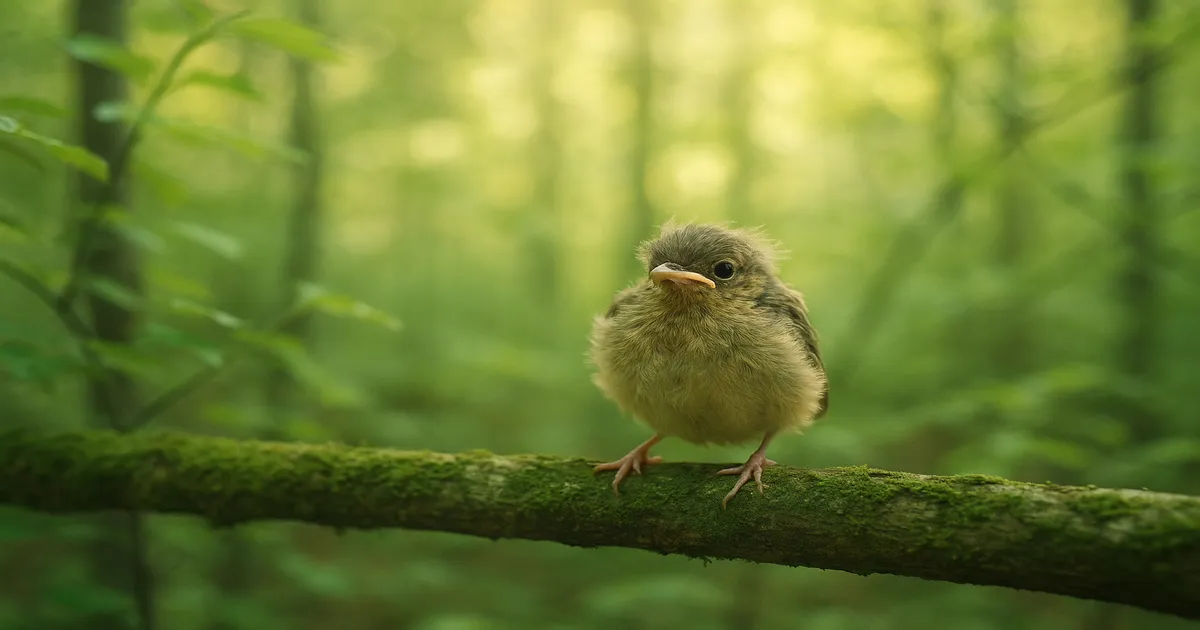
Quick Answer: Most nestlings that people assume are abandoned are not — parent birds are almost always nearby, watching from cover. Before doing anything, confirm you’re looking at a nestling (naked or downy, unable to perch) rather than a fledgling (mostly feathered, hopping on the ground). Fledglings on the ground are completely normal. If it is a true nestling, back away and observe quietly for 20–30 minutes before drawing any conclusions.
Finding a tiny bird on the ground triggers an immediate urge to help. That instinct comes from the right place. But knowing how to tell if a nestling is abandoned means slowing down and reading the situation carefully, because the most common mistake people make is rescuing a bird that didn’t need rescuing. Wildlife rehabilitators across North America consistently report that the majority of “abandoned” baby birds brought to them were perfectly fine and would have been better off left alone.
How to Tell If a Nestling Is Abandoned: Start Here
The Most Important Rule: Parent Birds Rarely Abandon Healthy Nestlings
Under normal circumstances, parent birds do not abandon their young. They will return to a nest after a human has touched it, handled the babies, or stood nearby. The idea that human scent causes abandonment is a myth — birds have a poorly developed sense of smell and simply cannot detect it the way mammals do. Their investment in a clutch of nestlings is far too high to walk away over something like that.
What looks like abandonment is usually one of two things: a fledgling doing exactly what fledglings are supposed to do, or a parent bird hanging back because you’re standing too close.
Nestling or Fledgling? The Distinction That Changes Everything
This is the single most important question you can ask.
- Nestling: Naked or covered in sparse down, eyes possibly still closed, unable to perch or stand steadily, completely dependent on the nest
- Fledgling: Mostly feathered, can hop or flutter, has intentionally left the nest — parents are still feeding it on the ground
If the bird you’ve found is hopping around with most of its feathers, put it down and walk away. That bird is a fledgling, and it is not abandoned.
When to Act and When to Wait
Leave it alone if:
- It has full or mostly full feathers and can hop
- You can hear alarm calls or scolding from nearby adult birds
- It looks alert and responsive
Observe from a distance (20–30 minutes) if:
- It’s naked or downy and clearly out of the nest
- You can see or reach the nest to return it
Contact a rehabilitator if:
- It’s cold, lethargic, has visible injuries, or has insects on its body
- No parent activity after a full hour of distant observation
- The nest has been destroyed with no replacement possible
Nestling vs. Fledgling: The Identification You Must Make First
What Does a Nestling Look Like?
A nestling hatches naked and pink, with eyes closed, and spends its first days completely helpless. Within a few days, pin feathers — tiny sheaths of emerging feathers — begin pushing through the skin, and soft down may cover the body. Nestlings cannot perch, walk, or regulate their own body temperature. If one is on the ground, something has gone wrong: it has either fallen, been blown out, or been displaced by a nest competitor.
The bright yellow or orange fleshy edges at the corners of the bill — called gape flanges — are one of the most visible features. They’re designed to trigger feeding responses in parent birds.
What Does a Fledgling Look Like?
A fledgling has left the nest intentionally. It has most of its feathers, can hop and flutter, and is actively exploring the world — even if it looks a bit rough around the edges. Parent birds continue feeding fledglings on the ground for one to three weeks after nest departure. The fledgling period is a critical developmental phase, not a sign that something has gone wrong.
American Crow fledglings (Corvus brachyrhynchos) are probably the most unnecessarily rescued bird in North America. They spend days — sometimes over a week — on the ground or in low shrubs, looking helpless, while their parents and often older siblings watch and feed them. The blue-gray eyes are the giveaway: adult crows have dark brown eyes, so a crow with pale eyes is a juvenile. Leave it alone.
Visual Comparison: Age Stages at a Glance
| Feature | Nestling | Fledgling |
|---|---|---|
| Feathers | Naked, downy, or pin feathers | Mostly full feathers |
| Eyes | May be closed | Open and alert |
| Movement | None or weak | Hops, flutters |
| Location | Should be in nest | Ground or low shrubs — normal |
| Parental care | Fed in nest | Still fed by parents |
How to Tell If a Nestling Is Abandoned: A Step-by-Step Assessment
Step 1: Observe From a Distance for 20–30 Minutes
Back away at least 30 feet and watch quietly. Parent birds actively avoid approaching a nest or chick when a human is standing nearby. Your presence is the problem. A good pair of binoculars lets you watch without crowding the scene. (Nikon Monarch M5 8x42) Give the parents time to return before concluding anything.
Step 2: Look and Listen for Parental Activity
While you wait, pay attention to the sounds around you. Persistent chip notes, tuk-tuk-tuk alarm calls, or scolding from nearby shrubs are strong signs that parent birds are present and watching. Silence doesn’t necessarily mean abandonment, but active alarm calling almost always means the nest is active.
Step 3: Check the Nest Itself
If you can safely see or reach the nest, look at its condition. An intact nest with other nestlings still inside is a strong sign the parents are active. A destroyed nest — knocked down by a storm, predator, or lawn equipment — is a different situation and may require intervention.
Step 4: Assess the Nestling’s Physical Condition
A healthy nestling, even one that’s been on the ground for a short time, will feel warm and react to your presence by gaping (opening its mouth for food). Signs of genuine distress include:
- Cold or cool to the touch
- Lethargic or unresponsive
- Sunken or partially closed eyes
- Visible wounds, blood, or broken limbs
- Flies or fly eggs (tiny white clusters) on the body
- No parental visits after 60+ minutes of observation
Common Nestlings You Might Find
American Robin
Robin (Turdus migratorius) nestlings hatch naked and pink, then develop grayish-brown down before their first real feathers emerge. The spotted breast — the hallmark of juvenile robins — appears before they leave the nest and persists for several weeks after fledging. If you find a robin-sized bird with a spotted breast hopping on your lawn, that’s a fledgling doing exactly what it should. The parents are almost certainly nearby, even if you can’t see them.
Northern Cardinal
Cardinal (Cardinalis cardinalis) nestlings hatch nearly naked and develop a grayish down. The crest appears early, which helps with identification. The most useful age marker is bill color: nestlings and young fledglings have a dark, dusky bill that hasn’t yet turned the characteristic heavy orange-red of adults. A crested bird with a dark bill that can hop is a fledgling — watch, don’t rescue.
Mourning Dove
Mourning Dove (Zenaida macroura) nests are notoriously sparse — a loose platform of sticks that looks like it’ll fall apart in a light breeze. That’s intentional. It’s how doves build. The nestlings hatch with sparse yellow down and develop quickly, but the nest will always look precarious. Don’t let the construction quality fool you into thinking it’s abandoned. Mourning Doves can nest up to six times per year, March through October, so you’re likely to encounter them throughout the whole season.
Eastern Bluebird
Bluebird (Sialia sialis) nestlings found outside a nest box have almost certainly fallen or been pushed out — they don’t fledge by wandering away from the entrance hole. Juvenile bluebirds show spotted, thrush-like plumage before their adult colors develop, which can make them look unfamiliar. If you find a spotted juvenile near a bluebird box, watch it rather than grabbing it. If you manage a nest box trail, a well-mounted box with a proper predator baffle reduces the chances of nestlings being displaced in the first place.
Carolina Wren
Carolina Wren (Thryothorus ludovicianus) nestlings are tiny and develop their characteristic barring early. Wrens are notorious for nesting in unusual spots — flowerpots, old boots, hanging baskets — and their fledglings tend to disappear quickly into dense shrubs. A small, barred, stub-tailed bird hopping in thick vegetation is almost certainly a wren fledgling with parents nearby.
House Sparrow
House Sparrow (Passer domesticus) nestlings are common finds in urban and suburban areas. They hatch with sparse whitish down and have large yellow gape flanges. One thing worth knowing: House Sparrows are an introduced, non-native species, and many licensed wildlife rehabilitators follow different protocols for them than for native birds. Call ahead before bringing one in.
What NOT to Do: Feeding and Handling Mistakes
Don’t Try to Feed It
Incorrect feeding is one of the leading causes of death in “rescued” nestlings. Aspiration — getting food or liquid into the lungs — can kill a nestling within hours. Never give a nestling bread, cow’s milk, water dripped directly into the mouth, or birdseed of any kind.
Robin nestlings need earthworms and soft invertebrates. Cardinal nestlings — despite having seed-eating parents — are fed almost exclusively insects and caterpillars, because the protein is essential for growth. Mourning Dove nestlings are fed crop milk, a specialized secretion that’s essentially impossible to replicate at home. Nestling diets are specific, often surprising, and not something you can safely improvise.
Safe Handling If You Must Move a Bird
If you need to handle a nestling to return it to its nest, keep it brief:
- Bare hands are fine — the scent myth is false
- Support the body fully; don’t grip the wings or legs
- Move quickly and calmly; minimize handling time
- If you need to hold it temporarily, place it in a small ventilated box lined with paper towels — no food, no water, no heat lamp
How to Reunite a Nestling With Its Nest
If the original nest is intact and reachable, simply place the nestling back in it. The parents will return. If the nest has been destroyed or is unreachable, construct a substitute: a small berry basket or plastic container with drainage holes, lined with dry grass or leaves, secured near the original nest site. Parent birds will often accept a substitute nest if it’s close to the original location.
When to Call a Wildlife Rehabilitator
Contact a licensed wildlife rehabilitator if:
- The bird has visible injuries (wounds, bleeding, broken limbs, drooping wing)
- It’s cold and unresponsive
- There are flies or fly eggs on the body
- The nest has been completely destroyed with no replacement possible
- You’ve confirmed the parent birds are dead
- You’ve observed from a distance for a full hour with zero parental activity
How to find one near you:
- National Wildlife Rehabilitators Association (NWRA): nwrawildlife.org
- Your state’s fish and wildlife agency — most have a hotline or online directory
- Local Audubon Society chapter — often maintains rehabilitator referral lists
- Animal Help Now: ahnow.org has a searchable map
While you wait for help, keep the bird warm, dark, and quiet. A small cardboard box with ventilation holes, lined with paper towels, in a warm room away from direct sun is the right setup. Do not give food or water. Handle it as little as possible.
Frequently Asked Questions
Will a mother bird abandon her nest if a human touches the eggs or babies?
No. This is one of the most persistent myths in wildlife care, and it’s false. Birds have a very limited sense of smell and cannot detect human scent the way mammals do. If you’ve touched a nestling or egg, return it to the nest and back away — the parents will come back.
How long can a nestling survive without being fed?
Most nestlings are in serious trouble after just a few hours without food, and very young nestlings deteriorate even faster. This is why the one-hour observation window matters. If you’ve watched from a distance for a full hour and seen no parental activity, that’s a genuine red flag worth acting on.
What’s the difference between a nestling and a fledgling?
A nestling is a young bird still dependent on the nest — naked or downy, eyes possibly closed, unable to perch. A fledgling has left the nest intentionally, has most of its feathers, and can hop or flutter. Fledglings on the ground are completely normal and are still being fed by their parents.
What should I do if the nest has been destroyed?
Construct a substitute nest from a small berry basket or plastic container with drainage holes, lined with dry grass or leaves. Attach it as close to the original nest site as possible — on the same branch or fence post if you can. Parent birds will often accept it. If the parents don’t return within an hour, contact a wildlife rehabilitator.
Is it normal for parent birds to reduce feeding trips near fledging time?
Yes. In the final days before fledging, parents often reduce feeding trips and may call from a distance to encourage nestlings toward the nest entrance. This is deliberate behavior — it looks like neglect, but it’s the parents nudging their young toward independence. Don’t intervene.