Quick Answer: If you find a robin fledgling dead in the nest, put on disposable gloves and remove the body promptly to protect surviving nestlings from disease. Double-bag it and place it in your outdoor trash. Then step back — the parent robins will almost certainly continue caring for any siblings that remain.
Finding a dead nestling in a robin nest is genuinely upsetting, especially if you’ve been watching the nest for weeks. You’re not alone in searching for what to do. This guide walks you through safe removal of a robin fledgling dead in the nest, explains the most likely causes, and tells you when to call for professional help — and when to trust the parents to handle things themselves.
What to Do If You Find a Robin Fledgling Dead in the Nest
Should You Remove the Body?
Yes, and fairly quickly. A decomposing nestling harbors bacteria and attracts blowflies, which puts surviving siblings at real risk. Parent robins won’t remove a dead nestling themselves — that job falls to you.
Do it calmly, with gloves, and spend as little time at the nest as possible.
Is It Safe to Touch the Nest or Dead Bird?
For healthy adults taking basic precautions, yes. Wear disposable nitrile gloves, avoid touching your face, and wash your hands thoroughly afterward. The main disease concern with dead robins is West Nile Virus, but that virus spreads via mosquito bite — not through handling a dead bird. Casual contact carries very low risk.
One thing worth saying plainly: the old myth that parent birds abandon a nest if humans touch it is false. Birds have a poor sense of smell and won’t reject their nest or surviving young because you were nearby.
When to Call a Wildlife Rehabilitator
Call a licensed rehabilitator if:
- Surviving nestlings appear weak, cold, or injured
- You see no parental activity for 4 or more hours during daylight
- The nest is destroyed and can’t be safely repositioned
- You suspect pesticide poisoning — multiple dead birds, or adults also affected
The National Wildlife Rehabilitators Association (nwrawildlife.org) has a state-by-state locator, and most state wildlife agencies maintain referral hotlines.
How to Identify an American Robin Nestling vs. Fledgling
What Nestlings Look Like (Days 1–16)
The American Robin (Turdus migratorius) changes fast in its first two weeks. At hatch, a nestling weighs roughly 0.18 oz (5 g) — barely more than a large grape — and is nearly naked, with a few wisps of gray down and a vivid orange-yellow gape that triggers feeding from the parents.
By days 4–9, dark blue-black pin feathers push through the skin on the wings and back, and the eyes begin to open. By days 10–13, the spotted breast pattern starts to emerge. At fledging — typically days 13–16 — the bird weighs approximately 2.1–2.5 oz (60–70 g), close to adult weight, and can stand and hop to the nest’s edge.
The Spotted-Breast Stage: Why Fledglings Confuse People
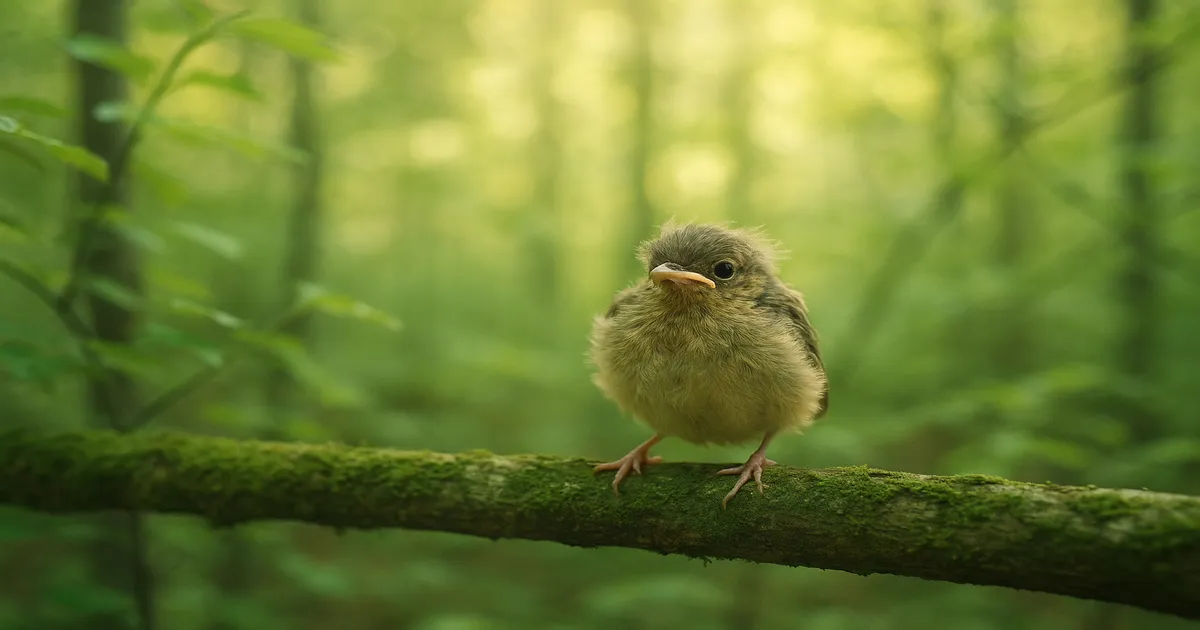
Newly fledged robins look nothing like the adults most people recognize. Instead of a clean brick-red breast, fledglings have dark brown spots on a pale orange background, and a mottled back with buffy whitish streaks on the upperparts. Soft yellowish gape flanges may still be visible on very recently fledged birds. This heavily spotted pattern is the classic thrush look — robins are thrushes, after all — and it persists for several weeks. Juveniles won’t molt into adult-like plumage until late summer of their first year.
Telling a Dead Nestling From a Sick or Stunned One
Before removing a nestling, confirm it’s actually dead:
- No response to gentle touch near the foot or wing
- Complete limpness — no muscle tone at all
- No visible breathing — the chest won’t rise and fall
- Pale or grayish gape instead of the bright orange-yellow of a living nestling
- Noticeably cooler than its nestmates
A sick or chilled nestling may be very still but will still show slight muscle tone and may react to touch. If you’re not sure, contact a rehabilitator before removing the bird.
Common Causes of Robin Nestling Death
Predation is the most frequent culprit. Outdoor cats are the single biggest threat — a strike that injures a nestling and leaves it in the nest can cause death within hours. Crows and blue jays raid nests opportunistically, and rat snakes are skilled climbers. Visible wounds on the body point strongly to predation.
Starvation follows if a parent is killed — by a cat, a window strike, or a car — and the surviving adult can’t feed the entire brood alone. Nestlings have very high metabolic demands, so starvation moves quickly. True abandonment by both healthy parents is rare and almost always caused by repeated human disturbance or sustained predator pressure.
West Nile Virus deserves a mention because robins are a primary amplifying host — the virus builds up in robin populations before mosquitoes spread it to other species. During active outbreaks, nestling mortality can be significant. Bacterial infections can also spread through a soiled nest, which is one more reason to remove a dead nestling promptly.
Weather is an underappreciated factor. A late spring cold snap can cause hypothermia in young nestlings before they can thermoregulate. A nest in direct afternoon sun during a heat wave can overheat them. Prolonged heavy rain keeps parents from foraging and leaves nestlings cold and underfed.
Brood reduction is worth normalizing. In a brood of four, the smallest nestling often doesn’t survive — not because anything went wrong, but because it’s a natural mechanism that allows stronger siblings to thrive when food is limited. If you find one dead nestling among healthy-looking siblings, this is probably what happened. It’s a normal part of robin reproductive biology.
Step-by-Step: Safely Removing a Dead Robin From the Nest
What You Need
- Disposable nitrile gloves
- Two small plastic bags (for double-bagging)
- Access to your outdoor trash bin
That’s it. Don’t overcomplicate this.
Removal
- Gloves on before you approach the nest.
- Move calmly — sudden movements can startle nestlings into jumping out prematurely.
- Locate the dead nestling — it will be cooler, limp, and unresponsive compared to its nestmates.
- Gently lift the body with two fingers, taking care not to jostle the living nestlings.
- Place it directly into a plastic bag without setting it down elsewhere.
- Step away immediately. Don’t linger.
The whole process should take under 60 seconds. Parent robins may alarm-call — a sharp, rapid tut-tut-tut — from a nearby branch. That’s normal defensive behavior, not a sign you’ve done something wrong.
Disposal and Nest Hygiene
Double-bag the body, tie both bags securely, and place it in your outdoor trash. Don’t compost it, bury it in a garden bed, or leave it on the ground. Under the Migratory Bird Treaty Act (MBTA), possessing a dead robin without a federal permit is technically illegal, but brief handling for nest sanitation is not prosecuted. Prompt disposal is the right move legally and practically.
Don’t attempt to clean the inside of the nest. You risk damaging the structure and stressing the surviving nestlings. Parent robins handle nest hygiene themselves, removing fecal sacs after every feeding — a healthy, active nest gets cleaned dozens of times a day.
What Happens Next: Surviving Nestlings and the Parents
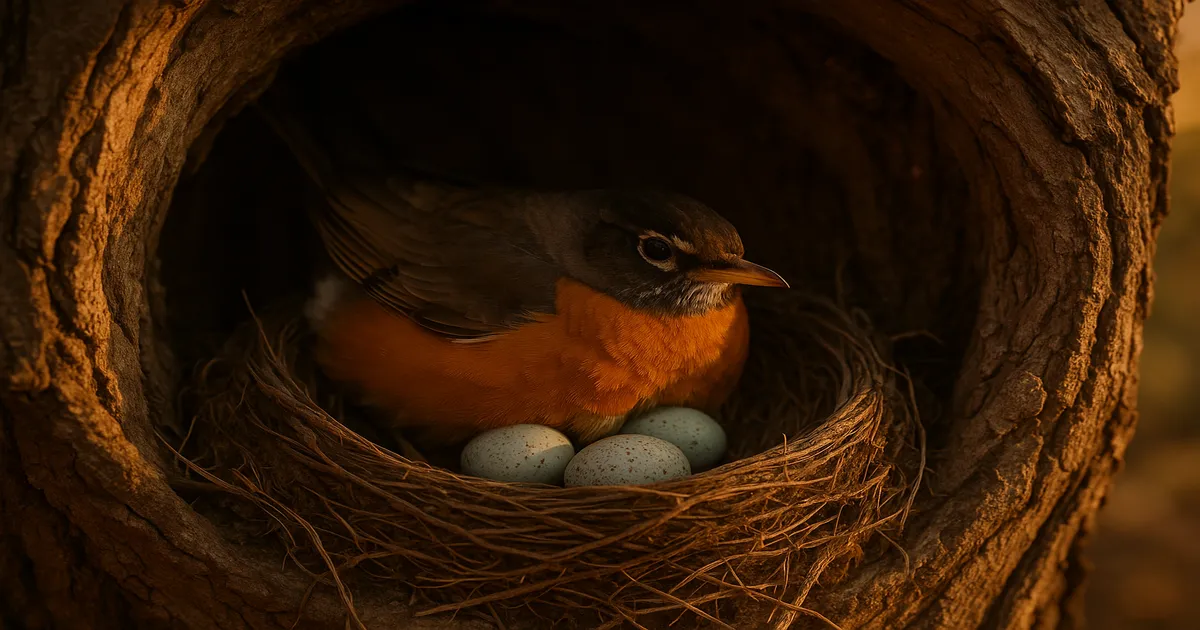
Parent robins are strongly motivated to care for surviving nestlings, and a single death won’t change that. Abandonment after one nestling dies is genuinely rare. What looks like abandonment is usually normal parental caution — adults stay away from the nest when they sense a threat nearby. Give them an hour or two of undisturbed time before worrying.
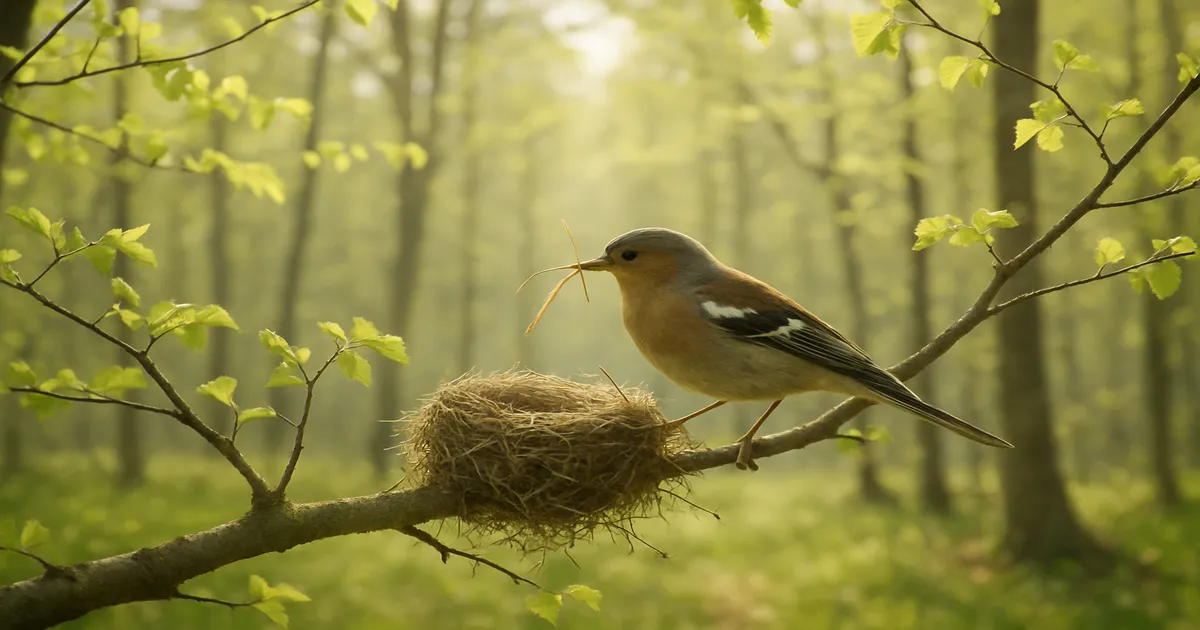
Once the brood fledges, the male typically takes over primary care — following the fledglings on the ground, feeding them, and defending them from predators. This frees the female to begin building a new nest for the next clutch. Robins raise 2–3 broods between March and July across most of their North American range, which stretches from Alaska and Canada south through Mexico. They’re one of the continent’s most productive songbirds, and they don’t dwell on losses. A female may begin a second nest within days of the first brood fledging. Robins rarely reuse the same nest structure but often build in the same general area.
Supporting Robin Nesting Success in Your Yard
Keep cats indoors during nesting season — March through July. This is the single most impactful thing a cat owner can do for nesting birds. If neighborhood cats are a problem you can’t fully control, a motion-activated sprinkler near active nest sites can help.
Skip the lawn chemicals. Earthworms are the primary food for nestling robins — a single brood of four may consume hundreds of worms over the 13–16 day nestling period. Lawn insecticides, grub treatments, and broad-spectrum pesticides devastate earthworm populations. A slightly imperfect lawn is far better robin habitat than a chemically managed one.
Add a birdbath. Robins are strongly attracted to water, and a good ground-level or pedestal bath will bring them in daily during nesting season. Keep the water fresh — robins bathe enthusiastically and foul it quickly.
Consider a nest platform. Robins won’t use enclosed nest boxes, but they’ll readily adopt an open-cup shelf mounted on a fence post or under a porch eave. Place it somewhere with a clear sightline below — robins like to see what’s coming.
Don’t over-monitor the nest. Every visit draws predator attention and stresses the parents. Check it occasionally with binoculars from a distance rather than walking up to it repeatedly. (Nikon Monarch M5 8x42) If the nest goes quiet, give the parents a couple of hours before assuming something is wrong.
Frequently Asked Questions
Is it normal for one baby robin to die while the others survive?
Yes, completely normal. This is brood reduction — a natural mechanism that allows stronger siblings to receive adequate food when resources are limited. Finding one dead nestling among healthy siblings is not a sign that something has gone catastrophically wrong.
Will the mother robin abandon the nest after a baby dies?
Almost never. Parent robins are strongly bonded to their surviving nestlings and will continue feeding and brooding them after a sibling dies. If you remove the body promptly and leave the nest undisturbed, the parents will very likely return within minutes.
Can I get sick from touching a dead baby robin?
The risk to healthy adults is very low. West Nile Virus — the main concern — spreads via mosquito bite, not through handling a dead bird. Wear disposable gloves, avoid touching your face, and wash your hands with soap and water afterward. People with compromised immune systems should take extra precautions.
What should I do if I find a live baby robin on the ground near the nest?
First, figure out whether it’s a nestling or a fledgling. A nestling — sparse feathers, eyes possibly still closed — has left the nest too early. Gently place it back if you can reach the nest safely; the parents will not reject it. A fledgling — fully feathered, spotted breast, hopping around — is supposed to be on the ground. Fledglings spend several days grounded before they can fly well, and their parents are almost certainly nearby. Leave them alone unless a cat or car poses immediate danger.
How long do baby robins stay in the nest?
Nestlings leave the nest 13–16 days after hatching. Eggs incubate for 12–14 days, so from laying to an empty nest is typically 25–30 days. After fledging, young robins stay dependent on their parents for another 2–3 weeks while they learn to forage on their own.