Quick Answer: To get birds away from your house, start by identifying exactly which species you’re dealing with — deterrents that work on pigeons often fail completely against crows, and the legal rules differ by species. Your best long-term tools are physical exclusion (netting, spikes, hardware cloth), habitat modification (removing food sources, changing your lawn), and rotating scare tactics for smarter birds. No single product fixes every bird problem, and some species are federally protected, so knowing what you’re up against matters before you act.
Figuring out how to get birds away from your house sounds simple until you’re standing in your driveway staring at a mess of droppings, a blocked vent, or a lawn that looks like a goose convention. The fix depends almost entirely on which bird you’re dealing with. A pigeon solution won’t move a crow, and a crow solution won’t stop a starling from nesting in your eaves. Here’s how to approach it the right way — species first, deterrents second.
How to Get Birds Away from Your House: Start Here
The Fastest Fixes by Problem Area
| Problem | Best First Step |
|---|---|
| Roof and ledge roosting | Anti-roosting spikes or netting |
| Vent and eave nesting | Hardware cloth exclusion (before nesting season) |
| Lawn and pond area | Taller grass, shoreline plantings, remove food |
| Feeder takeover | Switch seed types, change feeder design |
| Garbage and compost raids | Locking lids, enclosed bins |
Why Identification Matters Before You Act
European Starlings (Sturnus vulgaris) and House Sparrows (Passer domesticus) are introduced species with no federal protection — you can legally trap or remove them. American Crows (Corvus brachyrhynchos), Canada Geese (Branta canadensis), and House Finches (Haemorhous mexicanus) are all covered by the Migratory Bird Treaty Act (MBTA). Disturbing an active nest of a protected species without a permit is a federal offense. Get the ID right first.
Identify the Bird First: The 5 Most Common House Problem Species
European Starling: The Iridescent Invader
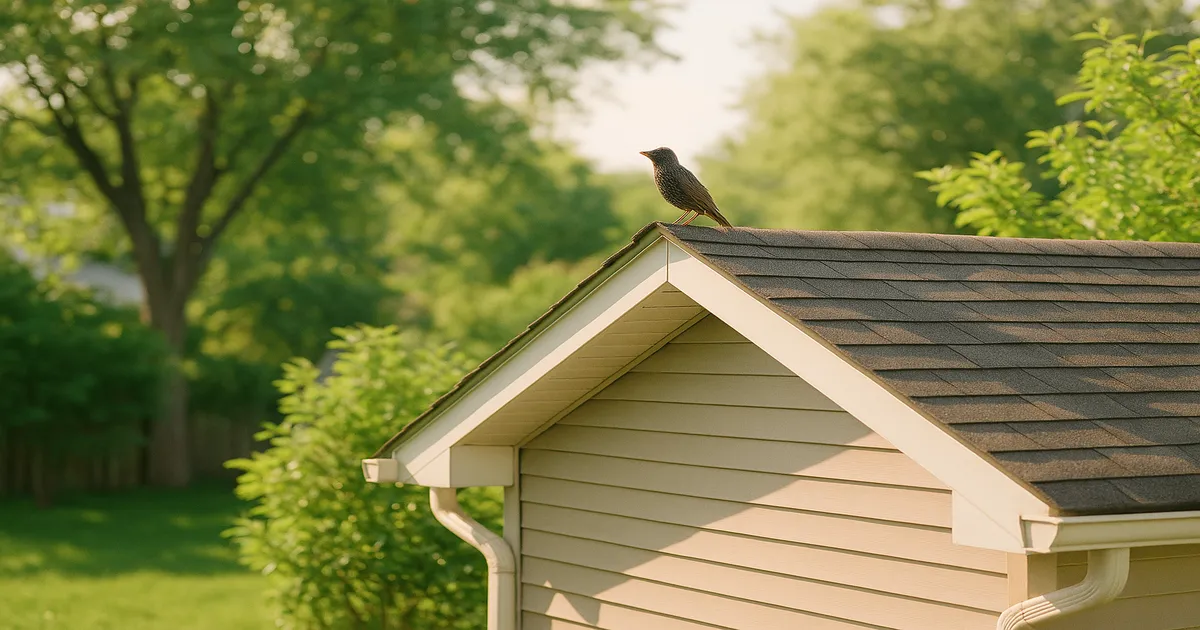
Starlings are stocky, short-tailed birds about 8.5 inches (21.5 cm) long with a pointed, dagger-like bill. In breeding plumage they’re glossy black with green and purple iridescence and a bright yellow bill. In fall and winter, heavy white spotting covers the body — they look almost speckled. By late winter, those white tips wear away through feather abrasion, so the same bird looks progressively glossier as spring approaches without molting at all. In flight, their triangular, pointed wings make them easy to pick out from other blackbirds.
Their calls are the giveaway: an endless stream of whistles, clicks, rattles, and impressively accurate mimicry. If you hear what sounds like a Red-tailed Hawk screaming from your roofline but there’s no hawk in sight, there’s probably a starling.
House Sparrow: The Persistent Cavity Nester
House Sparrows are small — about 6.3 inches (16 cm) — chunky, and round-headed with a thick conical bill built for cracking seeds. Males have a bold black bib, chestnut back streaked with black, and a gray crown with chestnut sides. Females are streaky brown with a pale buff eyebrow stripe and a plain, unmarked face — no eye ring, no streaking on the cheek. Their call is exactly what you’d expect: a relentless, monotonous cheep-cheep-cheep from dawn to dusk.
Rock Pigeon: The Ledge and Rooftop Colonizer
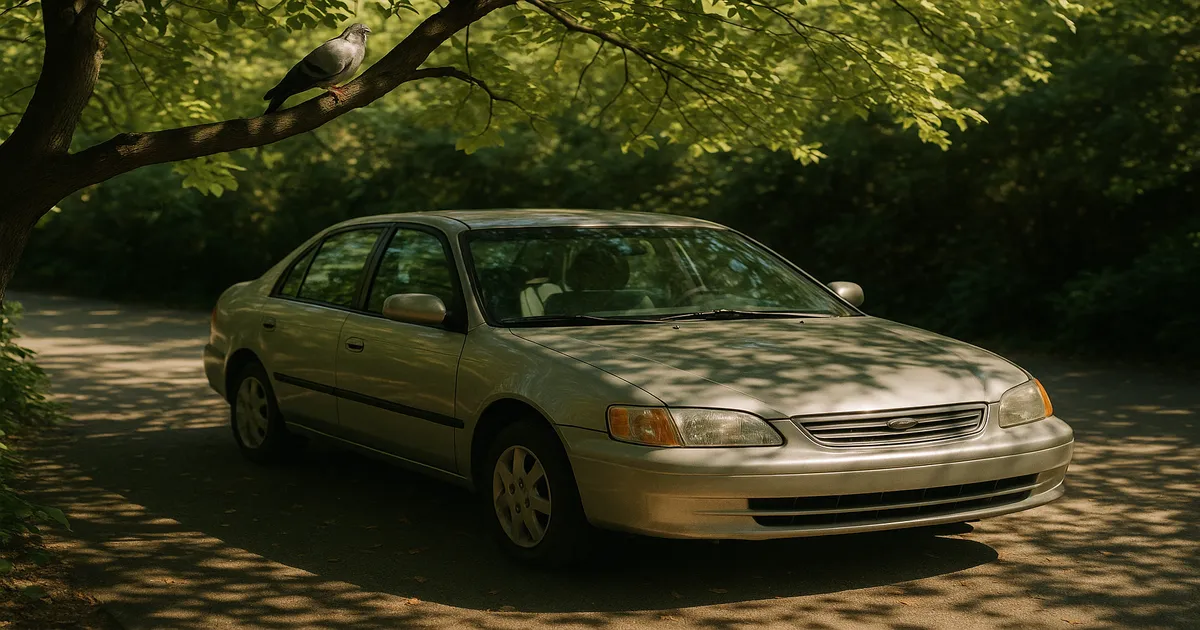
Rock Pigeons (Columba livia) are hard to miss at about 12.5 inches (32 cm) with a plump body, small head, and iridescent neck feathers. Wild-type birds are blue-gray with two black wingbars and a white rump patch that flashes in flight. Feral birds come in almost every color pattern from all-white to reddish-brown — centuries of domestication scrambled the genetics. They coo persistently, and that sound carries through walls and ceilings surprisingly well.
American Crow: The Intelligent Flock Raider
Crows are large — about 17.5 inches (44 cm) — all-black birds with a heavy, straight bill and a fan-shaped tail. Don’t confuse them with Common Ravens (Corvus corax), which are noticeably bigger, have a wedge-shaped tail, a shaggy throat, and make a deep, hollow croaking call rather than the crow’s familiar caw-caw-caw. In winter, crow roosts can number in the thousands, and the noise at dusk is genuinely startling if you haven’t heard it before.
Canada Goose: The Lawn-Grazing Giant
Canada Geese are unmistakable: 30–43 inches (76–110 cm) long, with a black head and neck and a crisp white chin patch. They’re loud (that classic ah-honk), aggressive near nests, and they defecate roughly every 20 minutes — producing around 1–2 lbs (0.45–0.9 kg) of droppings per bird per day. If you have geese on your lawn, you already know this.
House Finch: Nester in Hanging Baskets and Planters
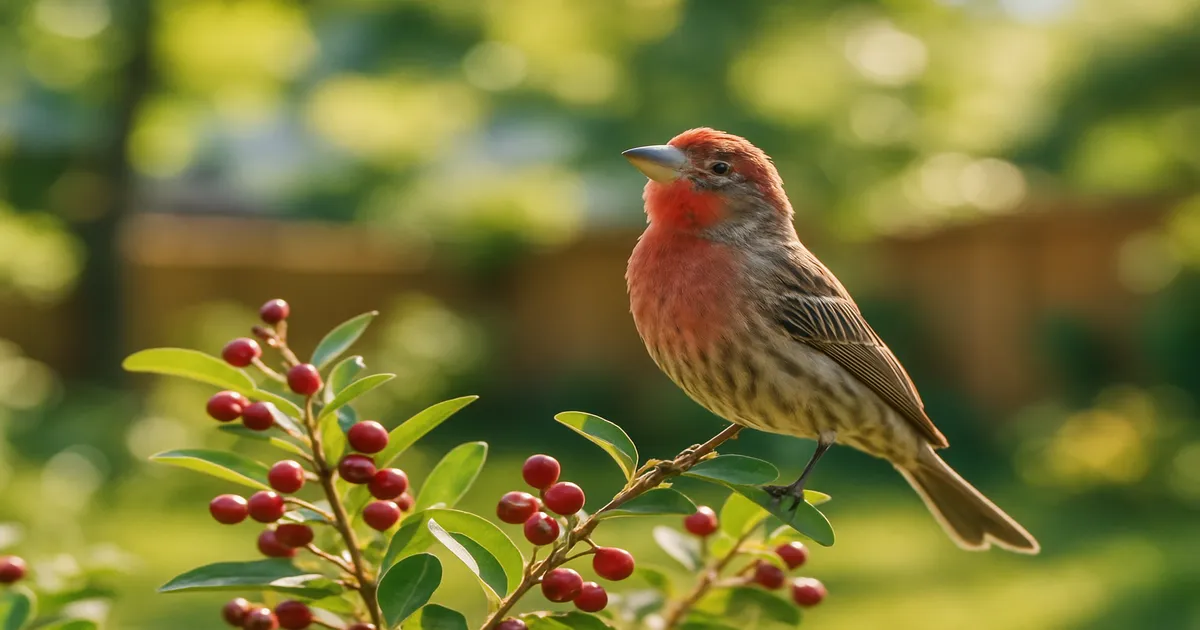
House Finches are small (about 6 inches/15 cm) with a rounded head and a short, curved bill. Males have rosy-red on the forehead, breast, and rump — the intensity varies with diet, so some males look almost orange. Females are plain brown and heavily streaked, with no distinctive face pattern. They’re not aggressive, but they’ll nest in hanging baskets, wreaths, and window boxes and return to the same spot year after year.
A good field guide helps enormously with these IDs.
Why Birds Are Attracted to Your House
Food Sources Drawing Birds In
Crows are drawn to unsecured garbage, open compost bins, and pet food left on a porch. Pigeons and sparrows zero in on grain, bread crumbs, and food waste — even small amounts spilled near a back door. Starlings probe lawns for grubs and earthworms using a specialized open-bill technique called rhynchokinesis, which lets them pry open soil and leaf litter. A grub-rich lawn is basically a restaurant for them.
Nesting and Roosting Opportunities
Starlings and House Sparrows are cavity nesters, and your house is full of cavities. Unscreened dryer vents, gaps under eaves, and open weep holes in brick are all prime real estate. Pigeons treat building ledges exactly like the cliff faces their ancestors used — flat, elevated, and sheltered from weather.
Lawn and Landscape Features That Attract Geese
Canada Geese need two things from a lawn: short grass to graze on and clear sightlines to spot predators. Manicured turf next to a pond or retention basin is ideal goose habitat. Crows are attracted to the same lawns for grubs, but they also want tall trees nearby for roosting and food caching.
How Feeders Can Backfire
A platform feeder loaded with cracked corn and white millet is essentially a pigeon and sparrow magnet. Ground feeding — whether intentional or from seeds falling below a feeder — concentrates pigeons fast. I’ve seen yards that had no pigeon problem until someone added a platform feeder, and within two weeks had a dozen birds. Feeder design and seed choice matter more than most people realize.
Physical Exclusion: How to Keep Birds Away from Your House Long-Term
This is the most reliable approach. Scare tactics fade; physical barriers don’t.
Bird Netting for Eaves, Solar Panels, and Fruit Trees
Netting works well for excluding birds from eaves, under solar panels, and around fruit trees. Use polypropylene or polyethylene netting with a mesh size matched to the bird — 3/4-inch (19 mm) for pigeons and starlings, 1/4-inch (6 mm) for sparrows. The netting must be taut and well-anchored; sagging netting can trap birds, which creates a different problem entirely. For large installations, professional fitting is worth the cost.
Spikes and Wire Systems for Ledges and Rooflines
Anti-roosting spikes are the standard fix for ledges, windowsills, rooflines, and signs. They don’t harm birds — they just make landing uncomfortable. Stainless steel spikes outlast plastic in outdoor conditions. For a cleaner look, multi-strand wire systems achieve the same result with far less visual impact.
Blocking Vents, Eaves, and Cavities
Hardware cloth — 1/4-inch (6 mm) galvanized wire mesh — is the right material for blocking dryer vents, bathroom exhaust vents, and gaps in soffits. Avoid lightweight plastic mesh; starlings will push straight through it. Check every vent opening on the exterior of your house in late winter before nesting begins. Foam sealant alone won’t stop a determined sparrow.
Do this work in February or early March before birds start claiming sites. Once there’s an active nest with eggs inside a vent, you’re legally required to wait — for protected species — until the young have fledged before sealing it.
Slope Panels and Surface Modifications for Pigeons
Pigeons need a flat surface to land and roost. Angled bird slope panels installed on ledges remove that landing zone. They work particularly well on wide window ledges and AC unit tops. Combined with spikes at the edges, you can make most ledges completely uninhabitable for pigeons.
Goose Barriers: Fencing and Shoreline Plantings
A low fence — 18–24 inches (45–60 cm) — along a pond or lawn edge is surprisingly effective against geese. They prefer to walk from water to lawn and don’t like obstacles. A more permanent solution is planting native shrubs and tall grasses (8 inches/20 cm or taller) along the shoreline. This removes the clear sightlines geese require and makes the area feel exposed and unsafe. It also improves habitat for native wildlife, which is a genuine bonus.
Scare Tactics and Visual Deterrents
Reflective Tape and Predator Decoys
Reflective tape and Mylar flash tape disorient birds with unpredictable light and movement. They work reasonably well for pigeons and starlings in the short term. Predator decoys — owl silhouettes or 3D models — can help, but only if you move them every few days. A plastic owl that sits in the same spot for two weeks becomes invisible to every bird in the neighborhood.
Motion-Activated Sprinklers and Sound Devices
Motion-activated sprinklers work well for geese on lawns and for keeping birds off garden beds. The unpredictability slows habituation.
Ultrasonic devices are a different story — the evidence that ultrasonic frequencies deter birds in open outdoor spaces is weak, and most ornithologists are skeptical. Save your money unless you’re working in a fully enclosed space like a warehouse. Distress call and predator call devices are more credible, especially for geese and starlings, and work best when used intermittently alongside other deterrents.
Why Crows See Through Static Deterrents Quickly
Crows are in a different category from every other bird on this list. They recognize individual human faces, hold grudges, and teach family group members which specific threats to ignore. A static owl decoy will fool a pigeon for weeks. A crow will figure it out in a day or two. I’ve watched crows land directly on top of plastic owl decoys and use them as a perch.
For crows, the only scare approach with any staying power is constant variation — move decoys every two days, alternate between reflective tape, a sprinkler, and distress calls on different days, and combine at least two or three deterrent types at once. Even then, removing the food source is what actually moves crows. The deterrents just buy time.
Feeder and Food Management
Seeds That Attract Fewer Nuisance Birds
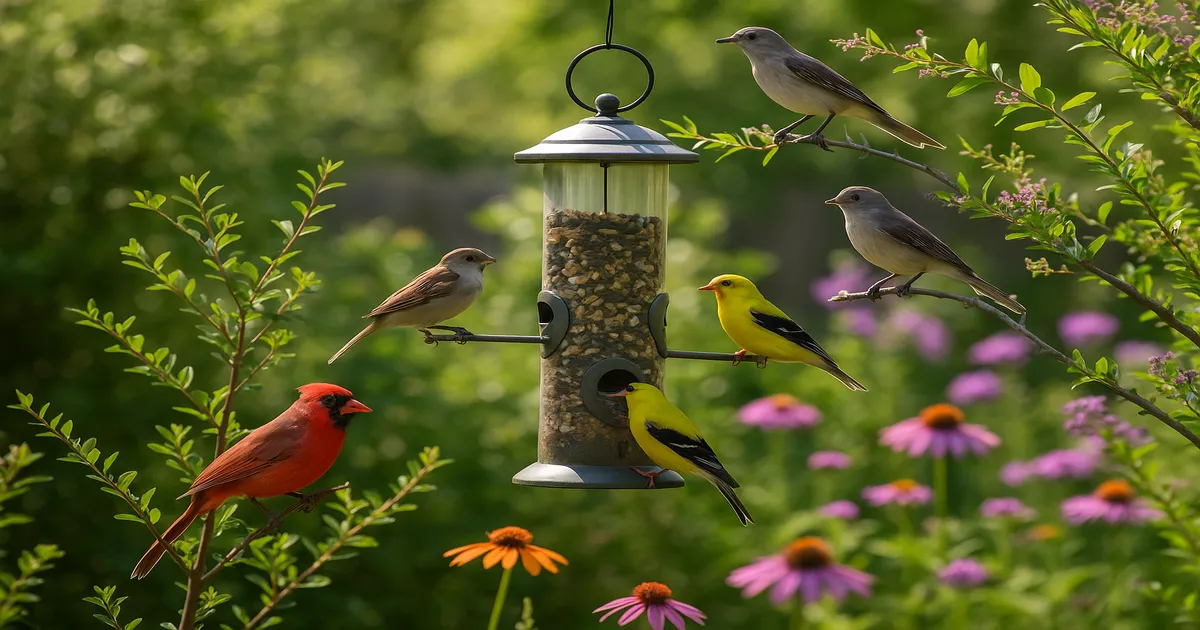
Switching your seed mix is one of the fastest changes you can make. Nyjer (thistle) seed attracts goldfinches and House Finches but is largely ignored by sparrows and pigeons. Safflower seed is taken by cardinals and chickadees but rejected by most starlings and House Sparrows. Shelled sunflower chips attract a wide range of desirable birds with minimal ground mess.
Cut out white millet, cracked corn, and milo — these are the primary draws for sparrows and pigeons.
Feeder Designs That Exclude Starlings and Pigeons
- Upside-down suet feeders: Starlings struggle to cling inverted; chickadees and nuthatches have no trouble. This is the single most effective feeder swap for a starling problem.
- Weight-sensitive feeders: These close the feeding ports when a bird heavier than a finch or chickadee lands — pigeons and starlings are too heavy to get a meal.
- Caged tube feeders: A wire cage around the feeder lets small birds through and physically blocks larger ones.
- Remove platform feeders entirely: If you have a pigeon or sparrow problem, this is the easiest thing you can do.
Stopping Ground Feeding
Clean up spilled seed daily. If seed is piling up below a tube feeder, add a seed catcher tray or switch to no-waste seed — shelled nuts and chips that birds consume completely. Eliminating ground-level food is often the fastest way to break a pigeon habit.
Securing Garbage and Compost from Crows
Crows are smart enough to open unsecured garbage cans. Bungee cords across the lid work in a pinch; a can with a locking lid is better. Enclosed tumbler-style compost bins are far superior to open pile composting if crows are a problem. Never leave cat or dog food on a porch or deck — crows cache food, so even a single unguarded bowl can establish a foraging pattern that brings them back every day.
Legal Considerations
Which Species Are Protected Under the MBTA
The Migratory Bird Treaty Act protects most native North American bird species, including American Crows, Canada Geese, and House Finches. Under the MBTA, it’s illegal to kill, capture, possess, or disturb the active nest of any protected species without a federal permit. Violations carry real fines — this isn’t a technicality.
European Starlings and House Sparrows: Unprotected Introduced Species
Both species were introduced from Europe and are explicitly excluded from MBTA protection. You can legally deter, trap, or remove starlings and House Sparrows without a federal permit. That said, check your state regulations — a handful of states have added their own restrictions.
Canada Geese: Federal Permits and Egg Addling
Urban resident Canada Geese are covered by the MBTA, but the U.S. Fish & Wildlife Service has depredation order provisions that allow registered participants to addle (oil) eggs or destroy nests under specific conditions. If you have a serious goose nesting problem on private property, contact your USFWS regional office or a licensed wildlife control operator about the egg addling program. It’s the most humane and legally sound management option available.
When to Call a Licensed Wildlife Control Professional
For large infestations, active nests of protected species, or any situation involving trapping, call a licensed wildlife control operator. They know the federal and state permit requirements and can handle situations where DIY approaches don’t work or aren’t legal — large starling or pigeon roosts in commercial buildings, aggressive Canada Geese nesting near public areas, that kind of thing.
Seasonal Timing: When to Act
Spring Nesting Season
Late February through March is your window for exclusion work — blocking vents, installing netting, sealing gaps — before birds claim sites. Once a protected species has an active nest with eggs inside your vent or eave, you have to wait until the young fledge before sealing it. Do a full exterior inspection every year in late winter and mark it on your calendar.
Winter Roosts: Crow and Starling Aggregations
Crow winter roosts form between October and March and can involve tens of thousands of birds descending on a neighborhood at dusk. Harassment techniques — noise, lights, distress calls — can encourage roosts to shift location, but you need to apply them consistently at dusk for several consecutive days. Roosts often move on their own as winter progresses anyway.
Canada Goose Molt Season
From late June through early August, adult Canada Geese undergo a simultaneous wing feather molt that leaves them flightless for 4–6 weeks. They’re concentrated near water and can’t escape by flying. This is a practical window for working with a licensed wildlife control operator on population management, but it’s also when geese are most defensive and most likely to charge people and pets. Give them space.
Frequently Asked Questions
What is the most effective bird deterrent for a house roof?
Physical deterrents — anti-roosting spikes and bird netting — are the most reliable options for rooftops and ledges. They work on pigeons, starlings, and most other roosting species without requiring ongoing maintenance once installed. Visual scare tactics like decoys and flash tape can supplement them but shouldn’t be your only line of defense.
How do I stop birds from nesting in my dryer vent?
Install a 1/4-inch (6 mm) galvanized hardware cloth cover over the vent opening. Do it in late winter before nesting season begins — February is ideal in most of the U.S. If a nest is already active and the bird is a protected species, you must wait until the young have fledged before removing it and sealing the vent.
Are bird spikes cruel?
No. Anti-roosting spikes don’t injure birds — they simply make landing uncomfortable. Birds move on and find another surface. The spikes are considered a humane deterrent by wildlife management professionals and are widely used on commercial buildings, bridges, and public infrastructure.
Will a fake owl keep birds away from my house?
For pigeons and some smaller birds, a realistic 3D owl decoy can work — but only if you move it every two or three days. A stationary decoy becomes part of the scenery within a week. For crows, don’t bother; they’ll figure it out in a day and may actually perch on it.
Can I remove a bird nest from my house?
It depends on the species. Nests belonging to House Sparrows and European Starlings can be removed at any time — neither species is federally protected. Nests of native species covered by the MBTA, including robins, finches, swallows, and most songbirds, cannot be disturbed once they contain eggs or live young. When in doubt, leave it alone until the young have fledged, then seal the entry point.