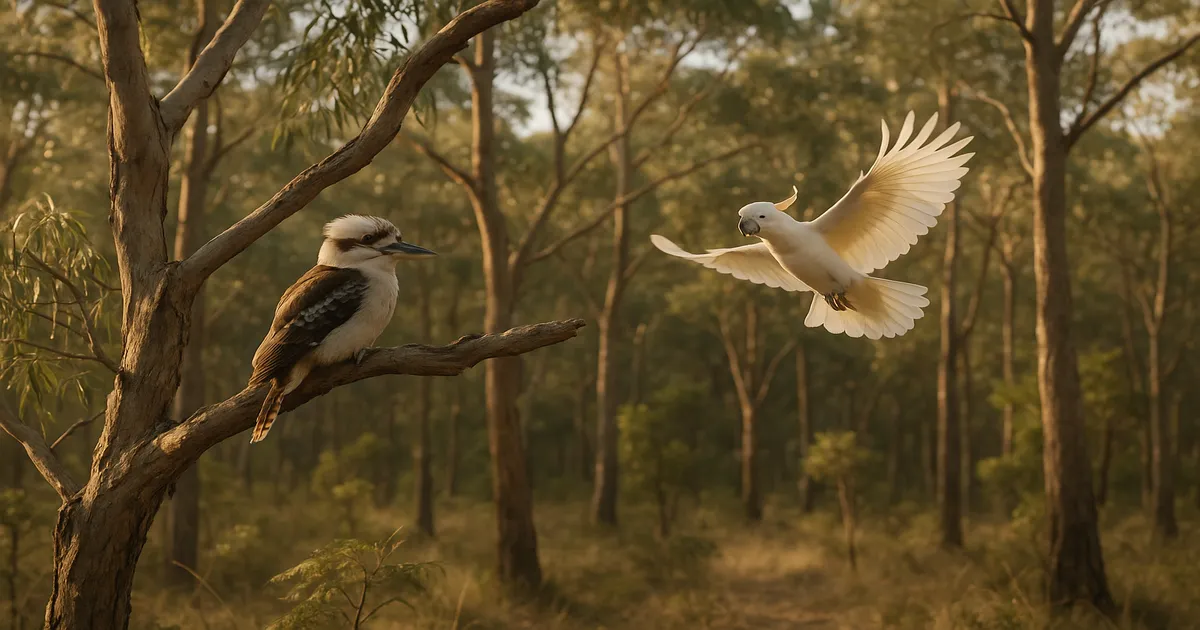
Quick Answer: To catch birds in Dinkum, craft or buy a trap from John’s Goods, place it in the correct biome with the right bait (seeds for cockatoos, meat for kookaburras), then back away and wait. Early morning is the best time. Caught birds can be donated to Franklyn’s Lab for research points.
If you searched for how to catch birds in Dinkum and landed here wondering whether this is a real-life birding guide — it isn’t, and that’s worth saying upfront. Dinkum is an Australian-inspired survival and crafting game released on Steam Early Access in July 2022. It features bird species based closely on real Australian wildlife, and the biology behind them is genuinely interesting. That said, catching wild birds without a federal permit is illegal in the US and Canada under the Migratory Bird Treaty Act. In Dinkum, though? Absolutely fair game.
This guide covers the in-game mechanics and the real-world biology behind the birds you’re chasing.
How to Catch Birds in Dinkum: The Fast Method
- Get a trap from John’s Goods (inventory rotates daily) or craft one once you’ve unlocked the recipe
- Find where your target bird spawns
- Place the trap with the right bait for that species
- Walk away — hovering nearby will spook them
- Return after a few in-game hours
- Donate your catch to Franklyn’s Lab for research points
That’s the core loop. The rest of this guide covers bait, biomes, timing, and the real birds behind the game’s species.
Birds You Can Catch in Dinkum — and Their Real-World Counterparts
Dinkum’s birds aren’t generic fantasy creatures. Each maps closely to a real Australian species.
Kookaburra
The Laughing Kookaburra (Dacelo novaeguineae) is one of the world’s largest kingfishers — about 16–18 inches (40–46 cm) long, with a heavy dagger bill and a chunky, large-headed silhouette. Its back is brown with blue-tinged shoulder patches, the underparts are creamy white, and the dark eye stripe is unmistakable. Males have a blue rump patch; females don’t. It’s one of the cleaner sex differences in Australian birds.
North American birders: picture a Belted Kingfisher (Megaceryle alcyon) that’s considerably bigger, without the rusty breast band, and capable of killing a snake.
Sulphur-Crested Cockatoo
The Sulphur-crested Cockatoo (Cacatua galerita) runs about 19–20 inches (48–51 cm) long — brilliant white plumage, blazing yellow crest, and a call that sounds like someone stepped on a squeeze toy in a cathedral. Sexing them requires decent light: males have dark brown to black irises; females have reddish-brown irises. There’s no true North American equivalent. The closest behavioral parallel is the Monk Parakeet (Myiopsitta monachus) — noisy, social, adaptable — but cockatoos are in a different cognitive league entirely.
Emu
The Emu (Dromaius novaehollandiae) is the second-tallest living bird on earth, standing up to 75 inches (190 cm) and weighing up to 132 lbs (60 kg). Its shaggy brown-gray feathers look more like coarse fur than plumage. The vivid blue bare skin on the face and neck is striking up close. Females are slightly larger and produce the deep booming drum call; males grunt. For scale: think Wild Turkey (Meleagris gallopavo), then double it and remove the ability to fly.
Australian Pelican
The Australian Pelican (Pelecanus conspicillatus) is a bold black-and-white bird with a massive pink-and-yellow bill and a wingspan up to 8.2 feet (250 cm). It behaves almost identically to the American White Pelican (Pelecanus erythrorhynchos) — cooperative fishing, colonial nesting, masterful soaring on thermals. If you’ve watched American White Pelicans herd fish on a reservoir, you already have a solid mental image.
Quick Comparison
| Dinkum Bird | Real Species | Closest North American Look-Alike |
|---|---|---|
| Kookaburra | Laughing Kookaburra | Belted Kingfisher |
| Cockatoo | Sulphur-crested Cockatoo | Monk Parakeet (behavior only) |
| Emu | Emu | Wild Turkey (scale only) |
| Pelican | Australian Pelican | American White Pelican |
How to Catch Birds in Dinkum: Biomes, Bait, and Timing
Where Each Bird Spawns
Grasslands: Emus roam open plains. A 6-foot flightless bird on flat terrain isn’t hard to spot. In real Australia, emus favor open savanna and dry scrubland for the same reason — they rely on speed and long sightlines to detect threats.
Wetlands and waterways: Pelicans spawn near rivers and water bodies. Stick to the edges of any significant water feature. Real Australian pelicans are tied to wetlands and estuaries but are nomadic enough to appear almost anywhere after heavy rain.
Bush and forest edges: Cockatoos frequent forested and scrub zones — you’ll hear them before you see them, in the game and in real life. Kookaburras favor woodland edges, the transition zone between open ground and tree cover, which mirrors exactly how they hunt: perching at the forest edge and scanning the ground below.
Bait Selection
The game’s bait logic tracks real dietary biology well:
- Cockatoos and smaller birds → seed-based bait. Cockatoos are granivores, feeding heavily on grass seeds, nuts, and grain crops. In real Australia, large flocks cause significant agricultural damage — they’re genuinely controversial birds in farming communities.
- Kookaburras → meat-based bait. Real kookaburras eat lizards, snakes, large insects, and small rodents. They’re carnivores through and through.
- Pelicans → fish or fish-adjacent bait, placed near water.
- Emus → omnivorous in real life (seeds, fruits, insects, small vertebrates). Check a current community wiki for updated bait specifics, as mechanics shift between patches.
Trap Placement and Timing
Distance matters more than anything else. Place your trap in the bird’s known territory, then move away. Birds in Dinkum have a flight-distance threshold — stand too close and they won’t approach. This mirrors real bird behavior, where every species has a measurable flush distance that varies by perceived threat level.
Don’t run near birds. Walking slowly is fine; running triggers an immediate flee response. Sudden fast movement reads as predator behavior to most birds, in the game and in the field.
Early morning is peak activity time in Dinkum, which reflects real bird behavior accurately. Most Australian birds are most active at dawn and in the first few hours after sunrise.
Some species are locked to specific seasons. Dinkum runs a full four-season cycle, and certain birds simply don’t spawn outside their window regardless of trap placement. Check what season you’re in before spending an hour hunting a bird that isn’t available yet.
Equipment
You can’t swing a Bug Net at a kookaburra and call it a day. Most birds require a proper trap. Check John’s Goods first — his inventory rotates daily, so if traps aren’t stocked today, try again tomorrow. Crafting recipes unlock as you progress, which removes the dependency on his rotation.
A good gaming mouse makes inventory management and trap placement noticeably smoother if you’re playing on PC.
Real Bird Behavior Worth Knowing
How Kookaburras Hunt
The kookaburra’s sit-and-wait strategy is one of the most efficient in the bird world. It perches high, watches the ground, drops fast, grabs prey, then beats it against a branch to kill it and break bones before swallowing. There’s a well-known photo series of a kookaburra subduing a carpet python nearly as long as itself. The laughing call isn’t about joy — it’s a territorial proclamation, performed in chorus by family groups at dawn and dusk to announce ownership of their patch. Cooperative breeding is common: offspring from previous years help raise new chicks, which is unusual behavior in birds.
Cockatoo Flock Intelligence
Sulphur-crested Cockatoos are among the most cognitively advanced birds on earth, capable of tool use and complex problem-solving. When a flock feeds on the ground, designated sentinel birds post up in tall trees and watch for predators while the others eat. If a sentinel calls alarm, the whole flock explodes upward in a screaming white cloud. Dinkum’s flee-on-approach mechanic loosely mirrors this sentinel behavior — the flock has a collective awareness threshold.
The Great Emu War
Emus can run at 31 mph (50 km/h) and sustain a trot of 12 mph (19 km/h) for extended periods. In 1932, the Australian military deployed soldiers with Lewis guns in Western Australia to cull emus damaging wheat crops. The emus won. They scattered when fired upon, absorbed bullets with surprising resilience, and the operation was quietly abandoned. Major G.P.W. Meredith, who led the campaign, reportedly said the emus “could face machine guns with the invulnerability of tanks.” The game’s difficulty check for catching emus feels appropriate.
Pelican Cooperative Fishing
Australian Pelicans coordinate to herd fish into shallow water, then scoop them up simultaneously. The bill pouch acts as a net, not a storage vessel — they drain the water before swallowing. A group of pelicans working a bay is one of the more organized hunting displays in the bird world.
Seasonal Availability and Real Breeding Windows
Dinkum’s seasons gate certain species, and weather conditions like rain can influence spawning. Before targeting a specific bird, confirm what season you’re in.
| Species | Real Breeding Season | Notes |
|---|---|---|
| Laughing Kookaburra | August–January | Tree hollows or termite mounds |
| Sulphur-crested Cockatoo | August–January (southern range) | Large eucalyptus hollows; both parents incubate |
| Emu | May–August | Male incubates alone for ~56 days; loses up to a third of body weight |
| Australian Pelican | Any time of year | Triggered by rainfall filling inland lakes |
Most birds breed in spring and summer when food is abundant. Emus do the opposite — breeding kicks off in autumn and winter, and the male handles all incubation alone for approximately 56 days, rarely leaving the nest to eat or drink. The eggs are dark green and roughly 5 inches (13 cm) long. Australian Pelicans take the opposite approach to predictability: they breed opportunistically after heavy rainfall, which can happen in any season. If Dinkum’s pelican spawning seems weather-dependent, that’s probably intentional.
Conservation Status
All four species — Laughing Kookaburra, Sulphur-crested Cockatoo, Emu, and Australian Pelican — are listed as Least Concern by the IUCN. None are in immediate danger of extinction at the species level.
“Least Concern” isn’t the same as “doing fine,” though. Kookaburras and cockatoos both nest in large tree hollows, and hollow-bearing trees take centuries to develop — clearing old-growth timber removes nest sites that can’t be quickly replaced. Emus face vehicle strikes, predation of eggs and chicks by introduced foxes and feral pigs, and habitat degradation from overgrazing. Pelicans are squeezed by wetland drainage and water diversion for agriculture.
Three island emu subspecies — from Kangaroo Island, King Island, and Flinders Island (not Tasmania, as sometimes stated) — were driven to extinction by European settlers in the 19th century. The mainland population is stable, but those island populations are gone permanently.
In the US and Canada, wild bird capture is federally prohibited under the Migratory Bird Treaty Act of 1918. This applies to native species without exception — no trapping, no netting, no keeping without proper scientific or educational permits. If you’re genuinely interested in birds, the right tools are binoculars and a field guide, not a trap.
A good pair of binoculars makes a real difference for watching any of these species if you ever visit Australia. (Nikon Monarch M5 8x42) For identifying what you’re looking at, a dedicated field guide to Australian birds is worth having.
Frequently Asked Questions About How to Catch Birds in Dinkum
What equipment do you need to catch birds in Dinkum?
You need a trap — available from John’s Goods (check daily, his stock rotates) or craftable once you’ve unlocked the recipe. A Bug Net won’t work for most birds. You’ll also need appropriate bait for the species you’re targeting.
What is the best bait for catching birds in Dinkum?
Match the bait to the bird’s real diet and you’ll be on the right track. Seeds for cockatoos and smaller birds. Meat for kookaburras. Fish-based bait near water for pelicans. Emu bait specifics can shift between game updates, so check a current community wiki for the latest.
Can you catch an emu in Dinkum?
Yes, but emus require more game progression than smaller birds — standard starter equipment won’t cut it. You’ll need to advance further before the right tools become available. Given that real emus can run at 31 mph and survived a military culling operation, the difficulty feels earned.
What season are birds available in Dinkum?
Dinkum runs a four-season cycle and some birds only spawn during specific windows. Early morning within any season gives you the best activity. Check a current community wiki for the most up-to-date spawn chart, since mechanics can change between updates.
What do you do with birds after catching them in Dinkum?
Donate them to Franklyn’s Lab for research points — that’s the main progression reward. You can also keep them for a personal collection or release them if you’ve already donated that species and don’t need duplicates.