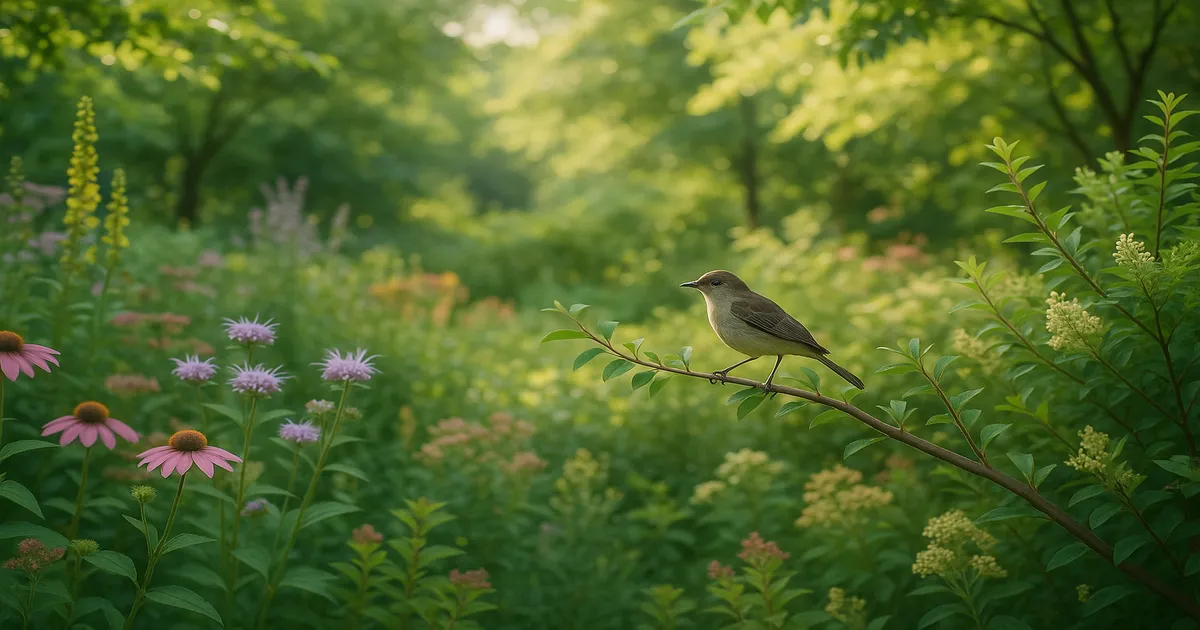
Quick Answer: The best birds for natural pest control include Purple Martins, Barn Swallows, Eastern Bluebirds, Black-capped Chickadees, Carolina Wrens, Downy Woodpeckers, American Kestrels, Eastern Phoebes, House Wrens, and Yellow Warblers. To attract them, provide species-appropriate nest boxes, native plantings, water sources, and stop using insecticides — which wipe out their food supply and can poison the birds directly. Knowing how to attract birds for pest control can dramatically reduce mosquitoes, caterpillars, beetles, and grasshoppers without a single chemical spray.
How to Attract Birds for Pest Control: Top 10 Species at a Glance
| Bird | Primary Pests Targeted |
|---|---|
| Purple Martin (Progne subis) | Dragonflies, beetles, flying insects |
| Barn Swallow (Hirundo rustica) | Gnats, flies, flying insects |
| Eastern Bluebird (Sialia sialis) | Ground beetles, caterpillars, grasshoppers |
| Black-capped Chickadee (Poecile atricapillus) | Aphids, scale insects, caterpillar eggs |
| Carolina Wren (Thryothorus ludovicianus) | Beetles, ants, grasshoppers, spiders |
| Downy Woodpecker (Dryobates pubescens) | Wood-boring beetles, bark beetles, ants |
| American Kestrel (Falco sparverius) | Grasshoppers, voles, large insects |
| Eastern Phoebe (Sayornis phoebe) | Flying insects, wasps, beetles |
| House Wren (Troglodytes aedon) | Caterpillars, beetles, spiders |
| Yellow Warbler (Setophaga petechia) | Caterpillars, aphids, leafhoppers |
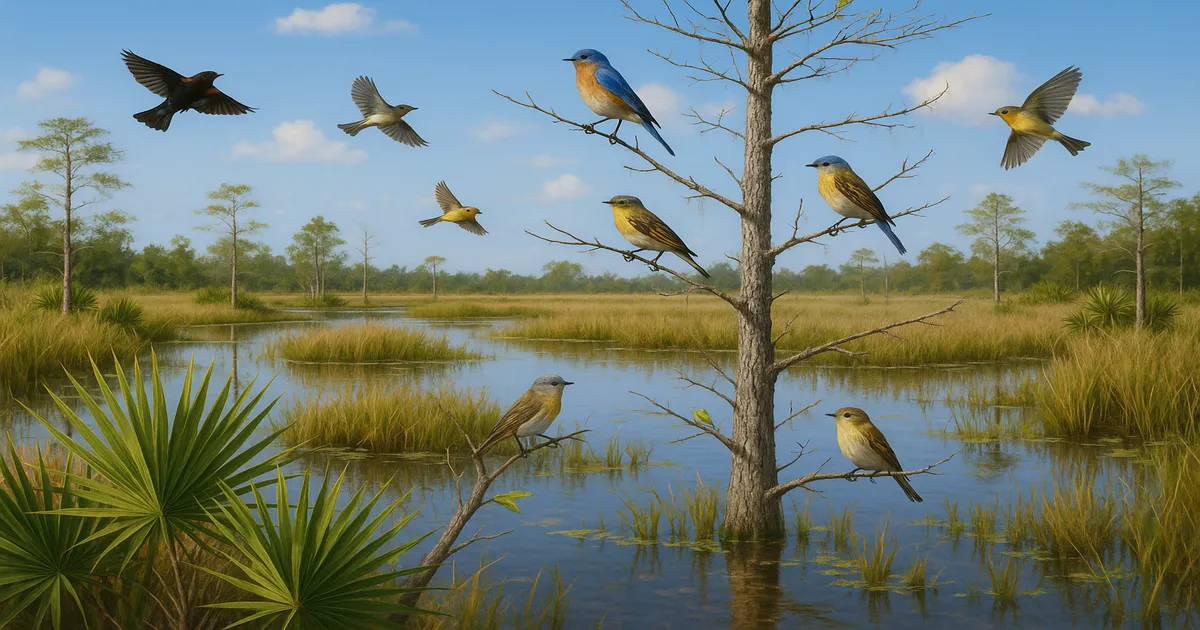
These ten species collectively cover almost every pest category a gardener or farmer deals with — aerial insects, soil pests, bark borers, and foliage feeders. Different birds hunt in different layers of the landscape, so a diversity of species gives you far better coverage than any single “pest-control bird.” The upfront habitat work takes some effort, but once established, it essentially runs itself.
Identifying the Best Pest-Control Birds for Your Yard
Aerial Insectivores: Purple Martin and Barn Swallow
Purple Martin is the largest North American swallow — about 7.5–8.7 inches (19–22 cm) long, with a broad chest and long pointed wings. Adult males are entirely glossy blue-black. Females are dusky gray-brown below with a pale forehead and a faint gray collar. The colony’s gurgling, liquid chur-chur calls are unmistakable once you’ve heard them.
Barn Swallow is slimmer and more acrobatic, about 5.9–7.5 inches (15–19 cm), with iridescent blue-black upperparts, a rich cinnamon-orange throat, and a deeply forked tail on adult males. Females are similar but duller with shorter streamers. If you see a swallow skimming low over a field with a tail that looks like a tuning fork, that’s your bird.
One note on Purple Martins: the old claim that a single martin eats 2,000 mosquitoes per day has been largely debunked. Mosquitoes make up a small fraction of their diet — they prefer larger, more calorie-dense prey like dragonflies, beetles, and wasps. A colony over a backyard pond still makes a real dent in flying insect pressure, but don’t expect them to be your primary mosquito solution.
Ground and Foliage Foragers: Eastern Bluebird, Chickadee, and Yellow Warbler
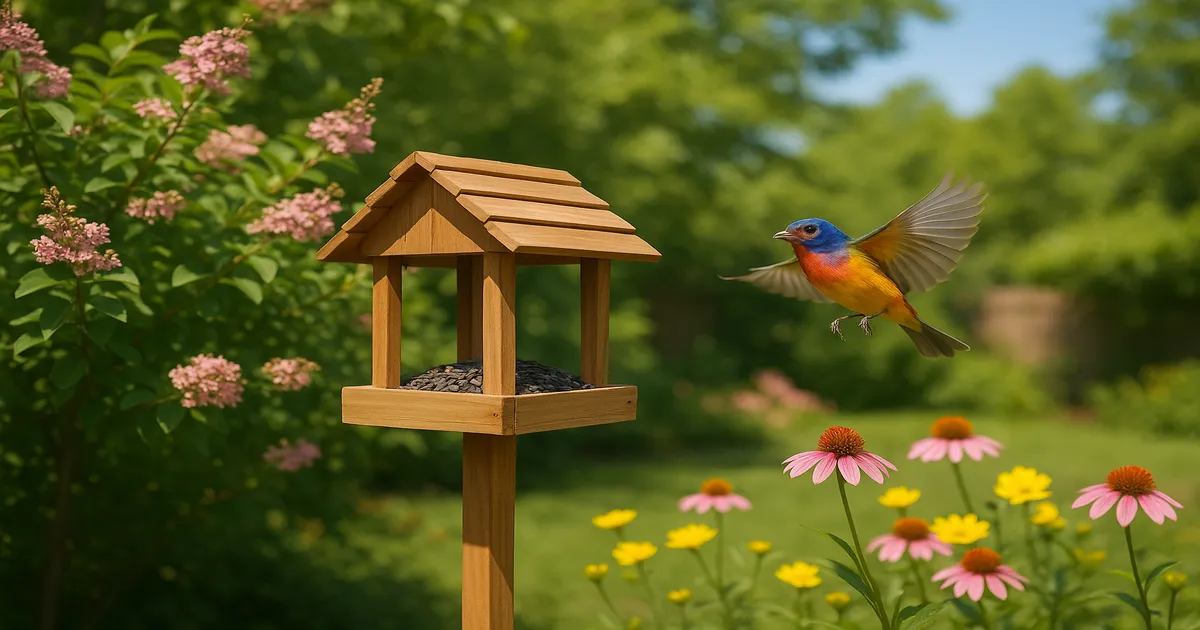
Eastern Bluebird is one of the most recognizable birds in North America. The adult male’s brilliant royal blue above and rusty-orange breast is hard to confuse with anything else. Females are more subdued — grayish-blue on the wings, paler orange on the breast. They’re about 6.3–8.3 inches (16–21 cm) long and tend to perch upright on fence posts or nest box tops, scanning the ground below for beetles and grasshoppers.
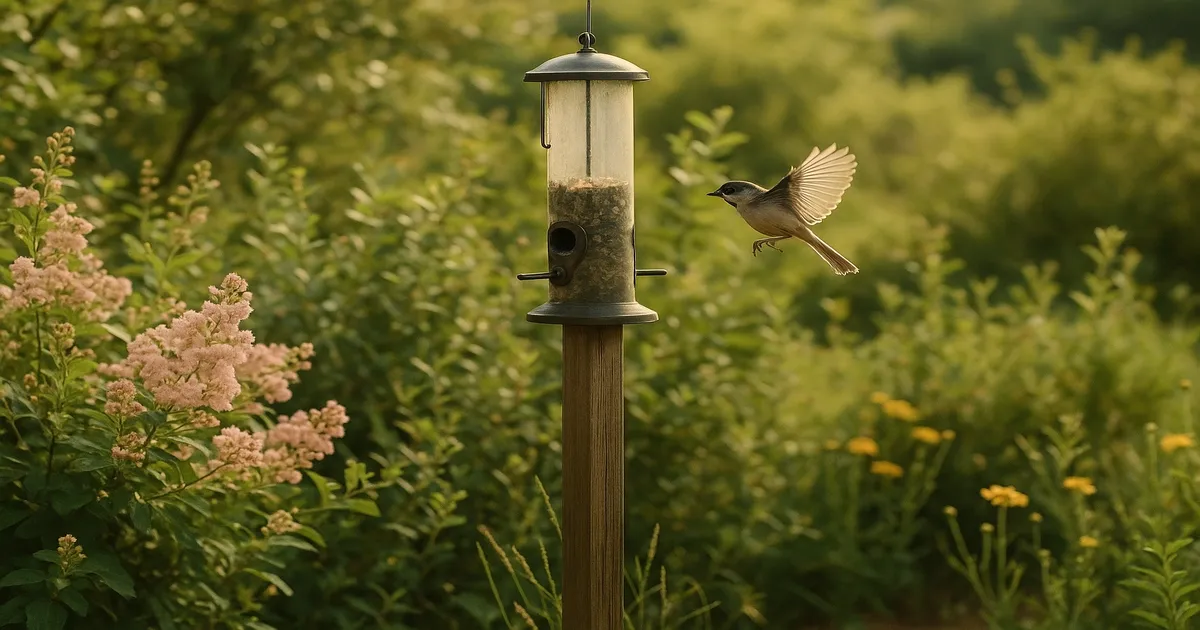
Black-capped Chickadee is tiny (4.7–5.9 inches / 12–15 cm) but fearless. The bold black cap and bib against bright white cheeks make it instantly identifiable. Yellow Warbler is the smallest of this group at about 4.7–5.1 inches (12–13 cm) — the adult male is essentially a flying lemon, bright yellow overall with rusty-red breast streaks. Both species work the foliage hard, picking caterpillar eggs and aphids off stems and leaves throughout the growing season.
Bark and Wood Specialists: Downy Woodpecker and Carolina Wren
Downy Woodpecker (5.5–6.7 inches / 14–17 cm) is the smallest woodpecker in North America and the one most likely to show up in a suburban backyard. The black-and-white checkered back, white underparts, and — on males — a small red patch on the nape are the key marks. Its bill is noticeably short relative to its head, which separates it from the similar Hairy Woodpecker.
Carolina Wren is a compact, round-bodied bird (4.9–5.5 inches / 12.5–14 cm) with rich rusty-brown upperparts, warm buffy-orange underparts, and a bold white eyebrow stripe. It habitually cocks its tail upright. The song — a ringing teakettle-teakettle-teakettle — is absurdly loud for a bird this size and will often alert you to its presence before you see it.
Open-Country Hunters: American Kestrel and Eastern Phoebe
American Kestrel is a small but fierce falcon, 8.7–12.2 inches (22–31 cm) long, with a rusty-red back, blue-gray wings on males, and two bold vertical black “mustache” marks on the face. The hovering behavior is the clincher — kestrels are the only North American falcon that regularly hovers in place over open fields, scanning for prey below. Females are heavily barred rusty-red on the back and wings, lacking the blue-gray wing panels of the male.
Eastern Phoebe (5.5–6.7 inches / 14–17 cm) is a plain-looking flycatcher — dark gray-brown above, whitish below — but it has one unmistakable habit: it constantly pumps its tail up and down while perched. That tail-wagging is your best field mark. Its raspy fee-bee call is also distinctive, and it’s one of the earliest migrants to return in spring, often appearing in February or March before most other insectivores have arrived.
Small Cavity Nesters: House Wren
House Wren is the smallest bird on this list at 4.3–5.1 inches (11–13 cm) — plain brown, faintly barred, with that characteristic cocked tail. It’s not flashy, but it’s a tireless insect hunter and one of the easiest birds to attract with a nest box. The song is a cascading, bubbling torrent that seems far too big for the bird producing it.
How to Attract Birds for Pest Control: Nest Boxes and Structures
This is where most of the real impact happens. The right structure in the right place is often more effective than any other single step.
Purple Martin Houses
East of the Rockies, Purple Martins are almost entirely dependent on human-provided housing — they’ve essentially abandoned natural cavities in this region. The two main options are gourd clusters (natural or artificial gourds with a 2.1-inch / 53 mm entrance hole, hung in clusters of six or more) or multi-unit aluminum towers with 12–24 compartments on a telescoping pole.
Mount housing in open areas at least 40 feet (12 m) from trees, on a pole 10–20 feet (3–6 m) high. Martins need clear flight paths. Have housing up and open by late February to early March in the South, March to April in the North.
Bluebird Trail Boxes
Eastern Bluebird nest box specs: 4 × 4 inch (10 × 10 cm) floor; 8–12 inches (20–30 cm) inside depth; 1.5-inch (38 mm) entrance hole; mounted 4–6 feet (1.2–1.8 m) high on a smooth metal pole with a predator baffle; entrance facing east or southeast; boxes spaced at least 100 yards (90 m) apart in open areas with short grass.
Check boxes weekly during breeding season and remove House Sparrow nests immediately — they’re the number-one threat to bluebird nesting success.
Kestrel Nest Boxes
American Kestrel box specs: 8 × 8 inch (20 × 20 cm) floor; 12–15 inches (30–38 cm) deep; 3-inch (76 mm) entrance hole; mounted 10–30 feet (3–9 m) high on a post or tree at the edge of open fields or fence lines. Kestrel populations have declined significantly across North America, and nest box programs have documented real conservation impact — this is one of the few cases where a backyard project directly addresses a species in trouble.
Wren and Chickadee Boxes
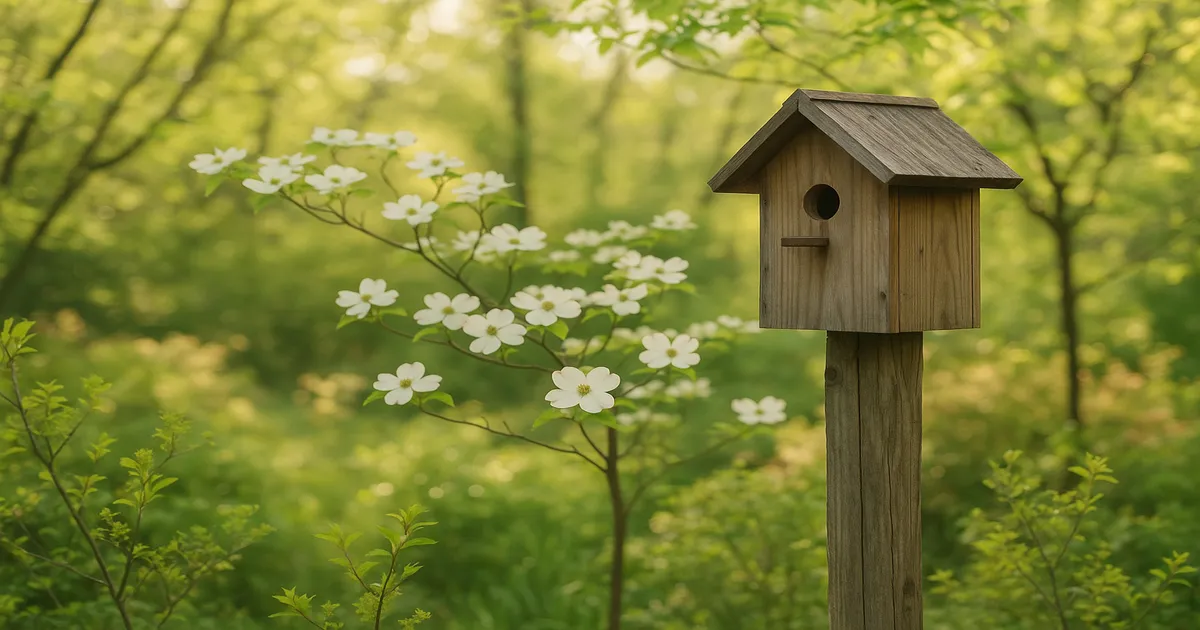
- House Wren: 4 × 4 inch (10 × 10 cm) floor; 1.25-inch (32 mm) entrance hole; mount 5–10 feet (1.5–3 m) high in or near shrubby vegetation
- Black-capped Chickadee: 4 × 4 inch (10 × 10 cm) floor; 1.125-inch (29 mm) entrance hole; mount 5–15 feet (1.5–4.5 m) high at woodland edge; add 1–2 inches of wood shavings inside
Both species are easy to attract and will often begin using boxes within the first season if placement is right.
Phoebe Ledges, Swallow Structures, and Woodpecker Snags
Barn Swallows and Eastern Phoebes don’t use enclosed boxes — they prefer open ledges on barns, bridges, and covered porches. For phoebes, a simple 6 × 6 inch (15 × 15 cm) wooden shelf mounted under an eave at 8–12 feet (2.4–3.7 m) is all you need. Barn Swallows will find open structures on their own; leaving a barn door or outbuilding accessible during nesting season is the best invitation you can offer.
Downy Woodpeckers excavate their own cavities in soft dead wood, so leave standing dead trees (snags) where it’s safe to do so. A single snag supports not just woodpeckers but also the secondary cavity nesters — wrens, chickadees, and bluebirds — that move into old woodpecker holes.
Creating Habitat That Maximises Pest Control
Native Plants
Native plants support exponentially more caterpillar and insect species than exotic ornamentals — and insects are what all of these birds feed their chicks. A yard with even a modest planting of native oaks, cherries, or willows produces visibly more bird activity than an equivalent yard planted with non-natives.
Good choices:
- Native oaks (Quercus spp.) — support hundreds of caterpillar species
- Native cherries and serviceberries (Prunus and Amelanchier spp.) — insects and fruit
- Native sunflowers and coneflowers (Helianthus and Echinacea spp.) — seed and insect habitat
- Elderberry (Sambucus canadensis) — dense cover and food
Water
Swallows and martins drink and bathe on the wing, skimming pond surfaces. A backyard pond or large shallow basin attracts them far more reliably than a standard birdbath. For smaller insectivores — wrens, chickadees, warblers — a moving water source like a dripper or mister is more effective than still water; the sound carries and pulls birds in from a surprising distance.
Brush Piles, Leaf Litter, and Perches
Carolina Wrens and House Wrens forage heavily in brush piles and leaf litter, picking through decomposing material for beetles, spiders, and caterpillars. Don’t be too tidy — a pile of branches in the corner of your yard and a layer of leaf litter under your shrubs creates exactly the microhabitat these birds need.
American Kestrels and Eastern Phoebes are sit-and-wait hunters that need elevated perches with clear sightlines. A fence post, a dead snag, or a simple T-post at the edge of a meadow or large lawn will have a phoebe on it within days of its first spring arrival.
Stop Spraying Insecticides
This is non-negotiable. Insecticides don’t just kill target pests — they eliminate the entire insect base these birds depend on, and many compounds are directly toxic to birds. Neonicotinoids in particular are linked to population declines across multiple insectivorous species. If you’re spraying and wondering why pest-control birds aren’t showing up, that’s your answer. Start by eliminating spraying near nest boxes, then expand from there.
Which Pests Do These Birds Actually Control?
Mosquitoes and flying insects: Barn Swallows are exceptionally effective near livestock — research on swallow colonies near cattle operations has documented measurable reductions in flying insect pressure. Purple Martins consume large quantities of aerial insects, though mosquitoes are a minor part of their diet compared to dragonflies and beetles.
Caterpillars and aphids: Black-capped Chickadees are arguably the most valuable pest-control birds for gardeners. They systematically work through branches picking off aphid colonies, scale insects, and caterpillar egg masses — often in winter when nothing else is hunting them. Yellow Warblers target leafhoppers and caterpillars on shrubs and garden plants throughout the growing season.
Beetles and wood-borers: One Downy Woodpecker working a dead tree can remove hundreds of beetle larvae in a single day. This is genuinely hard to replicate with any other pest-control method.
Grasshoppers and large insects: American Kestrels are the primary avian predator of grasshoppers in open agricultural landscapes. During outbreak years, kestrels shift their diet heavily toward grasshoppers and can consume dozens per day. Carolina Wrens and House Wrens mop up beetles, spiders, and caterpillars at ground level, covering the habitat layers that kestrels miss.
Frequently Asked Questions
Do birds actually make a measurable difference in pest control?
Yes — particularly in specific contexts. Barn Swallow colonies near livestock operations have been shown to reduce fly populations measurably. Chickadees are documented to reduce caterpillar pressure on orchard trees. Kestrels are used in some commercial agricultural settings specifically for grasshopper management. Birds won’t eliminate every pest, but they provide consistent, season-long pressure that chemicals can’t match.
How long does it take to attract pest-control birds after setting up nest boxes?
It depends on the species. House Wrens and Eastern Phoebes are often the fastest — a new box or ledge can be claimed within the first breeding season. Bluebirds typically take one to two seasons. Purple Martins are the slowest; establishing a new colony from scratch can take two to four years, and using decoys and recorded martin calls significantly speeds up the process.
Can I attract these birds if I live in the western United States?
Several species on this list have continent-wide ranges — Barn Swallow, American Kestrel, House Wren, and Downy Woodpecker are all present across most of North America. Western birders should substitute Western Bluebird (Sialia mexicana) for Eastern Bluebird, and note that Purple Martins west of the Rockies still use natural cavities and don’t respond to the large colony housing that works in the East.
What’s the single most effective thing I can do to attract pest-control birds?
Stop using insecticides. No amount of nest boxes or native planting will compensate for a yard where the insect base has been chemically eliminated. Once you’ve stopped spraying, adding a water feature — particularly moving water — is probably the fastest way to increase bird activity.
Will attracting pest-control birds also bring in predators like hawks?
Yes, and that’s fine. A healthy yard with diverse bird activity will occasionally attract Cooper’s Hawks or Sharp-shinned Hawks, which prey on small birds. This is a normal part of a functioning ecosystem, not a problem to be solved. The pest-control birds you’re attracting evolved alongside these predators and are well adapted to them. Providing dense shrub cover gives smaller birds escape routes and shelter.
A good pair of binoculars makes monitoring your nest boxes and identifying new arrivals much easier — and once you start watching pest-control birds work, you’ll find yourself doing it for hours. (Nikon Monarch M5 8x42)