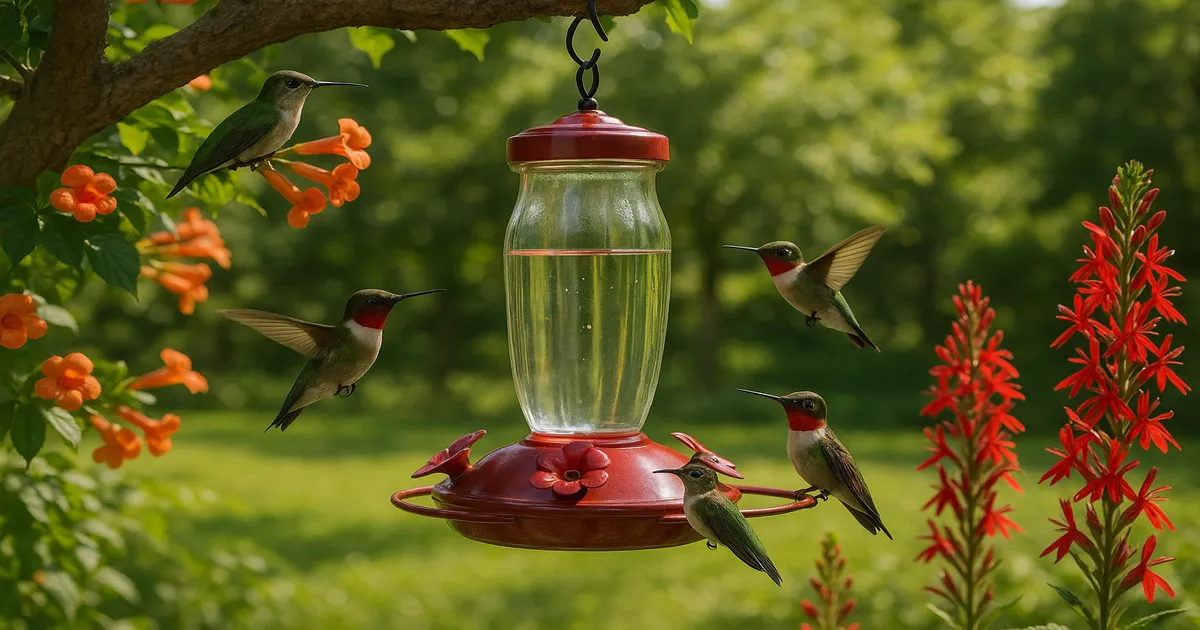
Quick Answer: Yes, completely normal — and a great sign. Large numbers of hummingbirds at feeders are most common in late summer (August–September), when birds are fueling up for migration, and again during spring arrival. If your feeders are suddenly mobbed, you’re watching one of the most spectacular small-bird events in North American birding.
If you’ve been staring at your feeders wondering whether it’s normal to have this many hummingbirds showing up all at once — it is. What looks like chaos is actually a well-documented surge tied to migration biology and seasonal congregation behavior. Two things drive most feeder explosions: a pre-migration feeding frenzy (especially intense in August and September) and waves of migratory birds passing through your yard on their way south. Once you understand what’s happening, the madness starts to make sense.
Which Hummingbirds Are Likely Crowding Your Feeder?
Ruby-throated Hummingbird: The Eastern Feeder Staple
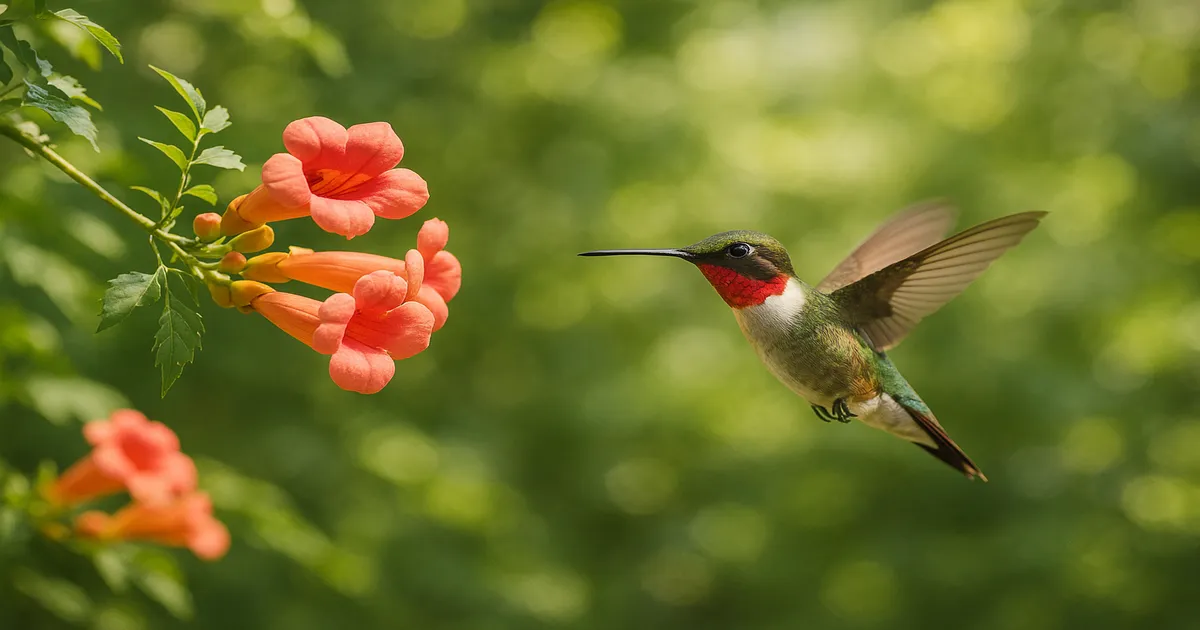
The Ruby-throated Hummingbird (Archilochus colubris) is the only hummingbird most eastern North Americans will ever see at a feeder. It’s about 3.75 inches (9.5 cm) long — roughly the weight of a penny — with a needle-like bill and a compact, torpedo-shaped body. Males are unmistakable when the light hits right: that ruby-red gorget blazes like a lit match. In poor light it looks black, which trips up a lot of new birders. Females have white-tipped outer tail feathers and a clean white throat with faint streaking — look for that tail flash when they hover.
Rufous Hummingbird: The Aggressive Western Migrant
The Rufous Hummingbird (Selasphorus rufus) is the bully of the feeder world, and I mean that affectionately. Males are cloaked in brilliant orange-rufous plumage — there’s nothing else like it at a North American feeder. Females and immatures show rufous-washed flanks and rufous at the base of the tail, which separates them from most other western species. If you’ve got one Rufous at your feeder, expect it to spend more time chasing everything else away than actually feeding. They’re stocky, loud, and relentless. Primarily western birds, Rufous have been expanding their fall range eastward for decades, and Gulf Coast and southeastern feeders now host them with some regularity.
Anna’s Hummingbird: The Year-Round Pacific Coast Regular
Anna’s Hummingbird (Calypte anna) is the only common North American hummingbird with a fully iridescent rose-magenta head — both the gorget and the crown flash that color, making the male look like a tiny flying jewel. At about 4 inches (10.2 cm), it’s slightly larger and stockier than most other feeder species. Unlike its migratory relatives, Anna’s doesn’t go anywhere. Pacific Coast residents can expect them every month of the year, and males sing their scratchy, buzzy song from exposed perches even in midwinter. It’s one of the few hummingbirds with a true, recognizable song — worth learning if you’re in its range.
Black-chinned Hummingbird: Common Western Feeder Visitor
The Black-chinned Hummingbird (Archilochus alexandri) looks a lot like the Ruby-throated — green back, white underparts, similar size — which causes plenty of confusion where ranges overlap in the western Great Plains. The male’s black chin with a narrow violet-purple lower band is the key mark, though that purple can be nearly invisible except in direct sunlight. The single most reliable field mark at a feeder is behavioral: Black-chinneds pump their tails almost constantly while hovering. Once you know to look for it, you won’t miss it.
Broad-tailed Hummingbird: Rocky Mountain Meadow Specialist
At Rocky Mountain feeders, the Broad-tailed Hummingbird (Selasphorus platycercus) is a staple. Males have a rose-red gorget similar to the Ruby-throated, but the Broad-tailed is slightly larger and — most distinctively — produces a loud, metallic, cricket-like wing trill in flight caused by a notch in the outer primary feather. You’ll hear a Broad-tailed before you see it. The trill carries over 100 yards and is one of the most evocative sounds of high-elevation summer. Females show cinnamon-buff flanks similar to Rufous females, so range is your best guide there.
Is It Normal to Have This Many Hummingbirds? Understanding the Seasonal Surge
Late Summer Feeding Frenzy: August and September
This is the big one. August and September are when most people notice a dramatic, almost overnight increase in feeder traffic — and it’s almost always tied to migration fueling. Ruby-throateds in the East are preparing for a non-stop crossing of the Gulf of Mexico, a journey of roughly 500 miles (800 km) over open water, and they need to pack on serious fat reserves to make it. Feeders become extremely efficient energy sources during this period, and birds that were loosely territorial all summer suddenly tolerate crowding because the drive to eat overrides everything else.
The biological term for this is hyperphagia — a compulsive, frantic eating phase during which hummingbirds can nearly double their body weight in fat stores within a few weeks. In the wild, a hummingbird may visit 1,000–2,000 flowers per day; a well-stocked feeder is an extraordinary shortcut during this period.
Spring Arrival: When the First Hummingbirds Return
Males arrive first in spring, typically hitting the Gulf Coast by late February or early March and reaching the Great Lakes and New England by late April or early May. The first male of the season at a feeder that’s been quiet all winter is one of those small birding moments that never gets old. Numbers build more gradually in spring than fall — there’s no equivalent of the late-summer frenzy — but you’ll see steady increases through May as females arrive and the season gets underway.
Fall Migration Waves and Lingering Stragglers
Rufous Hummingbirds are among the earliest fall migrants in North America. Adult males start moving south as early as late June — well before most people think of fall migration — funneling through the Rocky Mountain corridor in July and August. Ruby-throateds peak in August–September, with juveniles and females lingering into October. The very last birds of the season are almost always juveniles, and leaving feeders up well past the point you think you need to is almost always rewarded by at least one late straggler.
Year-Round Activity on the Pacific Coast
Anna’s Hummingbirds don’t follow a migration calendar. Pacific Coast feeders can expect them every month of the year. They begin nesting in December or January in California, which means a female you’re watching at your feeder in midwinter might be incubating eggs nearby. Activity may dip slightly in the coldest months but never goes to zero.
How to Handle a Hummingbird Feeder Surge: Practical Tips
How Many Feeders Do You Actually Need?
More than you think. During peak migration, one feeder can’t serve the demand, and a dominant bird will monopolize it anyway. Start with at least three or four feeders during August–September. A saucer-style feeder (Aspects HummZinger Excel 16 oz) is my preference over traditional bottle feeders — easier to clean, less prone to leaking, and the wide dish format makes it harder for one bird to guard all the ports at once. If you want to watch the action up close, a window-mount feeder puts the birds within arm’s length.
Feeder Placement: Using Distance to Reduce Aggression
Place feeders out of sight of each other. If a territorial bird can see multiple feeders from a single perch, it will try to guard all of them. Spread feeders around corners of the house, on different sides of the yard, or use vegetation to break sightlines. This one change can dramatically increase the number of birds actually getting to feed rather than just watching a Rufous throw its weight around.
Nectar Recipe and How Often to Refresh
Stick with the standard ratio: 1 part white granulated sugar to 4 parts water. Boil the water, dissolve the sugar, cool before filling. No red dye, no honey, no artificial sweeteners — all of those cause problems. During summer heat, nectar ferments and grows mold fast. Change it every 2–3 days when temperatures are above 80°F (27°C). In cooler fall weather, every 4–5 days is fine. If the nectar looks cloudy or you see black mold at the ports, scrub the feeder with hot water and a bottle brush before refilling.
When to Take Feeders Down in Fall
Leave them up. The persistent myth that keeping feeders up in fall will prevent hummingbirds from migrating is simply not true — migration is triggered by day length, not food availability. Taking feeders down early actually harms late migrants that need fuel. Leave feeders up for at least two weeks after your last sighting. In the East, that often means into October. On the Pacific Coast, don’t take them down at all.
Supporting Hummingbirds Beyond the Feeder
Native Plants That Attract Hummingbirds by Region
A feeder is a supplement, not a substitute for habitat. Native plants provide nectar in forms hummingbirds evolved with, and they support the insect communities birds depend on for protein.
- East: Cardinal flower (Lobelia cardinalis), trumpet vine (Campsis radicans), bee balm (Monarda spp.), columbine (Aquilegia canadensis)
- West: Penstemon (Penstemon spp.), salvia (Salvia spp.), desert willow (Chilopsis linearis)
- Pacific Coast: Fuchsia (Fuchsia spp.), monkeyflower (Erythranthe spp.), currant (Ribes spp.)
Why Insects Matter
Sugar water provides energy but zero protein. Hummingbirds catch gnats, fruit flies, aphids, and small spiders constantly — and nesting females feed their chicks almost entirely insects during the first week or two after hatching. A pesticide-free yard isn’t just good environmental practice; it’s directly tied to hummingbird reproductive success. If you’re spraying for mosquitoes, you’re also eliminating a significant portion of the local hummingbird food supply.
Water and Shelter
Hummingbirds bathe, but they prefer moving water to a traditional birdbath — they like to fly through fine mist rather than wade. A misting attachment on a drip line or hose can attract hummingbirds that never touch a feeder. Dense shrubs and small trees near feeders provide perching and roosting sites, which reduces the energy birds spend hovering and gives them somewhere to watch for rivals.
Frequently Asked Questions
Is it normal to have this many hummingbirds at your feeders all at once?
During peak migration in late summer, seeing 10–20 birds at a feeder simultaneously is entirely normal in areas with good habitat. Dedicated feeders in migration hotspots sometimes host 50 or more. There’s no number that signals something is wrong — the more birds you’re seeing, the better your setup is working.
Why are there suddenly so many hummingbirds at my feeder in August?
August is the peak of pre-migration hyperphagia for Ruby-throated Hummingbirds in the East, and it’s also when Rufous Hummingbirds are moving through western feeders in large numbers. Territorial behavior relaxes as the drive to fuel up takes over, and juveniles from the summer’s nesting season are now independent and feeding heavily. The combination produces the biggest feeder numbers of the year.
Is it okay that hummingbirds are fighting and chasing each other at my feeder?
Yes. Chase flights and aggressive displays are completely normal — hummingbirds are wired to defend food sources, and a feeder is worth fighting over. The chases look intense but rarely result in injury. If aggression is preventing birds from feeding at all, add more feeders and place them out of sight of each other.
Will keeping my feeder up in fall stop hummingbirds from migrating?
No. Migration timing is controlled by changes in day length, not food availability. Keeping feeders up does not trap or delay hummingbirds — it supports late migrants that genuinely need the fuel. Take feeders down two weeks after your last sighting, or leave them up year-round if you’re on the Pacific Coast.
How often should I change hummingbird nectar when traffic is heavy?
Every 2–3 days during hot weather (above 80°F / 27°C). Nectar ferments quickly in heat and can grow mold that harms birds. With heavy traffic, feeders may empty before they have a chance to spoil — but check them daily regardless. In cooler fall temperatures, stretching to every 4–5 days is reasonable.