Quick Answer: The hairy woodpecker (Leuconotopicus villosus) gets its name from the long, loose, wispy white feathers running down the center of its back — feathers that look remarkably like coarse hair or a tuft of fur. The scientific species name villosus means “shaggy” or “covered with long hairs” in Latin, making this one of those rare cases where the common and scientific names reinforce each other perfectly.
If you’ve ever wondered why is it called a hairy woodpecker, the answer is hiding in plain sight — literally on the bird’s back. That distinctive white stripe isn’t just a field mark; it’s the reason this bird has carried the same name for nearly three centuries of ornithological literature.
Why Is It Called a Hairy Woodpecker? The Feathers Tell the Story
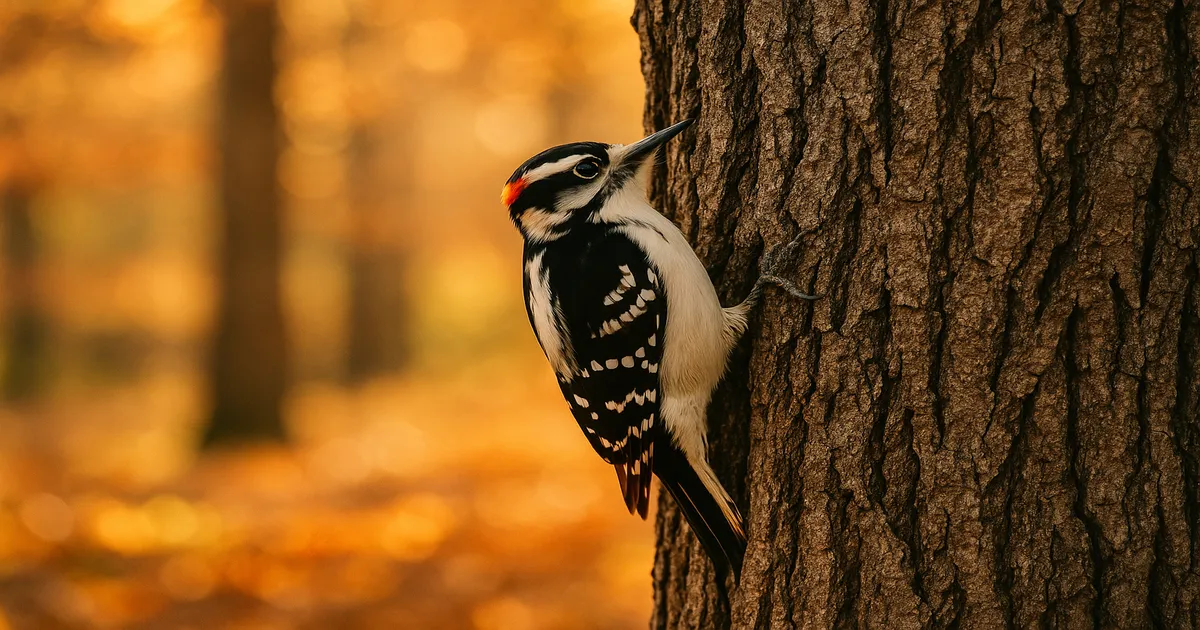
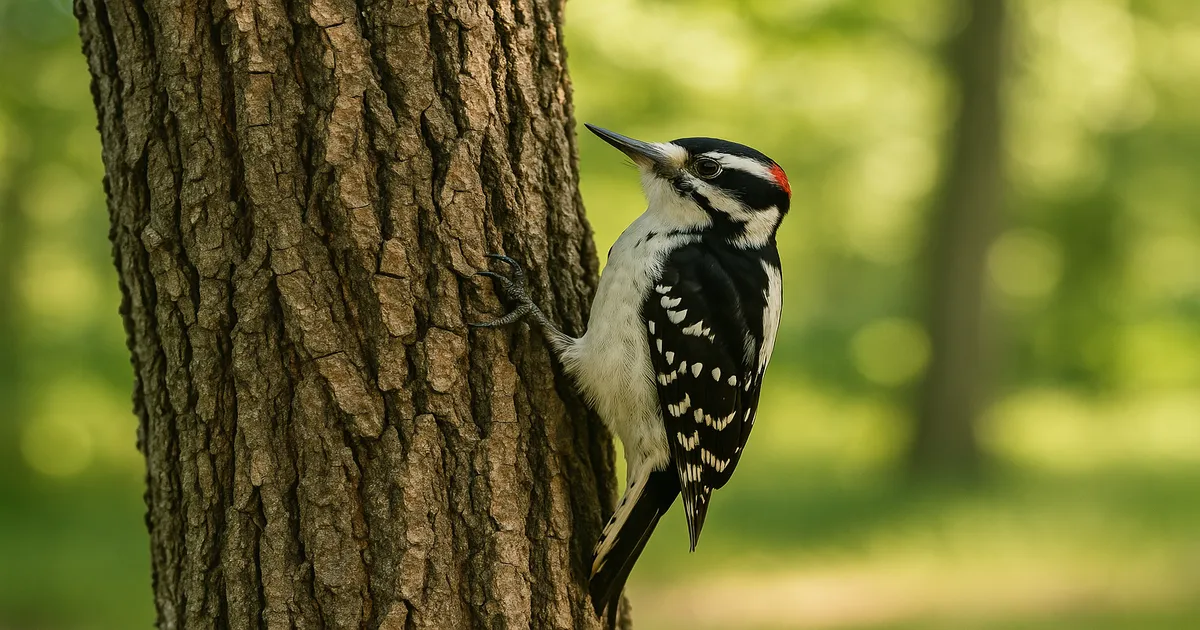
The white feathers running down the center of the hairy woodpecker’s back are nothing like the sleek contour feathers covering the rest of its body. They’re loose, wispy, and a little disheveled — almost bristly. When you get a good look at a bird clinging to a suet feeder or working a snag, those feathers genuinely do resemble a patch of coarse animal hair. Early naturalists weren’t being poetic; they were being accurate.
Some ornithological historians suggest the “hairy” descriptor may have referenced the bird’s overall ruffled, bristly appearance in certain postures — not just the back stripe alone. Either way, the name stuck because the feature is real and visible.
What the Latin Name Villosus Tells Us
The species epithet villosus is Latin for “shaggy” or “covered with long hairs.” That’s a striking alignment between common and scientific names — most birds don’t get that kind of linguistic consistency. When English-speaking naturalists and Latin-naming taxonomists independently landed on the same physical feature, you know it must have made an impression.
The History Behind the Name
Mark Catesby and the First Descriptions
Mark Catesby, the English naturalist, documented the hairy woodpecker in his landmark work The Natural History of Carolina, Florida and the Bahama Islands (published in volumes between 1729 and 1747). His descriptions noted the distinctive back feathering that would come to define the bird’s common name. Catesby was meticulous about physical description, and those wispy white feathers were impossible to overlook.
Alexander Wilson and the Formalization of the Name
Alexander Wilson — often called the father of American ornithology — standardized English common names for North American woodpeckers in the early 1800s. By Wilson’s time, “hairy woodpecker” was already in common usage, and his American Ornithology cemented it in the scientific literature. The name hasn’t budged since.
Why Feather Texture Mattered to Early Ornithologists
Early naturalists worked from specimens in hand, not through binoculars. Feather texture was a genuinely useful diagnostic tool — texture, color, and structure were all fair game for naming. The hairy woodpecker’s back feathers were distinctive enough to anchor an identity.
The naming logic becomes even clearer when you compare the two species side by side. The downy woodpecker (Dryobates pubescens) gets its name from the soft, downy-textured feathers on its back — noticeably different from the coarser, wispy feathers of its larger relative. The two names together reflect a deliberate convention: early ornithologists were paying close attention to how birds felt, not just how they looked.
Identifying the Hairy Woodpecker: Key Field Marks
Size, Shape, and Bill Length
The hairy woodpecker runs about 7.1–10.2 inches (18–26 cm) long with a wingspan of roughly 13–16 inches (33–41 cm) — noticeably larger and chunkier than a downy woodpecker. The head is blocky, and the bill is long, chisel-like, and nearly as long as the head itself. That bill length is the single most reliable field mark for separating it from the downy.
A good pair of binoculars makes all the difference here. (Nikon Monarch M5 8x42) At feeder distance you can usually judge bill length with the naked eye, but in the field you’ll want glass.
Plumage: The White Back Stripe and Black-and-White Pattern
The bold white stripe down the center of the back — those “hairy” feathers — is immediately visible on a perched bird. The wings are black with rows of white spotting, the underparts are clean white and unmarked, and the head shows a crisp black-and-white pattern with a broad white supercilium and white cheek patch.
Male vs. Female
Adult males carry a red patch on the rear of the crown — sometimes split into two lateral patches. Adult females have no red at all: entirely black crown and nape. Sexing adults is straightforward once you know what to look for.
Juvenile Plumage
Young birds of both sexes may show red or orange-red streaking across the entire crown, not just the nape, which complicates sex determination in the field. Overall plumage is similar to adults but can look slightly duller early in life. By their first fall, juveniles are well into molting toward adult-like plumage.
Subspecies Variation
With approximately 17 recognized subspecies, there’s meaningful variation across the range. Pacific Coast birds (such as L. v. harrisi) tend to be darker overall with reduced white wing spotting. Interior and eastern birds show the classic bold black-and-white pattern and are generally the largest. Southern subspecies run smaller with a faint brownish wash on the underparts. If you’re birding in the Pacific Northwest or Central America, don’t be thrown off by birds that look a bit different from your field guide plate.
Hairy Woodpecker vs. Downy Woodpecker: How to Tell Them Apart
This is the confusion pair that trips up more birders than almost any other. Here’s how to work through it.
Bill length is the one to memorize. The hairy woodpecker’s bill is roughly equal to the length of its head — long, heavy, and imposing. The downy’s bill is short and stubby, maybe a third of the head length. Even in poor light or at distance, bill length alone will usually get you to the right answer.
Size is the next check. The hairy is genuinely larger — roughly the size difference between a robin and a sparrow. When both species visit the same feeder, the gap is obvious. When you’re looking at one bird alone, size is harder to judge, which is why bill length matters so much.
Outer tail feathers offer a reliable backup mark. On the hairy, they’re clean white with no markings. On the downy, those same feathers show black spots or bars.
Voice is actually the fastest confirmation when you’re not getting a clean look. The hairy’s single-note call is a loud, sharp peek! — more emphatic than the downy’s softer, higher-pitched pik. The hairy’s rattle call is lower-pitched, longer, and more forceful.
At a suet feeder, behavior helps too: the hairy tends to dominate and will displace a downy without much ceremony. In the field, hairy woodpeckers typically work higher on larger-diameter trunks, while downys are more likely to work smaller branches and twigs. Neither rule is absolute, but both are useful supporting evidence.
Habitat and Range
The hairy woodpecker has one of the broadest ranges of any North American woodpecker — from the boreal forests of Alaska and northern Canada south through Mexico and into Central America (Guatemala, Honduras, El Salvador, Nicaragua, and Panama). In the East, it ranges south through Florida. The main gaps are the treeless Great Plains, the Mojave and Sonoran Deserts, and the Florida Keys.
This species isn’t picky about tree type. It’s equally at home in eastern oak-maple-beech woodlands, northern spruce-fir forests, western pine and hemlock stands, and mixed transition zones. Riparian corridors are also worth checking, especially in otherwise open landscapes.
If there’s one habitat requirement that matters above all others, it’s snags. Standing dead trees are where hairy woodpeckers do most of their foraging and where they excavate nest cavities every spring. A mature forest without snags is poor habitat for this species, full stop. Hairy woodpeckers also adapt reasonably well to suburban environments where large trees remain — wooded backyards, parks, golf courses, and cemeteries can all support resident pairs.
In mountainous regions of the West, hairy woodpeckers occur from sea level up to around 9,000–10,000 feet (2,700–3,000 m). Mountain populations may drift to lower elevations in winter, but across most of the range this is a year-round resident.
Behavior, Diet, and Ecology
The hairy woodpecker is a serious excavator. It uses its heavy bill to chip and flake bark, then drive into the wood itself to reach the larvae tunneling inside. Its tongue — which can extend up to 2 inches (5 cm) beyond the bill tip — is barbed and sticky, designed to extract prey from deep galleries.
The core of the diet is wood-boring beetle larvae, particularly longhorn beetles (family Cerambycidae) and jewel beetles (family Buprestidae). Carpenter ants (Camponotus spp.) are another major food source, especially in spring and summer. Come fall and winter, the diet shifts to include wild berries (dogwood, serviceberry, Virginia creeper), acorns, and other seeds. Hairy woodpeckers are also regular visitors to sapsucker wells — holes drilled by yellow-bellied sapsuckers (Sphyrapicus varius) — where they drink sap and pick off trapped insects.
Courtship begins in late winter or early spring, with mutual drumming and display flights. Both sexes excavate the nest cavity — typically in a snag or dead branch — over one to three weeks. The entrance hole runs about 1.5–2 inches (3.8–5 cm) across, and the cavity goes 8–12 inches (20–30 cm) deep, lined only with wood chips. A typical clutch is 3–6 white eggs, incubated for about 11–12 days. Nestlings fledge around 28–30 days after hatching.
Hairy woodpeckers excavate a new cavity every year, leaving last year’s hole available for other species. Eastern bluebirds, northern saw-whet owls, flying squirrels, and a long list of other cavity-dependent animals depend on these abandoned excavations. Woodpeckers aren’t just interesting birds — they’re ecosystem engineers.
Attracting Hairy Woodpeckers to Your Yard
Suet is the top attractant, and I’d call it non-negotiable if you want reliable hairy woodpecker visits. Insect- or peanut-flavored suet cakes work especially well. For the feeder itself, a tail-prop style is worth the upgrade — the extended bottom panel lets the bird brace its tail in a natural foraging posture, which hairy woodpeckers strongly prefer. Beyond suet, whole or shelled peanuts in a mesh feeder are very attractive, and black-oil sunflower seeds on a platform or hopper feeder round out the offering.
Place feeders within 10–15 feet of tree cover, ideally near a large-diameter trunk or a snag. Hairy woodpeckers aren’t shy, but they like an escape route close by. They’ll often cache suet and seeds in nearby bark crevices after visiting, which means a well-placed feeder can become part of their daily foraging circuit.
The single best thing you can do beyond feeders is leave dead trees standing where it’s safe. A standing snag in the backyard is worth more to a woodpecker than a year’s worth of suet. Planting native berry-producing shrubs — dogwood, serviceberry, native viburnums — adds winter food. Cutting back on pesticides protects the insect populations that make up the bulk of the natural diet.
Window strikes are a real mortality risk if you’re attracting woodpeckers near your house. Feeders placed either within 3 feet of a window (so birds can’t build speed) or more than 30 feet away significantly reduce strike risk. External window film or break-up tape applied to the outside of the glass also helps. (WindowAlert UV Decals)
Conservation Status
The hairy woodpecker holds an IUCN Least Concern designation, and Partners in Flight estimates the global breeding population at around 9 million individuals. That’s reassuring — but the North American Breeding Bird Survey shows stable-to-slightly-declining trends in some regions, particularly where mature forest is being fragmented or managed intensively.
The primary threat is straightforward: remove the big old trees and the snags, and you remove the habitat. “Clean” forest management — where dead wood is cleared for safety or aesthetics — is a genuine problem for this species. A few things you can do:
- Leave dead trees and large dead branches standing where safely possible
- Reduce pesticide use to support insect populations
- Log sightings on eBird — citizen science data matters for tracking population trends
- Participate in the Christmas Bird Count or Project FeederWatch to contribute to long-term monitoring
Frequently Asked Questions About the Hairy Woodpecker
Why is it called a hairy woodpecker?
The name comes from the long, loose, wispy white feathers running down the center of the bird’s back, which resemble coarse hair. Early naturalists used feather texture as a naming tool, and these feathers were distinctive enough to stick. The Latin species name villosus — meaning “shaggy” — references the same feature.
Why is it called a hairy woodpecker and not a downy woodpecker?
The two names reflect two different feather textures. The hairy woodpecker’s back feathers are long, loose, and wispy — like coarse hair. The downy woodpecker’s back feathers are softer and finer — like down. Early ornithologists used these textural differences deliberately, and the two names together tell you exactly what distinguishes the birds before you even raise your binoculars.
What does the scientific name Leuconotopicus villosus mean?
Leuconotopicus breaks down from Greek roots meaning roughly “white-backed woodpecker” (leuco = white, notos = back, picus = woodpecker). The species epithet villosus is Latin for “shaggy” or “covered with long hairs,” directly referencing the same physical feature that inspired the common name. It’s a satisfying case where common and scientific names say exactly the same thing.
How do you tell a hairy woodpecker apart from a downy woodpecker?
Start with bill length: the hairy’s bill is nearly as long as its head; the downy’s is short and stubby. Overall size is also noticeably different — the hairy is substantially larger. If you can see the outer tail feathers, the hairy’s are clean white while the downy’s show black spots or bars. Voice works well too: the hairy’s peek call is louder and sharper than the downy’s softer pik.
Are hairy woodpeckers common backyard birds?
Fairly common across most of North America, with a global population estimated around 9 million individuals. They’re not rare, but they’re less abundant than downys and tend to need larger trees and more mature habitat. In a wooded suburban yard with a suet feeder and some big trees nearby, a resident pair is a realistic expectation.