Quick Answer: The best bird feeder for crows is a large open platform or tray feeder — or simply the ground itself. Crows need room to land and stand, so tube feeders and small hanging feeders won’t work. Stock it with whole corn, peanuts, or dog kibble, keep a shallow birdbath nearby, and be patient: once a crow family finds your setup, they’ll return on a reliable schedule and bring the whole family with them.
What You Need to Know About Feeding Crows
Crows are not typical feeder birds, and that’s exactly what makes attracting them so satisfying. Setting up a dedicated bird feeder for crows takes about five minutes and costs almost nothing — a pile of whole corn on a flat surface will do it. The challenge is getting them to notice it in the first place, then managing the chaos once they do.
American Crows (Corvus brachyrhynchos) are highly intelligent, socially complex birds that live in tight family groups. Once they discover your yard, they’ll return on a near-daily schedule and recruit siblings, offspring, and sometimes half the neighborhood. Set your expectations accordingly: you’re not attracting one or two birds. You’re adopting a family.
Identifying the Crow at Your Feeder
American Crow: Size, Shape, and Field Marks
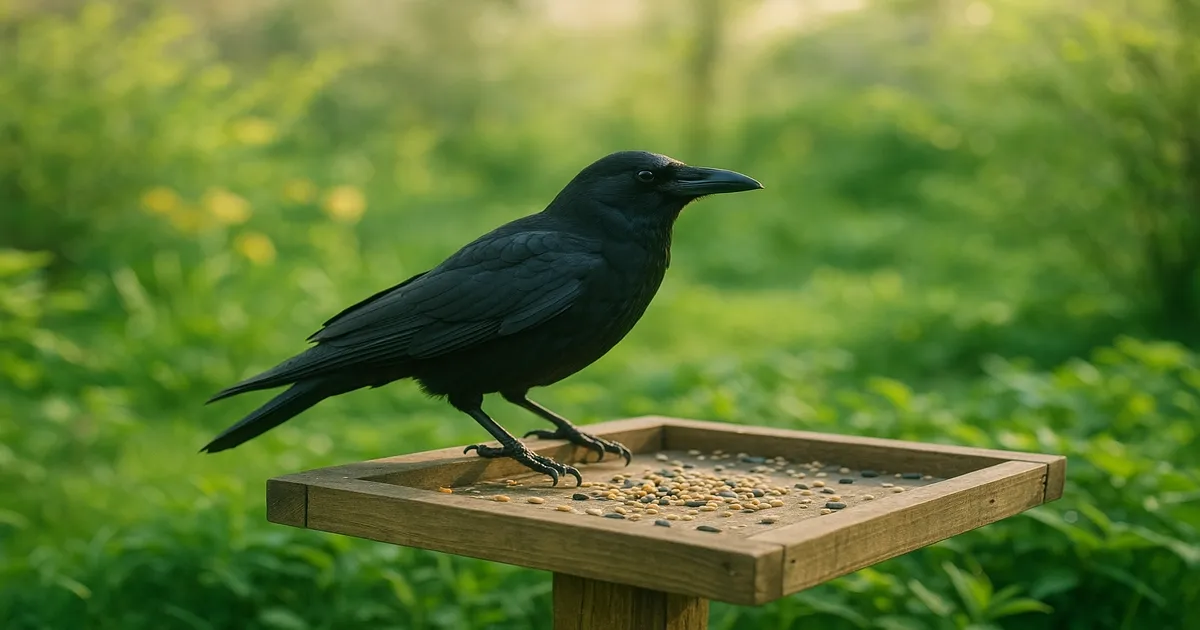
The American Crow is a large, entirely jet-black bird — bill, legs, feet, eyes, all of it. At 17–21 inches (43–53 cm) long with a wingspan of 33–39 inches (85–100 cm), it’s noticeably bigger than any blackbird or grackle. In good light, the plumage shows a subtle blue-violet iridescence, but in shade it reads as flat black.
The bill is stout and slightly hooked — built for prying, probing, and tearing. In flight, look for broad, fingered wingtips and a fan-shaped (rounded) tail. That tail shape is your best single field mark for separating crows from ravens.
A good pair of binoculars makes a real difference when you’re trying to nail these ID details from across the yard. (Nikon Monarch M5 8x42)
How to Tell a Crow from a Common Raven
The Common Raven (Corvus corax) is bigger — 22–27 inches (56–69 cm) — with a heavier, more arched bill and a distinctly wedge-shaped tail visible in flight. Ravens also soar more readily and produce a deep, hollow “cronk” rather than the crow’s familiar “caw.” If you’re in a suburban area in the lower 48, the bird at your feeder is almost certainly a crow. Ravens stick to wilder, less human-modified landscapes — mountains, boreal forest, open tundra, and coastal cliffs.
Fish Crow: The Lookalike on the East and Gulf Coasts
The Fish Crow (Corvus ossifragus) is slightly smaller than the American Crow — about 14–16 inches (36–41 cm) — and nearly identical in appearance. Your best clue is voice: a short, nasal “uh-uh” rather than the full “caw.” Fish Crows have expanded inland significantly in recent decades, now reaching well up the Mississippi River valley and into the mid-Atlantic interior, so don’t assume you’re off the hook just because you’re not on the coast.
Juvenile vs. Adult Crows at the Feeder
First-year crows look duller — less iridescent, with a slightly loose, fluffy texture to the feathers. When they’re still begging from parents, you’ll hear a higher-pitched, whining “caaah” call. In summer, a family group of adults accompanied by noisy, insistent juveniles is a good sign your yard has been properly adopted.
Where and When to Expect Crows
Range and Habitat
American Crows are found across virtually the entire continental United States and southern Canada, making them accessible to most backyard birders in North America. They’re habitat generalists — suburban neighborhoods, agricultural edges, parks, and urban areas all suit them. Dense, unbroken forest is about the only place they consistently avoid.
Seasonal Activity: Winter Flocks vs. Summer Family Groups
Winter is peak crow activity at feeders. Crows form massive communal roosts in cold months — sometimes tens of thousands of birds — and those roosts disperse widely each day to forage. A well-stocked feeder can pull birds from miles away. Summer visits are smaller and calmer: a family group of 2–8 birds working your yard on a predictable schedule.
Daily Timing
Morning and late afternoon are your best windows. In winter, crows leave communal roosts at dawn in large flocks to forage, then return at dusk — sometimes traveling 20–30 miles (32–48 km) each way. If nothing’s happening by mid-morning, try again an hour before sunset.
Choosing the Right Bird Feeder for Crows
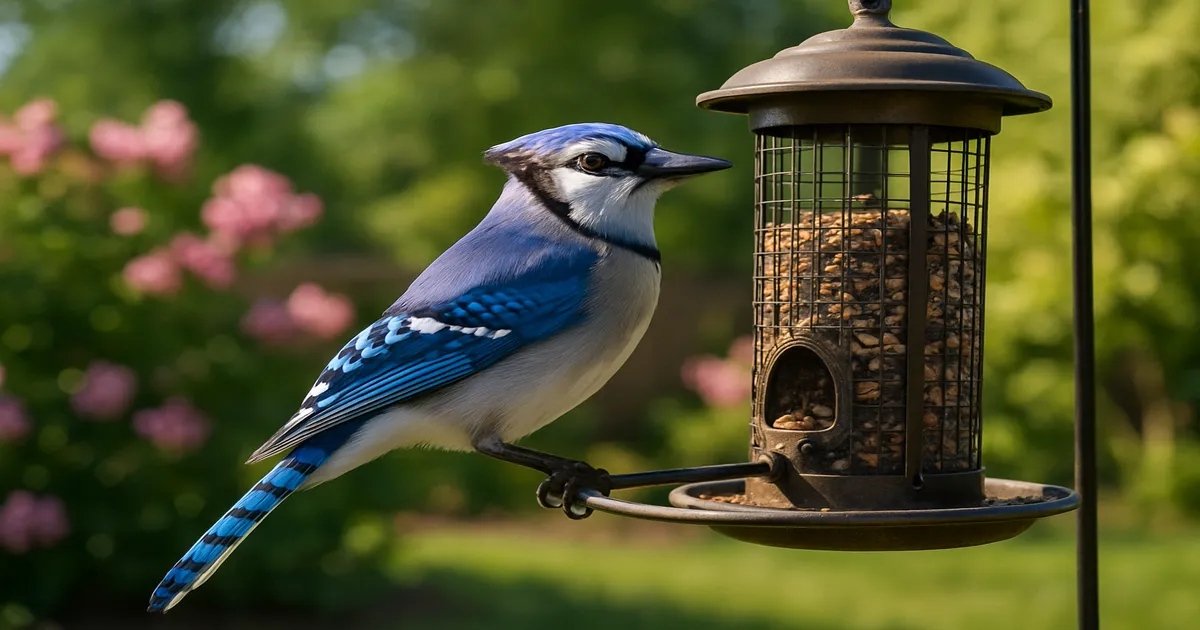
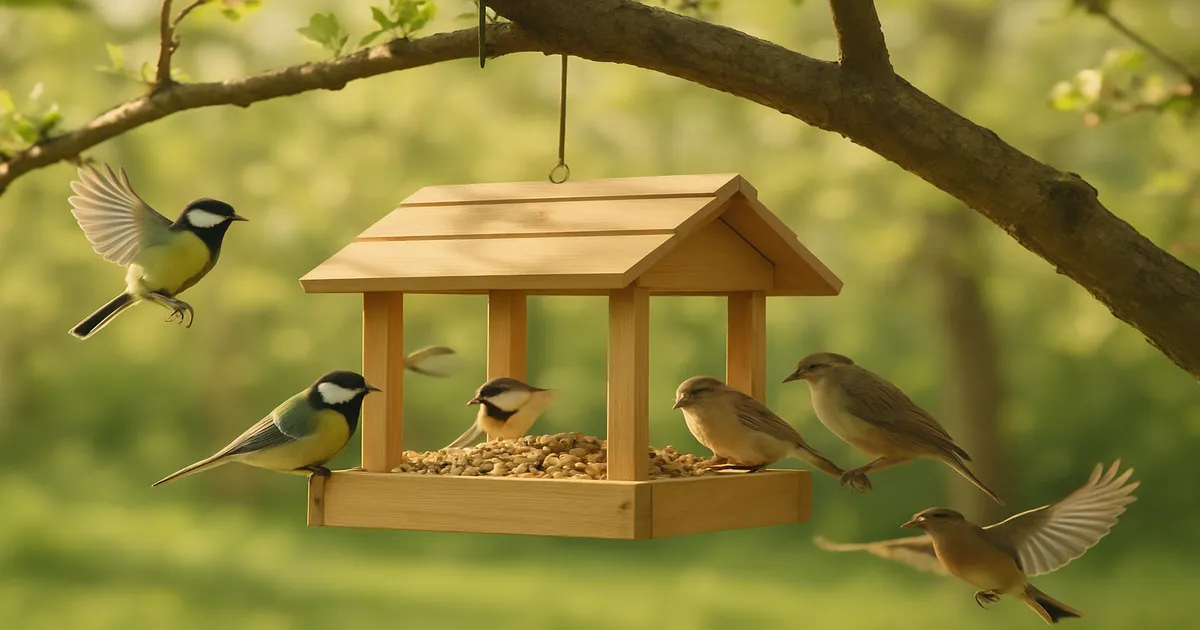
Why Tube and Hanging Feeders Don’t Work
A crow is 17–21 inches long and weighs up to 22 oz (620 g). Tube feeders and small hanging feeders are physically incompatible with a bird that size — there’s nowhere to land, nowhere to stand, and the perches buckle under their weight. Even if a crow tried, it would give up in seconds.
Platform Feeders: The Best Dedicated Option
A large open platform feeder is the right call for crows. You want a tray at least 16–18 inches across — big enough for a crow to land, turn around, and grab food without feeling cramped. Low-mounted platforms (2–4 feet off the ground) work better than high ones; crows are ground foragers by nature and feel more comfortable close to the surface.
Ground Feeding: Simple and Effective
Scattering food directly on the ground or a flat patio surface is the easiest approach that actually works. No feeder to buy, no assembly required. Crows prefer ground feeding to most elevated setups — it mirrors how they naturally forage. A dedicated patch of bare ground or a wide, flat stone does the job perfectly.
Placement
Open areas with clear sightlines in all directions are what crows want. They need to see approaching threats — hawks, cats, anything — from 50 feet away or more. A spot tucked against a fence or hedge will get ignored. Keep the crow feeding area at least 15–20 feet from your songbird feeders, and switch those to caged tube designs so smaller birds have a safe haven.
Adding a Water Source
This is the single biggest upgrade you can make. Crows are well-documented food-dunkers — they regularly dip food in water before eating, likely to soften it. A large, shallow birdbath near the feeding area dramatically increases visits. Two to three inches deep is ideal; anything deeper and they lose interest. (Allied Precision Industries 7.5-Gallon Heated Bird Bath)
Best Foods for a Crow Feeder
Whole Kernel Corn
Dried whole kernel corn is the best all-around crow food — cheap, widely available, and closely mirrors what crows eat naturally in agricultural areas. A 50-pound bag runs under $20 at most farm supply stores. Scatter it on the ground or pile it on a platform and you’re done.
Peanuts
Crows love peanuts, and in-shell peanuts trigger a particularly satisfying behavior: crows will grab one, fly off, and bury it for later. Shelled peanuts get eaten on the spot and disappear faster, so use them if you want crows to linger.
Dog Kibble
Dry dog or cat kibble surprises most people, but it’s one of the most effective crow attractants you can put out. It’s high in protein, inexpensive, and crows will dunk it in the birdbath to soften it — which means they’ll use both your food and water setup at once. Unsalted cooked meat scraps work equally well. Think of it as mimicking the carrion that’s a natural part of their diet.
Suet and Mealworms
Suet is excellent in winter — skip the small wire cage and use a large open tray instead. Dried mealworms are worth keeping on hand, especially when you’re first establishing a feeding station and trying to get crows to commit to the spot.
What to Avoid
- Bread and baked goods: Crows love them, but they’re nutritionally empty. Use sparingly if at all.
- Salted or seasoned food: Salt is harmful to birds. No chips, crackers, or seasoned meat scraps.
- Heavily processed human food: Anything preserved, spiced, or artificially flavored stays off the feeder.
Crow Behavior at the Feeder
Why Crows Arrive in Groups
Crows forage in family units. When one bird finds food, others follow quickly. They’re bold and assertive — smaller birds will scatter when crows arrive, and there’s not much you can do about it. It’s temporary; the sparrows and chickadees come back once the crows move on.
Food Caching
Don’t be confused when a crow grabs a peanut and immediately disappears. It’s not leaving — it’s caching. Crows store hundreds of food items in hidden locations and retrieve them later using spatial memory. One visit to your feeder can result in a crow making a dozen round trips, hiding food all over the neighborhood.
How Crows Learn Your Feeder
Crows recognize individual human faces and remember reliable food sources with impressive accuracy. Once a crow family has visited two or three times, they’ll build your yard into their daily foraging route. A yard that starts with two crows in October can easily have six or eight by December.
Tips for Attracting Crows
Be patient. Crows are neophobic — wary of anything new in their environment. A brand-new platform feeder or a pile of corn in an unfamiliar spot may get ignored for several days. Don’t move the feeder, don’t hover nearby, and give it at least a week before drawing conclusions.
Feed on a consistent schedule. Crows learn routines fast. Put food out every morning at the same time and they’ll start showing up a few minutes early. Pick a time you can actually stick to, because crows will hold you to it.
Let them eat in peace. Over time, your crows will become noticeably bolder — landing while you’re still in the yard, watching you from closer distances. Avoid sudden movements, don’t stare them down, and resist going back out to the feeder repeatedly during a visit.
Use crow calls sparingly. Playing crow contact calls through a phone speaker can attract curious birds when you’re first getting started. A few minutes in the morning is plenty. Avoid alarm calls; you want crows to associate your yard with safety.
Conservation and Legal Status
West Nile Virus and Population Impact
The American Crow is listed as Least Concern by the IUCN, but that status doesn’t tell the whole story. When West Nile Virus arrived in North America in 1999, crows were hit hard — some regional populations declined by 45% or more within a few years. Crows are so susceptible to the virus that wildlife agencies used crow mortality as a sentinel indicator to track its spread across the continent. Populations have partially recovered, but West Nile remains an ongoing threat.
Legal Protections
American Crows are protected under the Migratory Bird Treaty Act of 1918. It’s illegal to harm, kill, or possess them without a federal permit. Feeding them is not only legal — it’s genuinely beneficial, particularly during harsh winters when natural food is scarce.
Logging your crow sightings on eBird or participating in the Audubon Christmas Bird Count takes five minutes and gives researchers real data on population trends and roost sizes. Worth doing.
Frequently Asked Questions
What is the best bird feeder for crows?
A large open platform feeder — at least 16–18 inches across — mounted low or placed directly on the ground. Crows are too large for tube feeders or small hanging feeders and won’t bother with them. Many people find that scattering food on a flat surface works just as well as any purpose-built feeder.
What food attracts crows most reliably?
Whole dried corn is the most effective and affordable option. Peanuts (in or out of the shell), dry dog kibble, and suet are all excellent additions. Corn and peanuts alone will reliably draw crows in; everything else is a bonus.
Why do crows dunk food in water?
Crows dip dry or hard food items in water before eating — likely to soften them and possibly to aid digestion. It’s consistent enough behavior that placing a shallow birdbath near your feeding area noticeably increases crow visits. You’ll often see them dunking dog kibble, bread crusts, or peanuts before swallowing.
Will feeding crows cause problems?
They can arrive in large numbers in winter and will temporarily push smaller songbirds off the feeding area. They’re also noisy. That said, crows don’t cause structural damage and aren’t a health hazard. Keeping their feeding area separate from your songbird feeders, and switching those feeders to caged designs, solves most conflicts.
How do I stop crows from taking over my songbird feeders?
Give crows their own dedicated spot — a platform or ground scatter area away from your main feeders. Switch your songbird feeders to caged designs that physically exclude large birds. Crows will use whatever’s available; it’s easier to redirect them than to block them entirely.