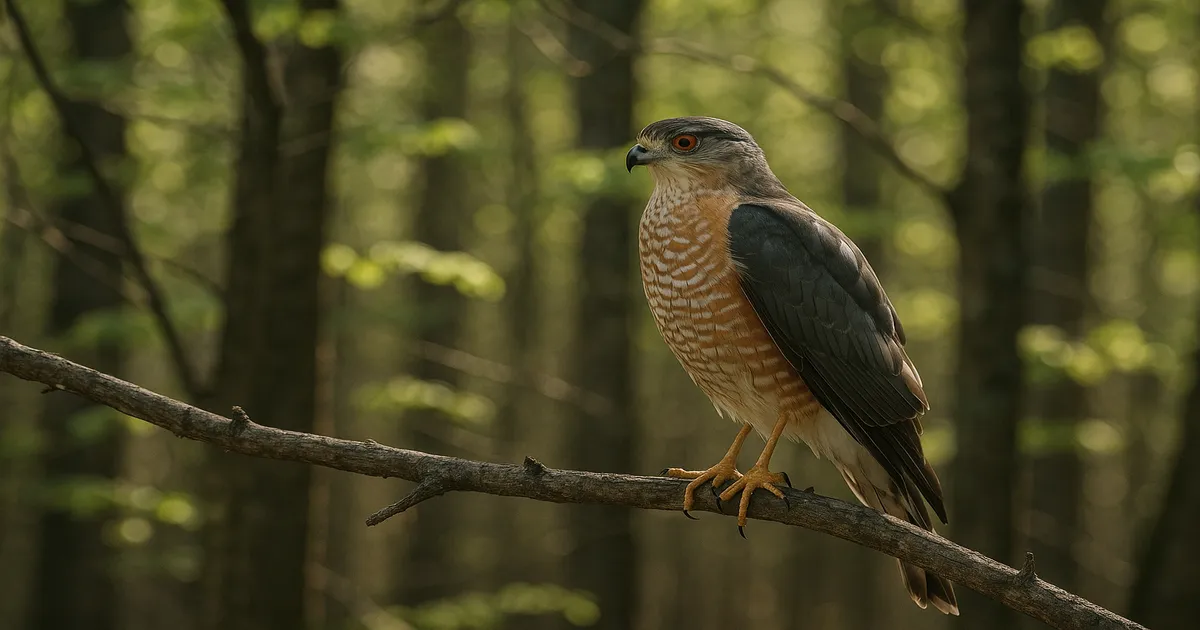
Quick Answer: The Sharp-shinned Hawk gets its name from the laterally compressed, keel-like leading edge of its tarsometatarsus — the lower leg bone — which feels distinctly sharp to the touch. Ornithologist Alexander Wilson formally named it around 1812 in American Ornithology after noting this unusual anatomical feature. Among birders, it’s affectionately called the “Sharpie,” though “Little Blue Darter” captures its flight style just as well.
Why Is It Called a Sharp-Shinned Hawk?
The answer is wonderfully literal. Pick one up carefully, run your finger along the front of its lower leg, and you’ll feel a distinct ridge — almost like the keel of a small boat. That compressed, blade-like edge on the tarsometatarsus bone is exactly what inspired the name, and it’s real enough that Alexander Wilson felt compelled to document it more than two centuries ago.
The scientific name, Accipiter striatus, tells a different story. Striatus is Latin for “striped,” pointing to the heavily streaked breast of juvenile birds and the barred underparts of adults. The common name honors anatomy; the scientific name honors plumage. Together they paint a fairly complete picture of the bird.
The Anatomy Behind the Name
What Makes the Shin “Sharp”
The tarsometatarsus is the long bone connecting the ankle joint to the base of the toes — what most people casually call the “lower leg” in a bird. In most hawks, this bone has a roughly cylindrical cross-section. In the Sharp-shinned Hawk, the leading edge is compressed laterally, forming a keeled ridge you can feel as a sharp edge. Think of the difference between a broomstick and the keel of a sailboat hull. Same basic structure, very different profile.
You won’t see this feature in a field photo. But it’s unmistakable in hand, which is exactly how Wilson would have examined specimens.
Who Named It and When
Alexander Wilson, often called the “Father of American Ornithology,” formally described the Sharp-shinned Hawk around 1812 in his multi-volume American Ornithology. Wilson was meticulous about anatomy, and the compressed tarsus stood out to him as a defining characteristic. His name stuck — which is more than can be said for many 19th-century common names that got quietly revised out of existence.
Sharp-Shinned Hawk Identification
Size and Sexual Dimorphism
Sharp-shinned Hawks measure about 9.4–13.4 inches (24–34 cm) long with a wingspan of 16.9–22.1 inches (43–56 cm). Those ranges look modest until you realize they’re almost entirely explained by sex. Males weigh just 2.9–4.1 oz (82–115 g); females reach 5.3–7.7 oz (150–218 g). A female Sharpie can be nearly twice the mass of a male — one of the most dramatic size differences between sexes of any North American raptor.
In practice, a large female looks nothing like a small male. I’ve watched experienced birders confidently call a big female a Cooper’s Hawk based purely on size, and honestly, I can’t blame them.
Adult Plumage
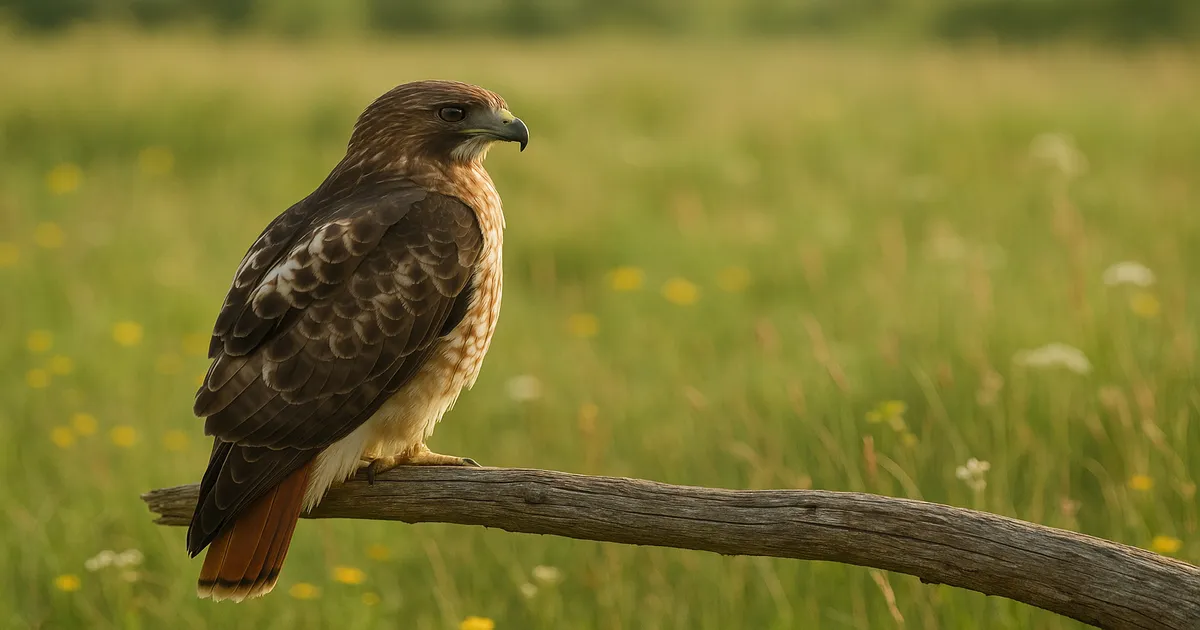
Adults are handsome birds up close. The upperparts are clean blue-gray across the back, wings, and crown. The underparts show fine rusty-orange barring on white — similar to a Cooper’s Hawk but generally finer. The eyes are a striking red to red-orange, and the darker cheeks give the face a slightly capped appearance. The nape is gray without the strong pale collar that Cooper’s Hawks typically show.
Juvenile Plumage
First-year birds are brown above with rufous feather edging and white below with coarse brown streaking. The streaks tend to be thinner and blurrier-edged than a juvenile Cooper’s Hawk’s sharper, more teardrop-shaped markings — though applying this distinction reliably takes practice and good light. Juveniles have yellow to pale yellow-green eyes that shift toward red as they mature.
The Single Most Useful Field Mark
If you learn one thing about Sharpie identification, make it this: the tail tip is squared off or very slightly notched. Cooper’s Hawks have a distinctly rounded tail. This is the most reliable field mark for separating the two species in the field, though worn tail feathers on a Cooper’s can muddy the picture. When a bird banks or turns, that’s your best look at tail shape.
Sharp-Shinned Hawk vs. Cooper’s Hawk
This is, without question, one of the most discussed identification challenges in North American birding. I’ve been at hawk watches where seasoned counters debated a single bird for ten minutes and still logged it as “Accipiter sp.” There’s no shame in that — the species genuinely overlap.
| Feature | Sharp-shinned Hawk | Cooper’s Hawk |
|---|---|---|
| Tail tip | Squared or notched | Rounded |
| Head projection in flight | Small, barely clears wings | Large, projects well forward |
| Nape | Gray, no strong collar | Pale nape, capped look |
| Tarsus | Compressed/keeled | Rounded |
| Juvenile streaking | Blurry, thinner streaks | Sharper, teardrop-shaped streaks |
| Wingbeats | Stiffer, quicker | Slightly more fluid |
In flight, a Cooper’s Hawk looks like a flying cross — the large head projects well forward of the wings, giving the bird a front-heavy silhouette. A Sharp-shinned looks more compact, the small head barely clearing the wrist. This becomes genuinely useful once you’ve seen enough of both species to calibrate your eye.
Size alone will get you into trouble. A large female Sharp-shinned and a small male Cooper’s overlap significantly in body size. Use size as supporting evidence, not as the deciding factor.
At a distance, Merlins and American Kestrels sometimes get confused with Sharpies. The fix is simple: check the wing shape. Falcons have long, pointed wings; Sharp-shinned Hawks have short, rounded wings. The Kestrel also hovers — something a Sharpie never does.
Habitat, Range, and Migration
Sharp-shinned Hawks breed across most of Canada, Alaska, and the northern and western United States, extending south through the Appalachians and into the mountainous West. They favor dense spruce, fir, and pine stands — the thicker and shadier, the better — from near sea level in boreal forest up to above 10,000 feet (3,050 m) in western ranges.
In winter, they spread across much of the continental U.S., Mexico, and Central America, becoming far more flexible about habitat. Woodland edges, suburban neighborhoods, and anywhere songbirds concentrate all work for them.
Fall migration runs August through November, peaking in September and October. Spring migration is March through May. On a good northwest-wind day at a premier hawk watch ridge, you can count thousands of Sharpies in a single morning. At Veracruz, Mexico — one of the largest raptor migration corridors on earth — the numbers are staggering.
Top Hawk Watch Sites
- Hawk Mountain Sanctuary, Pennsylvania — the world’s first raptor sanctuary; excellent fall counts
- Cape May Point State Park, New Jersey — the coastline funnels birds into dense concentrations
- Hawk Ridge Bird Observatory, Duluth, Minnesota — outstanding in northwest winds during October
- Golden Gate Raptor Observatory, California — the premier West Coast site
- Veracruz River of Raptors, Mexico — if you want sheer volume, nothing else compares
At hawk watch sites, birds are often distant and fast-moving. A quality pair of binoculars is non-negotiable. (Vortex Optics Viper HD 8x42) A compact field guide kept in your jacket pocket helps settle those Accipiter debates on the spot.
Diet, Hunting, and Feeder Visits
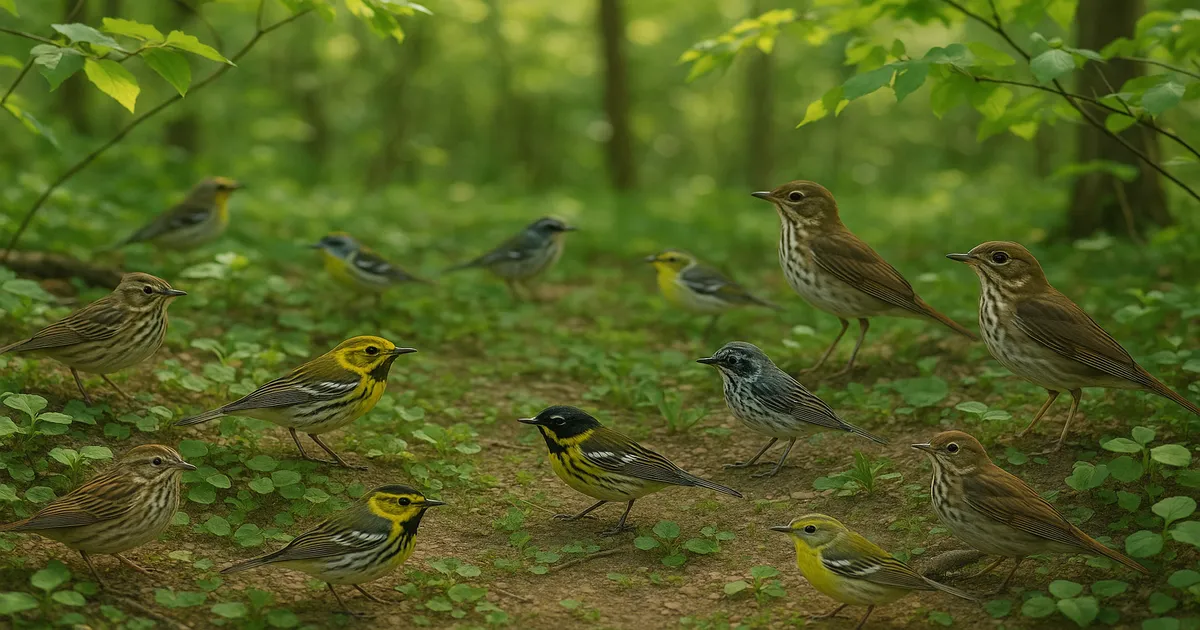
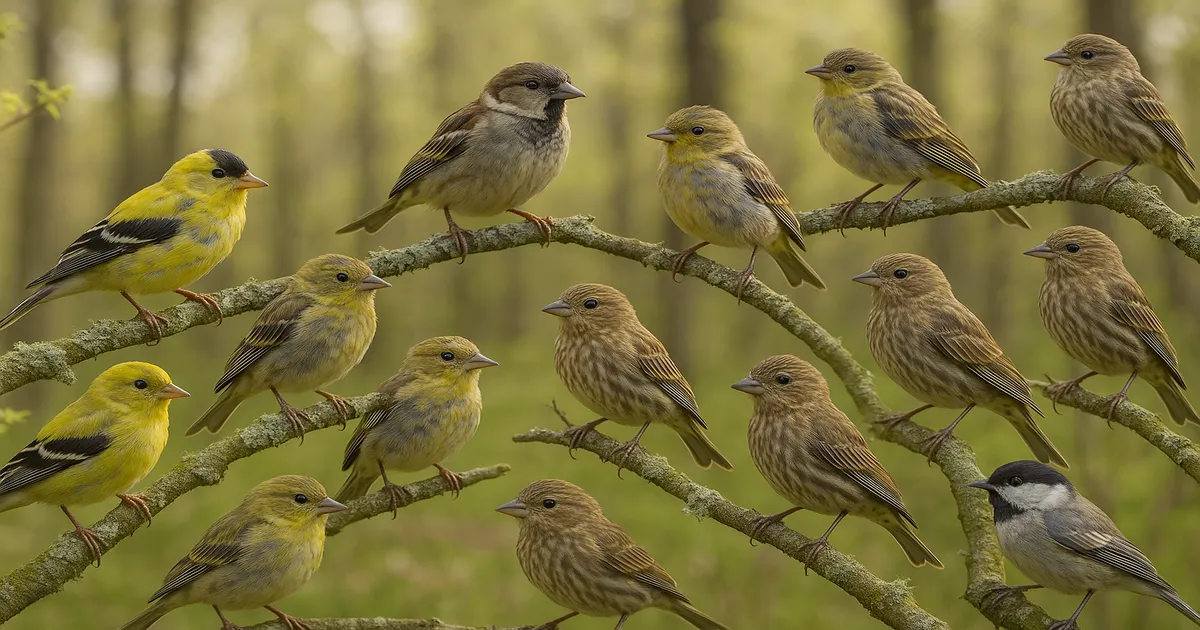
Small birds make up an estimated 90% or more of the Sharp-shinned Hawk’s diet. Warblers, sparrows, finches, juncos, and House Sparrows are all fair game. Males, being smaller, stick to smaller prey — a Dark-eyed Junco is a typical meal. Females can handle birds up to American Robin size.
Sharpies are ambush specialists. They’ll sit motionless inside dense foliage, then explode into pursuit with startling speed. They also skim low along hedgerows and forest edges to surprise prey from the other side. I’ve watched them thread through dense brush at full speed in a way that seems physically impossible. The short wings and long tail that look odd on a soaring hawk make obvious sense the moment you see one in a chase.
A well-stocked feeder is essentially a buffet of concentrated songbirds, and a Sharpie will absolutely exploit that. The most reliable sign of a visit isn’t seeing the hawk — it’s the sudden, complete silence that falls over your feeder as every bird vanishes at once. A “plucking post” nearby — a stump or branch covered in small feathers — confirms regular visits.
If you want to reduce window strikes for both the songbirds and the occasional Sharpie that misjudges a chase, external window screens or UV-reflective decals help significantly. (WindowAlert UV Liquid) A tube feeder positioned away from large windows also reduces collision risk for the birds using it.
Conservation Status and Population Trends
Sharp-shinned Hawks took a serious hit from DDT and other organochlorine pesticides in the mid-20th century. Eggshell thinning caused widespread reproductive failure. After the 1972 DDT ban, populations recovered substantially through the 1970s and into the 1990s.
The recovery didn’t hold. Breeding Bird Survey data suggests roughly a 75% decline in Sharp-shinned Hawk populations since 1966, and long-term hawk watch counts at Hawk Mountain and Cape May show significant drops in migration numbers over recent decades. The causes aren’t fully understood — habitat changes on breeding grounds, shifts in prey availability, and climate-driven changes in forest composition are all factors. The IUCN lists the species as Least Concern globally, but North American trend data tells a more complicated story.
Current threats include window strikes (Sharp-shinned Hawks are among the most commonly reported raptor window-strike victims), logging and fragmentation of dense young conifer forests, secondary poisoning from anticoagulant rodenticides, and illegal shooting — reduced but not eliminated.
Hawk Mountain Sanctuary, founded in 1934 by Rosalie Edge specifically to stop the legal shooting of migrating hawks along Pennsylvania’s Kittatinny Ridge, remains a global model for raptor conservation and continues the long-term population monitoring that’s essential for tracking where this species is headed. Sharp-shinned Hawks are protected under the Migratory Bird Treaty Act.
How to Find Sharp-Shinned Hawks
Fall migration — mid-September through mid-October — is the best window by a wide margin. Spring migration (March–April) is productive but less concentrated. Winter is excellent for patient feeder-watchers across most of the U.S. Breeding birds are genuinely hard to find; they’re secretive in dense forest, and the best strategy is to listen for rapid kik-kik-kik alarm calls near suspected nest areas rather than trying to spot the bird directly.
For casual birders, any woodland edge, forest trail, or well-stocked backyard feeder can produce a Sharpie in winter. Check eBird’s species maps for recent sightings near you before heading out — and when you do see one, log it. Citizen science data from backyard birders genuinely contributes to understanding population trends for a species that’s hard to monitor on its breeding grounds.
Frequently Asked Questions About the Sharp-Shinned Hawk
Why is it called a sharp-shinned hawk?
The name comes from the laterally compressed, keel-like leading edge of the tarsometatarsus — the lower leg bone. This ridge feels distinctly sharp to the touch, unlike the rounded tarsus of most other hawks. Alexander Wilson documented this feature when he formally described the species around 1812 in American Ornithology, and the name has stuck ever since.
What is the difference between a sharp-shinned hawk and a Cooper’s hawk?
The most reliable field marks are tail shape and head size in flight. Sharp-shinned Hawks have a squared or slightly notched tail tip; Cooper’s Hawks have a rounded tail. In flight, Cooper’s Hawks show a larger head that projects well forward of the wings — Sharpies look more compact. Size overlaps significantly due to sexual dimorphism, so don’t use it as a primary field mark.
Why do sharp-shinned hawks come to bird feeders?
They come for the songbirds, not the seed. A well-stocked feeder concentrates sparrows, finches, and juncos in a predictable location, making it an efficient hunting spot. The sudden silence and scatter of feeder birds is usually the first sign a Sharp-shinned Hawk has arrived.
How rare is it to see a sharp-shinned hawk?
Not rare at all during migration and winter. At hawk watch sites in September and October, hundreds or thousands can pass in a single day. In winter, they’re regular visitors to suburban areas and backyard feeders across much of the U.S. Breeding birds are genuinely hard to find because of their preference for dense, remote conifer forest.
What does the scientific name Accipiter striatus mean?
Accipiter is Latin for “hawk” or “bird of prey” — the genus shared by North America’s three accipiters. Striatus means “striped,” referring to the streaked breast of juvenile Sharp-shinned Hawks and the barred underparts of adults. The scientific name essentially translates to “striped hawk,” describing plumage rather than the anatomical feature that inspired the common name.