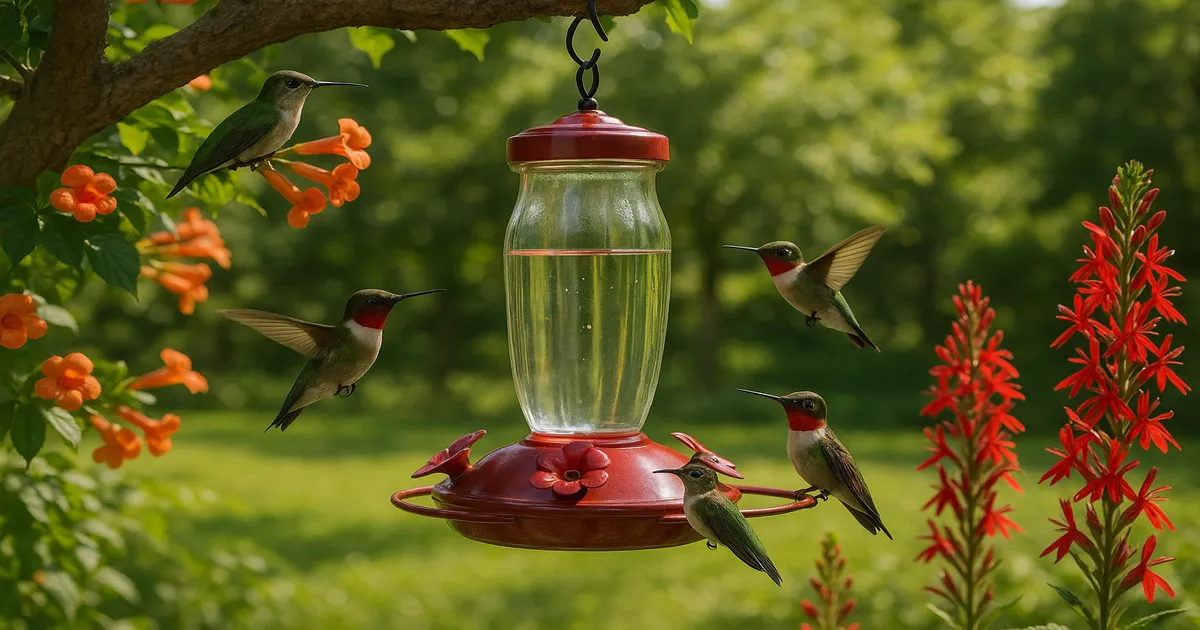
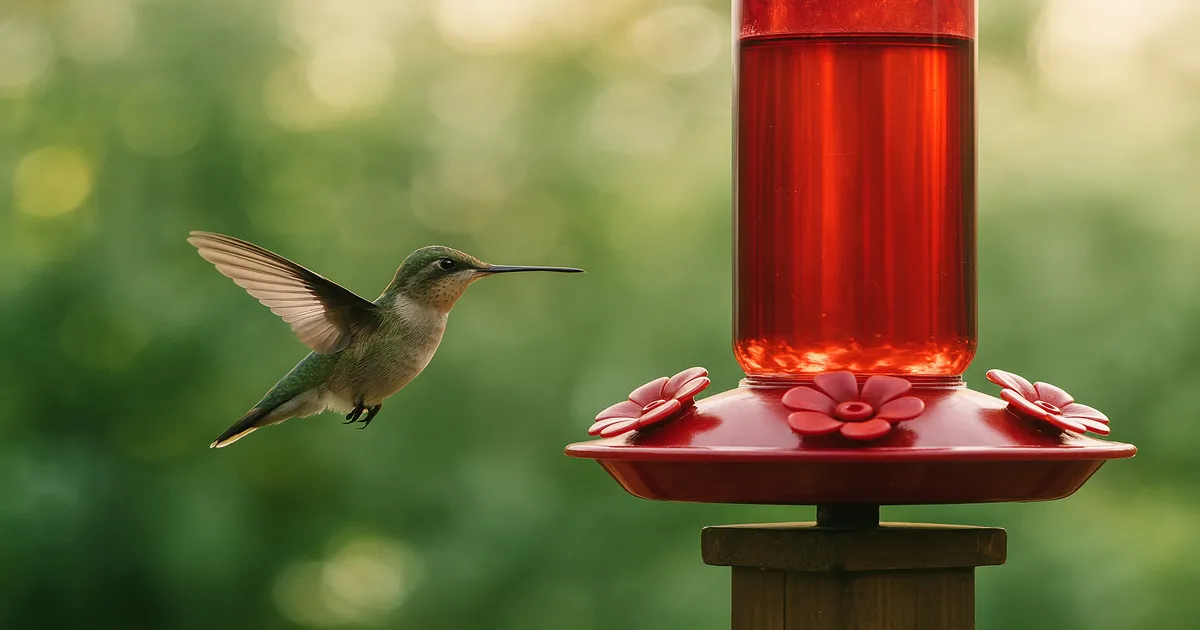
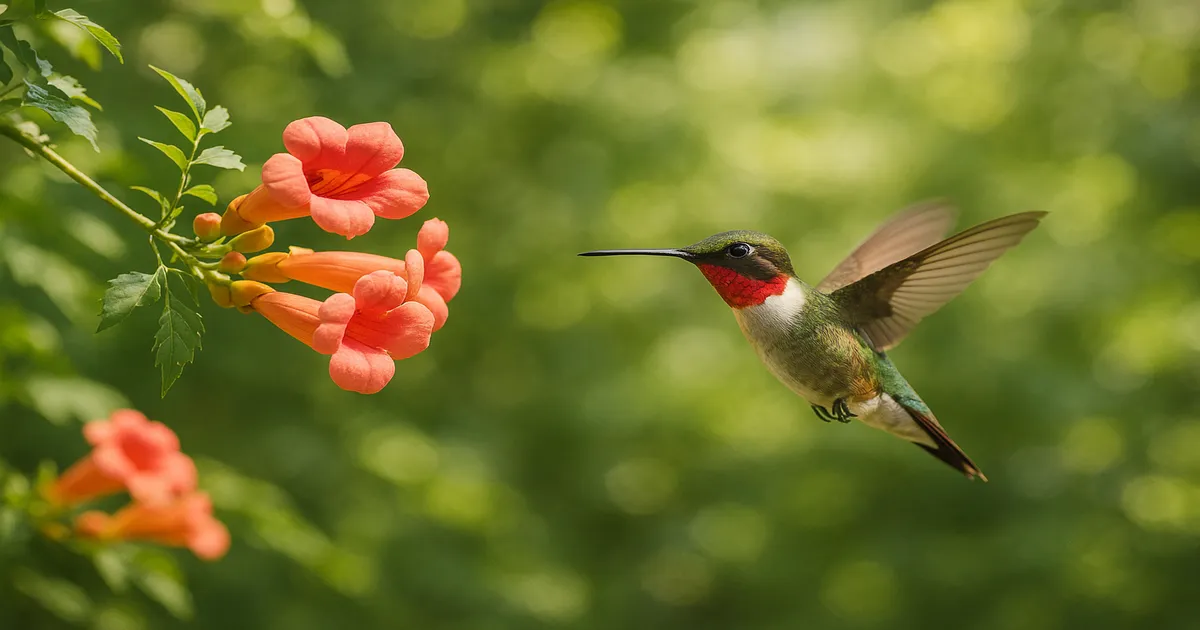
Quick Answer: Most hummingbirds migrate north through the U.S. from late February through May, depending on your region, and head south again from July through October. Ruby-throated hummingbirds — the only breeding species in the eastern U.S. — typically arrive along the Gulf Coast by early March and reach the Northeast by mid-May. Put your feeders out two weeks before expected arrival and leave them up at least two weeks after your last sighting.
A ruby-throated hummingbird weighs less than a nickel and crosses the Gulf of Mexico in a single nonstop flight. That fact alone should earn your respect. These birds burn through their entire fat reserves during an 18- to 20-hour journey over open water with no place to rest. And they do it twice a year without complaint, which is more than most of us can say about a connecting flight through Atlanta.
Understanding when hummingbirds migrate — and what drives their timing — helps you do two things: see more of them and actually help them survive the trip.
Spring Migration: When Hummingbirds Head North
Spring migration follows a predictable wave that rolls northward as temperatures warm and flowers bloom. The birds are chasing their food supply, so their schedule tracks closely with local plant phenology.
Timing by Region
| Region | Expected Arrival | Peak Activity |
|---|---|---|
| Gulf Coast (TX, LA, MS, AL, FL) | Late February – Early March | March |
| Southeast (GA, SC, NC, TN, AR) | Mid-March – Early April | April |
| Mid-Atlantic (VA, MD, PA, NJ) | Mid-April – Early May | May |
| Northeast (NY, New England) | Late April – Mid-May | Late May – June |
| Midwest (OH, IN, IL, MI, WI, MN) | Late April – Mid-May | May – June |
| Pacific Northwest (OR, WA) | March – April | April – May |
| Mountain West (CO, UT, MT) | April – May | May – June |
These dates can shift by a week or two in any given year. Unusually warm springs pull them ahead; late cold snaps slow them down. Checking a real-time hummingbird migration map each spring is the easiest way to see where the front line is.
What Triggers Spring Migration
Hummingbirds don’t wait for a weather report. Their migration is triggered primarily by changing day length (photoperiod), which signals hormonal changes that increase appetite and fat storage. Once they’ve put on enough weight — sometimes nearly doubling their body mass — they launch.
Temperature and food availability fine-tune the timing, but daylight is the master switch. This is why your feeder being empty in February doesn’t delay them, and leaving it full in November doesn’t trap them. They’re running on a biological clock, not your hospitality.
Fall Migration: When Hummingbirds Head South
Fall migration is longer, more spread out, and easier to miss if you’re not paying attention. While spring migration feels like a wave, fall is more of a slow drain.
General Fall Timeline
- July – August: Adult males depart first, often by mid-July in northern states. They’ve finished breeding and have no reason to stick around.
- August – September: Adult females and juveniles follow. Juveniles are making the trip for the first time with zero guidance — no flock, no parents leading the way.
- September – October: Stragglers and late migrants pass through. In the southern U.S., you may see transient birds well into October.
- November: A few hardy individuals — particularly rufous hummingbirds — may still turn up along the Gulf Coast or even overwinter in the Southeast.
Don’t take your feeders down in fall thinking you’ll “trap” hummingbirds — that’s a myth that refuses to die. They migrate on instinct, not because your sugar water ran out. Leaving feeders up late actually helps stragglers and vagrant species that wander outside their typical range.
Species Comparison: Who Migrates Where
North America has over a dozen hummingbird species, but most birders will encounter just a few. Their migration routes and timing differ significantly.
| Species | Breeding Range | Winter Range | Migration Route | Notable Trait |
|---|---|---|---|---|
| Ruby-throated | Eastern U.S. and Canada | Mexico, Central America | Across or around the Gulf of Mexico | Only eastern breeder; 500-mile Gulf crossing |
| Rufous | Pacific NW, Alaska | Mexico | Pacific Coast north, Rocky Mountain corridor south | Longest migration relative to body size |
| Black-chinned | Western U.S. | Mexico | Western corridors | Common at feeders in the Southwest |
| Anna’s | Pacific Coast (year-round) | Largely resident | Minimal migration; some altitudinal movement | Expanding range northward |
| Calliope | Mountain West | Mexico | Rocky Mountain flyway | Smallest bird in North America |
Ruby-Throated Hummingbird Migration
The ruby-throated hummingbird is the species most people east of the Rockies will see, and its migration is genuinely remarkable. In spring, many ruby-throats fly nonstop across the Gulf of Mexico — roughly 500 miles of open water. They can’t glide, they can’t stop, and there’s no margin for error. They fuel up on the Yucatan Peninsula, storing enough fat to power 18 to 20 hours of continuous flight.
Some individuals take the longer but arguably safer route around the Gulf, island-hopping through the Caribbean or hugging the Texas coastline. Either way, it’s an extraordinary feat for a bird that weighs about 3 grams.
Rufous Hummingbird Migration
The rufous hummingbird holds the record for the longest migration relative to body size of any bird in the world. They breed as far north as southeastern Alaska and winter in Mexico — a round trip of roughly 8,000 miles. In spring they push north along the Pacific Coast. In fall, they swing inland, following the Rocky Mountain corridor south, which is why they show up at feeders in Colorado, New Mexico, and Arizona in late summer.
Rufous hummingbirds are also famously feisty. If one shows up at your feeder, you’ll know — it’ll chase everything else away without a second thought.
When to Put Out Hummingbird Feeders
Timing your feeders correctly makes a real difference. Here’s the practical approach.
Spring Feeder Setup
Put your feeders out two weeks before the expected arrival date for your region. Early migrants are often the hungriest — they’ve been flying for days and natural flower sources may not be blooming yet. An early feeder can be a genuine lifesaver.
For most of the eastern U.S., that means:
- Gulf Coast: Early to mid-February
- Southeast: Early March
- Mid-Atlantic: Early April
- Northeast and Midwest: Mid-April
If you’re on the West Coast and hoping to attract rufous hummingbirds, feeders should go out by late February to early March.
Fall Feeder Takedown
Leave your feeders up for at least two weeks after your last sighting. This catches stragglers and vagrants that may desperately need the fuel. In practice, many experienced birders in the South leave feeders up through November or even year-round, since overwintering hummingbirds are increasingly common.
The Right Nectar Recipe
This is non-negotiable and dead simple:
4 parts water to 1 part white granulated sugar. No dye. No honey. No artificial sweetener.
Boil the water, stir in the sugar until dissolved, cool completely, and fill your feeder. Store extra in the refrigerator for up to two weeks. Change the nectar in your feeder every 3 to 5 days in warm weather — more often if it looks cloudy. Fermented nectar can make hummingbirds sick.
Red dye is unnecessary. Every commercial hummingbird feeder already has red parts, which is all they need to find it. Adding dye just introduces chemicals with no upside.
How Climate Change Is Shifting Migration
If you’ve been watching hummingbirds for more than a few years, you may have noticed the schedule shifting. You’re not imagining it.
Studies have documented several trends linked to a warming climate:
- Earlier spring arrivals. Ruby-throated hummingbirds are arriving in parts of the Southeast up to two weeks earlier than they did 30 years ago.
- Later fall departures. Some populations are lingering longer in their breeding range before heading south.
- Range expansions. Anna’s hummingbirds, once limited to southern California, now breed as far north as British Columbia. Rufous hummingbirds are showing up in the eastern U.S. with increasing regularity.
- Overwintering. More hummingbirds — particularly rufous and black-chinned — are spending the winter in the southeastern U.S. rather than making the full trip to Mexico.
The risk is a mismatch between hummingbird arrival and flower bloom. If birds show up before their food plants are flowering, they’re in trouble. Your feeders can help bridge that gap, which is another reason to put them out early and keep them up late.
Creating a Migration-Friendly Yard
Beyond feeders, you can make your yard a genuine rest stop for migrating hummingbirds.
- Plant native tubular flowers. Trumpet vine, bee balm, cardinal flower, salvia, and columbine are all excellent choices. Native plants also support the insects hummingbirds eat for protein.
- Provide shelter. Shrubs and small trees give migrating birds a place to rest and roost overnight.
- Avoid pesticides. Hummingbirds eat small insects and spiders. Pesticides remove this critical protein source and can poison the birds directly.
- Add a mister or shallow water feature. Hummingbirds love bathing in fine mist. A small fountain with a misting attachment will attract them reliably.
Frequently Asked Questions
Do all hummingbirds migrate?
No. Some species are largely resident year-round. Anna’s hummingbird, for example, stays along the Pacific Coast throughout the year, though individuals may move to lower elevations in winter. In tropical regions, many hummingbird species don’t migrate at all. In the U.S. and Canada, however, most species are migratory, with the ruby-throated and rufous being the most prominent long-distance travelers.
How fast do hummingbirds fly during migration?
Hummingbirds typically fly at 25 to 30 miles per hour during migration, though they can reach speeds of up to 45 mph in short bursts. They don’t migrate in flocks — each bird travels alone, which makes the journey even more impressive. During their Gulf of Mexico crossing, ruby-throated hummingbirds maintain a steady pace for up to 20 hours straight without any opportunity to stop.
Will leaving my feeder up in fall prevent hummingbirds from migrating?
Absolutely not. This is one of the most persistent myths in backyard birding. Hummingbirds migrate in response to hormonal changes triggered by day length, not food availability. Leaving your feeder up in late fall actually helps late migrants and vagrant species that may have wandered outside their normal range. If a hummingbird is still visiting your feeder in November, it likely needs the food — taking the feeder away won’t make it migrate, but it might leave it without fuel.
How can I track hummingbird migration in real time?
Several citizen science platforms track hummingbird migration using sighting reports from birders across North America. Hummingbird Central and Journey North both maintain interactive maps that update throughout the spring and fall migration seasons. You can report your own first sighting to help build the data set. Checking these maps in late winter gives you a good sense of when to expect arrivals in your area.
Do hummingbirds return to the same yard each year?
Yes, they frequently do. Banding studies have shown that individual hummingbirds often return to the exact same feeding territory year after year. If you had a reliable visitor last summer, there’s a good chance that same bird — or its offspring — will be back. This is one more reason to get your feeders out early and keep your yard hummingbird-friendly. The birds remember where the good stops are.