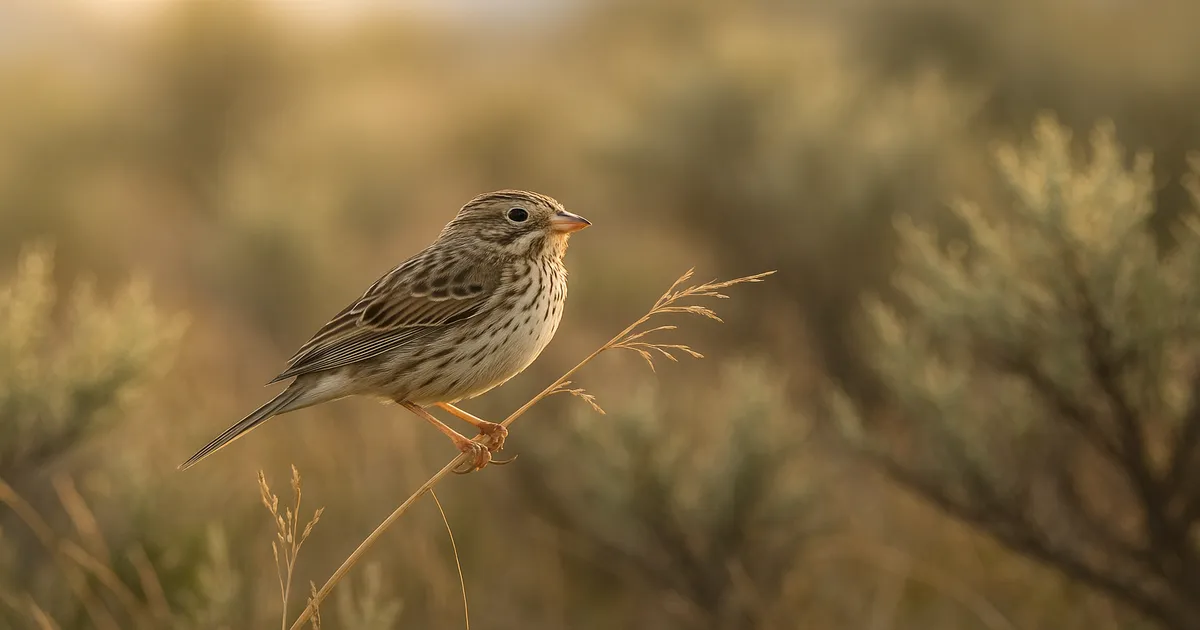
Quick Answer: If you’re asking “what is this sparrow? Seen in Idaho,” you’ve got 15+ species to work through — but the odds-on candidates are Song Sparrow, White-crowned Sparrow, Dark-eyed Junco, Chipping Sparrow, and Vesper Sparrow. Your fastest shortcut is habitat: sagebrush points to Brewer’s or Sagebrush Sparrow, riparian thickets to Song or Lincoln’s, and open grassland to Vesper or Savannah.
What Is This Sparrow? Identifying Idaho’s Most Common Species
Idaho sits at the crossroads of the Rocky Mountains, Great Basin sagebrush-steppe, and Columbia Plateau — which means sparrow species from several ecological zones overlap here in ways they don’t in most western states. That’s good news and bad news. Good news: the diversity is genuinely exciting. Bad news: you might be staring at a small brown bird with very few obvious marks.
Start with two questions before you scroll any further: Where did you see it, and what month is it? A sparrow flushing from big sagebrush in July is almost certainly a Brewer’s or Sagebrush Sparrow. One scratching under your feeder in January is probably a Dark-eyed Junco, White-crowned Sparrow, or American Tree Sparrow. Habitat and season cut the candidate list from 15+ down to three or four almost instantly.
A good pair of binoculars makes all the difference with sparrows — the field marks are often subtle. (Nikon Monarch M5 8x42) For song ID, the Merlin Bird ID app (free from Cornell Lab) has Sound ID that works in real time; point your phone at a singing sparrow and it will name the species within seconds. (Sibley’s Birds of the Western United States)
Idaho Sparrow Habitats: Where to Start Your Search
Sagebrush Steppe — Southern and Central Idaho
The vast sagebrush plains of the Owyhee Plateau and Snake River Plain host two specialists: Sagebrush Sparrow and Brewer’s Sparrow, both breeding residents from April through August. If you hear an elaborate, buzzy trill running 10 seconds or more, that’s a Brewer’s Sparrow — it has the longest song of any small North American sparrow. If you see a slim gray bird running mouse-like along the ground with its tail cocked up rather than flushing into a bush, that’s a Sagebrush Sparrow. Behavior alone often clinches it before you even raise your binoculars.
Riparian Corridors and Wetland Edges
Willow thickets along the Boise River, cattail edges on the Snake River, brushy creek margins in northern Idaho — these are Song Sparrow and Lincoln’s Sparrow territory. These two species share habitat and a broadly similar streaked look, which is why they confuse so many people. See the comparison below.
Forest Edges, Parks, and Suburban Yards
Chipping Sparrows nest in conifers and ornamental shrubs across Idaho suburbs and campgrounds from May through August. Dark-eyed Juncos are everywhere from mountain forest edges down to city parks, especially in fall and winter when they descend in flocks. A millet-stocked feeder will pull both species in reliably.
Open Grasslands and Farmland
Vesper Sparrows, Savannah Sparrows, and Lark Sparrows prefer open country — irrigated farmland, native bunchgrass prairies, and weedy field edges. Grasshopper Sparrows occupy native grasslands in southern Idaho but are genuinely uncommon and declining; finding one is a small event worth noting on eBird.
Seasonal Quick Reference
| Season | Species to Expect |
|---|---|
| Year-round | Song Sparrow, Dark-eyed Junco (lower elevations) |
| Spring/Summer (Apr–Aug) | Chipping, Vesper, Brewer’s, Sagebrush, Lark, Savannah, Lincoln’s, Grasshopper Sparrows |
| Migration (Apr–May, Sep–Oct) | Fox Sparrow, Golden-crowned Sparrow, Clay-colored Sparrow |
| Winter (Oct–Mar) | American Tree Sparrow, most White-crowned Sparrows |
Field ID Guide: Sparrows Seen in Idaho
Song Sparrow
About 6.3 inches long with a long, rounded tail it pumps rhythmically in flight. The clincher: heavy brown streaking on the breast that converges into a bold central chest spot. Males and females look identical. Juveniles in summer are buffer with finer, blurrier streaking and may lack the central spot — a common source of confusion. Song is two or three pure whistled notes, then a buzzy trill, then a varied warble. Call is a sharp, flat chimp. Found year-round in riparian areas and brushy edges statewide.
White-crowned Sparrow
At 7.3 inches, this is a large, upright sparrow with a peaked crown and a pinkish-orange bill. Adults are unmistakable — bold black-and-white striped crown, plain gray face and breast. First-year birds have brown-and-buff crown stripes and fool a lot of beginners. Idaho hosts two subspecies: the Rocky Mountain breeder (oriantha, with black lores) and the common migrant/wintering gambelii (pale lores). Call is a sharp metallic pink.
Dark-eyed Junco
Compact and round-headed at 6.3 inches. The “Oregon” subspecies group dominates Idaho: dark charcoal hood, rusty-brown flanks and back, white belly, and white outer tail feathers that flash in flight. Females have a brownish-gray hood. Juveniles in summer are streaked all over and briefly look like a different bird before molting into adult plumage. Song is a simple trill on one pitch — similar to a Chipping Sparrow but slower and warmer.
Chipping Sparrow
Small and slim at 5.5 inches. Breeding adults are crisp and easy: bright rufous cap, bold white supercilium, black eye line, clean gray underparts. Non-breeding birds are much trickier — the cap becomes streaked and brown, the supercilium buffs out. Song is a long, rapid mechanical trill on a single pitch. Nests in conifers and ornamental trees across Idaho parks and campgrounds, May through July.
Vesper Sparrow
Medium-large at 6.3 inches with a notched tail. Two marks clinch it: white outer tail feathers (conspicuous in flight) and a chestnut lesser wing covert patch — a rusty shoulder spot visible at rest. Breast is streaked but lacks a central spot. White eye ring is also helpful. Vesper Sparrows sing frequently at dusk — that’s exactly what gave them their name. Common in open grasslands and farmland across southern and central Idaho from April through September.
Sagebrush Sparrow
Slender and long-tailed at 6.1 inches. Key marks: gray head with a white eye ring and white spot in front of the eye, a single dark malar stripe, and a single dark breast spot on an otherwise clean white breast — no streaking below. Tail often cocked upward. The behavioral cue is usually faster than any field mark: this bird runs across open ground like a mouse rather than flushing. Restricted to sagebrush steppe in southern and central Idaho, breeding April through July.
Brewer’s Sparrow
One of Idaho’s smallest sparrows at 5.5 inches, and honestly one of the plainest birds in North America. Finely streaked brown crown with no bold pattern, pale gray-brown face, thin eye ring, unstreaked buff-gray underparts. Nothing jumps out — which is itself the field mark. The song, though, is extraordinary: a long, complex series of buzzy trills and canary-like warbles that can run 10 seconds or more. Hear it once in sagebrush and you won’t forget it.
Savannah Sparrow
Small and short-tailed at 5.5 inches. Look for the yellow supercilium — it’s often small but usually present and is the fastest mark. Heavily streaked above and below, with a pink bill and pink legs. Song has an insect-like quality: a few chips followed by two long buzzy trills. Found in wet meadows and irrigated fields across Idaho from April through September.
Lark Sparrow
Large and distinctive at 6.3 inches with a long, rounded tail showing white corners. The harlequin face pattern — chestnut ear patch, white supercilium, black malar stripe — makes this one of Idaho’s easiest sparrows once you know it. Single dark breast spot. Song is rich and melodious, among the most musical of any sparrow. Juveniles have a duller face and streaked breast, but the tail pattern still helps. Found in open grasslands and shrublands across southern Idaho, May through August.
Lincoln’s Sparrow
Slim and secretive at 5.75 inches. The key mark is a buffy wash across the breast and flanks with fine, crisp brown streaking — it looks almost delicate compared to Song Sparrow’s heavy blotching. Thin buffy eye ring, gray face, brown crown stripes. Often raises its crown feathers into a slight crest when alarmed. Song is surprisingly loud and wren-like — a rich, bubbling series of trills. Call is a buzzy bzzt that’s distinctive once you’ve learned it. Breeds in mountain willow thickets above 5,000 feet; also a common migrant statewide in May and September.
American Tree Sparrow
Medium-sized at 6.3 inches, and a winter-only visitor to Idaho (October through March). Looks superficially like a Chipping Sparrow but note the single dark central breast spot on an unstreaked gray breast and the two-toned bill (dark above, yellow below). Rufous cap and rufous eye line. Call is a musical teedle-eet — once you’ve heard it, you’ll pick it out of a flock instantly. Flocks visit weedy fields and feeders; white millet on a ground tray is the best way to attract them. (Wagner’s Greatest Variety Wild Bird Food)
Fox Sparrow
Idaho’s largest common sparrow at about 7 inches and noticeably chunky. Western birds (the “Thick-billed” and “Slate-colored” groups) have gray heads, rufous-brown wings and tail, and heavy triangular spots on the breast that often merge into a central blotch. Large two-toned bill with a yellow lower mandible. Foraging behavior is distinctive: a double-scratch kick with both feet simultaneously to expose seeds. Song is among the most beautiful of any sparrow — rich, loud, melodious whistles. Mainly a migrant in Idaho, passing through in April–May and September–October.
Golden-crowned Sparrow
Large and long-tailed, similar in size to White-crowned Sparrow. Adults have a bright yellow central crown patch bordered by black. Dull brown overall with a plain gray face. First-year birds have a duller yellow-and-brown crown. A migrant through Idaho in spring and fall, often traveling with White-crowned Sparrows. Check flocks carefully during October and April.
Grasshopper Sparrow
Small and flat-headed at about 5 inches — it looks almost neckless. Unstreaked buffy-orange breast, bold head pattern with a pale central crown stripe, and a yellow-orange spot in front of the eye (the loral spot). Short tail. Song is a thin, insect-like buzz that’s easy to miss. Found in native grasslands in southern Idaho, but uncommon and declining. If you find one, report it on eBird — it genuinely matters for conservation.
Harris’s Sparrow
Large and striking at about 7.5 inches — Idaho’s biggest sparrow. Adults have a black crown, face, and bib surrounding a pink bill. A rare but regular migrant, mostly in October and November in weedy fields and thickets, particularly in eastern Idaho. If you see a large sparrow with a black face patch, don’t talk yourself out of it.
Confusing Look-Alikes: Side-by-Side Comparisons
Song Sparrow vs. Lincoln’s Sparrow
| Feature | Song Sparrow | Lincoln’s Sparrow |
|---|---|---|
| Breast pattern | Heavy coarse streaks, bold central spot | Fine crisp streaks on buffy wash — delicate |
| Face | Brown, boldly patterned | Gray, thin buffy eye ring |
| Behavior | Often out in the open | Skulking, stays in dense cover |
Chipping Sparrow vs. American Tree Sparrow
| Feature | Chipping Sparrow | American Tree Sparrow |
|---|---|---|
| Breast | Plain, unstreaked gray | Single dark central spot |
| Bill | All dark (breeding) | Two-toned (dark above, yellow below) |
| Season in Idaho | Summer | Winter only |
Season alone resolves most confusion: a rufous-capped sparrow at your feeder in January is an American Tree Sparrow.
Savannah Sparrow vs. Vesper Sparrow
Both are streaked brown sparrows of open country. Vesper shows bold white outer tail feathers in flight and a chestnut shoulder patch at rest; Savannah has a short notched tail with no white and often shows a yellow tint to the eyebrow. In flight, the tail is the fastest separator.
Brewer’s Sparrow vs. Clay-colored Sparrow
Clay-colored Sparrow is an uncommon but regular migrant in Idaho, mainly in May and September. Both are small, pale Spizella sparrows. Clay-colored has a more defined pale median crown stripe, bolder lateral crown stripes, a contrasting gray nape, and a crisper face pattern. Brewer’s crown is finely streaked with no bold pattern — the plainness is the point.
Identify by Sound: Why Song Beats Plumage for Sparrows
Once you’ve been birding sparrows for a season, song becomes your primary ID tool. Many of Idaho’s sparrows are secretive and give you only a brief look in dense vegetation. Their songs carry across open habitat and are often more distinctive than anything you can see.
Key songs to learn:
- Brewer’s Sparrow — Extraordinarily long, complex buzzy trills; unmistakable in sagebrush
- Lincoln’s Sparrow — Rich, bubbling, wren-like warble; surprisingly loud for such a shy bird
- Vesper Sparrow — Two clear whistles, two higher notes, then a descending trill
- Chipping Sparrow — Rapid mechanical trill on a single pitch, like a tiny sewing machine
- Dark-eyed Junco — Slower, warmer trill on one pitch; more musical than Chipping
Use the Merlin Bird ID app’s Sound ID feature in the field — it’s free, it works offline once you’ve downloaded the Idaho bird pack, and it’s genuinely accurate for sparrows. For deeper study at home, the Peterson Field Guide to Bird Sounds of Western North America covers every species here with spectrograms and written descriptions.
FAQ: Sparrows Seen in Idaho
What is the most common sparrow in Idaho? Song Sparrow is probably the single most widespread, found year-round in riparian and brushy habitats statewide. Dark-eyed Junco rivals it in sheer numbers, especially in fall and winter when mountain birds move to lower elevations.
What sparrows stay in Idaho all winter? Song Sparrows are year-round residents. Dark-eyed Juncos winter at lower elevations in large numbers. American Tree Sparrows arrive in October and stay through March. Many White-crowned Sparrows winter in southern Idaho, though the breeding population moves to higher elevations in summer.
I saw a plain gray-brown sparrow with no obvious marks in sagebrush. What is it? Almost certainly a Brewer’s Sparrow. Its plainness is the field mark — no bold crown pattern, no strong face pattern, just finely streaked brown above and buff-gray below. Listen for the song: a long, complex series of buzzy trills that goes on far longer than you’d expect from such a small bird.
What’s the difference between a sparrow and a junco? Dark-eyed Juncos are sparrows — they’re in the family Passerellidae along with all the other species here. People often don’t recognize them as sparrows because the “Oregon” form’s dark hood and clean white belly look so different from the streaky brown pattern most people associate with sparrows. If it’s at your feeder in winter with white outer tail feathers flashing when it flies, it’s a junco — which is also a sparrow.
How do I get sparrows to come to my yard in Idaho? White millet scattered on a ground tray or low platform feeder is the single best sparrow attractant. Song Sparrows, White-crowned Sparrows, Dark-eyed Juncos, and American Tree Sparrows all respond well to it. A brush pile nearby gives them cover and makes them feel safe enough to linger.